Quick Answer
Leather and vinyl look similar but behave differently. Leather is skin: it dries out, absorbs oils, and cracks when neglected, so it needs a pH-balanced cleaner plus a conditioner. Vinyl is a synthetic coated material: it has no pores to feed, so it needs a gentle cleaner and a UV protectant, not a leather conditioner. If you are unsure which you have, test a hidden spot first: leather feels slightly tacky and warms to your hand, while vinyl stays cool and slick.
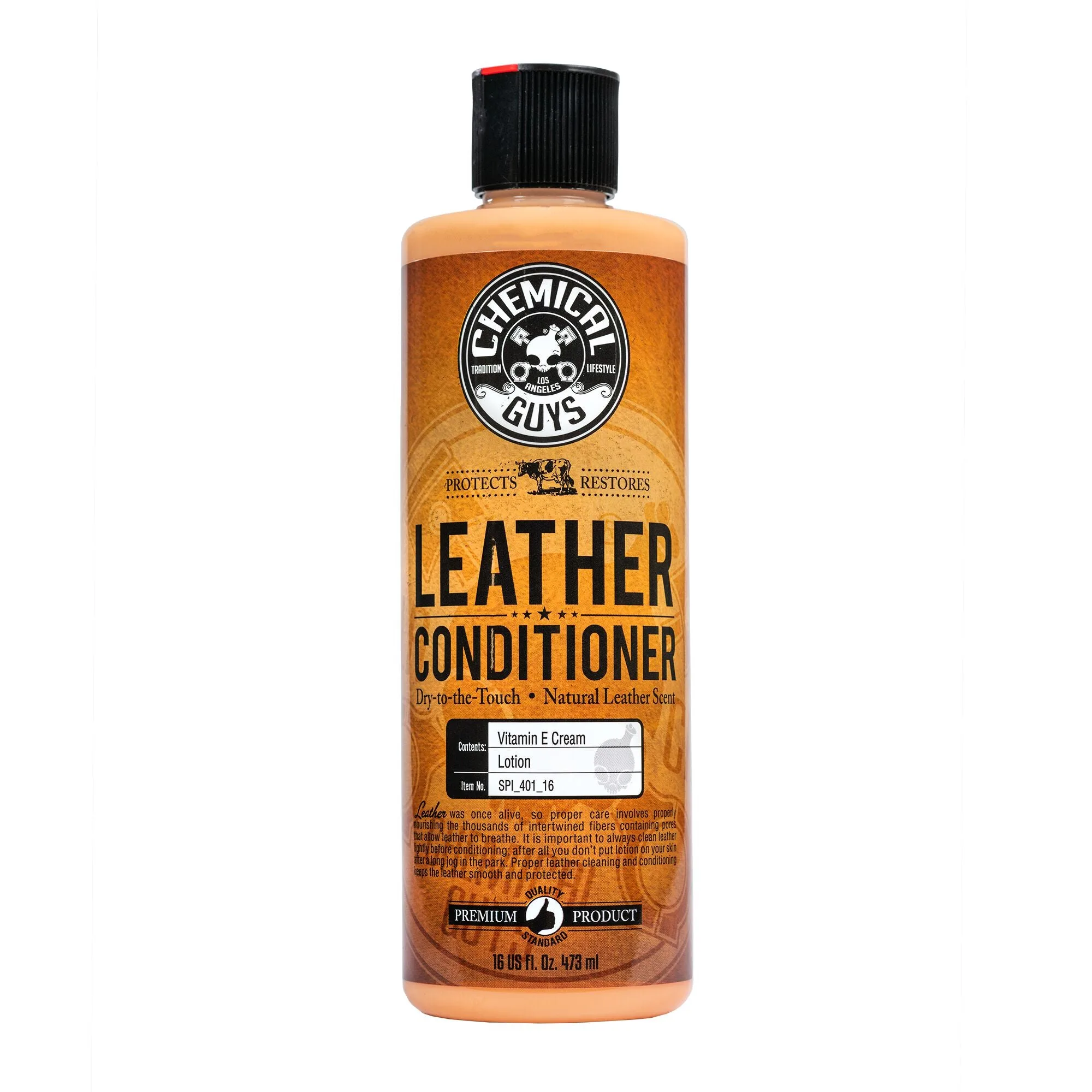
leather conditioner
How to Tell Leather and Vinyl Apart Before You Buy Anything
Before you pick a leather car seat care product, confirm what you are actually sitting on. Real leather has a natural grain that varies across the panel, feels slightly warm and tacky when you press it, and often shows small pores or irregular texture. Vinyl is a synthetic coated material with a very uniform grain, a cooler and slicker feel, and a slightly plastic sheen.
A quick water test helps: place a drop of water on a hidden area. On unfinished or lightly finished leather, it darkens and absorbs slowly. On vinyl, it beads and sits on the surface. If your seats are perforated or ventilated, look closely at the holes: leather perforations usually show a fibrous edge, while vinyl perforations look cleanly punched. Knowing this first prevents you from buying the wrong cleaner and wasting money.
Leather Car Seat Care: Clean Gently, Then Condition
Leather is skin, so it loses moisture over time and needs replenishment. Start by vacuuming crumbs and grit from seams and perforations, then wipe with a pH-balanced leather cleaner using a soft microfiber towel. Avoid all-purpose cleaners, alcohol, and harsh detergents, which strip the finish and accelerate cracking. Work in small sections and dry as you go.
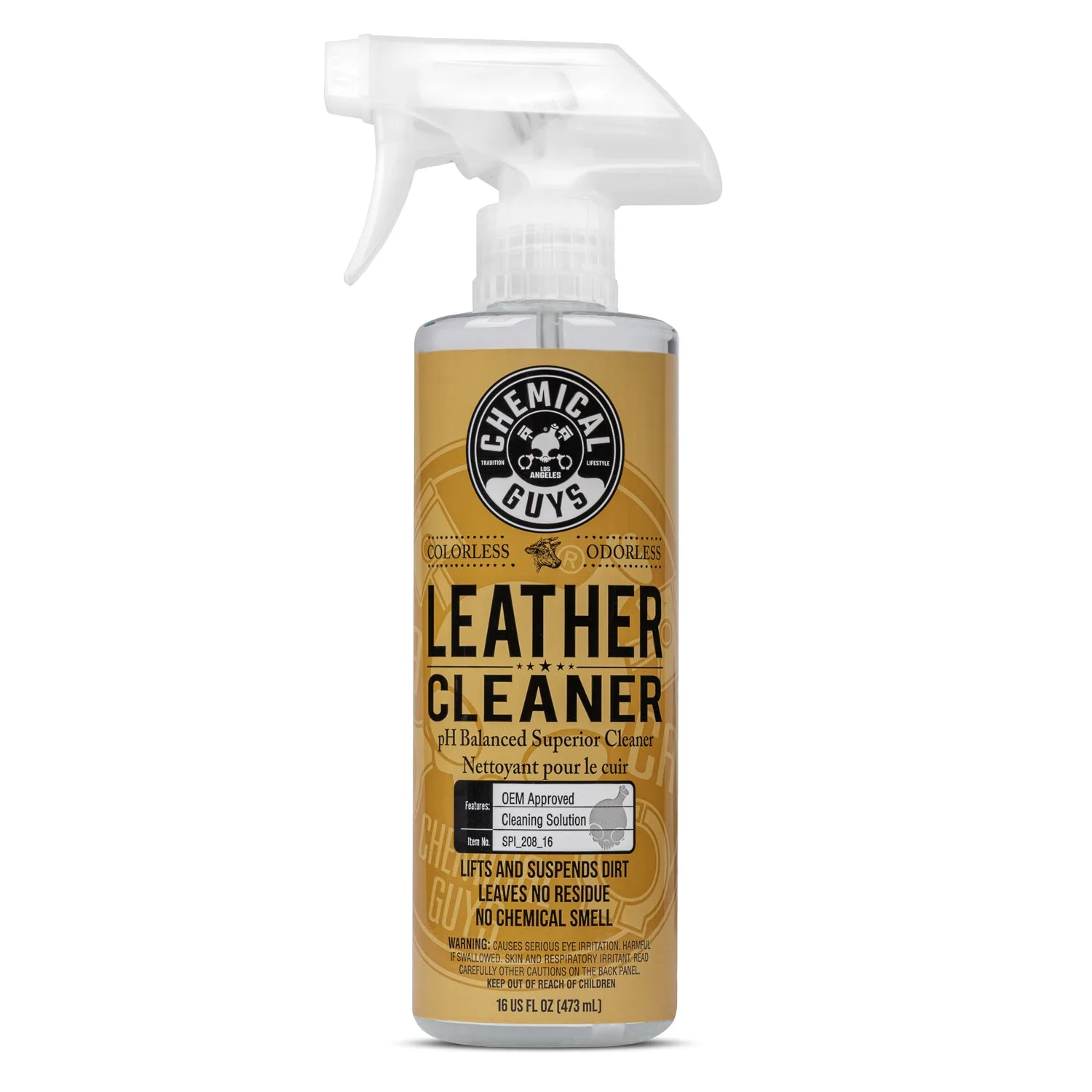
leather cleaner
Conditioning is the step vinyl owners can skip. A leather conditioner replaces oils and keeps the surface supple, which helps prevent the dryness that leads to cracks and fading. For perforated or ventilated seats, use a product designed for the holes so the cleaner does not clog the channels. Apply conditioner sparingly, let it absorb, then buff off any excess so the seat is dry to the touch rather than greasy.
Vinyl Seat Cleaner: Skip the Conditioner, Add UV Protection
Vinyl has no pores to feed, so a leather conditioner does little except leave a slippery film that attracts dust. Instead, clean vinyl with a mild cleaner and a soft brush or microfiber towel, then protect it with a UV-blocking dressing. The main enemies of vinyl are sun, heat, and plasticizers leaching out over time, which causes hardening and cracking.
Use a water-based protectant rather than a heavy silicone shine, especially on seats and the steering wheel where slickness is a safety issue. If your vinyl is perforated, use the same care as perforated leather: gentle cleaner, low moisture, and a soft brush so you do not push dirt into the holes. Wipe away excess so the surface is matte, not greasy.
Where the Two Routines Overlap
Both leather and vinyl benefit from the same habits: vacuum first, use microfiber, avoid harsh chemicals, and protect from UV. Both also suffer from the same mistakes: oversaturating with liquid, scrubbing with stiff brushes, and letting sunscreen or hand lotion build up on the surface. A tint-safe glass cleaner also matters for the interior because dashboard and window films transfer onto seats and glass over time.
If your car has a mix of materials, such as leather seating surfaces with vinyl bolsters or door panels, keep two products on hand rather than one compromise product. That way you condition the leather and protect the vinyl without over-treating either one.
The Real Trade-Offs Between Leather and Vinyl Care
- Leather needs conditioning; vinyl does not: Leather is skin and loses oils over time, so a conditioner is part of routine maintenance. Vinyl is a coated synthetic and gains nothing from conditioner, which can leave a greasy film. Buy a leather cleaner plus conditioner for leather; buy a mild cleaner plus UV protectant for vinyl.
- Perforated surfaces change the product choice: Holes and ventilation channels can clog with thick creams or excess liquid. A product designed for perforated leather, like VentRight, helps clean and protect without blocking airflow. Match the product to the surface, not just the material name.
- UV damage hits both, but differently: Leather fades and dries; vinyl hardens and cracks as plasticizers leach out. Both need UV protection, but leather gets it through conditioner and vinyl through a water-based protectant. Park in shade or use a sunshade to reduce how often you need to reapply either product.
- Cost and effort differ: Leather care typically means two steps (clean, condition) and more frequent attention. Vinyl care is usually one clean-and-protect step and tolerates more neglect before showing damage. Budget your time honestly: leather rewards routine care, vinyl rewards occasional protection.
Products That Fit Each Routine
- VentRight Perforated Leather Cleaner: VentRight Perforated Leather Cleaner is formulated to clean, condition, and protect perforated and ventilated leather while helping avoid clogging the small holes and channels in natural, faux, and vegan leather. If your seats are perforated or ventilated, this is the safer choice because it cleans and conditions without filling the holes that carry airflow.
- Streak Free Window Clean Glass Cleaner: Streak Free Window Clean Glass Cleaner is a gentle, tint-safe glass cleaner for interior and exterior glass that removes dirt, dust, grease, and fingerprints with a streak-free finish. Interior glass is part of the same cabin care routine; a tint-safe formula lets you clean windows and mirrors without worrying about aftermarket tint.
- Swift Wipe Waterless Car Wash: Swift Wipe Waterless Car Wash is safe for paintwork, glass, plastic, rubber, and metal, and adds gloss enhancers and optical spray sealants for shine and protection. Useful for wiping down door jambs, sills, and surrounding trim before you treat the seats, so you are not pushing dirt from adjacent surfaces onto the upholstery.
- Ghosted Odor Eliminator: Ghosted Odor Eliminator targets odors at the source and leaves the space smelling fresh and clean. Seat cleaning often reveals musty or trapped odors; treating the source keeps the cabin fresh after the seats dry.
Which Routine Fits Your Car?
Choose the leather routine if
- Your seats are real leather and feel slightly tacky or warm to the touch
- You have perforated or ventilated leather seats that need cleaning without clogging
- You want to prevent cracking and fading on a daily-driven interior
Choose the vinyl routine instead if
- Your seats are uniform, cool, and slick with a plastic sheen
- You want a simple one-step clean and protect with no conditioner
- Your seats are vinyl and already cracking, which conditioner will not fix