Quick answer
Choose a bifold if you carry six or fewer cards and want the thinnest profile; choose a trifold only if you need eight or more cards and don't mind extra bulk. For front-pocket carry, keep the wallet under about 4.5 inches wide and stick to full grain leather, which stays slim as it breaks in instead of stretching out of shape.
Most wallet advice tells you to buy leather and stop there. The real decision is structural: how the wallet folds, how many card slots it has, and whether it can live in your front pocket without turning into a brick. Get those three things right and the wallet lasts years. Get them wrong and you'll be replacing it in eighteen months.
This guide walks through the bifold vs trifold trade-off, how many card slots you actually need, and why full grain leather behaves differently from corrected-grain or bonded leather over time. It also covers the measurements that matter for everyday carry, using real wallets from the King Ranch Saddle Shop catalog as reference points.
Bifold vs trifold: the fold decides everything else
A bifold folds once, creating two panels and a spine. That single fold keeps the closed wallet thin, usually under half an inch when loaded with six cards and a few bills. A trifold folds twice, adding a third panel that holds more cards but stacks three layers of leather against your leg. The difference in closed thickness is often a quarter inch or more, which is the difference between a front-pocket wallet and a back-pocket wallet.
Trifolds win on capacity and on keeping cards visible when you open the wallet flat. Bifolds win on bulk, on how they sit in a slimmer pocket, and on long-term shape retention because there's less leather to crease and stretch. If you're torn, count your cards first. Most people carry fewer than they think.
- Lay your current cards on a table. If the stack is under half an inch, a bifold will hold it comfortably.
- Trifolds tend to wear fastest at the second fold, so check that seam first when evaluating durability.
How many card slots do you actually need?
A standard bifold offers six to eight card slots plus one or two currency pockets. That covers a driver's license, two or three credit or debit cards, an insurance card, and a transit or membership card. If you carry loyalty cards, gift cards, or business cards, you'll either need a trifold or a habit of rotating cards seasonally.
More slots isn't automatically better. Every empty slot still adds a layer of leather, and every filled slot adds thickness. A wallet with twelve slots that you only half-fill is heavier and bulkier than an eight-slot wallet that's fully used. Buy for the cards you carry daily, not the ones you might need once a quarter.
- Count cards you use at least weekly. That number plus two is your target slot count.
- If you need more than ten slots, consider a card case plus a separate billfold rather than one oversized wallet.
Thin leather wallets for front-pocket carry
Front-pocket carry is better for your back and keeps the wallet out of sight, but it demands a slimmer shape. Look for a closed width under about 4.5 inches and a closed thickness under 0.5 inches when loaded. Bifolds naturally fit this range; trifolds usually don't. A wallet that's too wide will press into your hip when you sit, which is the main reason people abandon front-pocket carry.
Material matters as much as dimensions. Full grain leather starts slightly firm and softens with use without sagging, so the wallet keeps its shape instead of bulging. Corrected-grain or bonded leather may feel soft immediately but tends to stretch and lose structure, which makes a thin wallet get thicker over time.
- Measure your front pocket depth before buying. If the pocket is shallow, a bifold under 4 inches closed is safer.
- Remove cards before measuring your current wallet. Loaded thickness is what actually matters.
Full grain leather vs the alternatives
Full grain leather keeps the outermost layer of the hide intact, including the tight fiber structure that resists stretching. That's why it holds a wallet's shape and develops a patina rather than cracking or peeling. It costs more upfront, but a well-made full grain wallet can outlast two or three cheaper wallets. The King Ranch Saddle Shop's Kineño leather is a good example: it's infused with natural oils and waxes, described as heirloom-quality, soft, durable, and prone to developing a rich patina over time.
Corrected-grain leather has the surface sanded to hide imperfections, which removes some of that fiber strength. Bonded leather is scraps glued together and is the least durable option. Neither is automatically bad if the price is low and you expect to replace it, but neither will stay thin and structured for years the way full grain does.
- Ask whether the leather is full grain, top grain, or bonded. If the listing doesn't say, assume the lower tier.
- Full grain shows scratches more visibly at first but absorbs them into the patina over time.
Construction details that predict how long a wallet lasts
Stitching is the first thing to check. Look for tight, even stitches with no loose threads, and prefer wallets where the stitching doesn't run through the fold line, since that's where stress concentrates. Edge finishing matters too: burnished or painted edges resist fraying, while raw edges on a thin wallet tend to split. A wallet with a solid D-ring or a reinforced spine is built for heavier use.
Hardware is the second check. Zippers, snaps, and money clips should feel solid, not flimsy. A wallet with a braided leather pull tab or a perforated crest detail is showing you where the maker spent time. Those details don't make the wallet stronger by themselves, but they usually signal a higher standard of assembly throughout.
- Flex the wallet gently at the fold before buying. It should resist slightly, not collapse.
- Avoid wallets where the card slots are cut straight through the outer leather, as those edges fray first.
Decision rules for choosing your wallet
- If you carry six or fewer cards: Choose a bifold. It keeps the closed profile thin enough for front-pocket carry and puts less stress on the fold, so the leather keeps its shape longer. Bifold is the default for most everyday carry.
- If you carry eight or more cards: Choose a trifold or a continental wallet. Both add capacity, but a trifold gets thick in a pocket while a continental stays flat in a bag or jacket. Match the fold to where you'll carry it, not just how many cards you own.
- If you want front-pocket carry: Keep the closed width under about 4.5 inches and the loaded thickness under 0.5 inches. Full grain leather helps here because it resists stretching, so the wallet stays slim as it ages. Measure your pocket before you buy, not after.
- If you want the wallet to last a decade: Prioritize full grain leather, tight stitching that avoids the fold line, and finished edges. Skip bonded leather and wallets with raw, unsealed edges. Pay for the leather and the construction, not the logo.
Catalog examples and what they tell you
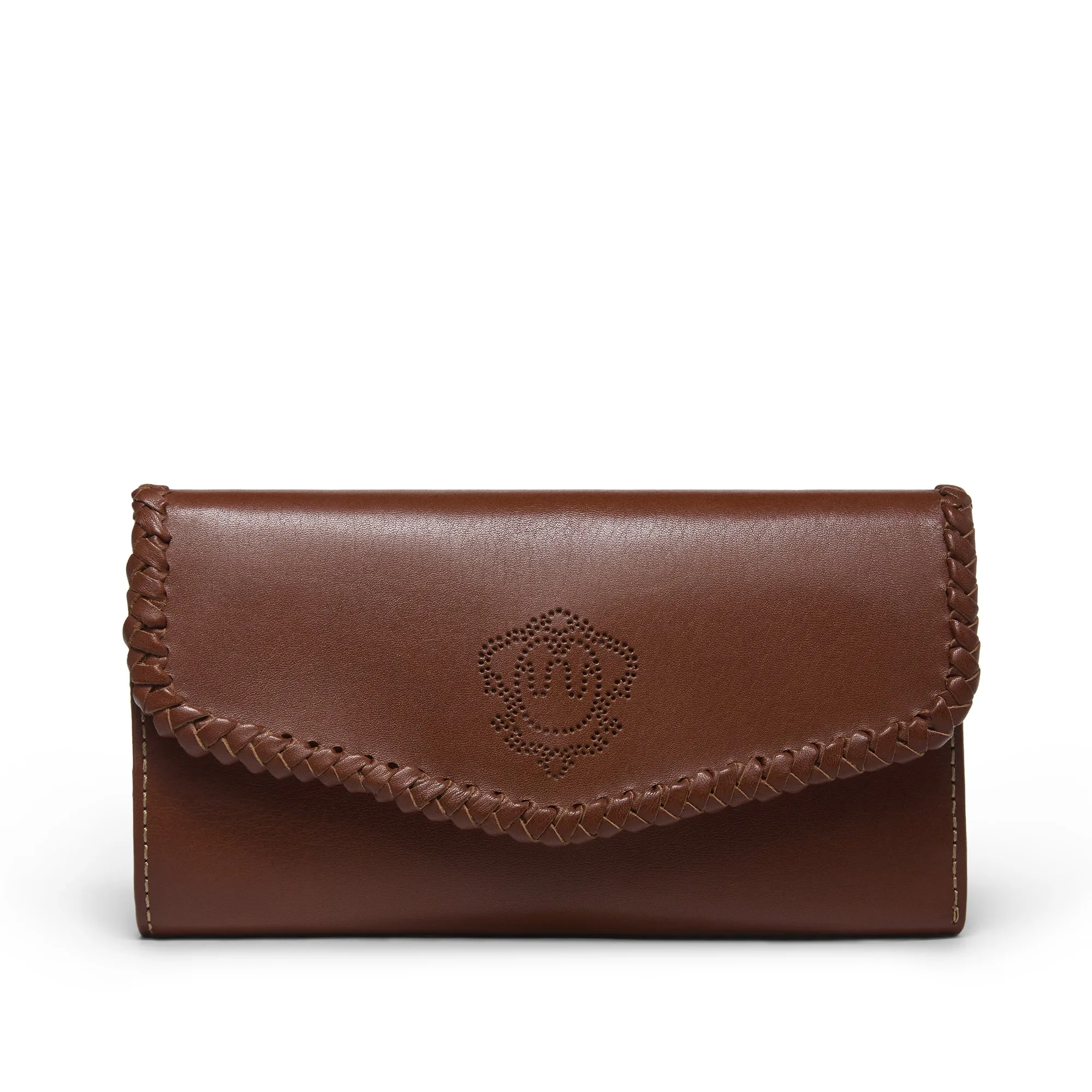
- Whipstitch Continental Wallet: Inspired by equestrian heritage, this wallet takes cues from classic saddlecraft and the decorative crests in the legendary Main House. A W crest is perforated into the flap, framed by whipstitch edges, and the silhouette is sleek and structured yet surprisingly lightweight. A continental-style wallet is longer and holds more cards and bills flat, so it suits people who carry a bag or a jacket rather than a front pocket. The whipstitch edges and structured build signal a wallet meant to keep its shape.
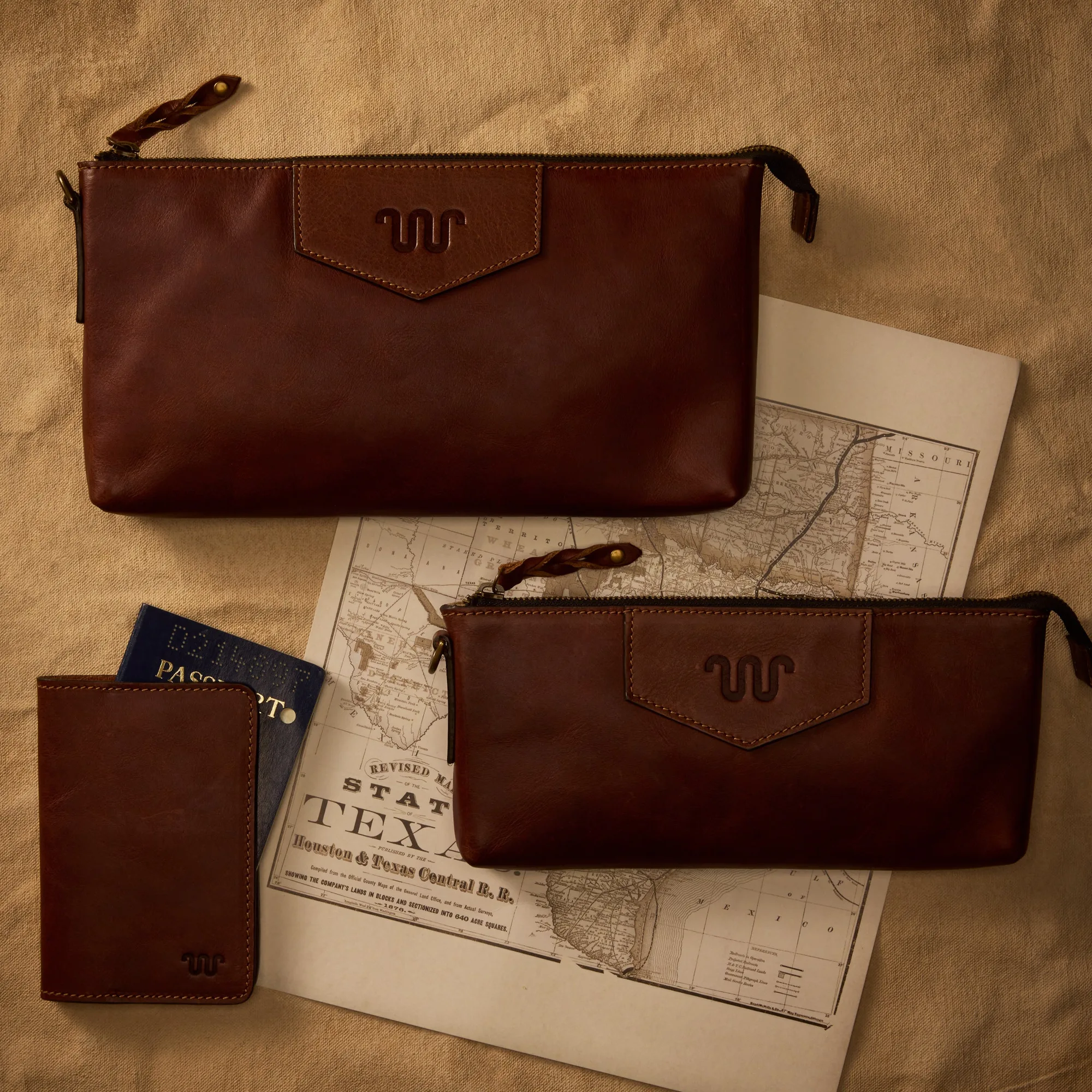
- Kineño Leather Catch All, Large: Infused with natural oils and waxes, this heirloom-quality leather is soft, durable, and develops a rich patina over time. It brings order to small essentials like writing instruments, cash, cards, and cords, with a braided leather pull tab and a solid D-ring for securing it. If your card count is low and you mostly need a place for cash, cards, and small gear, a catch-all can replace a bulky wallet entirely. The D-ring lets you tether it inside a travel bag or briefcase, which keeps everyday carry organized without adding pocket bulk.
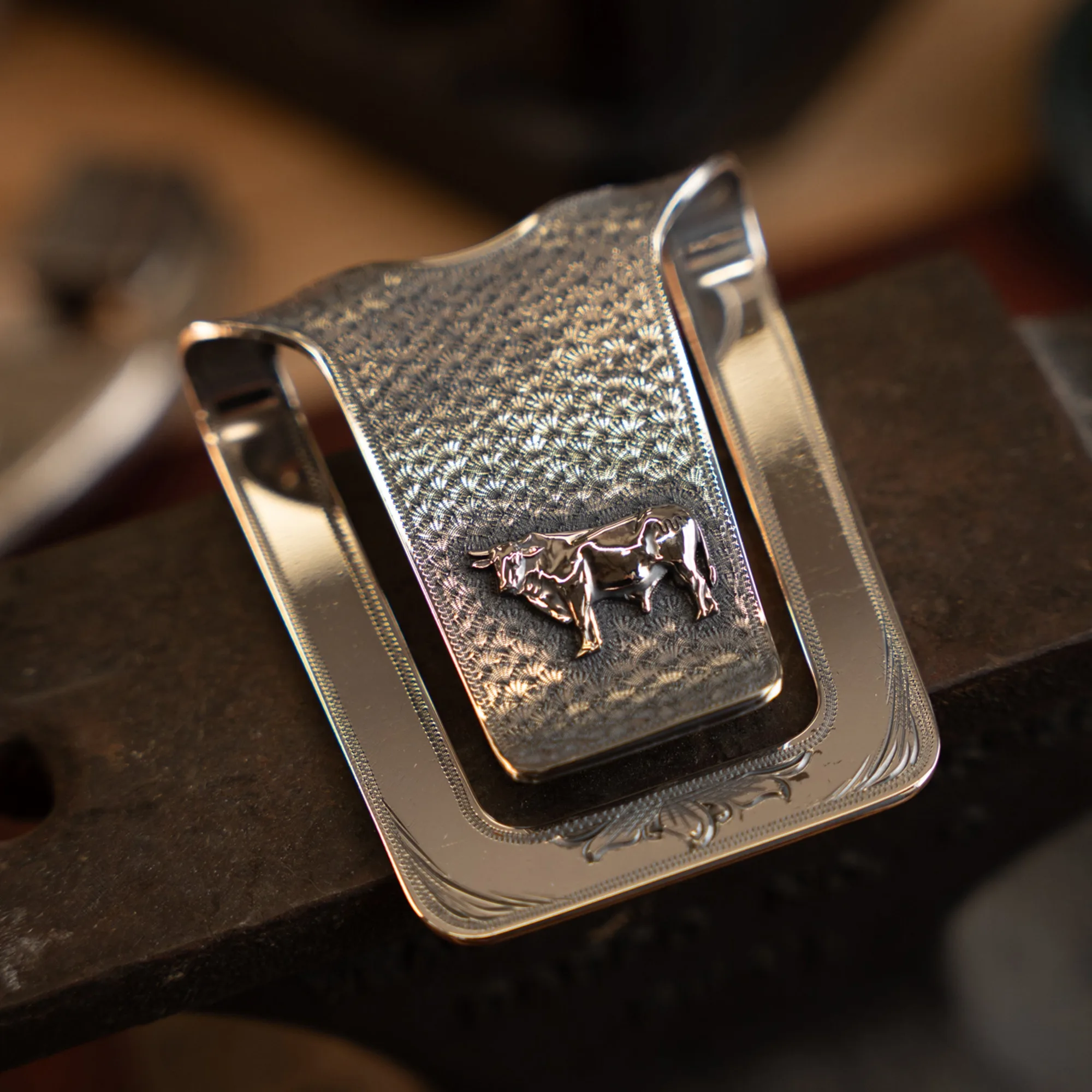
- King Ranch X Clint Orms Bull Money Clip: A rare collaboration between King Ranch and master silversmith Clint Orms, this is an heirloom in solid sterling silver, handcrafted in limited quantities. At its center is Monkey, the legendary foundation sire of the Santa Gertrudis breed, captured in bold relief with remarkable attention to detail. A money clip is the thinnest possible carry option if you mostly use cards and a few bills. It's a deliberate choice to skip card slots entirely, so it works best as a companion to a small card case rather than a standalone wallet.
Who should choose which wallet
Best for
- Anyone who carries six or fewer cards and wants a thin bifold for front-pocket everyday carry
- Travelers and commuters who carry a bag or jacket and can use a continental wallet for flat storage
- People who mostly use cards and a few bills and want the thinnest possible option, such as a money clip or catch-all
Not for
- People who carry ten or more cards daily and need a trifold or card case plus billfold setup
- Buyers who want a soft, slouchy leather feel from day one and don't care about shape retention
- Anyone unwilling to measure pocket dimensions before buying, since fit is the main reason wallets get returned
Pick the fold first, then the slot count, then the leather. A bifold in full grain leather covers most everyday carry needs, while a trifold or continental wallet makes sense only when your card count or carry style genuinely requires the extra capacity. Measure your pocket, count your cards, and the right wallet becomes obvious.