Quick answer
Wipe your wallet with a dry microfiber cloth weekly, clean it with a barely damp cloth and a drop of mild soap only when soiled, then apply a small amount of leather conditioner and buff off the excess. Store it flat or lightly stuffed in a breathable cotton bag away from direct sun and damp basements. Keep the routine short and consistent rather than aggressive.
A leather wallet fails in predictable ways: cracked fold lines, dark greasy corners, and a stretched card pocket that no longer holds anything. Most of that damage comes from three habits—over-wetting, over-oiling, and storing the wallet somewhere hot or damp. The good news is that a leather care routine takes about ten minutes a month and prevents almost all of it.
This guide walks through a simple order of operations for any smooth or lightly grained leather billfold. If you own a hand-stitched piece like the King Ranch Tiffany Rug Border Belt or a saddle-leather belt with hand-rubbed edges, the same principles apply to your wallet: gentle cleaning, light conditioning, and dry, breathable storage.
Why leather wallets wear out faster than belts
A wallet lives in a pocket, which means constant flexing, body heat, sweat, and friction against keys or a phone. Those fold lines are where leather breaks down first, because the fibers are repeatedly compressed and pulled. Add a hot car dashboard or a damp gym bag and the finish starts to lift.
Belts and bags handle the same leather differently because they dry out between wears. A wallet rarely gets that recovery time. That is why leather wallet care is less about deep treatments and more about small, regular habits that keep the leather supple without saturating it.
- Empty your wallet before cleaning so grit does not get pushed into the leather.
- Never soak a wallet in water or use a washing machine, even on a gentle cycle.
- If the leather is already cracking at the fold, conditioning slows it but will not reverse it.
What you actually need
You do not need a full kit. A dry microfiber cloth, a second cloth you can dampen, a pH-neutral leather cleaner or a drop of mild dish soap, and a small amount of leather conditioner cover almost every situation. Cotton swabs help around stitching and hardware.
Avoid alcohol wipes, bleach, vinegar, and paper towels. Alcohol strips the finish, vinegar can darken or spot the leather, and paper towels leave lint in the grain. If your wallet has a suede or nubuck panel, keep liquids away from it entirely and use a suede brush instead.
- Test any cleaner on a hidden interior seam before using it on the outside.
- Use separate cloths for cleaning and conditioning so you are not spreading dirt back in.
- For hand-stitched pieces with cotton needlepoint or hand-tooled floral patterns, go lighter on moisture so threads and tooling keep their shape.
The monthly routine in order
Start with the wallet empty and open. Wipe the whole surface with a dry microfiber cloth to lift dust and pocket grit. This step alone prevents most of the grime that later turns into dark, waxy buildup in the corners.
If the leather looks dull or feels tacky, dampen a cloth with water, add a drop of mild soap, and wipe in small circles. Follow immediately with a dry cloth so no moisture sits in the seams. Let it air-dry away from heat for at least an hour before conditioning.
Apply conditioner with your fingertip or a cloth, using a pea-sized amount for the whole wallet. Work it into fold lines and edges, then let it absorb for ten to fifteen minutes. Buff off anything still sitting on the surface. Once a month is plenty for most wallets; every two to three months is enough in dry climates.
- Common mistake: conditioning a dirty wallet, which traps grit under the oil.
- Common mistake: using heat—hair dryer, radiator, direct sun—to speed drying, which hardens leather.
- Checkpoint: after buffing, the leather should feel supple, not slick or greasy.
How to store a leather wallet
For daily use, storage means your pocket—keep the wallet out of a hot car and away from a sweaty gym bag. For a wallet you rotate or keep as a backup, store it flat or lightly filled with a soft cloth so the fold does not crease sharply. A breathable cotton bag or a shoebox with a few air holes works better than sealed plastic, which traps moisture.
Keep stored wallets out of direct sunlight and away from damp basements or humid bathrooms. If you live in a very dry climate, a light conditioning before storage helps; if you live somewhere humid, skip the extra conditioner and focus on airflow. Check stored wallets every few months for mold spots or stiff folds.
- Do not store a wallet under heavy books or in a compressed drawer.
- Do not wrap leather in plastic wrap or vacuum-seal it.
- If you see white bloom (fatty spew), wipe it off and air the wallet out—it is usually harmless.
Your leather wallet care routine, step by step
- Empty and dry-wipe: Remove cards, cash, and receipts, then wipe the entire wallet with a dry microfiber cloth, including inside pockets and fold lines. Checkpoint: no visible grit or crumbs left in the corners.
- Spot-clean only where needed: Dampen a cloth, add one drop of mild soap, and wipe soiled areas in small circles, then dry immediately with a separate cloth. Mistake to avoid: soaking the whole wallet or scrubbing the grain.
- Air-dry away from heat: Let the wallet sit open at room temperature for at least an hour before applying anything else. Mistake to avoid: using a hair dryer, radiator, or direct sun.
- Condition lightly: Apply a pea-sized amount of leather conditioner with your finger, working it into fold lines, edges, and any hand-tooled areas. Checkpoint: leather looks evenly darkened, not wet.
- Buff and rest: After ten to fifteen minutes, buff off excess conditioner with a clean cloth and let the wallet rest overnight before reloading it. Mistake to avoid: stuffing cards back in while the leather is still tacky.
- Store flat and breathable: Keep daily wallets out of hot cars; store backups flat or lightly filled in a cotton bag away from sun and damp. Check stored wallets every few months for stiffness or mold.
Leather goods that show the same care principles
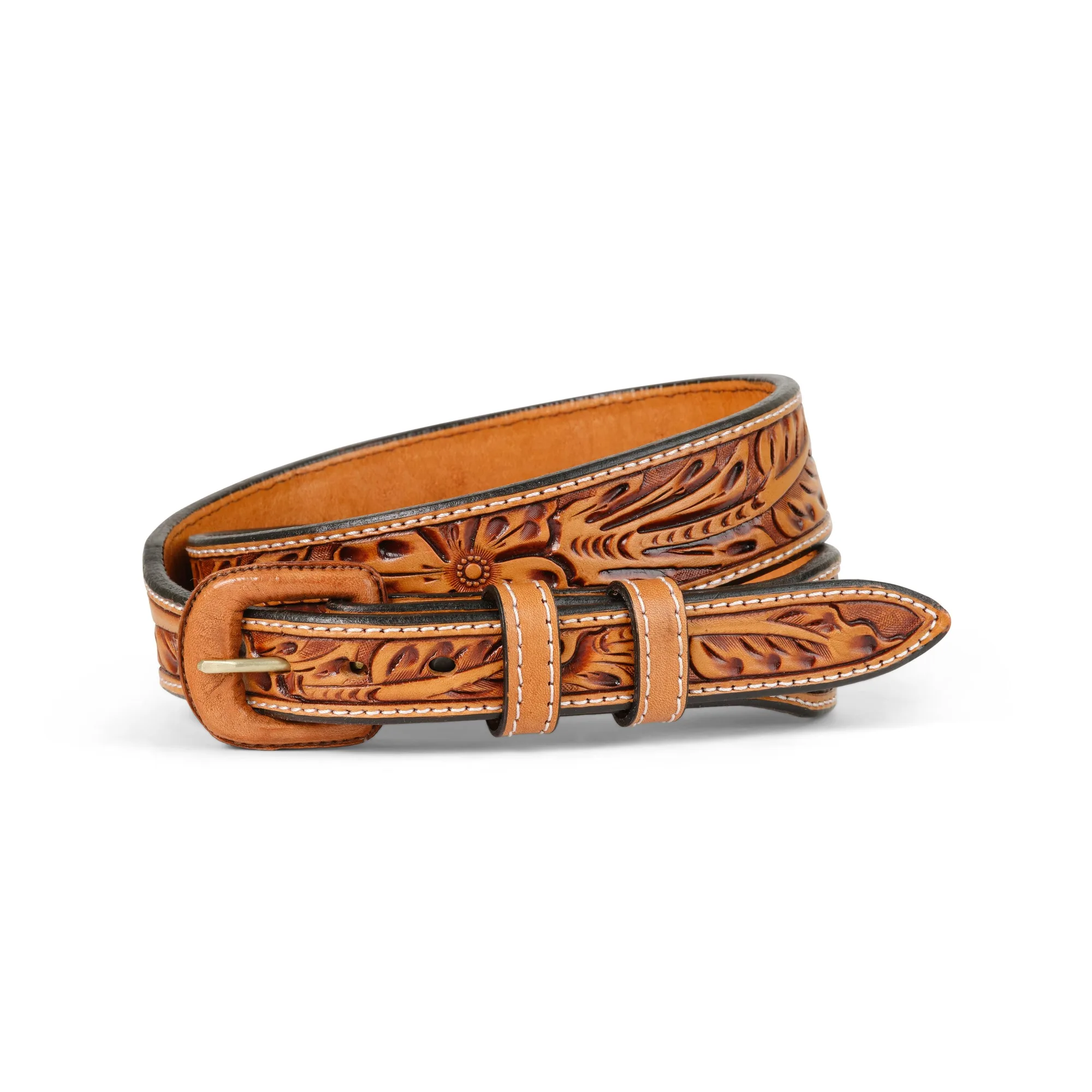
- Tapered Floral Belt: Crafted from fine-stitched saddle leather with meticulous hand-rubbed edges and a hand-tooled traditional floral pattern. Hand-rubbed edges and tooling are the first places to dry out, so a light conditioner on edges keeps the pattern crisp and the belt from cracking.
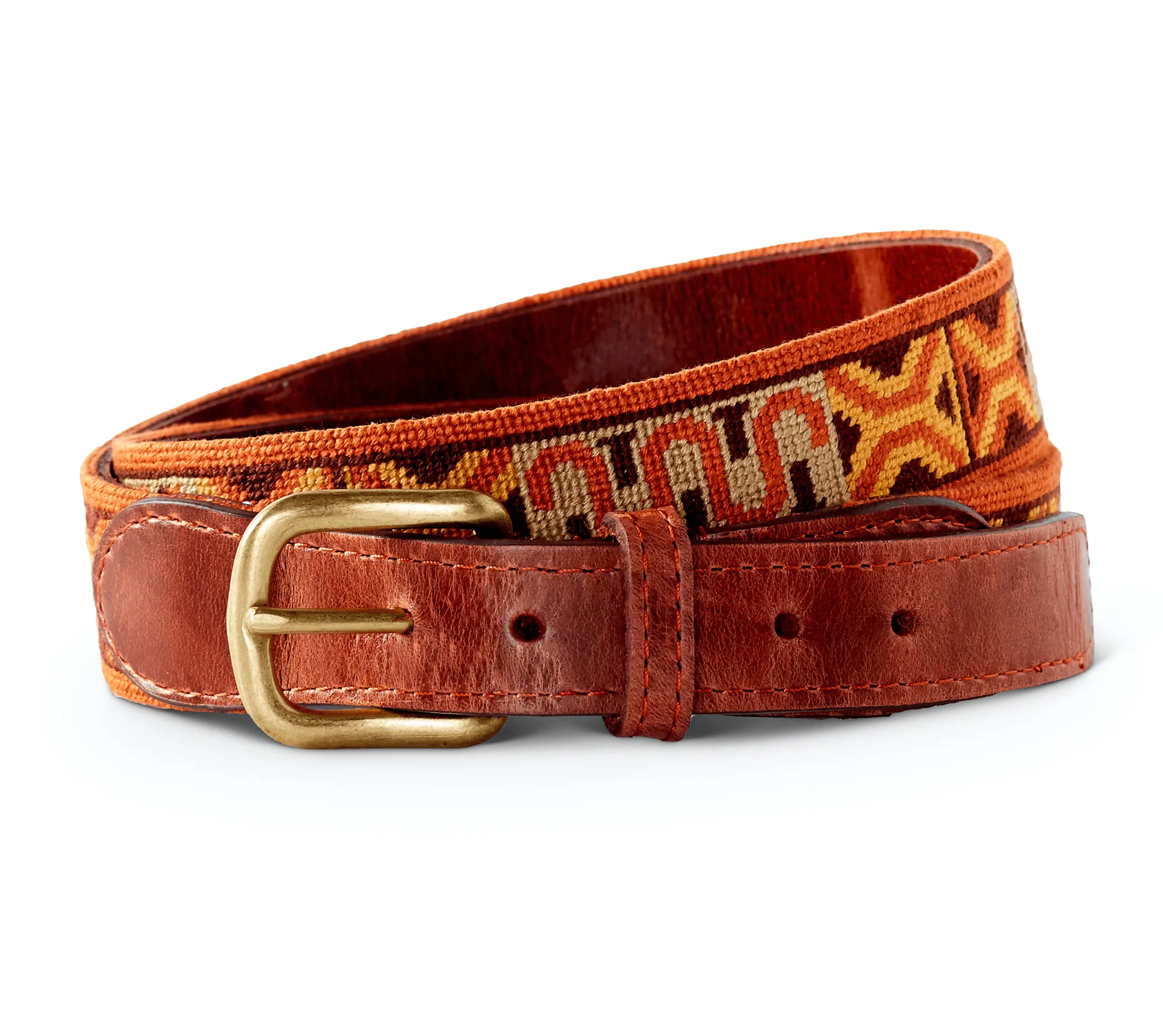
- King Ranch Tiffany Rug Border Belt (Muted Colors): Hand-stitched in pure cotton thread with rich brown leather and a solid brass buckle. Cotton thread and brass hardware both dislike soaking, so clean around stitching with a barely damp cloth and dry the buckle immediately.
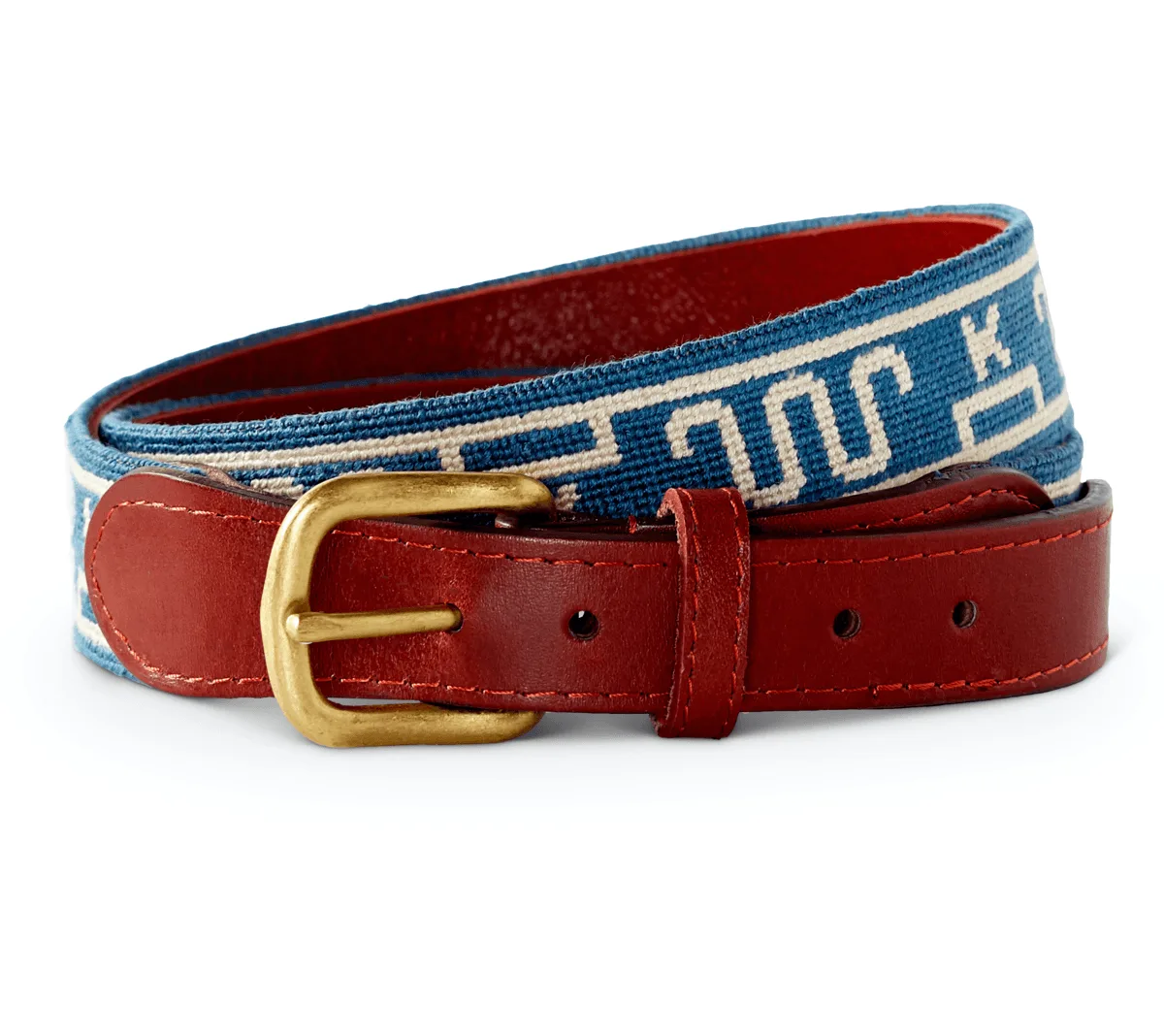
- King Ranch Running W-K Bar Belt: Entirely hand-stitched in cotton needlepoint, trimmed with brown leather, and finished with a brass buckle. Needlepoint holds moisture longer than flat leather, so air-dry it fully before storing rather than putting it away damp.
Leather wallet care comes down to small, regular habits: dry-wipe often, clean rarely, condition lightly, and store it where air can move. Do that and a well-made billfold will outlast several cheap replacements—and look better doing it.