Quick Answer
For most video work, choose an LED panel if you need portable, adjustable light on a budget; choose a softbox kit when you want soft, wraparound illumination for interviews or product shoots.
Light Quality: Hard vs Soft
The biggest difference between these two types of continuous light is the quality of the beam. An LED panel with many small bulbs produces a relatively hard, direct light that creates defined shadows. A softbox, by contrast, uses a diffuser to spread the light over a larger area, producing soft shadows and flattering skin tones.
For video interviews or beauty shots, soft light is often more forgiving. For product shots where you want to emphasize texture or shape, the harder light from a panel can be more useful.
Portability and Setup
LED panels are typically lightweight and can be powered by batteries, making them ideal for on-location shoots. Softbox kits, especially those with multiple lights, require stands and AC power, so they are better suited for a permanent studio.
If you travel frequently or shoot in tight spaces, a panel is easier to pack and set up. If you have a dedicated space, a softbox kit can stay assembled and ready.
Control and Adjustability
LED panels often come with dimming and color temperature adjustment, giving you precise control without adding gels. Softboxes rely on the bulb's color temperature and may need gels to change the color, but they offer a more natural, softer light out of the box.
Think about how much control you need during a shoot. If you frequently adjust light intensity or color, a panel's built-in controls are a major advantage.
Trade-Offs at a Glance
- Portability: LED panels are lighter and can run on battery, making them easy to move and set up anywhere. Softbox kits need stands and AC power, so they are best for a fixed studio. If you shoot on location, prioritize a panel.
- Light Softness: Softboxes produce softer, more flattering light that wraps around the subject. Panels give harder light that can emphasize texture and shape. For interviews, softbox is often the better choice.
- Control: LED panels often have built-in dimming and color temperature control. Softboxes rely on bulb choice and may need gels to change color. If you need quick adjustments, a panel offers more flexibility.
Product Facts
-
680 LED Photo Studio Video Light Panel 680 LED Ultra High Power Dimmable Video Light with Wireless Remote FST680S: 680 LED bulbs with 5600K/3200K color temperatures, dimmable, and includes a wireless remote with 99 channels. This panel gives you quick, remote control over brightness and color, making it easy to adapt to changing lighting conditions without touching the light.
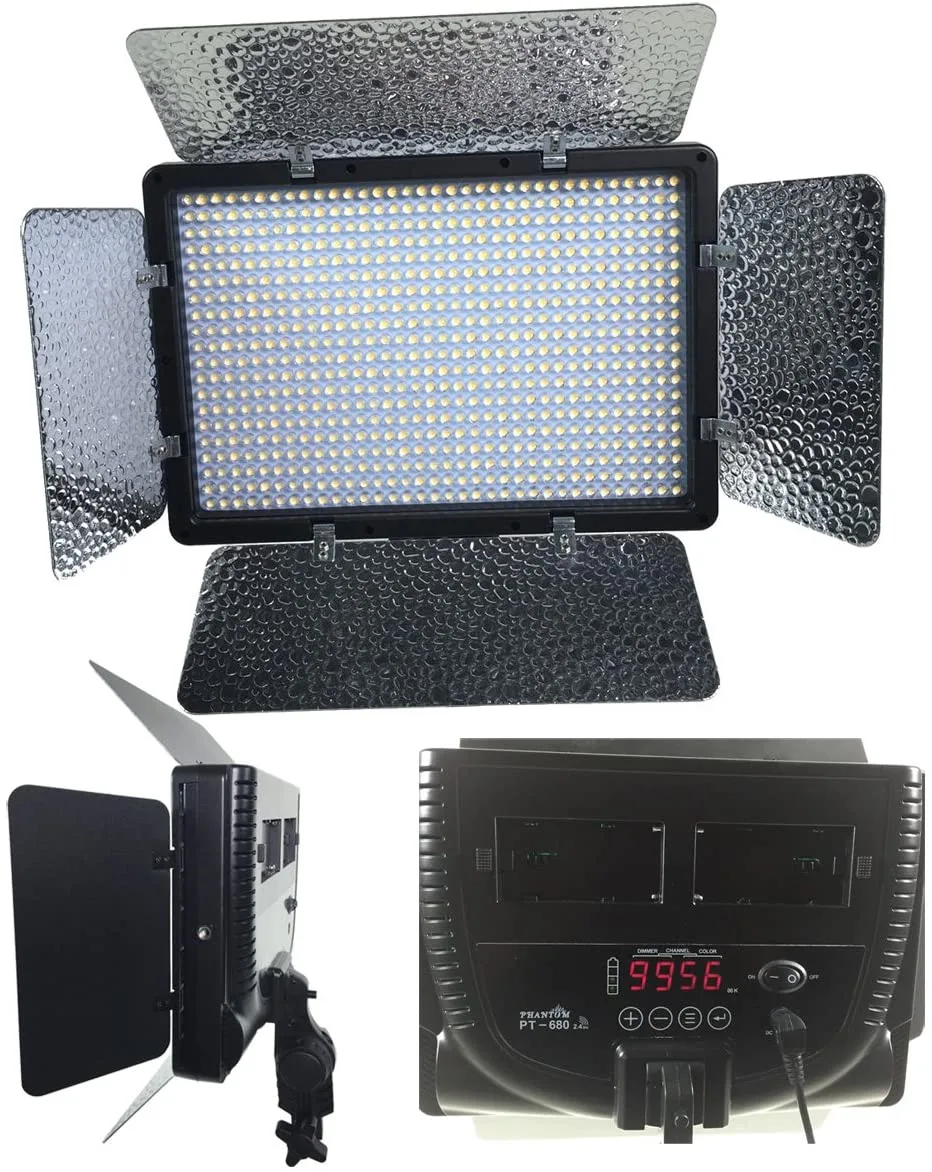
680 LED Photo Studio Video Light Panel 680 LED Ultra High Power Dimmable Video Light with Wireless Remote FST680S
-
2000W Video Studio Photography Softbox Hair Light Kit: Output over 2000 watts from eight 45-watt daylight bulbs, with two 16x24 softboxes and one easy-open softbox, plus stands. This kit delivers soft, even illumination across a larger area, ideal for interviews or product shoots where you want to minimize harsh shadows.
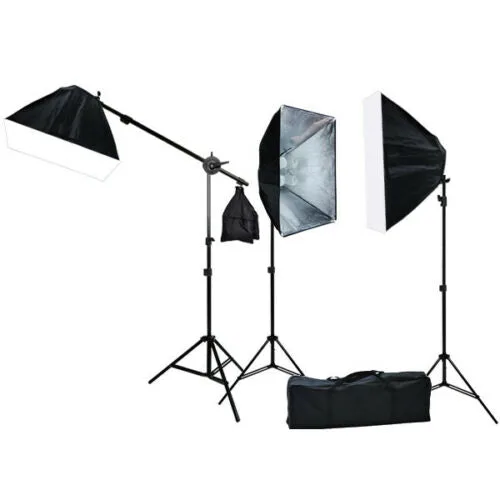
2000W Video Studio Photography Softbox Hair Light Kit
Which Should You Choose?
Best for
- Traveling videographers who need a compact, battery-powered light
- Shooters who want quick, remote control over brightness and color
Not for
- Those who need soft, flattering light for interviews or beauty shots—consider a softbox kit instead