Quick answer
Choose a COB LED projector when you need punch, throw distance, and precise beam shaping for narrative, broadcast, or large sets. Choose an LED panel when you need soft, even fill across a wide area for interviews, streaming, or tight spaces where a hard point source would be difficult to control. If your work mixes both, buy the projector first and add a panel for fill, because a point source can be softened but a soft panel cannot easily become a hard light.
The core difference: point source vs. soft surface
A COB projector light uses a single chip-on-board emitter behind a reflector or lens. That concentrated point source produces high output from a compact head and accepts optical accessories like spot lenses, fresnels, and projection attachments. An LED panel spreads many small emitters across a flat surface, so the light arrives softer and wider with less need for diffusion.
This is not a quality ranking. It is a physics trade-off. A point source gives you control and reach but demands shaping tools. A soft panel gives you flattering wrap but limits how far you can throw and how tightly you can cut the beam.
Output, throw, and beam control
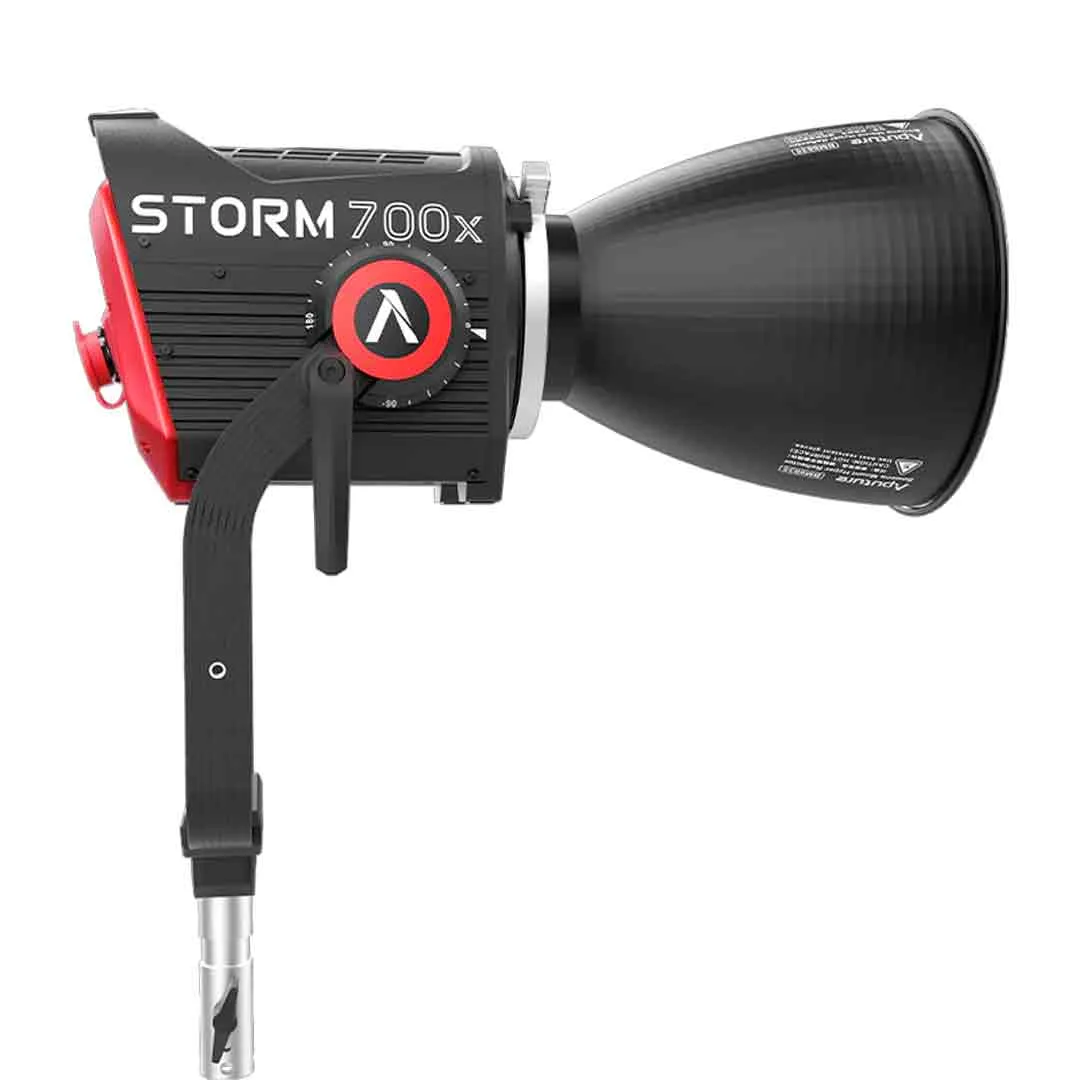
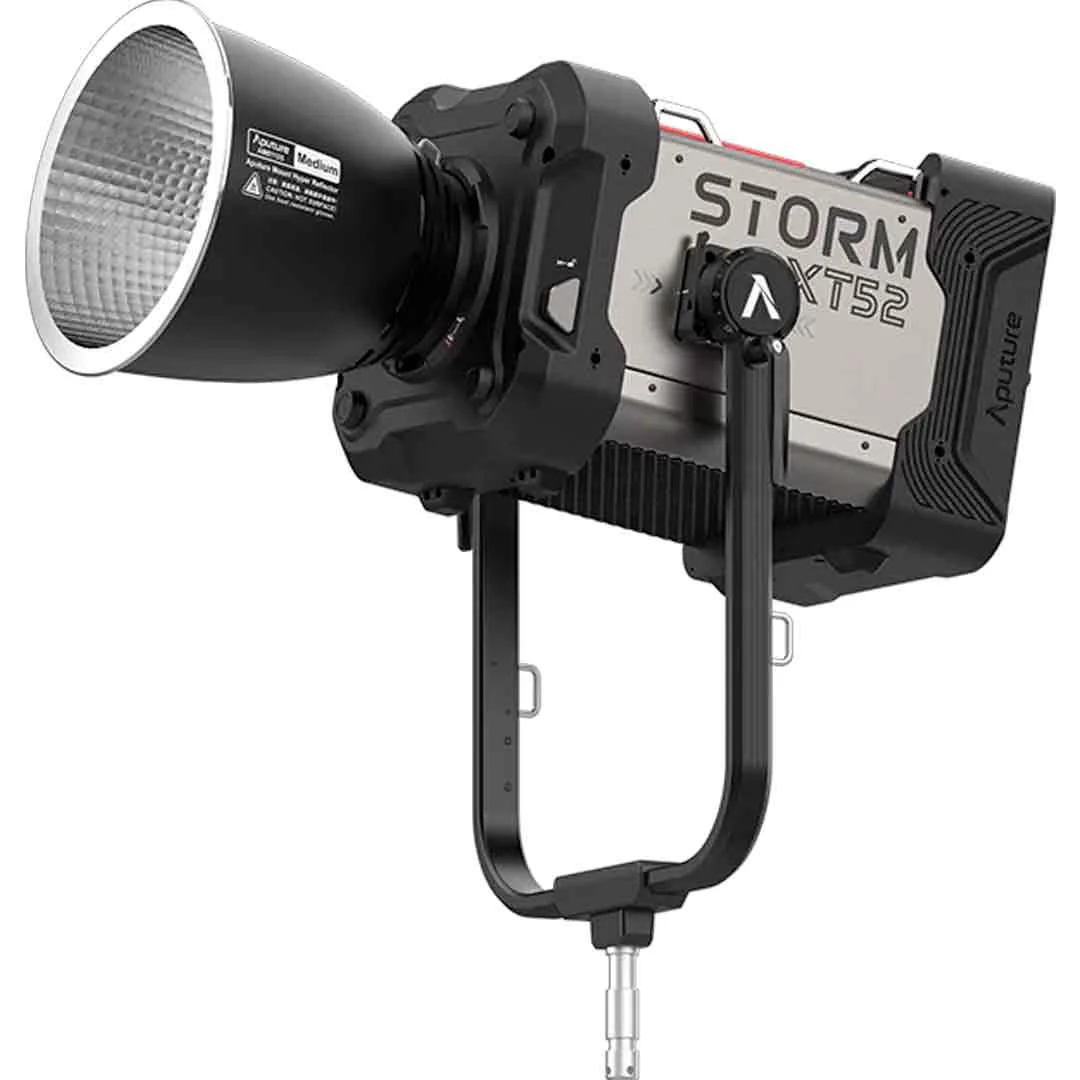
Projectors win when the light must travel. A 700 W tunable-white head like the Aputure STORM 700x is built for cinema, broadcast, and audiovisual production, with a BLAIR chipset for white reproduction and spectral coverage. That matters when you are lighting a subject from across a room or punching through a window.
Panels are typically rated for closer working distances. They cover a broad area evenly, which is ideal for a two-person interview or a desk setup, but they lose intensity quickly as you move them back. If your shot list includes long throws or hard shadows, budget for a projector and the modifiers it needs.
Color, control, and crew workflow
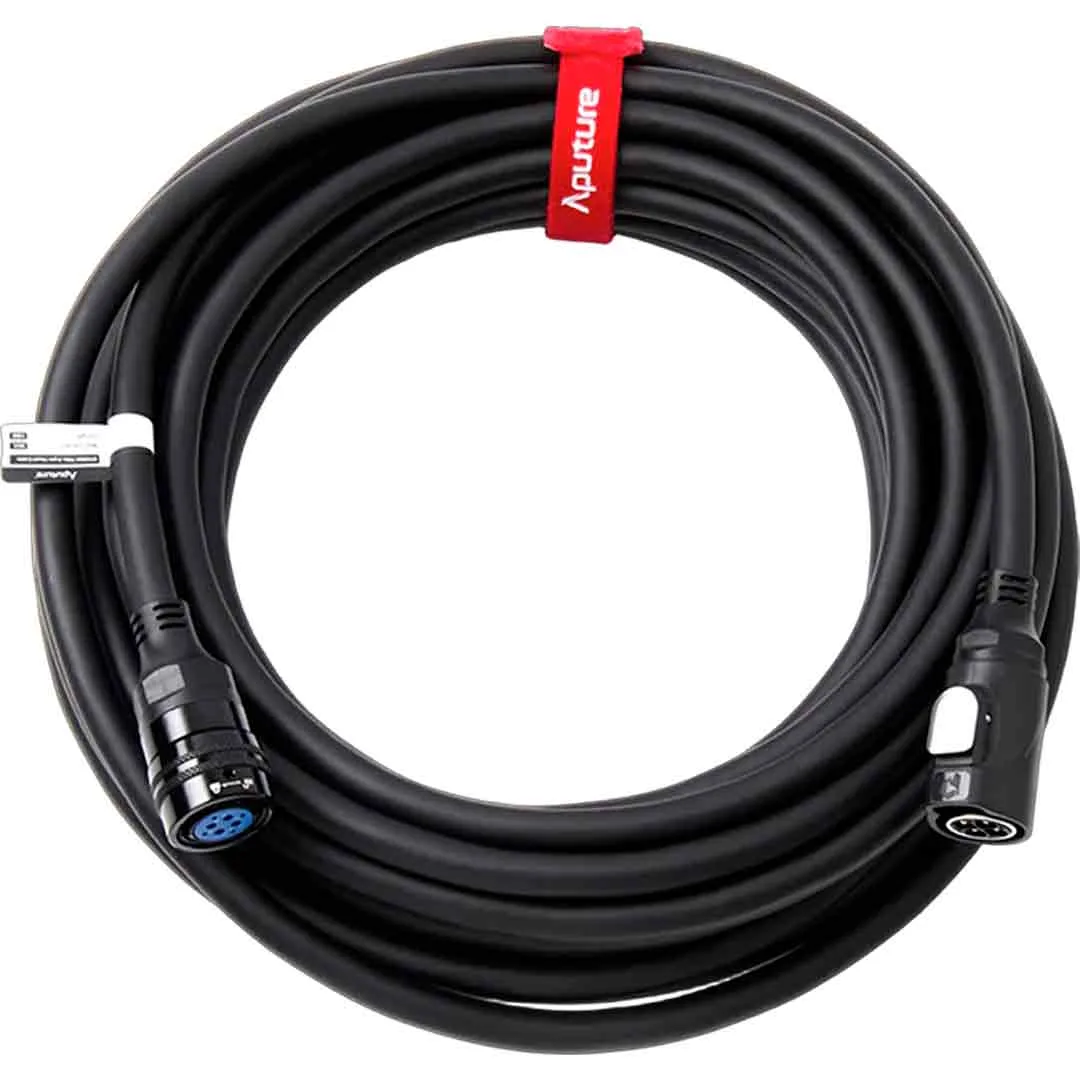
Both formats now offer tunable white and app or DMX control, so the decision usually comes down to how you shape and position the fixture. Projectors often need a ballast or control box, which is why extension cables matter. The Aputure STORM 700x 8-pin Cable (15 m) lets you place the head far from the control box, a real advantage on sets where the power source cannot sit next to the light.
Panels are simpler to rig overhead or hide behind a frame because they are self-contained and light. On small crews, that simplicity reduces setup time and cable management.
Matching light to lens and sound choices
Your lighting choice should follow the lens and microphone you already own. A fast cinema prime like the DZOFILM Vespid Prime II 85mm T1.9 PL rewards controlled lighting because shallow depth of field exposes uneven exposure and color shifts. A projector with precise beam control helps you place light exactly where the frame needs it.
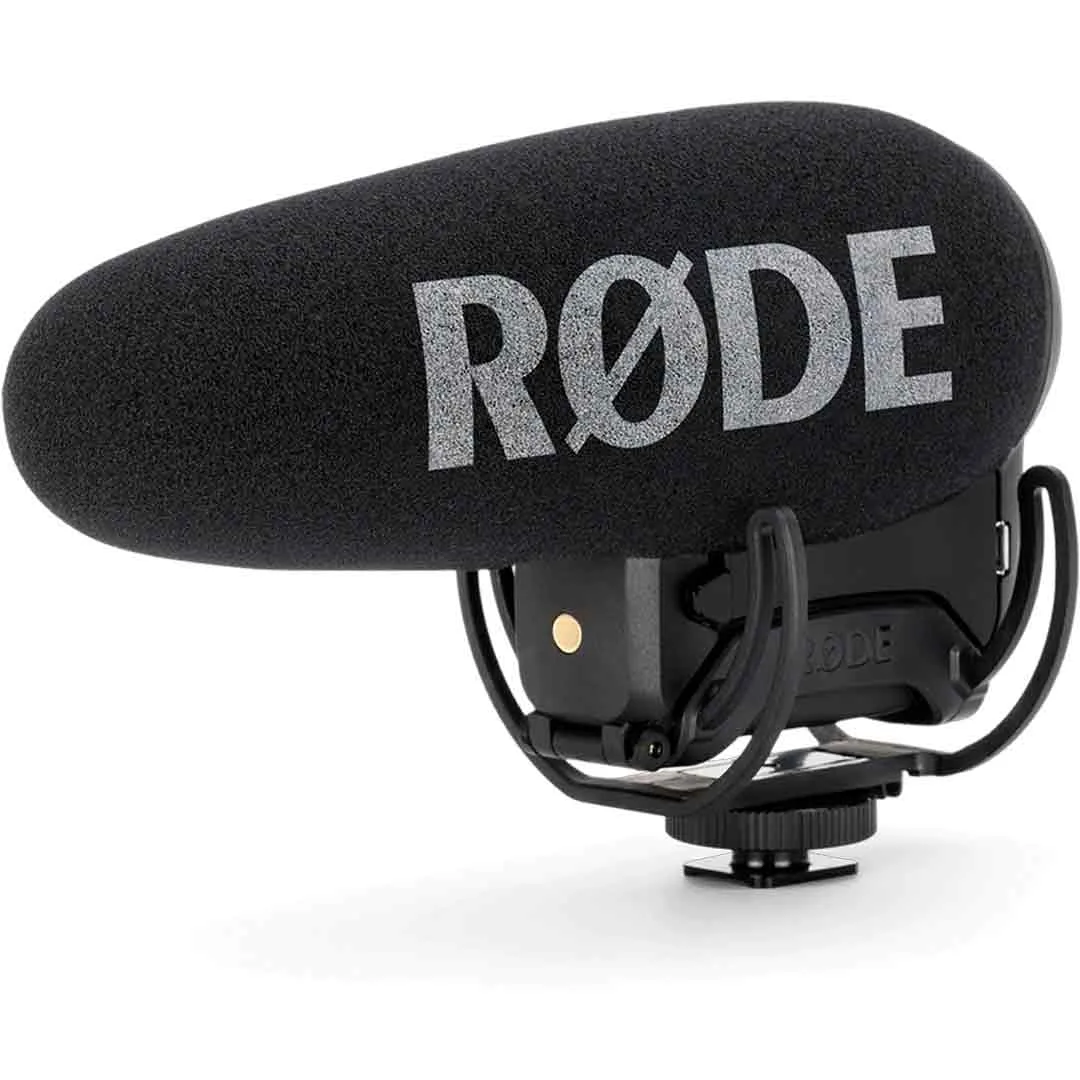
For run-and-gun interviews, a panel plus a camera-mounted microphone such as the RODE VideoMic Pro+ keeps the kit light and fast. The supercardioid pattern reduces surrounding noise, so you can work in less controlled rooms without a full lighting package.
Decision rules for your next lighting purchase
- Rule 1: Buy for throw distance first: Measure the farthest distance you will place a key light from the subject. If it exceeds roughly 3–4 meters, prioritize a COB projector such as the Aputure STORM 700x. Checkpoint: if you cannot move the light closer, a panel will not keep up.
- Rule 2: Buy for the softest source you can rig: If your main shot is a seated interview in a small room, an LED panel gives you soft, even coverage without a diffusion frame. Checkpoint: panels save time when you have no grip to build diffusion.
- Rule 3: Count your power and cable runs: Projectors often separate the head from a control box. Confirm you can run the included cable or budget for an extension like the 15 m 8-pin cable. Checkpoint: a great light you cannot position is not a great light for that set.
- Rule 4: Match the fixture to your lens and audio kit: Fast primes and shallow depth of field reward precise beam control; run-and-gun audio like the RODE VideoMic Pro+ rewards a light, fast panel setup. Checkpoint: the lighting choice should shorten your setup, not lengthen it.
Products that illustrate the trade-off
- Aputure STORM 700x – Projecteur LED: The Aputure STORM 700x is a 700 W tunable-white point-source LED projector with a BLAIR chipset for white reproduction and spectral coverage, aimed at cinema, broadcast, and audiovisual production. It is the projector-side reference: high output and color accuracy for long throws, but it needs shaping accessories and a power/control plan.
- Aputure STORM 700x 8-pin Cable (15m) – Montée de Lampe: The Aputure STORM 700x 8-pin Cable (15 m) places the projector head up to 15 m from the control box, compared with the standard 5 m cable included with the projector. If your set separates power from camera position, this cable decides whether the projector is practical or a rigging problem.
- RODE VideoMic Pro+ – Micro Caméra: The RODE VideoMic Pro+ is a supercardioid condenser camera microphone designed for broadcast-quality sound, with directional pickup that reduces surrounding noise. A panel-and-camera-mic kit stays mobile for interviews, while a projector setup usually assumes a more controlled, stationary shoot.
Who should choose which
Best for
- Narrative, broadcast, and commercial shoots that need punch, long throws, and hard light shaping
- Studios with rigging and power access where a point source can be softened with modifiers
- Crews already using fast cinema lenses who need precise exposure control
Not for
- Solo creators who need a soft key in minutes with no grip or diffusion
- Tight rooms where a hard point source cannot be moved far enough back
- Run-and-gun interviews where a panel and camera mic keep the kit light