Quick answer
Choose knee warmers for cool but not cold rides (50-60°F) when you want to protect your knees without overheating your shins. Switch to full leg warmers for temperatures below 50°F, especially if you tend to get cold calves or ride in wet conditions.
Why the choice matters for comfort and performance
Knee warmers and leg warmers serve different purposes despite looking similar. Knee warmers focus warmth exactly where cyclists need it most—the knee joint—while leaving your lower legs free to breathe. Leg warmers cover from ankle to thigh, providing full insulation and protection against wind and road spray.
The right choice depends on temperature, ride duration, and personal cold sensitivity. If you run cold or ride early mornings, leg warmers are usually the better bet. For variable conditions where you might strip down mid-ride, knee warmers are easier to stash in a jersey pocket.
Material matters: why merino is a top pick
Merino wool is a favorite for cycling leg and arm warmers because it insulates even when damp, resists odor, and feels soft against skin. The ARC Merino Leg Warmers from Le Col use a close-to-skin fit and low profile grippers to stay put without bunching or chafing—critical on rough roads or at tempo pace.
Merino also breathes well, so you can wear leg warmers in a wider temperature range without overheating. If you tend to sweat heavily, merino wicks moisture better than basic synthetic blends.
The arm warmer connection
When temperatures drop, don't forget your arms. The same logic applies: arm warmers are ideal for cool but not cold conditions (55-65°F), while full sleeves or a long-sleeve jersey work better below that. The ARC Merino Arm Warmers share the same low profile grippers and close-to-skin design, making them a natural pairing with leg warmers for a complete cool-weather kit.
A common mistake is wearing arm warmers too early—they can feel stifling above 65°F. Start with a short-sleeve jersey and add arm warmers only when you feel a chill on the descent.
How to decide: leg warmers vs knee warmers
- Check the temperature and wind: Below 50°F (10°C): go with leg warmers. Between 50-60°F (10-15°C): knee warmers are usually enough. Above 60°F: skip both or use knee warmers only if you have sensitive knees. Wind chill can make leg warmers necessary even at 55°F. Check the wind forecast before you roll out.
- Consider ride duration and effort: For rides over two hours, leg warmers provide consistent warmth as your legs cool down later. For short, high-intensity rides, knee warmers let your calves breathe and cool faster. If you tend to overheat on climbs, knee warmers are easier to push down or remove mid-ride.
- Test the fit before you ride: Put on leg or knee warmers at home and do a few squats. They should stay put without rolling or sagging. The ARC Merino Leg Warmers have low profile grippers that hold securely—but if any warmer slides, it will cause chafing on the road. A snug fit is essential. If you can pinch more than half an inch of fabric, size down.
- Layer with your bib shorts correctly: Leg warmers should sit flush against your skin, not over the bib short leg grippers. Pull the bib short leg up slightly, then place the warmer's top edge above the gripper. This prevents bunching and keeps the warmer from slipping down. The warmer's gripper should contact your skin, not the bib short fabric, for the best hold.
Product highlights
-
ARC Merino Leg Warmers: Low profile grippers are designed to stay comfortably in place on even the most rugged terrain or at tempo speeds. You won't have to stop mid-ride to pull up your leg warmers, even on bumpy roads or during hard efforts.
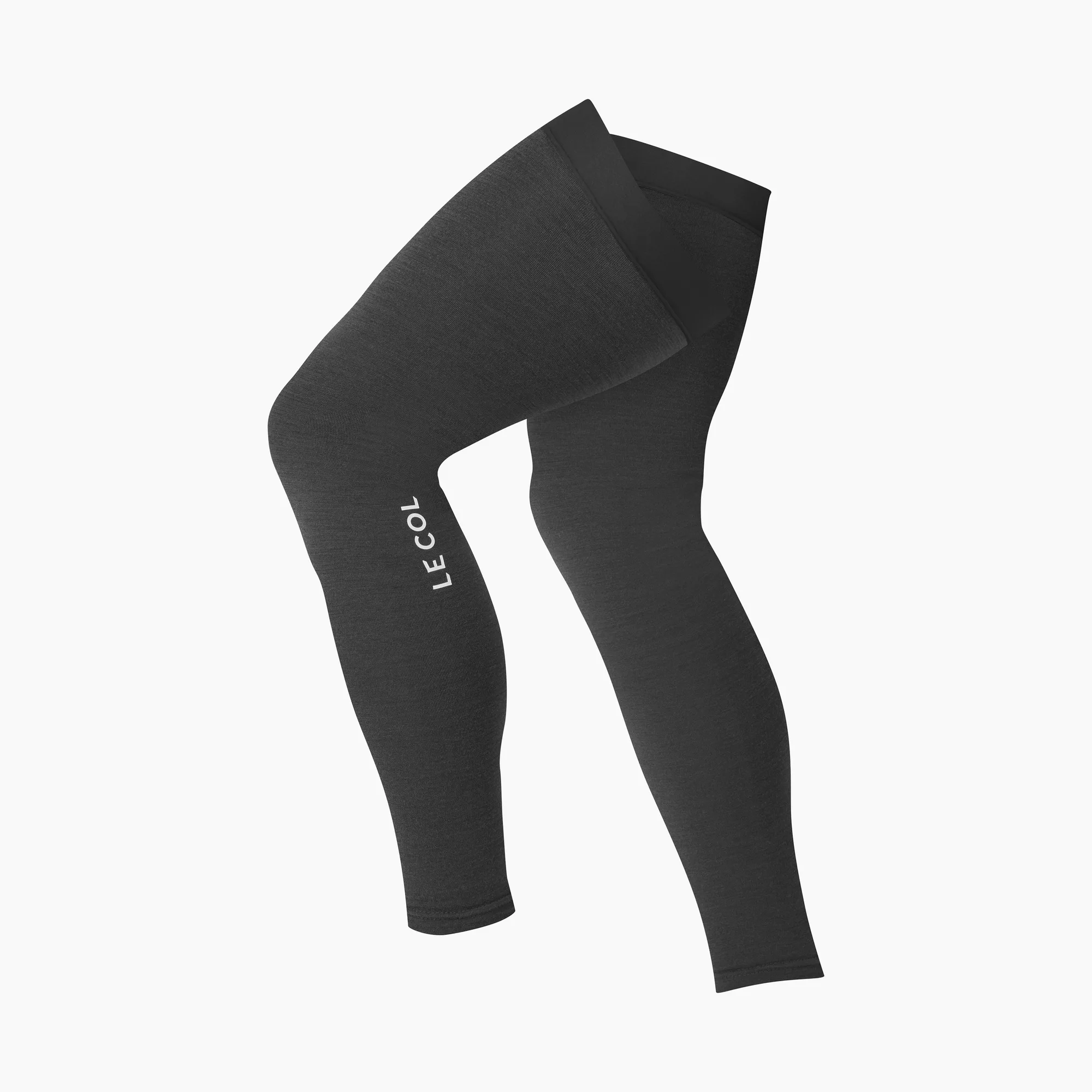
ARC Merino Leg Warmers
-
ARC Merino Arm Warmers: Designed to fit close to the skin, the arm warmers are intended to eliminate any possibility of chafing or bunching. No irritating folds under your jersey sleeves, so you stay comfortable on long rides.
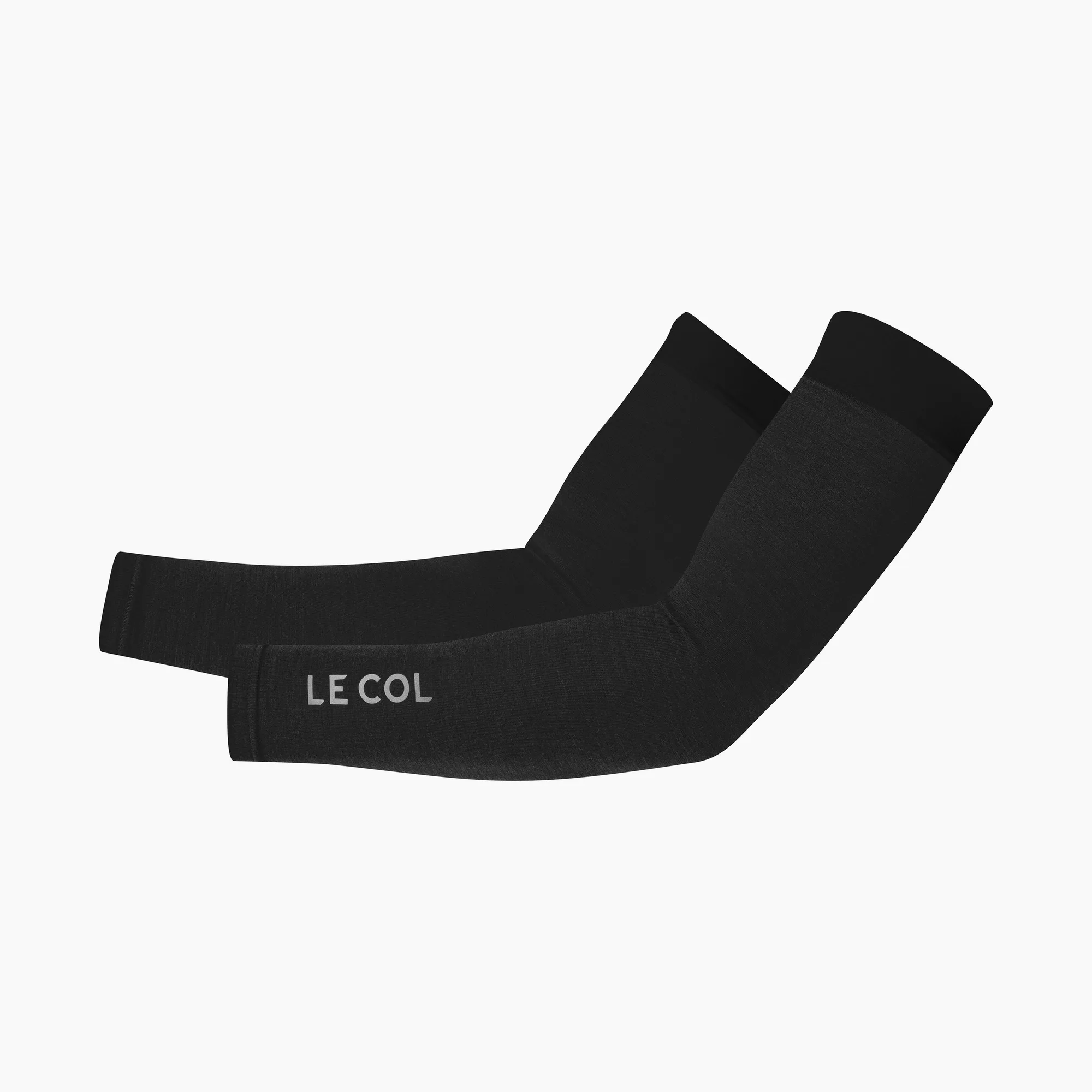
ARC Merino Arm Warmers