What a Lens Hood Actually Does
A lens hood is a simple accessory that attaches to the front of your lens to block stray light. Its main job is to reduce lens flare, ghosting, and loss of contrast caused by light hitting the front element from outside the frame. Many photographers also find that a hood provides a useful layer of physical protection for the lens barrel and front element.
Not every lens needs a hood in every situation, but when you're shooting toward a light source or in bright conditions, the difference can be significant.
Dedicated Hoods for Canon and Nikon Lenses
-
Canon EW-83H Lens Hood for EF 24-105mm f/4L IS USM Lens: The Canon EW-83H is a short, conical hood designed for the EF 24-105mm f/4L IS USM lens. It helps prevent lens flare, ghost images, and loss of contrast. This hood is shaped to match the lens's angle of view, so it blocks stray light without causing vignetting. It's an inexpensive, must-have accessory for that lens.
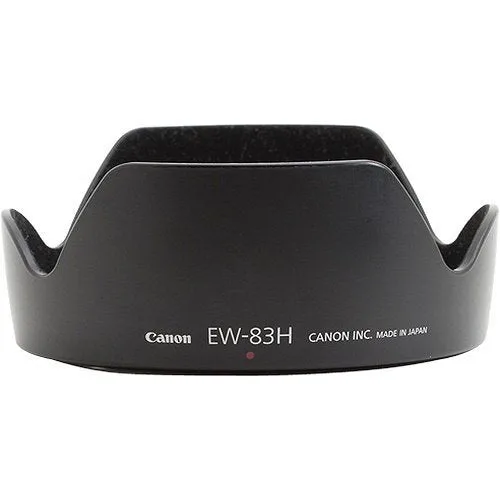
Canon EW-83H Lens Hood for EF 24-105mm f/4L IS USM Lens
-
Camson HB-69 Lens Hood for Nikon Nikkor AF-S DX 18-55 mm VR II Lens: The Camson HB-69 is a bayonet-mount hood for the Nikon AF-S DX NIKKOR 18-55mm f/3.5-5.6G VR II lens. It keeps stray light from entering the lens to reduce flare. Bayonet mounts are quick to attach and detach. This hood is designed specifically for that kit lens, so you get effective light blocking without compromising the zoom range.

Camson HB-69 Lens Hood for Nikon Nikkor AF-S DX 18-55 mm VR II Lens
-
Camson ET-60 Lens Hood 58mm: The Camson ET-60 is a dedicated hood for several Canon telephoto zoom lenses, including the EF 75-300mm f/4-5.6 III and EF-S 55-250mm f/4-5.6 IS II. It also provides extra protection from accidental impact. Longer lenses are more prone to flare from off-axis light. This hood extends and shades the end of the lens, and the bayonet mount allows it to be reversed for compact storage.
Flare Reduction vs. No Hood
Without a hood, strong light sources outside the frame can create flare spots, reduce micro-contrast, and wash out colors. A well-matched hood blocks that stray light while keeping the full image area clear. The Canon EW-83H, for example, is shaped to match the 24-105mm lens's field of view, so you won't see the hood edge in your photos.
The trade-off is that a hood adds a bit of bulk and can be inconvenient for storage. Many hoods, like the Camson ET-60, can be reversed over the lens for more compact packing. If you rarely shoot in bright conditions or toward light sources, you might not notice a difference. But for outdoor, travel, or event photography, the improvement in contrast and color is often worth the extra size.
Physical Protection: A Real Bonus
A lens hood extends past the front element, creating a buffer against bumps, rain, and accidental contact. The Camson ET-60's description notes that it provides extra protection from accidental impact. This is especially useful for telephoto lenses that extend forward and are more vulnerable.
Keep in mind that a hood is not a substitute for a lens cap or a padded bag. It offers limited impact resistance and won't seal against dust or moisture. But as a first line of defense during shooting, it's a practical addition.