Quick answer
A lens mount adapter changes the mount so a lens fits a camera it was not built for; a teleconverter multiplies the focal length of a lens that already fits. If your goal is using old lenses on mirrorless cameras, buy an adapter matched to the lens mount and camera mount. If your goal is more reach with a lens you already own, a teleconverter is the right tool, but only when the lens and camera are compatible.
Adapters and teleconverters solve different problems
An adapter is a mechanical (and sometimes electronic) bridge between two different mounts. It does not change focal length or aperture. A teleconverter sits between a lens and a camera of the same mount and multiplies focal length, usually at the cost of light and sometimes autofocus speed. Treat them as separate tools: one is about compatibility, the other is about reach.
For manual lenses, adapters are often simple metal tubes with no glass. For autofocus lenses, adapters may include electronics to pass through aperture control and autofocus, and those cost more and can affect performance. Teleconverters are matched to specific lens lines and are not universal.
What to check before buying any adapter
First identify the lens mount and the camera mount. A Minolta MC or MD lens needs a Minolta SR-mount adapter for your camera; a Sony E-mount body needs an E-mount adapter. Second, check whether the adapter has glass. Glass adapters can degrade image quality and change the effective aperture; glassless adapters preserve the lens's optics but may limit infinity focus on some combinations.
Third, decide whether you need electronic contacts. If you are adapting a manual lens, you do not. If you are adapting an autofocus lens, you may need them for aperture control and stabilization, and you should confirm the specific lens and camera are supported. Finally, consider handling: a long, heavy lens on a small adapter can stress the mount, so support the lens, not the camera.
Teleconverter trade-offs in plain terms
A 1.4x teleconverter adds 40% focal length and typically costs one stop of light; a 2x doubles focal length and typically costs two stops. That means a 200mm f/4.5 becomes roughly a 280mm f/6.3 with a 1.4x, or a 400mm f/9 with a 2x. The narrower aperture can push autofocus below its working limit and makes the viewfinder darker.
Teleconverters also multiply any softness in the lens. A lens that is sharp wide open will hold up better than one that is not. They are not a substitute for a longer lens when you need maximum quality, but they are a compact way to add reach if you already own a compatible lens.
Mount compatibility and camera settings
With a manual adapter, set the camera to release without a lens attached if your camera requires it, and use focus peaking or magnification to focus. Aperture is controlled on the lens. With an electronic adapter, update the adapter firmware if the manufacturer provides it, and test autofocus behavior before a paid shoot.
For teleconverters, check the manufacturer's compatibility list. Not every lens works with every teleconverter, and some combinations block autofocus at certain apertures. If your camera has a crop mode or in-body stabilization, you may need to set the focal length manually for stabilization to work correctly with a manual lens.
Trade-offs at a glance
- Mount adapter: Changes the mount so a lens fits a different camera. Glassless versions preserve optics; electronic versions add cost and complexity. Choose this when the lens and camera mounts do not match and you accept manual focus or verified electronic support.
- Teleconverter: Multiplies focal length on a compatible lens of the same mount. Costs light and can slow autofocus. Choose this when you need more reach with a lens you already own and the lens is on the manufacturer's compatibility list.
- Stacking both: Using an adapter and a teleconverter together adds length, weight, and more glass. It can work, but each connection is a potential point of flex or misalignment. Only stack them if you have tested the combination and can support the lens properly.
Products that fit these scenarios
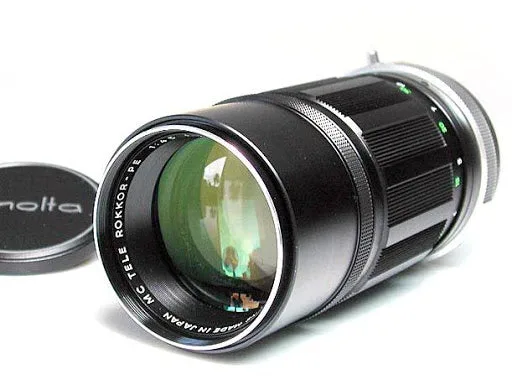
- Minolta MC Tele Rokkor-PE 200mm f.4.5 Lens - Used-Very Good: The Minolta MC Tele Rokkor-PE 200mm f/4.5 is a manual-focus medium tele from the early seventies, solidly built at about 540 g, with very smooth focus typical of Minolta MC lenses. This is a classic candidate for a manual lens adapter on a mirrorless camera. You focus by hand and control aperture on the lens, so you do not need an electronic adapter.
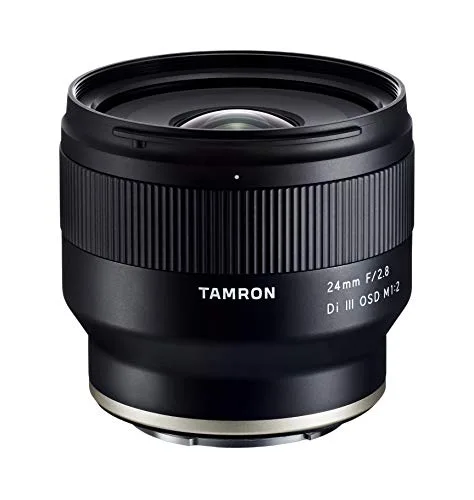
- Tamron 24mm f/2.8 Di III OSD M 1:2 Lens - Sony E: The Tamron 24mm f/2.8 Di III OSD M 1:2 is a full-frame Sony E-mount prime with a stepping motor, 1:2 magnification, and a minimum focus distance of 4.7 inches. Because it is already E-mount, it does not need a mount adapter on a Sony E camera. Its close-focus ability makes it useful for detail work where a teleconverter would not help.
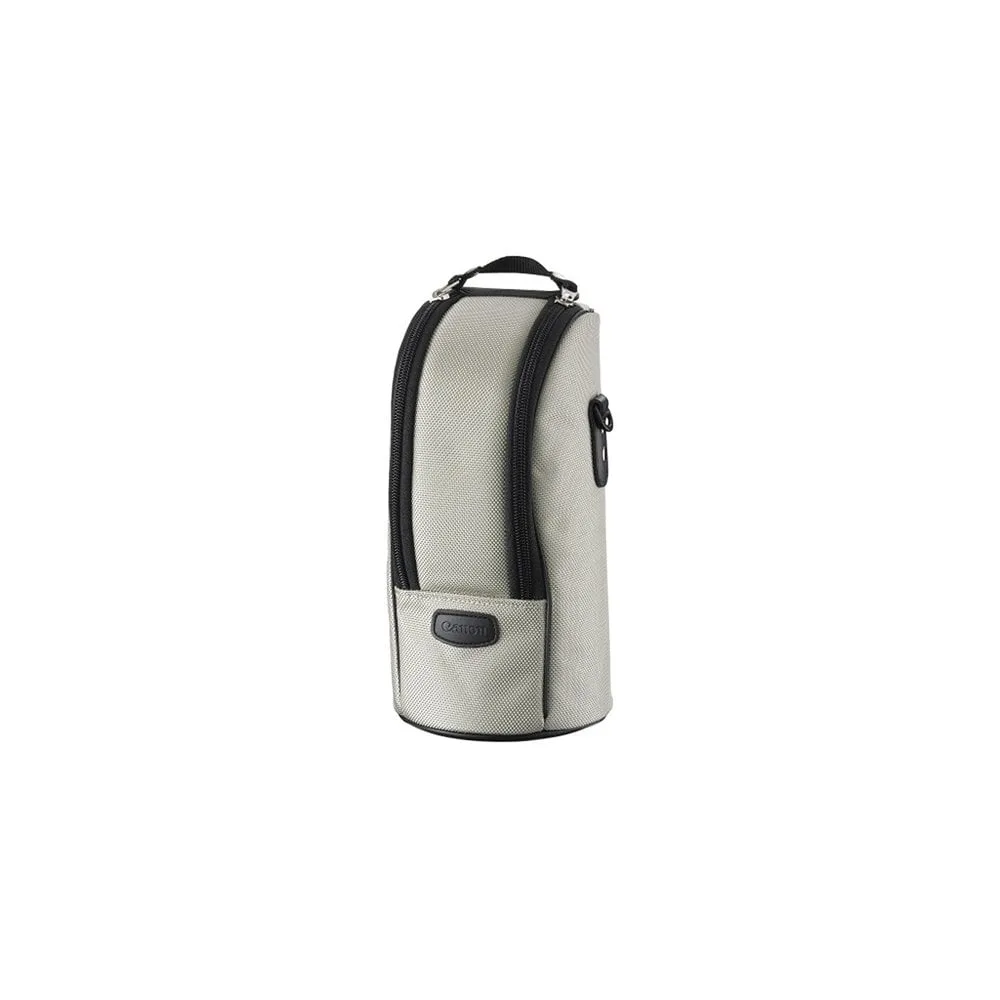
- Canon LZ1326 Lens Case: The Canon LZ1326 Lens Case is a soft, double-zippered case with an adjustable strap, designed for lenses such as the EF 70-200mm f/2.8L and EF 100-400mm f/4.5-5.6L IS II. If you add a teleconverter or adapter to a long lens, the combination gets longer. A case sized for the bare lens may not fit the extended setup, so plan storage accordingly.
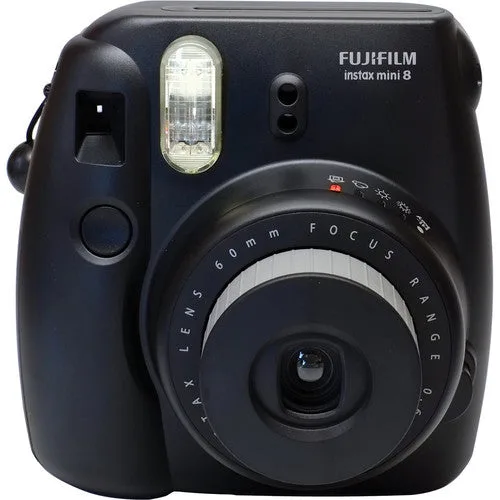
- Fujifilm Instax Mini 8 Instant Film Camera - Black: The Fujifilm Instax Mini 8 is a compact instant camera that uses instax mini film and produces credit card-sized prints, with a Fujinon 60mm f/12.7 lens. It is a fixed-lens camera, so adapters and teleconverters do not apply. It is included here to clarify that not every camera accepts interchangeable lenses.
Which one fits your situation
Best for
- Photographers who want to use a manual lens like a Minolta Rokkor on a mirrorless body
- Shoppers who need to match a lens mount to a camera mount before buying
- Buyers who want a compact way to add reach to a compatible telephoto lens
Not for
- Cameras with fixed lenses, such as instant cameras, where adapters and teleconverters do not apply
- Photographers who need autofocus and cannot confirm electronic adapter support for their specific lens and body
- Buyers who expect a teleconverter to improve image quality rather than extend reach