Quick answer
Hand wash lace bras and delicate lingerie in cool water with a gentle detergent, then press—never wring—the water out and lay flat to dry. Skip the dryer and fabric softener entirely; heat and friction are what stretch lace, break elastic, and dull silk. If you must use a machine, use a mesh bag on the delicate cycle, but hand washing is the safest routine for anything with lace, tulle, or silk.
Lace and silk don't fail because they're fragile—they fail because of heat, friction, and the wrong detergent. A lace bra that gets tossed in a hot dryer or scrubbed against denim will lose its shape long before the fabric wears out. The fix is a short, consistent routine you can do in a sink.
This guide walks through a hand-washing process you can repeat weekly, plus the checkpoints that catch the most common mistakes. It applies to everyday lace bras, silk sleep masks, and special-occasion pieces like a French lace robe or bridal slip.
Why hand washing lingerie beats the machine
Machine agitation is the main enemy of lace. The drum twists straps, stretches cups, and pulls delicate threads against zippers or hooks from other garments. Even a mesh bag only reduces that friction—it doesn't remove it. Hand washing gives you control over water temperature, detergent strength, and how much pressure touches the fabric.
The second enemy is heat. Hot water and a dryer cycle break down the elastane that gives a bra its stretch and shrink silk fibers. Cool water and air drying protect both. If you only change one habit, make it this: no dryer, ever, for lace or silk.
- Wash lace and silk separately from towels, jeans, and anything with zippers or hooks.
- Never soak lace for more than 15 minutes—prolonged soaking can weaken fibers and bleed dye.
What you need before you start
You don't need special equipment. A clean sink or basin, cool water, and a gentle detergent formulated for delicates are enough. Avoid standard laundry detergent, which often contains enzymes and brighteners that degrade silk and can leave residue in lace. Fabric softener is a hard no—it coats fibers, reduces absorbency, and can yellow light-colored lace over time.
Keep a clean towel nearby for blotting and a flat drying rack or a second towel for laying pieces flat. If you're washing a structured piece like a bustier slip, note any hardware—hooks, adjustable straps, or boning—so you can check it after washing.
- Use a detergent labeled for delicates or a tiny amount of mild soap; more soap does not mean cleaner lace.
- Check the care label first. If it says dry clean only, hand washing may still be fine, but test a hidden spot.
How to hand wash a lace bra step by step
Fill a basin with cool water and add a small amount of gentle detergent—about a teaspoon is plenty for one or two bras. Submerge the bra and gently press it down with your palms so it absorbs water. Let it sit for five to ten minutes. Don't rub, twist, or scrub the lace; that's how threads snag and cups lose their shape.
After soaking, lift the bra and gently squeeze the water through the fabric without wringing. Rinse in cool water until no suds remain. If the bra has removable padding, take it out before washing and wash it separately or by hand. For a silk sleep mask or a lace robe, the same process applies—just be extra careful around any satin belt or tie.
- Support the cups from underneath when lifting a wet bra; wet lace stretches more easily than dry.
- If the water turns cloudy with dye, rinse again in cool water—don't let the piece sit in colored water.
Drying and reshaping without damage
Lay the piece flat on a clean towel and roll the towel gently to blot excess water. Then reshape the bra—cups rounded, straps straight—and lay it flat on a drying rack or a fresh towel. Hang drying by the straps can stretch them, so avoid clothespins on lace. For a robe or slip, lay it flat or hang it on a padded hanger to dry.
Keep drying pieces out of direct sunlight, which can fade ivory lace and weaken silk fibers. A well-ventilated room is enough. If you're in a hurry, a fan on low setting speeds drying without heat.
- Never put lace or silk in the dryer, even on low—heat sets wrinkles and shrinks silk.
- If a bra still feels damp at the hooks or straps, give it more time; storing damp lingerie invites mildew.
Storing lace and silk so they stay ready to wear
Once fully dry, store bras flat or stacked in a drawer with cups nested, not folded in half. Hanging a lace bra by its straps can stretch them over time. For special pieces like a French lace robe or a silk tulle gown, use a padded hanger and a breathable garment bag—not plastic, which traps moisture.
Keep lace away from rough zippers, hooks, and Velcro in the drawer. A soft cloth pouch or a separate drawer section prevents snags. If you're storing a bridal piece between wears, add a small sachet of lavender or cedar to deter moths without perfuming the fabric.
- Rotate your bras—wearing the same one two days in a row gives elastic less time to recover.
- Check hooks and straps every few wears and repair loose threads before they become tears.
Your 7-step lace lingerie washing routine
- Step 1: Check the label and hardware: Read the care label and note any hooks, removable padding, or delicate trims. Remove padding before washing. Checkpoint: if the label says dry clean only, spot-test a hidden area first.
- Step 2: Fill a basin with cool water: Use cool water and add a teaspoon of gentle detergent made for delicates. Never use hot water or fabric softener. Checkpoint: if the water feels warm to your wrist, it's too warm for lace.
- Step 3: Submerge and soak briefly: Press the piece gently under the water and let it soak for 5–10 minutes. Do not rub, scrub, or twist. Checkpoint: set a timer—soaking longer than 15 minutes can weaken fibers and bleed dye.
- Step 4: Gently squeeze and rinse: Lift the piece supporting the cups or body, squeeze water through without wringing, then rinse in cool water until no suds remain. Checkpoint: if the rinse water still feels slippery, rinse once more.
- Step 5: Blot with a towel: Lay the piece flat on a clean towel and roll the towel gently to absorb excess water. Never twist or wring. Checkpoint: the piece should feel damp, not dripping, before you lay it out.
- Step 6: Reshape and air dry flat: Reshape cups and straps, then lay flat on a drying rack or fresh towel away from direct sunlight. Never use a dryer. Checkpoint: if straps are still damp at the hooks, give them more time before storing.
- Step 7: Store with care: Once fully dry, stack bras with cups nested, or hang robes and slips on padded hangers in a breathable garment bag. Checkpoint: keep lace away from zippers, hooks, and Velcro to prevent snags.
How these care rules apply to real pieces
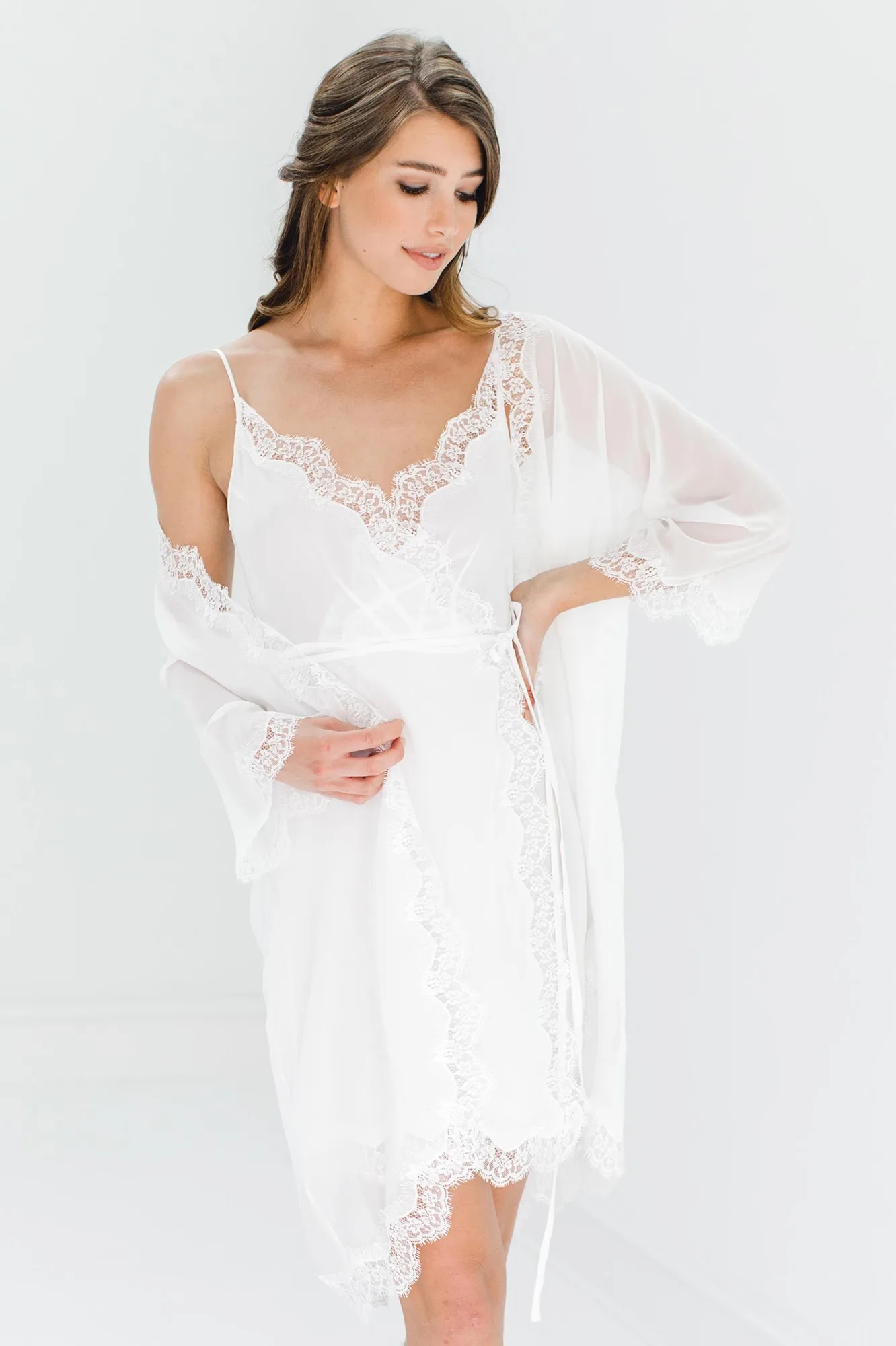
- Juliet French lace bustier slip camisole bridal lingerie in ivory: Made of Chantilly French lace layered with a tulle lining for structure, with fully adjustable camisole straps. The tulle lining and adjustable straps mean you should support the slip from underneath when wet and check the strap hardware after each wash to keep the structure intact.
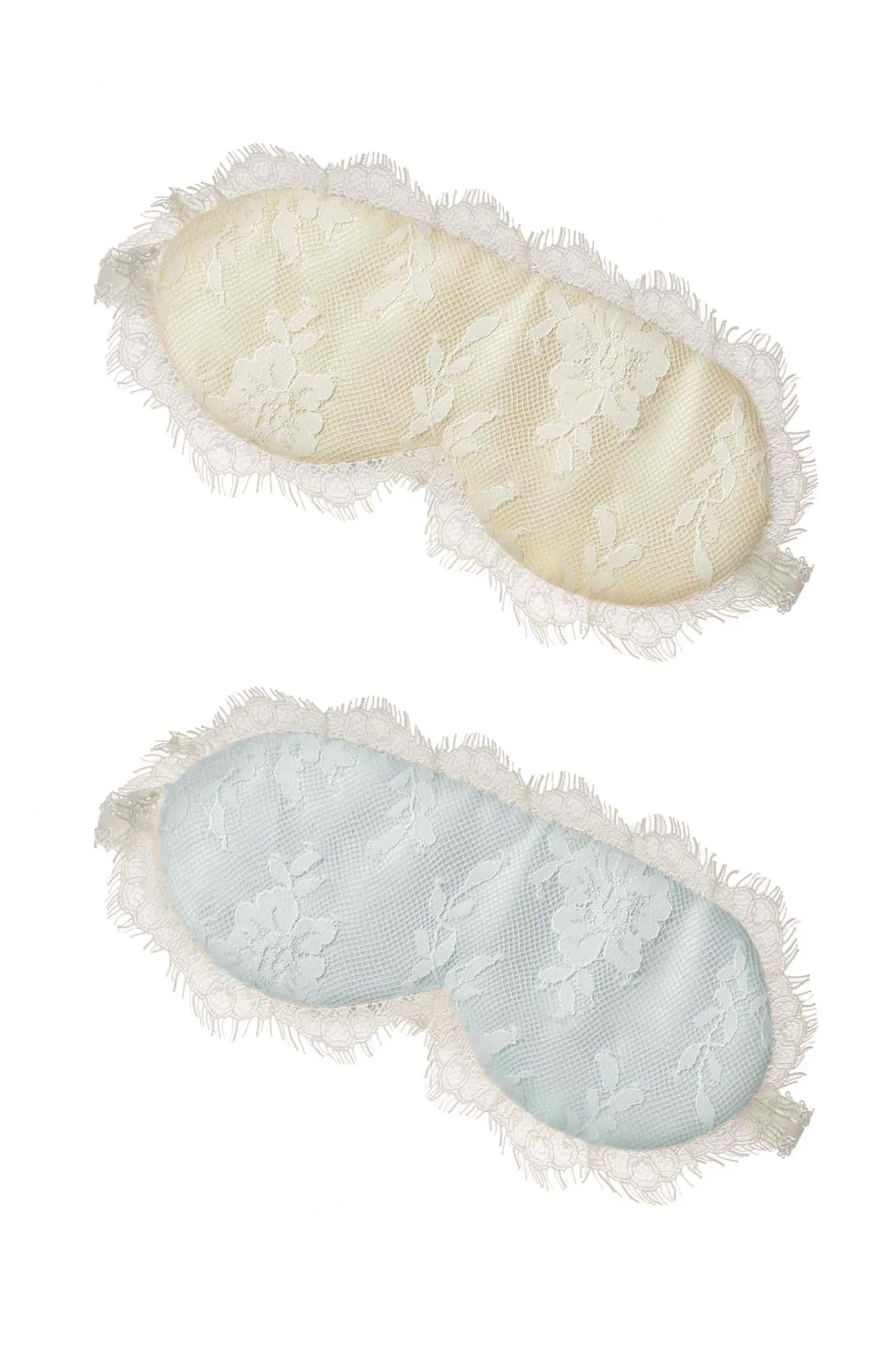
- Swan Queen lace and silk Sleep Mask: Handmade with 100% silk and ivory French lace, available in robin egg blue and champagne. Silk is sensitive to heat and detergent residue, so hand wash in cool water and lay flat to dry—never wring—to keep the smooth finish soft against the skin.
- Tulip French Lace & Silk Bridal Kimono Robe in Black: Made of French lace from Calais with silk accents, a silk neckline, and a tie. The silk tie and neckline need gentle handling, so wash the robe by hand, press water out without twisting, and dry flat to protect the lace motifs and silk trim.
Hand washing lace bras and delicates takes about ten minutes and protects the pieces you wear for the moments that matter. Cool water, gentle detergent, no wringing, and air drying are the whole routine—repeat it and your lace will keep its shape and softness far longer than machine-washed pieces.