Quick Answer
Most lingerie fit problems come from one of three sources: the band or waistband is the wrong size, the cup or panel shape does not match your proportions, or the straps and hardware are adjusted incorrectly. Fix the band first, then the cups, then the straps. If a piece still digs, gaps, or shifts after those three adjustments, stop adjusting and change the size or the style. No amount of tugging will fix a shape mismatch.
A lingerie set that digs, rides up, or gaps is not a sign that your body is wrong. It is a sign that one measurement, one adjustment, or one design feature is off. This guide walks through the most common lingerie fit problems by symptom, so you can identify the likely cause and take the right corrective action instead of guessing.
Work through each fix in order, because adjustments interact. A band that is too loose makes straps dig; a cup that is too small makes the band feel tight. Once you know the real cause, you can decide whether to adjust, size up or down, or choose a different silhouette entirely.
Start With the Band or Waistband, Not the Straps
The band carries most of the support in a bra or bustier, so it should sit level and snug without leaving deep marks. If it rides up in the back, the band is usually too loose — not too tight. If it digs into your ribs or leaves red grooves that last more than an hour, it is too tight or the band width does not suit your frame. Adjust the hook-and-eye closure before you touch the straps.
For high-waisted bottoms and waistbands, the same logic applies. A waistband that rolls down is often too loose or cut for a shorter torso rise than yours. A waistband that cuts in is too tight or sits at the wrong point on your waist. Try the next size or a different rise before you decide the style is wrong for you.
- Fasten a bra on the loosest hook when new; you need room to tighten it as the elastic relaxes.
- If the band rides up, size down in the band before you size up in the cup.
- A waistband should stay put when you sit, bend, and raise your arms.
Cup and Bust Fit: Gapping, Spilling, and Digging Wires
Cups that gap at the top usually mean the cup is too large, too tall, or shaped for more upper fullness than you have. Cups that spill over the top or sides mean the cup is too small or too shallow. In both cases, the fix is a cup size or cup shape change — not a tighter band. Underwire should sit flat against your ribcage, not on breast tissue.
If the center gore floats away from your chest, the cup is often too small or too shallow. If the underwire digs into your underarm, the wire is too wide or too tall for your frame. Note which part fails, because that tells you whether to change size or change style.
- Scoop and smooth your breast tissue into the cup after fastening — this alone fixes many gaping issues.
- If one cup fits and the other gaps, consider whether you need a different cup shape rather than a different size.
- Never fix a gaping cup by over-tightening the straps; that pulls the band up and makes the problem worse.
Straps, Hardware, and Elastic That Won't Stay Put
Straps that fall off the shoulder are usually too loose, set too wide for your frame, or made from elastic that has lost its snap. Tighten them until they lie flat without pulling the band up. If they still slip, the strap placement is wrong for your shoulder width — a style with a closer-set or convertible strap will work better than more tightening.
Digging straps are the opposite problem: they are too tight, or they are compensating for a band that is too loose. Loosen the straps and check the band first. If the band is correct and the straps still dig, the strap width or hardware may be too narrow for the weight it carries.
- You should be able to slide one finger under a strap without effort.
- If straps dig only on one side, check whether the band is level before you adjust anything.
- Replace a piece when the elastic is stretched out or the hardware no longer holds tension.
Bottoms, Bodysuits, and One-Pieces
Bottoms that cut into the hips or thighs are usually too small or cut for a different hip-to-waist ratio. Bottoms that slide down or feel loose at the back are too large or have lost elastic. For thongs and cheeky cuts, check the side straps and waistband separately, because one can fit while the other does not.
Bodysuits and one-pieces add a torso-length variable. If the torso is too short, the piece pulls at the shoulders and rides up at the crotch. If it is too long, it bunches at the waist. Torso length is not always listed in sizing charts, so treat it as a decision limitation: if a one-piece pulls or bunches after you adjust the straps, you likely need a different torso length, not a different letter size.
- Check the rise: high-waisted styles sit at or above the natural waist, while low-rise sits at the hip.
- For bodysuits, fasten the closure and raise your arms — if it pulls hard, the torso is too short.
- If a one-piece bunches at the waist, try a smaller size only if the hips and bust still fit comfortably.
When to Stop Adjusting and Choose Another Option
Stop adjusting when you have corrected the band, the cup or panel, and the straps, and the piece still digs, gaps, or shifts. At that point the problem is shape, not adjustment. Repeating the same fixes will only stretch the elastic and shorten the life of the garment.
Choose a different size when the issue is consistent across the whole piece — too tight everywhere or too loose everywhere. Choose a different style when the issue is localized — cups that gap only at the top, straps that slip only on one side, or a waistband that rolls only when you sit. If you are between sizes or between torso lengths, size for the largest measurement the piece must cover and plan to adjust the rest.
- One adjustment that fixes the problem means you have the right size.
- Two or more adjustments that still fail means you need a different size or shape.
- If the piece leaves marks that last more than an hour, it is too tight regardless of the size label.
Fit Diagnosis: Symptom, Cause, Fix, and Stop Point
- Band rides up in the back: Likely cause: the band is too loose or stretched. Fix: fasten on a tighter hook or size down in the band. Stop point: if a new, correctly sized band still rides up, the band width or style is wrong for your frame. Fix the band before you touch the straps.
- Cups gap at the top: Likely cause: the cup is too large, too tall, or shaped for more upper fullness. Fix: scoop your tissue into the cup, then try one cup size down or a shorter cup shape. Stop point: if the gore still floats or the wire digs, change the style rather than the size. Gaping is a shape issue more often than a size issue.
- Straps dig into the shoulders: Likely cause: straps are too tight or are compensating for a loose band. Fix: loosen the straps, then check the band. Stop point: if the band is correct and straps still dig, the strap width or hardware is too narrow for the weight. Digging straps usually point back to the band.
- Waistband rolls or cuts in: Likely cause: the waistband is too loose, too tight, or sits at the wrong rise. Fix: try the next size or a different rise, such as a high-waisted cut. Stop point: if it still rolls when you sit, the rise does not match your torso. Change the rise before you change the size.
- One-piece pulls at the shoulders or bunches at the waist: Likely cause: torso length is too short or too long. Fix: adjust the straps and closure, then reassess. Stop point: if it still pulls or bunches, you need a different torso length, not a different letter size. Torso length is a separate measurement from size.
Catalog Details That Affect Fit
- Red Orchid High Waisted Lingerie Set: High-waisted bottoms are designed to sculpt and accentuate curves with a flattering fit, and the set is available in clothing sizes. If your usual complaint is a waistband that rolls or cuts, a high-waisted cut changes where the band sits, so it can solve a rise problem that a size change alone will not.
- Snow Blossom Lingerie Nighty: This piece has a supportive underwire bustier top and a ruffled hemline, and it is available in clothing sizes. An underwire bustier top means band and cup fit matter as much as dress size, so check the band first if the bust feels unsupported or the wires dig.
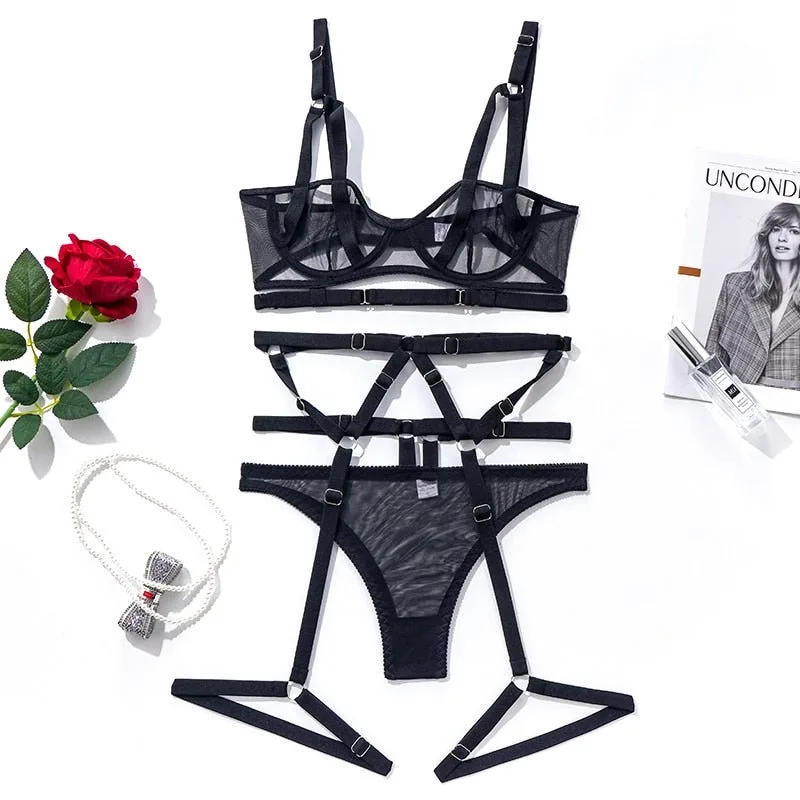
- Classic Black Lingerie Set With Straps: This set comes with a bra, panties, belt, and garter, and it is available in clothing sizes. Four separate pieces mean four separate fit points. If one piece fits and another does not, adjust or exchange the individual piece rather than assuming the whole set is the wrong size.
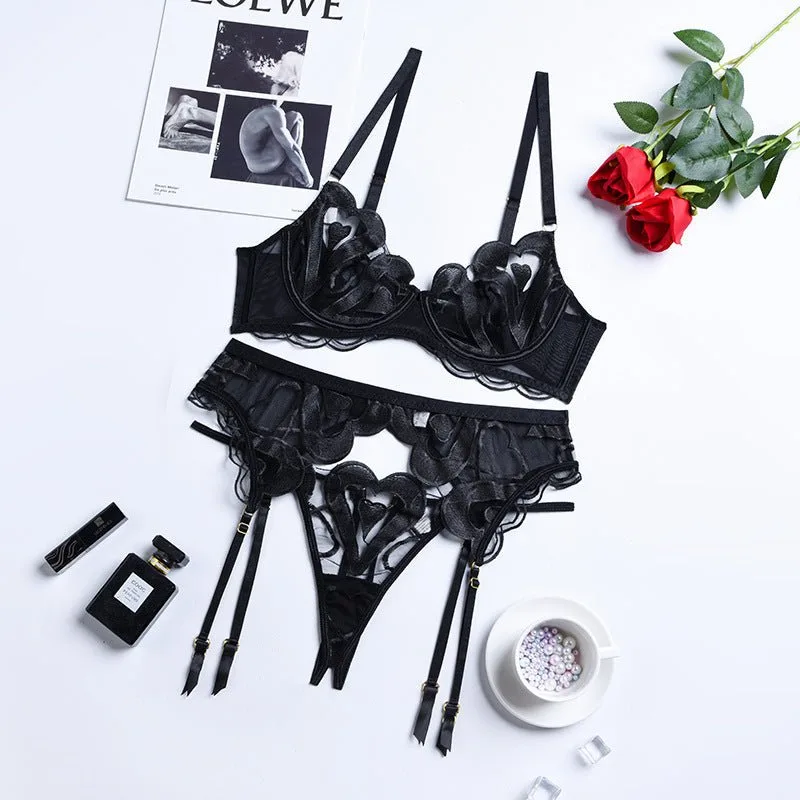
- Hearts Lingerie Set - Black: This three-piece set includes a bra, thong, and belt, and it is available in size and color options. A thong and belt fit differently from full-coverage bottoms, so use the band-and-strap checks above before deciding the size is wrong.
Most lingerie fit problems have a specific cause and a specific fix, and the order matters: band first, then cups or panels, then straps. When three adjustments still leave you digging, gaping, or shifting, stop adjusting and change the size or the style. That is not a failure — it is how you find the pieces you will actually reach for.