Quick answer
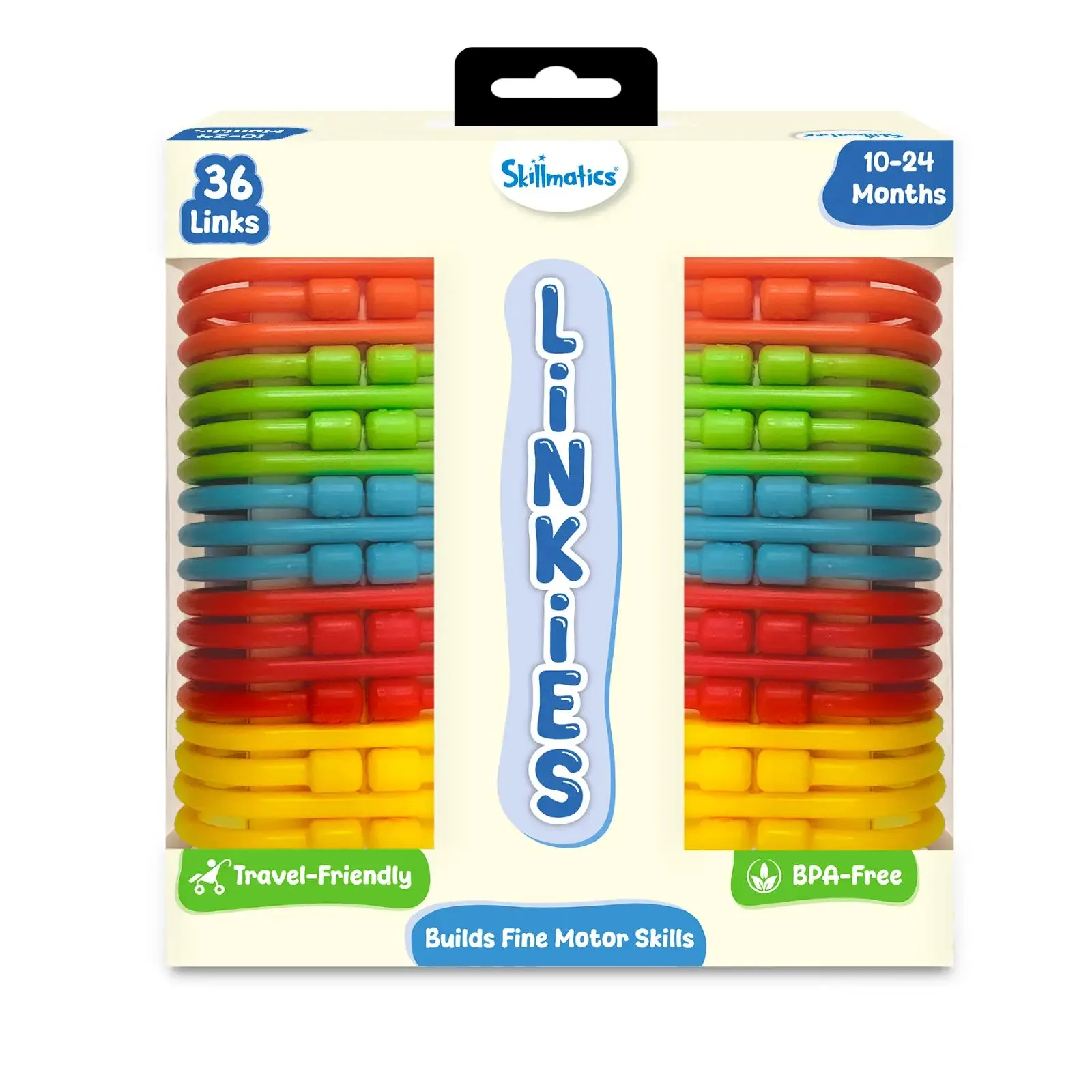
Buy Linkies if you want one open-ended toy that a 10-24 month old can grasp, snap, pull apart, and click together without adult setup, and you are comfortable supervising mouthing. Skip them if your toddler already has a full basket of linking toys or needs a toy with sound, lights, or a fixed outcome. Linkies: Set of 36 Links is the strongest fit for this age band because the links are designed for tiny fingers and each click gives instant, repeatable feedback.
What Linkies actually do at 10-24 months
Linkies are bright, connectable links that snap together and pull apart. For a toddler, the value is not the finished shape; it is the repeated act of connecting and disconnecting. That loop is short enough to hold attention at this age and long enough to build hand strength and hand-eye coordination.
Because there is no correct answer, the toy grows with your child. A 10-month-old may simply hold, shake, or mouth a single link. By 18 months, many toddlers start joining two links and pulling them apart on purpose. By 24 months, some begin sorting by color or making simple chains. You do not need to teach these steps; the toy invites them.
Why fine motor skills toys should be boring on purpose
Toys with lights, songs, and fixed rewards can be engaging, but they often do the work for the child. Linkies do the opposite. The only feedback is the click and the pull, which means your toddler has to supply the effort and the repetition. That is exactly what builds the pincer grasp and wrist rotation that later help with self-feeding, crayon holding, and eventually writing.
The trade-off is honesty: some toddlers ignore Linkies for weeks, then return to them. If your child needs instant audio or visual payoff, a different early development toy will hold attention sooner. Linkies reward patience and repeated exposure, not novelty.
How to introduce Linkies without forcing play
Start with two links, not the full set. Snap them together yourself, then hand the pair to your toddler and let them pull it apart. If they mouth it, that is normal exploration at this age; keep the session short and supervised. Once pulling apart is easy, show joining two links and pause. Many toddlers will copy within a few days.
Rotate Linkies in and out rather than leaving all 36 out at once. A smaller handful keeps the choice manageable and makes the toy feel new again after a break. Store the rest out of sight.
Where Linkies fit in a toy rotation
Linkies work best as a quiet, screen-free option for floor time, diaper-bag carry, or restaurant waiting. They are also a practical first toy for grandparents' houses because there are no pieces to lose beyond the links themselves and no batteries to manage.
If your household already owns a shape sorter, stacking cups, and a push toy, Linkies still add something different: they are open-ended and portable. If you already own several linking or snapping toys, the marginal benefit drops, and your money may be better spent on a different category such as reusable activity mats for older siblings.
Safety and supervision at this age
Any toy for 10-24 months needs active supervision. Links are small enough to mouth, and while the catalog describes them as designed for tiny fingers, that is a playability claim, not a safety certification. Check the packaging and current safety guidance for your region before purchase, and inspect links regularly for cracks or sharp edges.
If your toddler is still in the phase of putting everything in their mouth constantly, consider waiting a few weeks or using Linkies only during seated, supervised play rather than as a stroller toy.
Decision rules for buying a toddler link toy
- Age check: Buy Linkies when your child is between 10 and 24 months and can sit and reach for objects. If your child is under 10 months, wait or choose a larger-grip toy. Age is the first filter, not the last.
- Mouthing check: If your toddler still mouths most toys constantly, Linkies are still usable but only during seated, supervised play. If you need a toy for unsupervised crib or stroller time, choose something else. Supervision is the deciding factor, not the toy.
- Toy basket check: Count how many linking, snapping, or stacking toys you already own. If you already have three or more, Linkies add less value. If you have none, they fill a real gap. Buy the gap, not the duplicate.
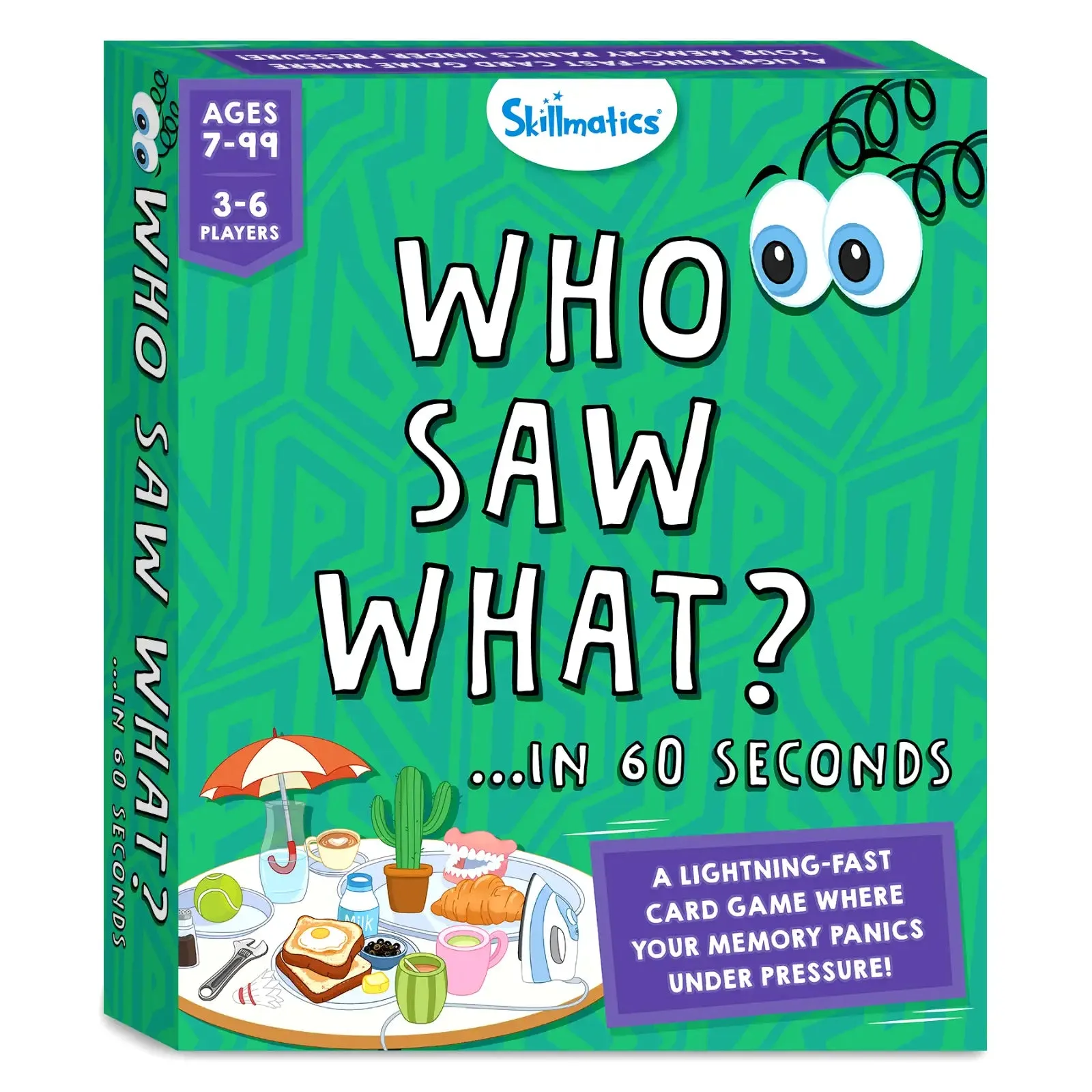
- Household check: If there is an older sibling aged 7 or up, Linkies alone may not cover family play time. Consider pairing them with a game like Who Saw What? In 60 Seconds so both children have something age-appropriate. One toy rarely serves two very different ages.
Product facts that matter for this decision
- Linkies: Set of 36 Links | Connectable Learning Link Toy for Toddlers (10-24 months): Designed for tiny fingers, these bright links are easy to grasp, snap together, pull apart, and play with—perfect for creating fun shapes and designs with every click. The grasp-and-snap loop is the whole point at 10-24 months, so ease of grasping matters more than the number of links in the set.
- Who Saw What? In 60 Seconds: Fast-Paced Memory Game for Kids (ages 7+): A lightning-fast challenge where your brain is on the clock: you get 60 seconds to study a picture and memorise its details, then shout out what you remember and discard your letter cards. This is a memory game for ages 7+, so it is a sibling or family option rather than a toddler toy. It helps you decide whether to buy Linkies alone or add something for an older child in the same household.
Who Linkies are for, and who should choose differently
Best for
- Parents of a 10-24 month old who want a screen-free, open-ended toy for floor time
- Families who need a portable toy for diaper bags, restaurants, or grandparents' houses
- Caregivers building a first collection of fine motor skills toys with no batteries or setup
Not for
- Toddlers who need sound, lights, or a fixed reward to stay engaged
- Households that already own several linking or snapping toys
- Anyone looking for a toy that can be used unsupervised or as a crib toy