Quick answer
Prevent lost luggage by making your bag identifiable inside and out before you reach the airport. Attach a durable tag with current contact details, add a second copy inside the bag, photograph the closed bag and its contents, and confirm your flight and contact information at check-in. Most bags are delayed, not permanently lost, and a traceable bag is far easier for an airline to return to you.
A bag that disappears at the airport is rarely gone forever, but the hours or days it takes to get it back can derail a trip. The good news is that most lost baggage situations are preventable with a few minutes of preparation before you leave home. The steps below focus on identification, documentation, and check-in habits that make your bag easy to trace if it goes missing.
You do not need special equipment to prevent lost luggage. A reliable luggage tag for flights, a photo of your packed bag, and a clear understanding of your airline's checked bag tips will do more than any gadget. Work through these steps in order, and treat each one as a checkpoint rather than a box to tick.
Start with identification, not packing
Before you think about what goes in the bag, decide how the bag will be identified if it is separated from you. A tag on the outside handle is the first line of defense, but it is not enough on its own. Tags fall off, get torn, or become unreadable in rain and rough handling. Write your name, a mobile number, and an email address that you actually check while traveling.
Add a second copy of the same information inside the bag, ideally in a place that is visible the moment the bag is opened. If the outer tag is lost, the inner note gives the airline a way to identify the owner. Avoid using your home address as the only contact detail, because you will not be there to receive a call or a delivery while you are away.
- Use a mobile number with the correct country code for international trips.
- Write legibly in permanent ink or use a printed card rather than a pencil.
- Check that the tag is attached to a solid handle or loop, not a zipper pull.
Choose a tag that survives the journey
A flimsy paper tag from the check-in desk is better than nothing, but it is not built for a full trip. A durable tag with a secure attachment and a protected information panel is a small investment that pays off every time you fly. The Wenger Personalized Luggage Tag is designed for this job: you can customize your address, phone number, and email, and the set includes both small and standard sizes. It is compatible with the ID panels found on many Wenger luggage styles and also attaches to a backpack or luggage handle with the included flexible tie strap.
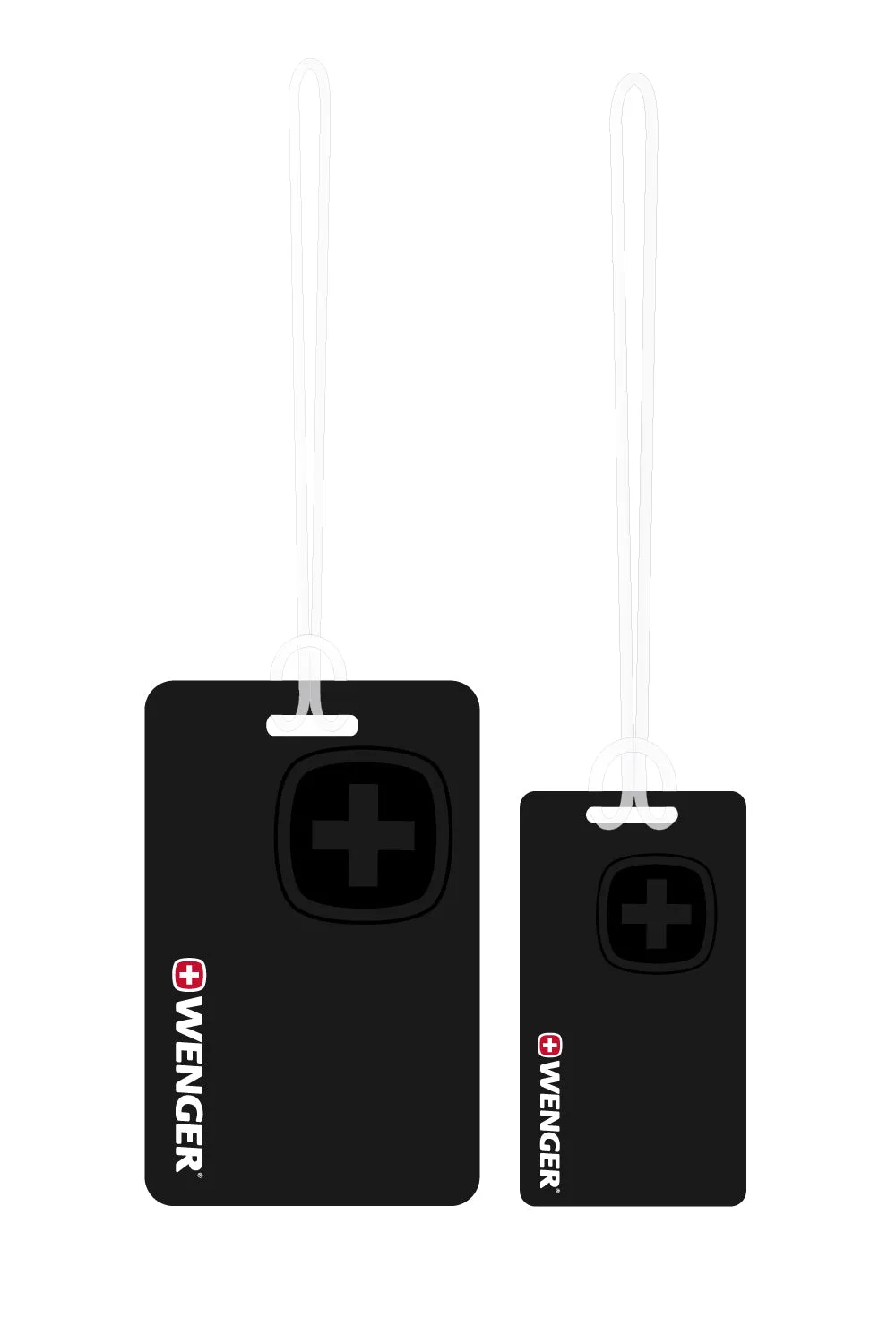
Wenger Personalized Luggage Tag
The practical advantage is that your contact details are printed rather than handwritten, so they stay readable after repeated handling. The two sizes also let you match the tag to different bags, from a carry-on to a checked duffel. If you prefer to write your details by hand, choose a tag with a covered window so the ink does not smudge or fade.
- Check the attachment point each time you collect your bag.
- Keep the information panel facing outward so it can be read without opening the bag.
- Replace the tag if the strap or window shows cracks or wear.
Photograph the bag and its contents
A photograph is one of the most useful lost baggage tips because it gives the airline something specific to search for. Take a picture of the closed bag from the front and the back, including any distinctive marks, straps, or colors. Then open the bag and photograph the contents as they are packed. If the bag is delayed, you can send the photos to the airline and describe exactly what is inside.
This step also helps with insurance claims. Keep the photos on your phone and back them up to cloud storage so they are available even if your phone is lost. If you are checking a bag with valuable or hard-to-replace items, reconsider whether those items belong in a checked bag at all. Most airlines exclude certain valuables from liability, so the safest place for them is with you.
- Include a photo of the baggage tag and receipt after check-in.
- Note any pre-existing damage so it is not mistaken for new damage later.
- Keep a list of the most valuable contents with the photos.
Confirm your details at check-in
The moment you hand over your bag is the moment to verify that the airline has linked it to you correctly. Check that the agent attaches a destination tag and that the tag matches your flight number and final airport. If you have a connecting flight, confirm that the bag is tagged all the way to your final destination rather than an intermediate city.
Make sure the airline has a mobile number and email address for you in the booking, not just at the counter. If your plans change or your bag is delayed, that contact information is how the airline reaches you. Keep your baggage claim receipt in a safe place, because you will need it if you have to file a report.
- Watch the bag go onto the belt rather than walking away immediately.
- Ask for a receipt if you do not receive one automatically.
- Save the airline's baggage claim phone number before you fly.
Reduce the risk before you leave home
Some choices make a bag harder to lose. A distinctive bag stands out on the carousel and is less likely to be picked up by mistake. If your bag looks like every other black suitcase, add a colored strap, a patch, or a unique tag. Remove old destination tags from previous trips so the current routing is unambiguous.
Pack a small carry-on with essentials for the first day, including medication, a charger, and a change of clothes. If your checked bag is delayed, you can function while the airline works on returning it. Finally, arrive with enough time to check your bag without rushing. A rushed check-in is where tags get missed and bags get misrouted.
- Remove old barcode stickers and destination tags from the bag.
- Use a distinctive color or marking that is easy to describe.
- Keep essentials in your carry-on, not in the checked bag.
Pre-flight steps to prevent lost luggage
- Attach a durable, readable tag: Put a tag with your name, mobile number, and email on the outside handle. Use a tag with a protected information panel so the details survive rain and handling. Checkpoint: confirm the tag is attached to a solid handle, not a zipper pull.
- Add a second copy of your details inside: Place a note with the same contact information in an inside pocket that is visible when the bag is opened. This is your backup if the outer tag is lost. Checkpoint: use a mobile number you will answer while traveling.
- Photograph the bag and contents: Take clear photos of the closed bag and the packed contents. Save them to cloud storage so you can send them to the airline or an insurer. Checkpoint: include the baggage receipt and tag in the photos after check-in.
- Verify the destination tag at check-in: Watch the agent attach the tag and confirm it matches your flight number and final airport. For connections, make sure the bag is tagged to the final destination. Checkpoint: keep the baggage claim receipt in a safe place.
- Make the bag distinctive and pack a carry-on: Remove old tags, add a unique marking, and keep essentials like medication and a charger with you. A distinctive bag is less likely to be taken by mistake. Checkpoint: arrive with enough time to check the bag without rushing.
Product facts that help
- Wenger Personalized Luggage Tag: Enhance the security of your belongings with a Personalized Luggage Tag from Wenger. Customize your address, phone number, and email to your preference and receive a set of tags consisting of small and standard sizes. Compatible with the ID panels featured on many Wenger luggage styles, you can also attach it to your backpack or luggage handle using the flexible tie strap that's included with your purchase. Printed contact details stay readable and the two sizes let you tag both checked and carry-on bags, which makes identification faster if a bag is delayed.
- SWISSGEAR Zurich Pro 24" Garment Bag Roller: Don't be deceived by the compactness of the SWISSGEAR 7895 Full Sized Wheeled Garment Bag. This sleek luggage unfolds into four sections with plenty of storage compartments. Several mesh pockets ensure that folded items stay crisp, while a large, compression-strap-equipped compartment helps to prevent wrinkles and shifting of larger hanging items such as suits, blouses, pants, and button-downs. A garment bag that keeps contents organized and compressed is easier to describe and identify if it goes missing, and it reduces the chance of items shifting into a different bag during handling.
Preventing lost luggage comes down to a short routine you repeat before every flight. Tag the bag inside and out, photograph it, confirm the routing at check-in, and keep your essentials with you. Do these steps in order and you give the airline every chance to return your bag quickly if it is delayed.