Quick answer
Low caf coffee is specialty coffee made from low-caffeine species or processed to reduce caffeine while keeping flavor. It's for anyone who wants fewer jitters, better sleep, or a later-day cup without giving up specialty taste.
How low caf coffee gets its lower caffeine
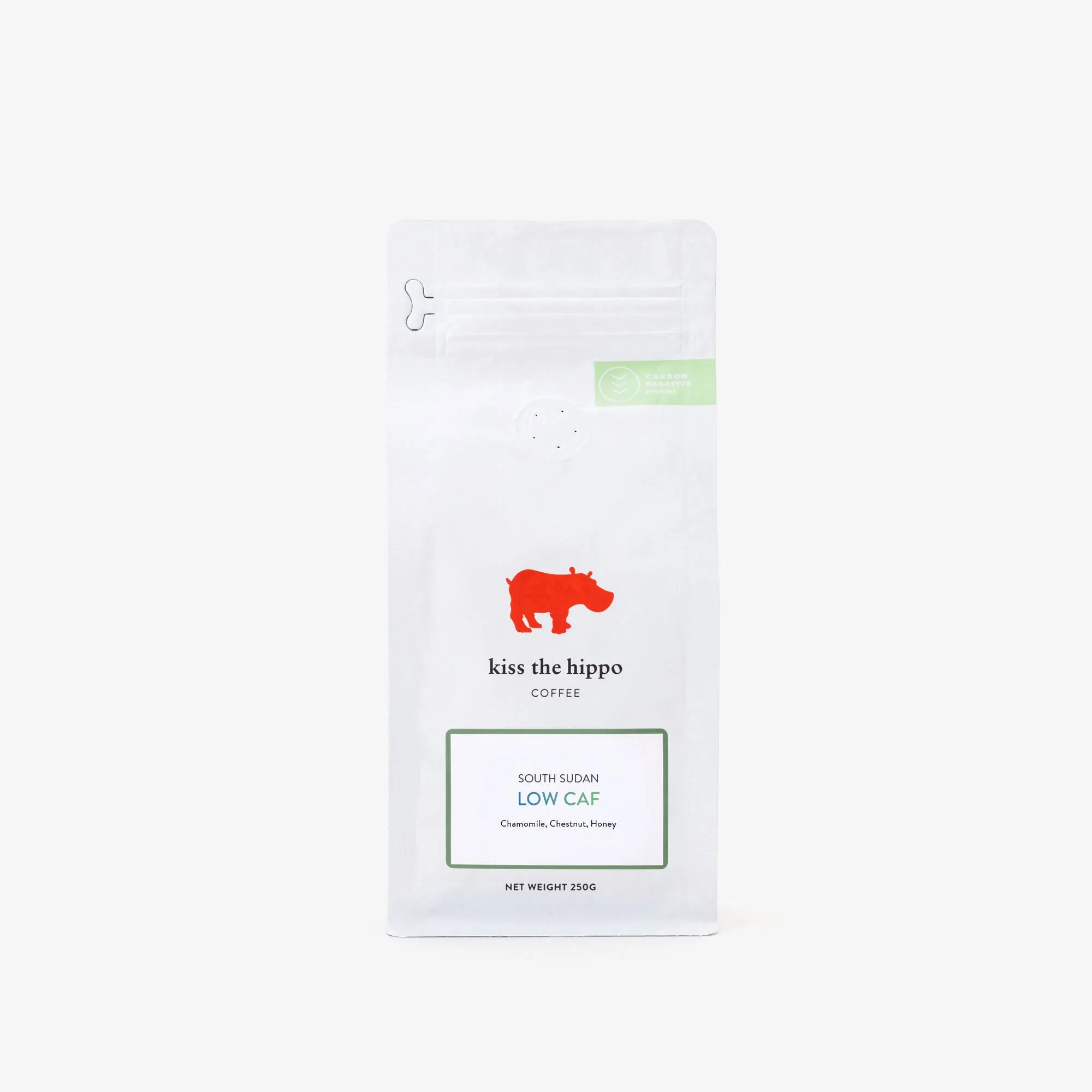
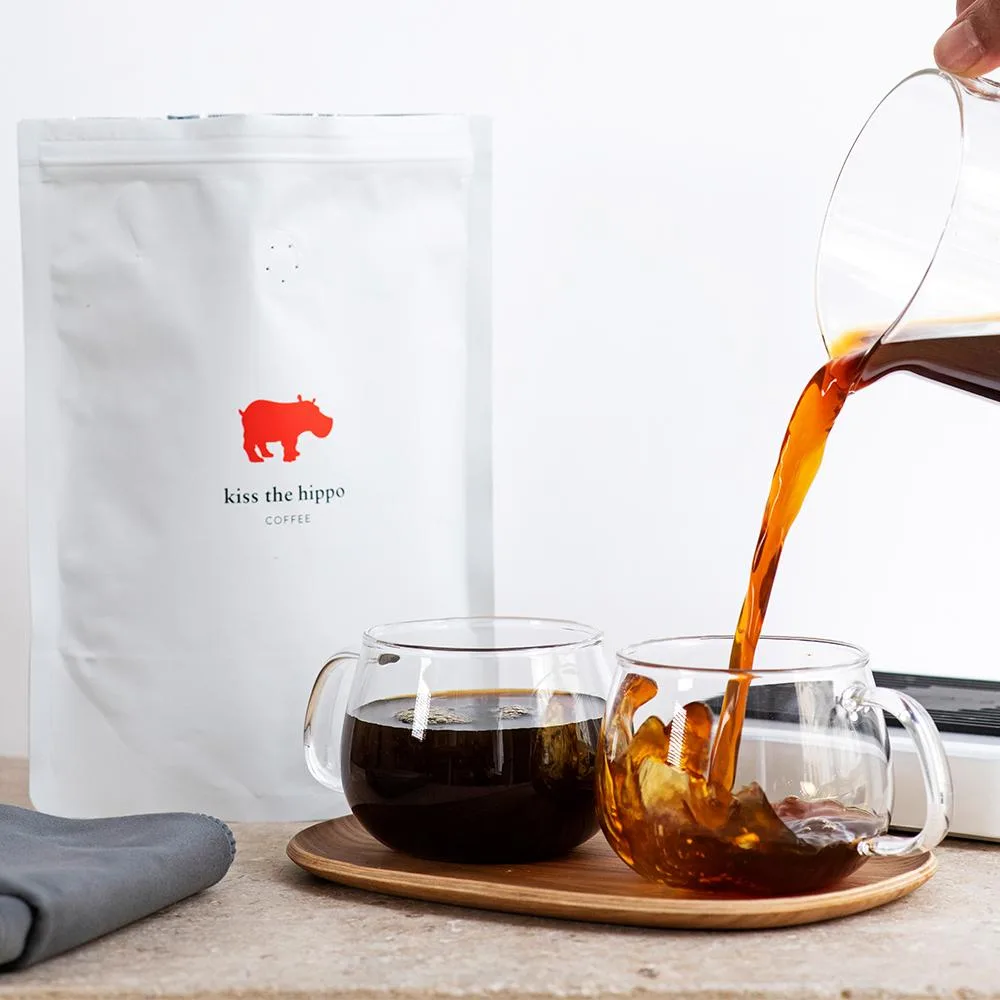
Low caf coffee starts with the plant, not a chemical shortcut. Species like Excelsa naturally contain less caffeine than Arabica, and careful processing can further shape the final level. Kiss the Hippo's Low Caf uses South Sudanese Excelsa from Nzara and Yambio County, grown at 600 masl and processed as anaerobic honey. The result is a cup with chamomile, chestnut, and honey notes. Because the caffeine is lower from the start, you get a gentler lift without the harshness of some decaf methods.
What low caf coffee tastes like
Expect a softer, sweeter profile than a typical high-caffeine specialty coffee. The Low Caf from Kiss the Hippo shows floral and nutty tones with a honeyed finish. It's not a compromise cup; it's a different origin and species that stands on its own. If you usually drink bold espresso or dark roasts, you may find it lighter, so adjust your brew ratio or grind to bring out more body.
Who should choose low caf coffee
Low caf coffee suits people who are sensitive to caffeine, want to avoid afternoon jitters, or are cutting back without quitting coffee. It's also a good option for pregnant or nursing individuals who want to reduce caffeine but still enjoy a specialty cup, though you should confirm with a healthcare provider. If you love the ritual and taste of coffee but not the buzz, low caf is a straightforward swap.
How to brew low caf coffee for the best cup
Treat low caf beans like any specialty coffee: use fresh water, a consistent grind, and a ratio you enjoy. Because the flavors are delicate, start with a 1:16 ratio and adjust. For pour-over, a medium grind works well; for espresso, you may need to grind finer to get a syrupy shot. If you usually add milk, the honey and chestnut notes pair nicely with oat or dairy. Store beans in an airtight container away from light and heat.
Low caf vs decaf: what's the difference
Decaf removes caffeine after harvest, often through water, solvent, or CO2 processes. Low caf coffee comes from a naturally lower-caffeine species, so it's less processed. That means low caf can retain more of the coffee's original character. It still contains some caffeine, so it's not caffeine-free. If you need zero caffeine, decaf is the safer choice. If you want a small lift with less intensity, low caf is a better fit.
Low caf coffee FAQ
Is low caf coffee completely caffeine-free?
No. Low caf coffee contains some caffeine, just less than typical Arabica. If you need zero caffeine, choose decaf. Check the label or ask the roaster for exact caffeine levels if you're sensitive.
Does low caf coffee taste like regular coffee?
It tastes like specialty coffee but often lighter and sweeter. The Low Caf from Kiss the Hippo has chamomile, chestnut, and honey notes. Try it as a pour-over first to appreciate the delicate flavors.
Can I drink low caf coffee in the afternoon?
Yes, many people choose it for a later cup because the lower caffeine is less likely to disrupt sleep. If you're very sensitive, treat it like any coffee and avoid it close to bedtime.
Low caf coffee to try
- Low Caf: Coffee South Sudan, Equatoria; Cultivar Excelsa; Process Anaerobic Honey; Altitude 600 masl; Harvest 2025; Expect notes of Chamomile, Chestnut, Honey. This is a naturally lower-caffeine species, so you get a gentler cup with a distinct floral and nutty profile.