Quick Answer
Choose a micro red dot if your shooting happens inside 25 yards, you carry daily, or you want the lightest, fastest sight picture on a pistol or subcompact. Choose an LPVO if you need to identify targets or place precision shots past 100 yards, or if your rifle serves double duty for home defense and medium-range hunting. Many shooters end up with both: a red dot on the carry gun and an LPVO on the rifle.
What Each Optic Actually Does
A micro red dot projects a single illuminated aiming point onto a compact window. You keep both eyes open, the dot follows your eye, and target acquisition is fast because there is no eye relief or magnification to manage. The tradeoff is that a 3 MOA dot covers roughly 3 inches at 100 yards, so it obscures small targets at distance and gives you no help identifying what you are looking at.
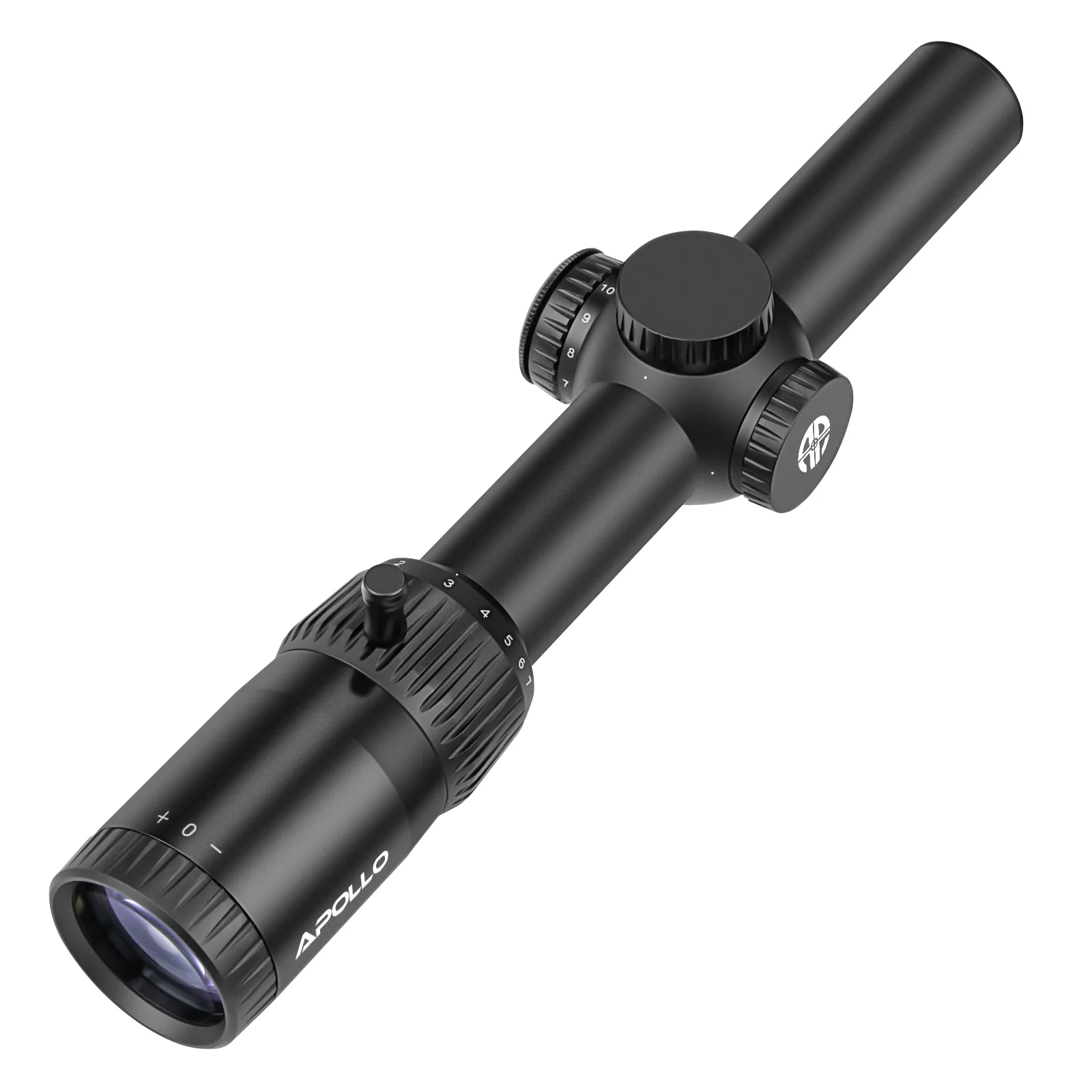
An LPVO, or low power variable optic, runs from true 1x for close-range, both-eyes-open engagement up to a magnified setting for precision. The Apollo Phoenix 1-8X24 LPVO, for example, uses a hybrid horseshoe-center-dot plus outer drift-ring reticle that stays visible at 1x and tightens into a precise sight picture at 8x. The cost is weight, bulk, a 30 mm tube, and the need to mount it correctly for eye relief.
Footprint and Mounting: The Hidden Decision
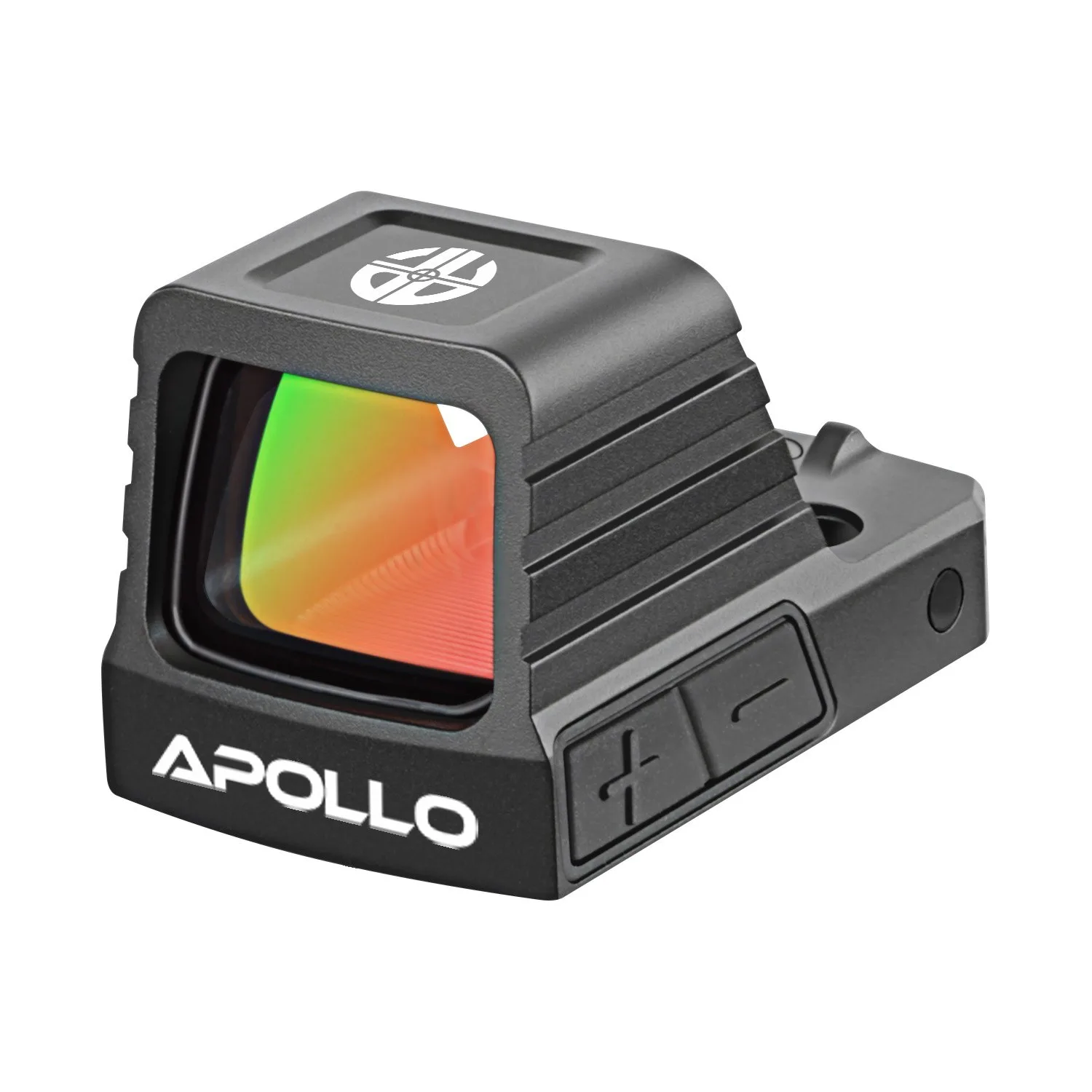
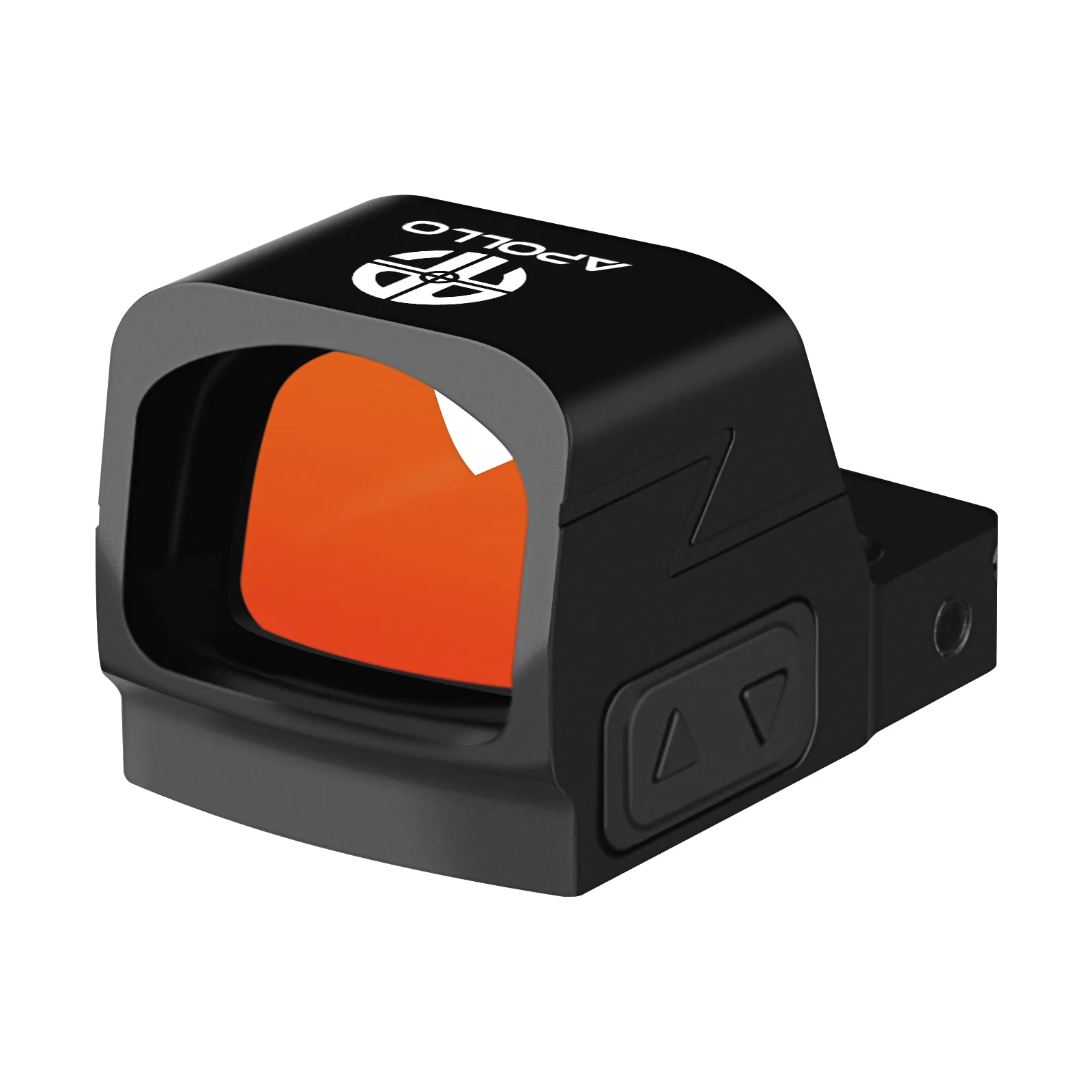
Micro red dots are not one footprint. The Apollo Eclipse uses a slim RMSc footprint for conceal carry and subcompact pistols, while the Orion Red uses an RMR footprint for broader holster and slide compatibility. If you already own a milled slide or a specific holster, that footprint often decides the purchase before brightness or window size does.
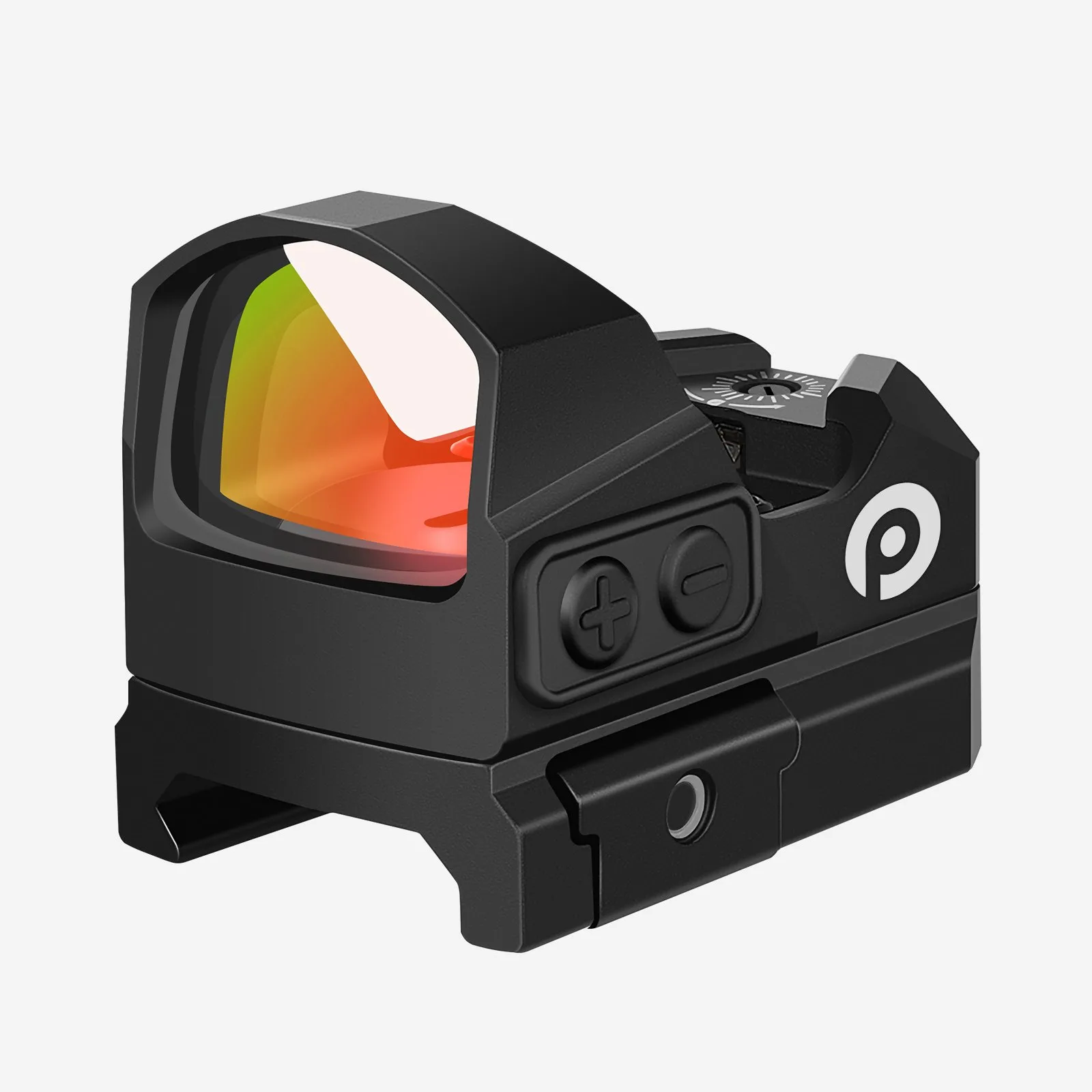
The Pulse Shake Awake also uses an RMSc footprint but ships with a Picatinny adapter, which makes it easier to move between a pistol slide and a rail-mounted platform. LPVOs like the Phoenix use a 30 mm tube and a Picatinny-ready mount, so you are choosing a ring height and eye relief position rather than a slide cut. If a product page does not list a footprint or mount type, treat that as missing information and confirm with the manufacturer before buying.
Window Size, Dot Size, and What You Give Up
A larger window makes it easier to find the dot when your draw is imperfect, but it prints more when carrying concealed. The Eclipse keeps a compact 18 x 14.3 mm window for a low profile, while the Orion Red uses a 24 x 17 mm window that is more forgiving to pick up. Neither is wrong; the smaller window rewards a consistent draw, and the larger one tolerates a rushed one.
Dot size works the same way. A 3 MOA dot is a common compromise: small enough for reasonable precision at 100 yards, large enough to find quickly up close. If your primary use is 200 yards and beyond, an LPVO with a reticle that offers holdovers and a magnified sight picture will serve you better than any 3 MOA dot.
Durability and Conditions
Both optic types need to survive recoil, weather, and impact. The Orion Red is built from 6061 aluminum with IPX7 waterproofing, which covers rain and brief submersion. The Pulse Shake Awake steps up to 7075 aluminum with fully multi-coated optical glass, and the Eclipse is described as rugged construction for dependable performance in all conditions. For an LPVO, the 30 mm tube and mount are the weak points if you torque rings unevenly or use a cheap mount.
Shake-awake is a practical feature on a carry gun because the dot is on when you grab it and off when you holster it, preserving battery. LPVOs typically use a throw lever or magnification ring, so the equivalent habit is setting the optic at 1x when you store it and checking the illumination battery on a schedule.
Decision Rules for Picking Your Sight
- If your shooting is inside 25 yards: A micro red dot is the faster, lighter answer. The Apollo Eclipse, Pulse Shake Awake, and Orion Red all use a 3 MOA dot that is easy to find on a draw and does not add rifle-length bulk to a carry gun. Pick a red dot and spend the saved weight on training ammo.
- If you need to identify targets past 100 yards: Magnification is not optional. The Apollo Phoenix 1-8X24 LPVO gives you true 1x for close work and 8x for precision, with a reticle that stays visible at both ends of the range. Choose the LPVO when target identification matters as much as hitting.
- If your rifle does home defense and hunting: One LPVO can cover both roles if you practice transitioning between 1x and the magnified setting. Set it at 1x for storage and close-range use, then dial up for a longer shot. A single LPVO beats two rifles you have not zeroed.
- If you already own a milled slide or holster: Match the footprint before anything else. RMSc and RMR are not interchangeable without an adapter, so confirm the cut on your slide and the shell on your holster. Footprint first, features second.
Apollo Optics That Fit These Roles
- Apollo Eclipse: The Apollo Eclipse is engineered for conceal carry and subcompact pistols, offering a slim RMSc footprint and a crisp 3 MOA red dot with a compact 18 x 14.3 mm window. The slim footprint and small window keep a low profile, so it disappears under a shirt and still gives a clear sight picture for close-range carry.
- Pulse Shake Awake: The Pulse Shake Awake uses an RMSc footprint plus a Picatinny adapter, is built from 7075 aluminum with fully multi-coated optical glass, and offers a 3 MOA aiming point with wake-on-movement. The adapter lets you move the same optic between a pistol slide and a rail, and shake-awake means the dot is ready without pressing a button.
- Orion Red: The Apollo Orion Red is built on an RMR footprint with a 24 x 17 mm viewing window, 6061 aluminum construction, IPX7 waterproofing, and a 3 MOA dot, and ships with an RMR footprint and a Picatinny adapter mount. The larger window and broad RMR compatibility make it a practical choice if you want a forgiving sight picture and wide holster or slide support.
- Apollo Phoenix 1-8X24 LPVO: The Apollo Phoenix 1-8X24 LPVO is a true 1x low-power variable optic with a hybrid horseshoe-center-dot plus outer drift-ring reticle, a rugged 30 mm tube, and a Picatinny-ready mount. True 1x keeps close-range engagement fast, and the 8x setting gives a tight sight picture for medium-range precision without switching rifles.
Who Should Choose Which
Best for
- Conceal carry and subcompact pistols where low profile and fast draw matter
- Home defense inside 25 yards where a simple, bright aiming point is enough
- Shooters who want one optic they can move between a pistol slide and a Picatinny rail
- Rifle shooters who need target identification and precision past 100 yards
Not for
- Shooters who need magnification for small targets at distance and will not add an LPVO
- Anyone who wants a magnified sight picture but refuses to manage eye relief and mount height
- Buyers who cannot confirm their slide cut or holster footprint before ordering