Quick answer
An LPVO like the Apollo Phoenix or Apollo Terra is the better choice if you hunt in close to medium cover and need fast target acquisition; a traditional high-magnification scope wins for open-country, extreme-range shots.
Why magnification range matters in the field
Hunting often demands both snap shooting at close quarters and careful aim at distance. An LPVO gives you a true 1× setting for both-eyes-open shooting, while a traditional scope with a 4–16× or 10–60× range excels when you need to identify antlers or place a precise shot past 300 yards.
The tradeoff is simple: LPVOs trade top-end magnification for speed and a wider field of view at low power. Traditional scopes give you more zoom but can feel like a tunnel at 1× (if they even go that low).
Reticle design differences
LPVO reticles are built for rapid holdovers and close-range engagement. The Apollo Phoenix uses a hybrid horseshoe-center-dot with an outer drift ring, so you can track a moving target without losing the aiming point. The Apollo Terra has an etched-glass ranging reticle with holdovers out to 900 meters for popular calibers.
Traditional scopes often feature fine crosshairs or mil-dot patterns that work well at high magnification but can be hard to pick up quickly at low power. If you hunt in thick brush or timber, a bold LPVO reticle will get on target faster.
LPVO vs traditional scope tradeoffs
- Close-to-medium cover hunting (0–300 yards): Choose an LPVO like the Apollo Phoenix 1–8×24 or Apollo Terra 1–6×24. The true 1× setting gives you a wide field and fast target acquisition. You sacrifice top-end magnification, but inside 300 yards you rarely need more than 8×.
- Open-country / mountain hunting (300+ yards): A traditional scope with higher magnification (e.g., 4–16× or 10–60×) gives you the resolution and sight picture needed for ethical shots at distance. You lose the 1× close-quarters speed, but that tradeoff is acceptable when most shots are long.
- Mixed terrain / all-day carry: An LPVO is typically lighter and more compact than a full-sized long-range scope. If you hike miles between stands or cover varied terrain, the weight savings and flexibility of 1–8× or 1–6× make the LPVO the practical choice. Check the weight and length of the scope against your rifle and pack setup.
Product facts
-
Apollo Phoenix 1-8X24 LPVO: The Apollo Phoenix is a true 1× LPVO with an 8× top end and a hybrid horseshoe-center-dot reticle. It lets you keep both eyes open at 1× for close brush work while still reaching out to medium range at 8×.
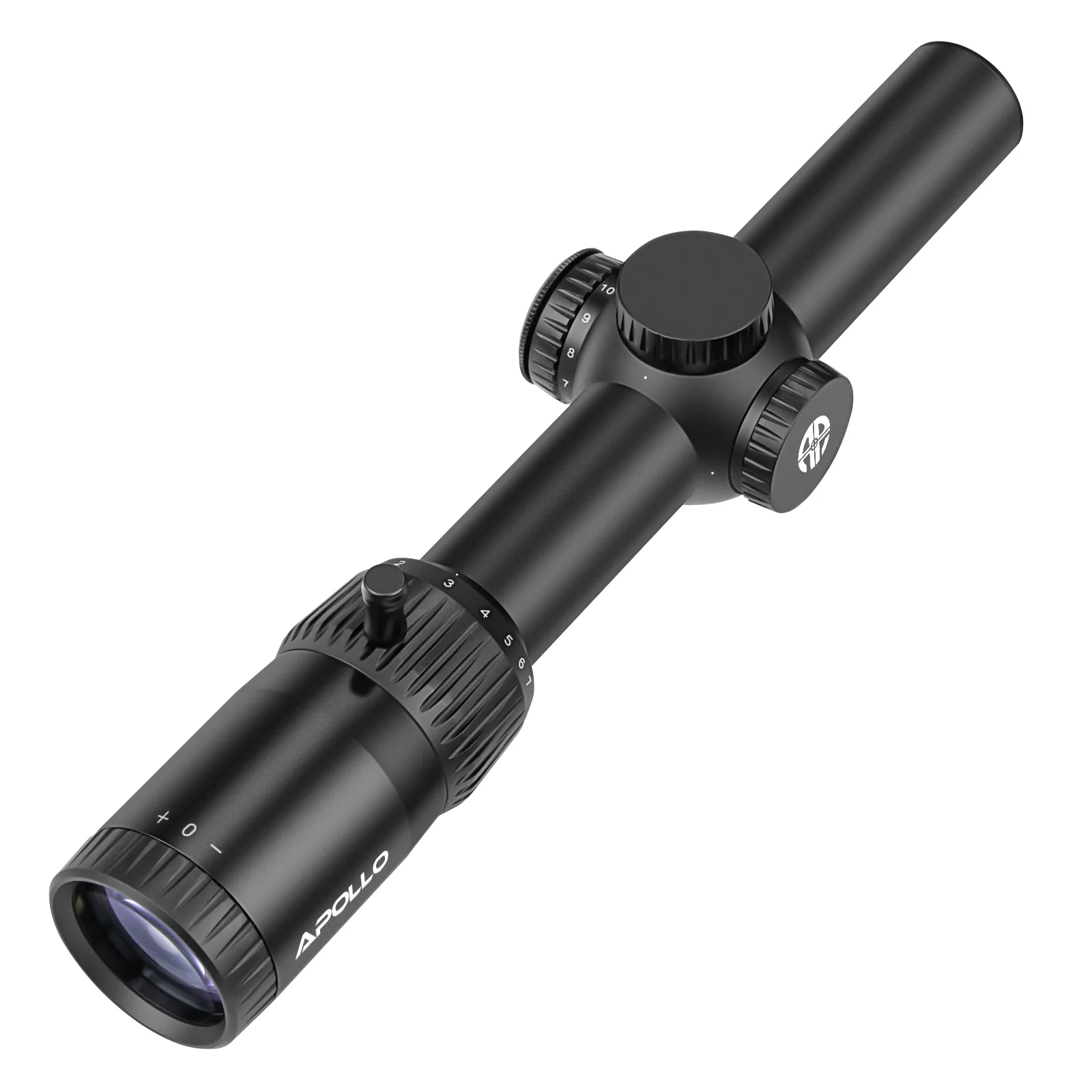
Apollo Phoenix 1-8X24 LPVO
-
Apollo Terra 1-6×24 LPVO: The Apollo Terra has an etched-glass ranging reticle with holdovers out to 900 meters for .223, 5.56, and .308. You can estimate range and hold over without dialing, which is a real time-saver when a shot window closes fast.
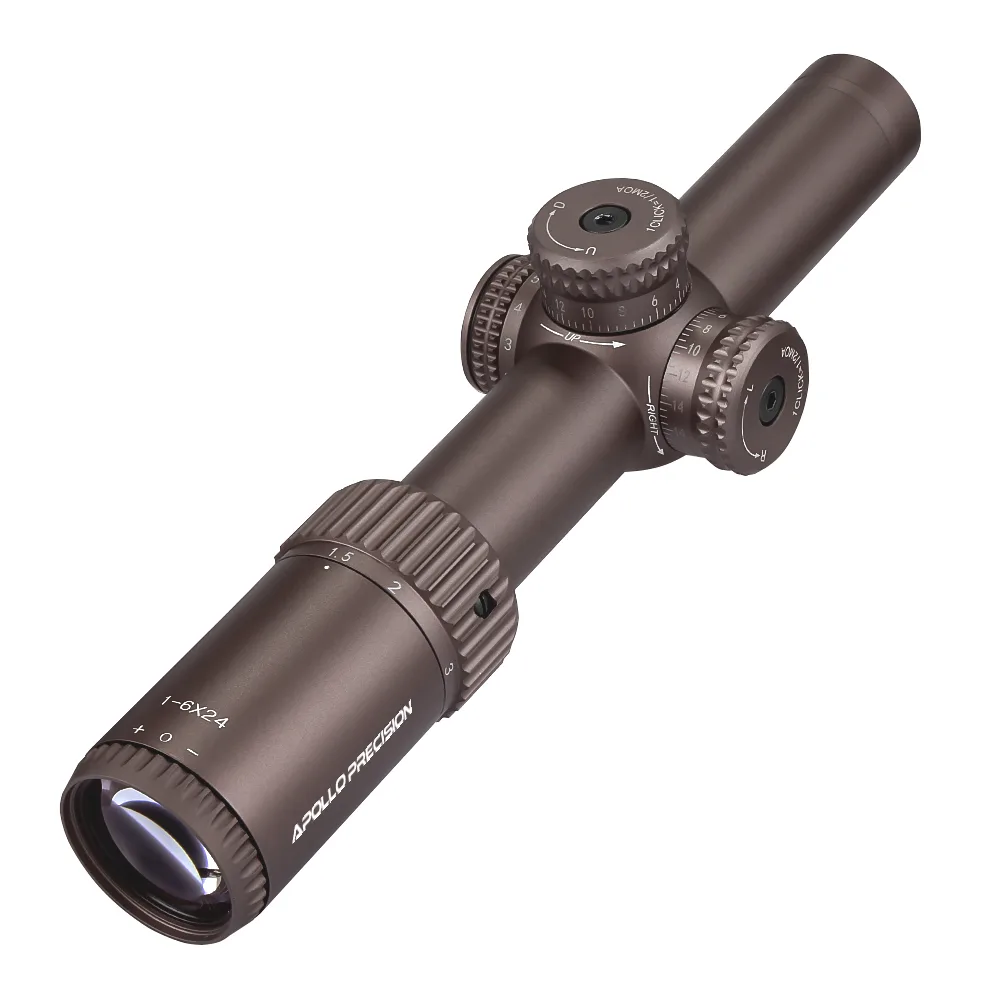
Apollo Terra 1-6×24 LPVO
Which one fits your hunt?
Best for
- Hunters who work thick cover, timber, or brush and need fast close-range shots
- Hunters covering mixed terrain who want one scope for both still-hunting and spot-and-stalk
Not ideal for
- Long-range specialists who routinely take shots beyond 400 yards and need high magnification
- Hunters who prefer a fine crosshair at high power for precision load development or target identification at extreme distance