Quick answer
Clean your suitcase after every trip, keep wheels and zips free of grit, and store it empty and dry rather than crammed in a damp space. The biggest gains come from three habits: wipe or vacuum the shell, clear hair and dust from the wheel housings, and never store luggage dirty or wet. Do this and you will extend luggage lifespan far more than any single deep clean.
Most suitcase damage is not caused by one bad flight. It builds up slowly from grit in the wheels, dust in the zip teeth, and long months pressed into a damp corner. A short care routine after each trip prevents that build-up and keeps your bag ready to pack at a moment's notice.
This suitcase care guide walks through the process in order, from emptying and cleaning to wheel maintenance and storage. It covers both fabric and hard-shell designs, because the right method depends on what your bag is made of. Each step includes the checkpoint that tells you when to stop or switch approach.
Start by emptying and airing the bag
Unpack everything, including the small items that hide in side pockets and mesh compartments. Leave every zip open and let the bag air out for a few hours before you clean it. This matters more than it sounds: trapped moisture from a wet towel or damp clothing is what causes odors and, over time, weakens linings and coatings.
Once the bag is empty, check the interior seams and corners for crumbs, sand, or small debris. Tip the bag upside down over a bin and shake gently. A vacuum with a soft brush attachment works well on fabric linings, while a dry microfiber cloth is enough for coated or hard-shell interiors.
- Common mistake: cleaning a full bag. You will miss debris in the pockets and push dirt deeper into the lining.
- Checkpoint: the bag is completely empty, dry to the touch, and smells neutral before you move on.
Clean the exterior according to material
For fabric suitcases, mix a little mild soap with lukewarm water, dip a soft cloth, and wipe the surface without soaking it. Work in sections and pay attention to high-contact areas like handles, the base, and the edges where dirt collects. Rinse the cloth often so you are lifting dirt rather than spreading it.
Hard-shell luggage is easier: a damp cloth with mild soap removes most marks, and a soft brush handles scuffs along the corners. Avoid abrasive cleaners, solvents, and scrubbing pads, which dull the finish and can scratch a grained or coated surface. If your shell has a water-resistant or scratch-resistant finish, gentle cleaning is what preserves it.
- Common mistake: soaking fabric or using harsh chemicals. Both can damage coatings and leave residue that attracts more dirt.
- Checkpoint: no visible marks remain on high-contact areas, and the surface is dry before you close the bag.
Maintain wheels, zips, and handles
Wheels are the most neglected part of any suitcase and the most common cause of early replacement. Turn the bag over and remove hair, thread, and grit wrapped around the wheel axles with tweezers or a small brush. Wipe the wheels with a damp cloth, then let them dry completely before spinning them by hand to check they run freely.
For zips, brush out dust and sand with an old toothbrush, then run the zip open and closed a few times. If it feels stiff, apply a small amount of silicone or zip lubricant along the teeth, not on the fabric. Wipe handles and telescopic tubes with a damp cloth, and check that the handle extends and retracts smoothly without sticking.
- Common mistake: ignoring wheel hair until the wheel seizes. A two-minute clean prevents most wheel failures.
- Checkpoint: wheels spin freely and quietly, zips glide without force, and the handle locks at each height.
Dry the bag completely before storage
Never put a suitcase away damp. Even a small amount of moisture trapped inside a closed bag can cause mildew and a persistent smell. After cleaning, leave the bag open in a well-ventilated room, away from direct sun and radiators, until every surface and crevice is dry. This usually takes several hours, longer in humid conditions.
Once dry, place a moisture absorber or a small sachet of silica gel inside the main compartment. This is a simple, low-cost habit that protects linings and coatings during long storage periods, especially in closets, basements, or garages where humidity fluctuates.
- Common mistake: storing a bag the same day you clean it. Damp interiors are the leading cause of musty odors.
- Checkpoint: the inside of the bag feels dry to the touch, including seams, pockets, and the base.
Store luggage so it keeps its shape
Store suitcases upright or flat with the handles down, and avoid stacking heavy items on top of a soft bag. For fabric luggage, stuff the main compartment lightly with a clean towel or pillowcase to hold the shape without stretching the seams. Hard-shell bags can be nested if they fit, but check that the wheels and handles are not bearing weight.
Keep bags out of damp basements and hot attics when possible. A breathable dust cover, or a clean cotton pillowcase over smaller bags, keeps dust off without trapping moisture. If you store several pieces, leave a little space between them so air can circulate.
- Common mistake: compressing soft luggage into a tight space. Creases and strained zips become permanent over time.
- Checkpoint: the bag holds its shape, nothing presses on the wheels, and air can move around it.
Do a quick pre-trip check
Before every trip, spend two minutes on a fast inspection. Spin the wheels, run the zips, extend the telescopic handle, and check the TSA lock if your bag has one. Look at the base and corners for wear, and tighten any loose hardware you can reach. This catches small problems while they are still cheap and easy to fix.
If you travel often, keep a small care kit with a microfiber cloth, a soft brush, and a zip lubricant. Storing it inside the suitcase means you always have what you need, whether you are cleaning at home or wiping down a bag in a hotel room after a muddy trip.
- Common mistake: discovering a broken wheel or zip at the airport. A two-minute check at home prevents that.
- Checkpoint: wheels, zips, handle, and lock all work smoothly before the bag leaves your home.
Your six-step suitcase care routine
- Empty and air the bag: Remove everything from every pocket, open all zips, and let the bag air for a few hours. Checkpoint: dry, neutral-smelling interior before cleaning.
- Clean the exterior by material: Wipe fabric with mild soap and a damp cloth; use the same gentle approach on hard shells and coated surfaces. Checkpoint: no marks on handles, base, or corners, and a dry surface.
- Clear the wheels: Remove hair and grit from the axles, wipe the wheels, and spin them by hand. Checkpoint: wheels spin freely and quietly.
- Service the zips and handles: Brush zip teeth, apply a small amount of lubricant if stiff, and wipe handles and telescopic tubes. Checkpoint: zips glide without force and the handle locks at each height.
- Dry fully, then add a moisture absorber: Leave the bag open in a ventilated spot until completely dry, then place silica gel inside. Checkpoint: no damp spots in seams, pockets, or the base.
- Store with shape and space: Keep the bag upright or flat, avoid stacking weight on soft luggage, and leave room for air to circulate. Checkpoint: nothing presses on wheels or handles.
Built to resist: care examples from our range
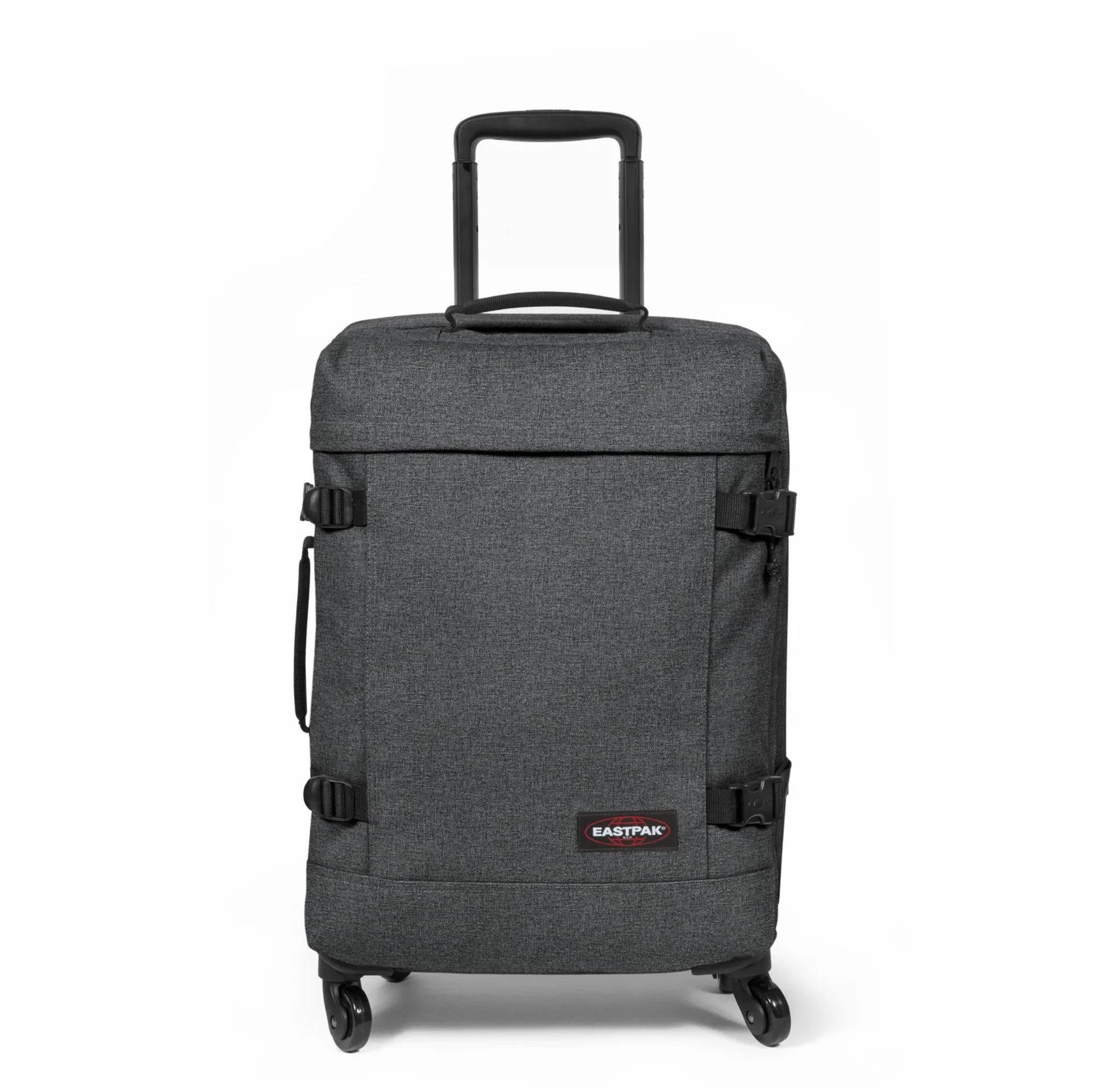
- https://eastpakex.com/products/trans4-s-black-denim-e9b5cbb230d4afa62084b118-1384238TRANS4 S BLACK DENIM: Features a double deck compartment with zip closure and compression straps, 360° spinning wheels, a telescopic handle, and top and side padded handles. The double deck and compression straps help you pack without overstuffing, which reduces strain on zips. The 360° wheels and padded handles are the parts to check and clean most often.
- RESIST'R ZIP L MONOTONE BLUE: Large durable hard shell luggage with two zippered compartments, Japanese 360-degree spinning wheels, an integrated TSA lock, and a grained scratch-resistant and water-resistant shell. A scratch-resistant and water-resistant shell simplifies cleaning: a damp cloth handles most marks, and you can skip heavy scrubbing that would dull the finish. Clean around the TSA lock and wheels regularly so they keep working smoothly.
- TRANSIT'R PRO M NAVY PRO COATED: Two smooth and silent wheels, an integrated TSA lock, a water repellent coating, a quick access top pocket, and a handlebar at the bottom for easy handling. The water repellent coating protects belongings from light rain but still needs a dry cloth wipe after wet trips. Two-wheel designs benefit from extra attention to the wheel housings, since grit there affects rolling more noticeably.
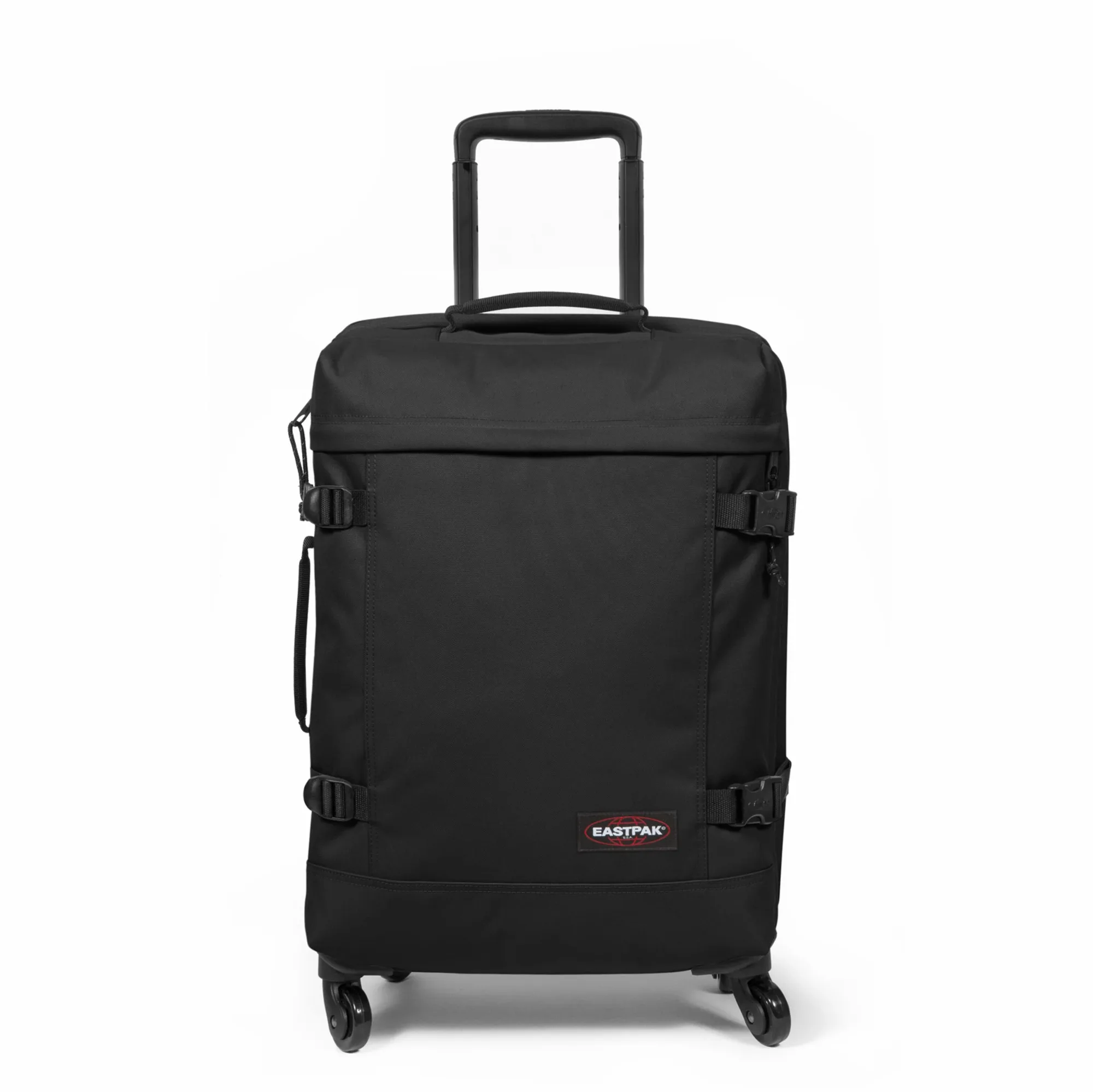
- TRANSIT'R 4 L + BLACK: Large four-wheeled suitcase with two main compartments, a zip-fastening front pocket, an integrated TSA three-digit code lock, 360-degree spinning wheels, aluminum tubes, protective skids, and water repellant fabric. Protective skids take the wear on stairs and curbs, so check them for looseness. Water repellant fabric should be wiped rather than soaked, and the aluminum tubes and telescopic handle benefit from a dry cloth wipe to keep them gliding.
Luggage care is mostly about consistency, not products. A few minutes after each trip to empty, clean, dry, and check your bag will keep wheels rolling, zips gliding, and fabrics looking better for years. Start with the step you have been skipping, and build the routine from there.