Quick answer
Use a luggage tag with a covered privacy flap and write only your name, mobile number, and a frequent-flyer or business address on the inside. Carry a slim RFID card holder in a front pocket instead of a bulky wallet, and photograph your bag and tag before you leave for the airport. These three habits reduce the chance of a lost bag, a stolen card, or an identity leak at baggage claim.
Why your luggage tag is a privacy risk, not just a label
A standard luggage tag displays your full name, home address, and phone number to anyone standing near the carousel. That is enough information for a stranger to learn where you live or to call your phone while you are still searching for your bag. A better approach is a tag with a fold-over privacy flap: the outside shows only a name or initials, and the detailed contact information stays hidden until you lift the flap. If your current tag has no cover, write your mobile number and an email address instead of a street address. Airlines can reach you by phone or email, and a thief cannot use your home address.
The same logic applies to how you attach the tag. Loop it through the top handle rather than a zipper pull or a side D-ring. Handles are reinforced and less likely to tear off during conveyor belt handling. If you use a paper airline tag, add a second personal tag inside the bag as well, because paper tags tear easily.
Choose a travel wallet that stays on your body
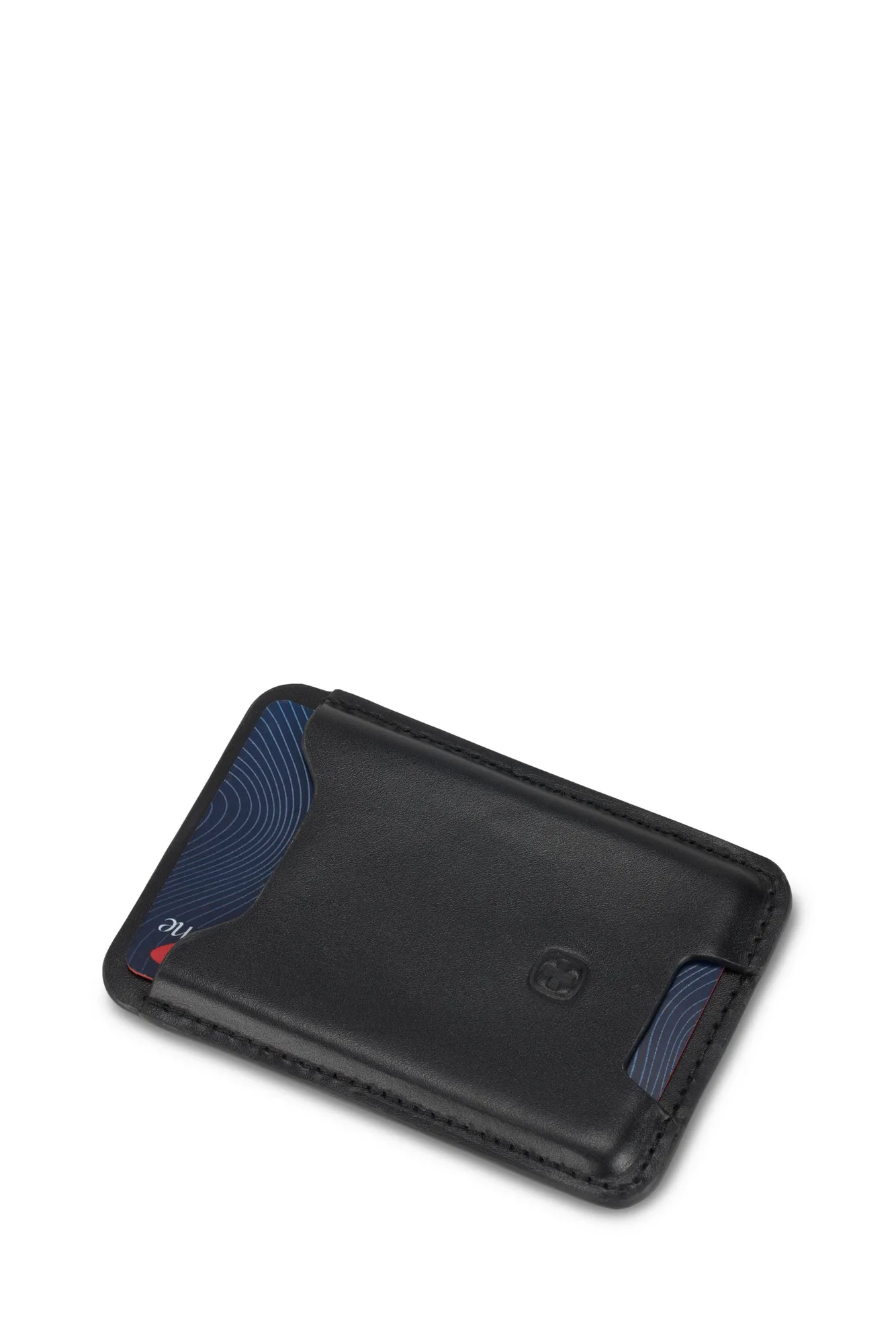
A bulky bi-fold wallet in a back pocket is the easiest target in a crowd, and it is uncomfortable to sit on during a long flight. For travel, a slim card case or RFID-blocking card holder that fits in a front pocket or crossbody bag keeps your ID, one credit card, and a transit card accessible without exposing everything at once. The SWISSGEAR Snapp Phone Card Holder for MagSafe is designed for this role: it clicks onto a MagSafe-compatible phone case, holds multiple cards in a single slot, and includes RFID protection. Because it attaches to your phone, you are less likely to leave it in a seatback pocket or on a security bin.
If you prefer a traditional wallet, empty it before the trip. Take only the cards you will actually use, and leave loyalty cards, gift cards, and extra IDs at home. A thinner wallet is harder to drop and easier to check after every transaction.
Make your bag identifiable without advertising your name
Most bags are black, gray, or navy, which makes baggage claim a guessing game. A bright strap, a colored handle wrap, or a distinctive tag helps you identify luggage at baggage claim without reading every name tag. Avoid writing your full name in large letters on the outside of the bag; a first initial and last name is enough for airline staff to match the bag to your claim.
Before you check a bag, take a photo of the bag and its tag with your phone. If the bag goes missing, you can show the airline exactly what it looks like and read the tag number from the photo. Keep that photo in a separate album from your travel documents.
Run a two-minute security check before security and after landing
Pickpockets work security lines because travelers are distracted by bins, laptops, and shoes. Before you reach the conveyor, put your phone, card holder, and passport in one zipped pocket or bag, and keep that bag in front of you. After you pass through, step to a wall or a quiet corner, not the end of the belt, and confirm that every item is still with you. Do the same check after landing, before you leave the gate area. If you use a card holder that snaps to your phone, verify the snap is still attached after you have taken the phone out of a bin.
At baggage claim, stand back from the carousel until you see your bag. Rushing forward puts you in the crowd where a wallet can be lifted. Once you have the bag, check the tag to confirm it is yours before you walk away.
Your step-by-step routine for tagging bags and carrying ID
- Write the tag information before you leave home: Put your full name, mobile number, and email on the inside of a privacy-flap tag. On the outside, write only your last name and first initial. Common mistake: writing your home address on the outside where anyone can photograph it. Checkpoint: the outside of the tag should not reveal your street address.
- Attach the tag to the top handle, not a zipper: Loop the tag through the reinforced top handle of your carry-on or tote. If you use a paper airline tag, add a second personal tag inside the bag. Common mistake: attaching the tag to a zipper pull that can snap or a side ring that catches on belts. Checkpoint: tug the tag gently; it should not slide off the handle.
- Move your ID and cards into a slim holder: Transfer your ID, one credit card, and a transit card into a card case or RFID card holder. Leave extra cards and your bulky bi-fold wallet at home. Common mistake: carrying every card you own, which makes the wallet harder to track and more painful to replace if lost. Checkpoint: your travel wallet should fit in a front pocket without bulging.
- Photograph your bag and tag: Take one photo of the closed bag and one close-up of the tag. Store the photos in a travel album on your phone. Common mistake: relying on memory when the airline asks for a description at the baggage service desk. Checkpoint: the tag number should be readable in the photo.
- Do a pocket check after security and after landing: Before you step away from the security bin, confirm your phone, card holder, and passport are in the same zipped pocket. Repeat the check after you land and before you leave the gate area. Common mistake: patting a back pocket where a pickpocket can see exactly where your wallet is. Checkpoint: keep the zipped pocket on your front side, not your back.
- Confirm your bag before you leave baggage claim: Stand back from the carousel, wait until the bag is in front of you, then read the tag before pulling it off. Common mistake: grabbing the first similar-looking bag and walking away without checking the tag. Checkpoint: the name on the tag should match the name on your boarding pass.
Products that support these habits
- SWISSGEAR Snapp Phone Card Holder for MagSafe: The SWISSGEAR Snapp Phone Card Holder for MagSafe is made from top grain leather with a reinforced, non-bendable structure, a single card slot that holds multiple cards, and RFID protection. A rigid card holder keeps cards from bending or falling out, and RFID protection blocks unauthorized scans. Because it clicks onto a MagSafe-compatible phone case, it stays with the device you already check most often.
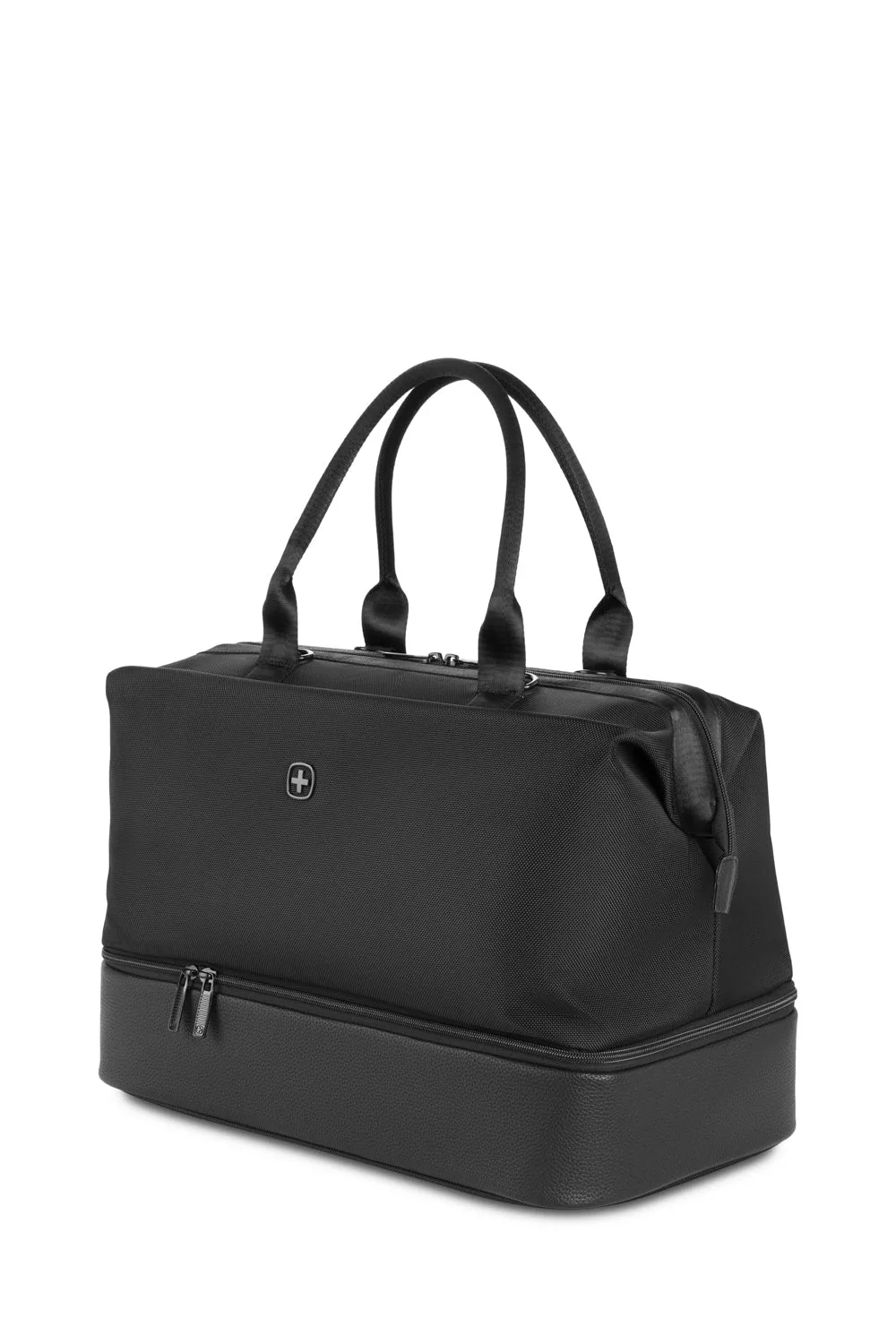
- SWISSGEAR Weekender Travel Tote: The SWISSGEAR Weekender Travel Tote has a title option and is priced at USD 69.00, compared with a catalog comparison price of USD 100.00. A tote with a top handle gives you a secure place to loop a luggage tag and a zipped interior pocket for a card holder, so your ID and cards are not loose in an open bag.
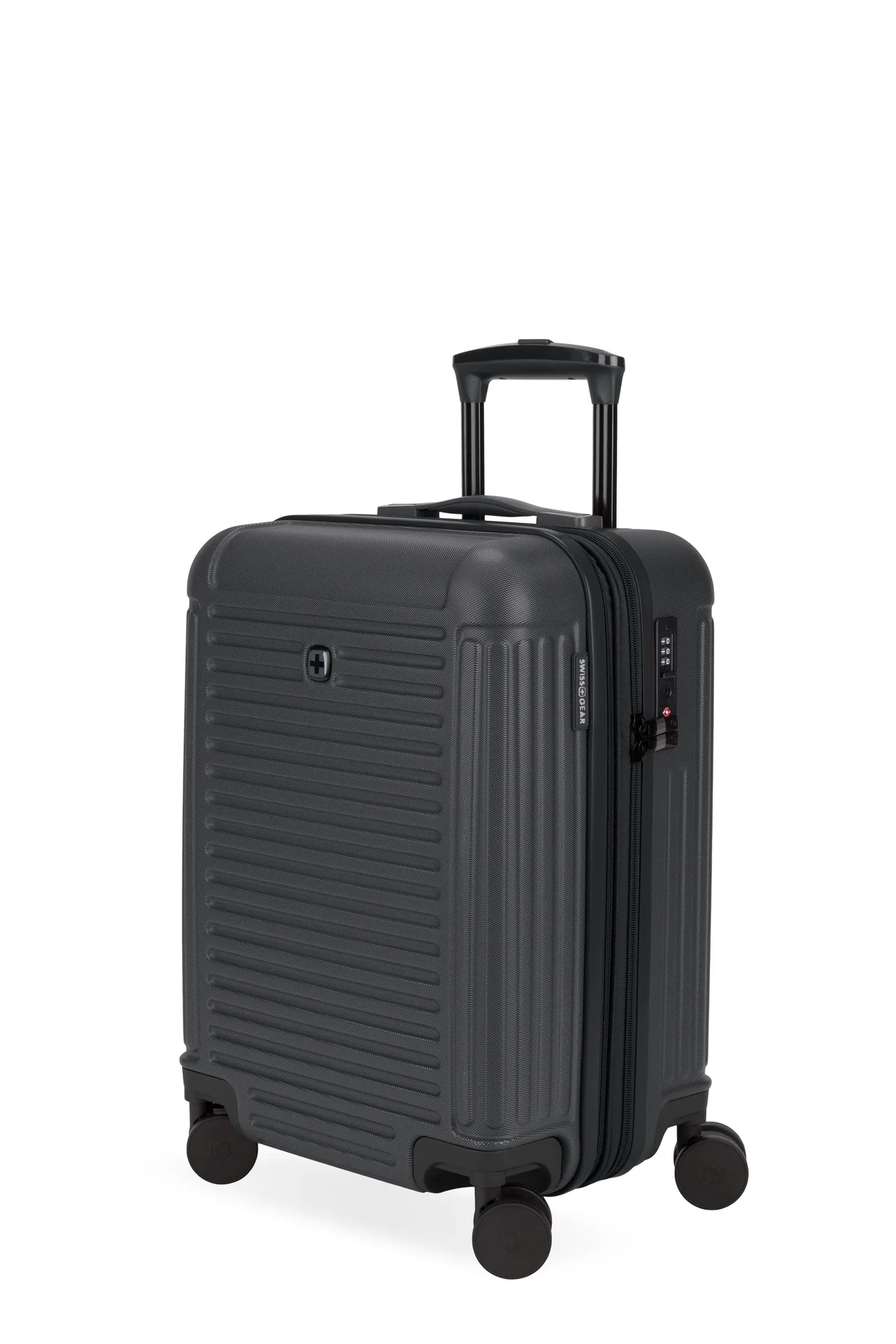
- SWISSGEAR Summit Reserve Carry On Spinner: The SWISSGEAR Summit Reserve Carry On Spinner has eight multi-directional spinner wheels, a split-case interior with a compression panel, accessory pocket, separator panel, integrated wet bag, and flat packing pocket, plus a retractable locking handle and 2-inch expandable construction. Multiple interior pockets let you separate a wallet or passport from clothing, and the locking handle gives you a fixed point to attach a tag so it is less likely to be torn off in transit.
Before your next flight, set up your tag with a privacy flap, move your essentials into a slim RFID card holder, and run the pocket check after security and after landing. Those three actions take less than five minutes and cover the most common ways ID and bags go missing in transit.