Quick answer
Choose a lumbar cover that is 2–4 inches smaller than your insert for a full look, and match the width to your furniture: 12x20 inches for narrow chairs, 14x22 or 14x36 for sofas, and 12x24 for beds. For a soft, washable accent, try the https://brooklinenstore.com/products/cotton-velvet-lumbar-pillow-cover-47600Cotton Velvet Lumbar Pillow Cover; for a textured, artistic statement, the https://brooklinenstore.com/products/caroline-z-hurley-hand-block-print-lumbar-pillow-cover-47632Caroline Z. Hurley Hand Block Print Lumbar Pillow Cover is a strong choice.
Start with the insert, not the cover
A lumbar cover only looks right when the insert fills it properly. Measure your insert’s width and height, then choose a cover that is 2–4 inches smaller in both dimensions. For example, a 14x22 cover needs a 16x24 insert. If the cover is the same size as the insert, it will look flat and limp; if it’s too small, the insert will strain the seams and zipper. Feather inserts give a traditional, sink-in feel, while down-alternative inserts are a good hypoallergenic option and hold their shape well. Brooklinen sells feather inserts separately, so factor that into your budget. If you already own an insert, measure it before buying any cover—this one step prevents most returns.
Match size to furniture and room
Lumbar covers come in standard sizes, but the right one depends on where you’ll use it. On a sofa, a 14x22 or 14x36 cover adds width without blocking the backrest. On a narrow accent chair, a 12x20 cover fits better. On a bed, a 12x24 cover works as a finishing piece in front of standard pillows. If you’re layering with square pillows, keep the lumbar cover slightly narrower than the square to create a balanced stack. For a bench or window seat, a longer lumbar (14x36) can act as a single, clean accent. When in doubt, tape the dimensions on your furniture with painter’s tape to see the footprint before you buy.
Choose a fabric that fits your life
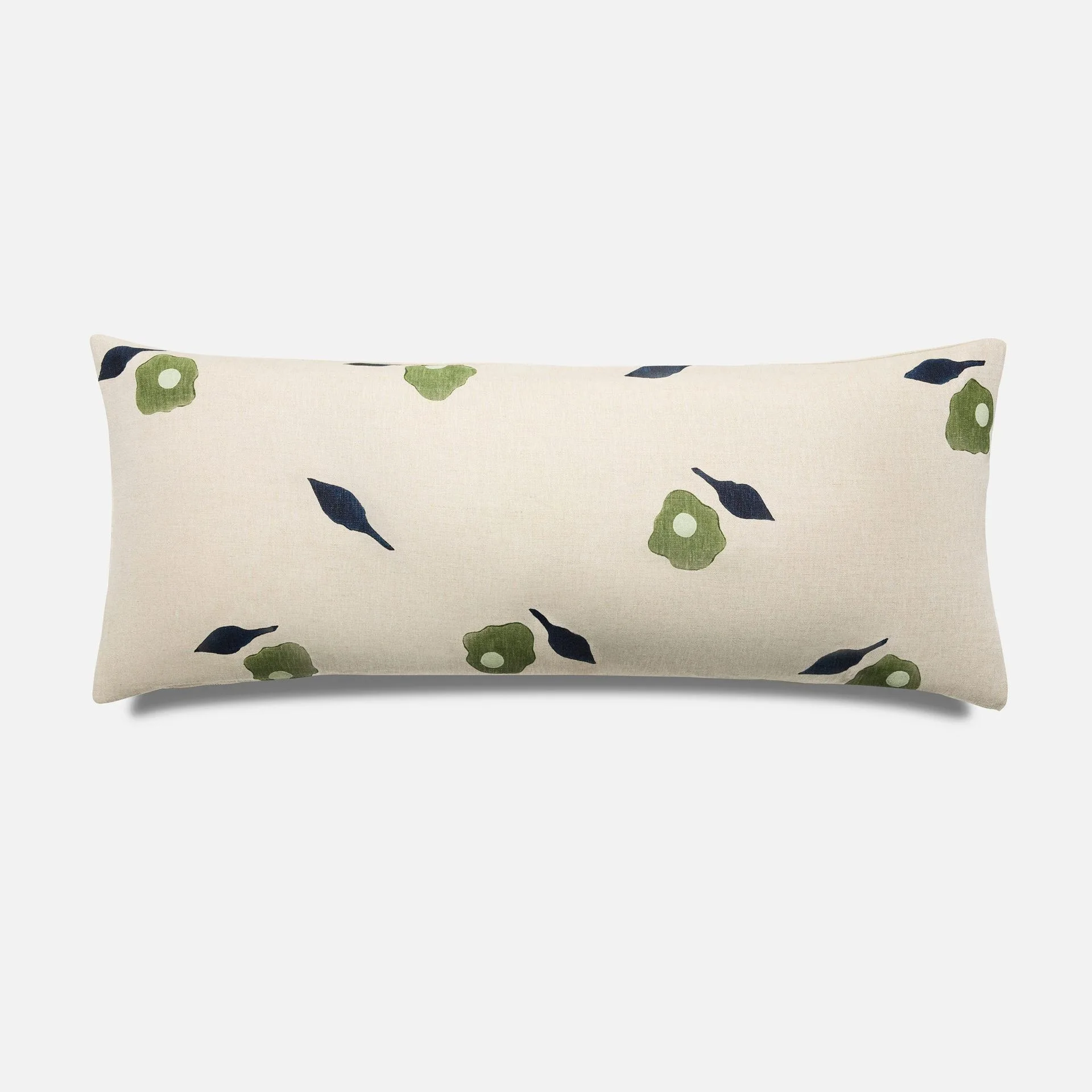
Fabric determines how a lumbar cover feels and how much care it needs. Cotton velvet, like the Cotton Velvet Lumbar Pillow Cover, is garment-washed and dyed for a soft handfeel and bold color—it’s a good pick for a polished, low-maintenance bed or sofa. Hand block print linen, like the Caroline Z. Hurley Hand Block Print Lumbar Pillow Cover, is textured and artistic, but linen can wrinkle and may need ironing. Cotton slub, like the Drifting Blooms Lumbar Pillow Cover, is machine washable and reversible, which is practical for high-traffic rooms. If you have pets or kids, choose a cover you can machine wash cold and tumble dry low; check the care label before buying. None of these covers include an insert, so plan to buy one separately.
Placement rules that actually work
On a sofa, place one lumbar cover in the center of each seat cushion, or offset two covers to one side for an asymmetric look. On a bed, center a lumbar cover in front of your sleeping pillows, or layer it over a square decorative pillow. On a chair, a single lumbar cover at the lower back adds support and color. For a console or bench, a single long lumbar cover can anchor the space. Avoid placing a lumbar cover where it will be squeezed by a tight armrest or behind a heavy throw—it will lose its shape. If you’re styling a rental or a room you change often, stick to neutral covers and swap in colorful inserts or throws instead.
Decision rules for buying a lumbar cover
- If you already have an insert: Measure it and choose a cover 2–4 inches smaller in both width and height. For example, a 16x24 insert fits a 14x22 cover. Write down your insert size before you shop.
- If you’re buying for a sofa: Choose a 14x22 or 14x36 cover for a balanced look. For a narrow chair, choose 12x20. For a bed, choose 12x24. Tape the dimensions on your furniture to check the footprint.
- If you need easy care: Pick a cotton or cotton slub cover you can machine wash cold and tumble dry low. Linen and velvet may need gentler handling. Check the care label before buying.
- If you want a quick refresh: Choose a reversible cover like the Drifting Blooms Lumbar Pillow Cover to switch between two patterns without buying a second cover. One cover, two looks.
Product facts
- Cotton Velvet Lumbar Pillow Cover: Made from 100% cotton that’s been garment-washed and dyed for a super soft handfeel and bold color; includes one pillow cover and a visible silver zipper closure; feather insert sold separately. The soft, washable cotton velvet is a practical choice for a polished bed or sofa, but you’ll need to buy an insert separately.
- Caroline Z. Hurley Hand Block Print Lumbar Pillow Cover: Produced in limited runs in Caroline Z. Hurley’s studio, made of 100% heavyweight linen with non-toxic inks; described as luxe, textured, and hand-crafted. This is a good option if you want a textured, artistic accent that feels one-of-a-kind, but linen requires more careful care than cotton.
- Drifting Blooms Lumbar Pillow Cover: Double-sided design with floral print on one side and vertical stripes on the other; made of 100% cotton slub; machine wash cold, gentle cycle, tumble dry low; includes one pillow cover; feather insert sold separately. The reversible design gives you two looks in one cover, and the machine-washable care makes it easy to live with in busy rooms.
Who this guide is for
Best for
- Shoppers who want a lumbar cover for a sofa, bed, or chair and need help with sizing and insert fit.
- Anyone looking for a washable, soft accent cover or a textured, artistic statement piece.
Not for
- Shoppers who need a cover with an insert included—these covers are sold separately from inserts.
- Those who want a fully reversible, two-pattern option—choose a double-sided design instead.