Quick answer
A lunch box keeps food better when you pack saucy, leak-prone, or stacked meals, because rigid walls and sealed compartments hold temperature and contain spills. An insulated lunch bag keeps food better when your meals vary in shape and size, since soft walls flex around odd containers and crush nothing. If you commute with a backpack, the deciding factor is often which one fits your bag without squeezing your laptop or spare layers.
What actually keeps food at a safe temperature
Both formats rely on the same physics: an insulated layer slows heat transfer, and a sealed interior traps cold air. A rigid lunch box usually holds a tighter seal around the lid, so cold air stays put and condensation does not soak your bag. An insulated lunch bag depends on its zipper and lining quality; a soft bag with a thin lining and a loose zip will warm up faster than a hard-sided box with a gasket. Neither format refrigerates food, so the practical move is to add a frozen gel pack and keep the whole kit out of direct sun.
The variable people forget is air space. A half-empty box or bag has more warm air inside, which speeds up temperature change. Pack your container full, or add a small folded cloth to take up the gap.
Leaks, smells, and cleanup
Rigid boxes win on containment. A sealed compartment keeps curry, dressing, or soup away from your notebook and cables. Soft bags win on portability but lose on spills: a tipped bag with a loose container can leak through the lining and into whatever it touches. If you carry a waterproof backpack, a leak inside is still a leak, because waterproofing protects against rain, not against soup. Use a sealed container inside a bag, or choose a box with individual lidded sections.
Cleanup matters too. Hard plastic and stainless interiors wipe clean and do not hold odors. Fabric linings need a wipe-down after every saucy meal, and some seams trap smells over time.
How each format fits inside a commuter backpack
A lunch box is a fixed footprint. It sits flat on the base of a main compartment and stacks predictably, but it does not compress when you need space for a jacket-male-05a2e3cd05f2c3d9dca274e5-781567">jacket or gym kit. An insulated lunch bag squashes into gaps, which is useful in a packed backpack but risky next to a laptop, since a soft bag offers no structural protection.
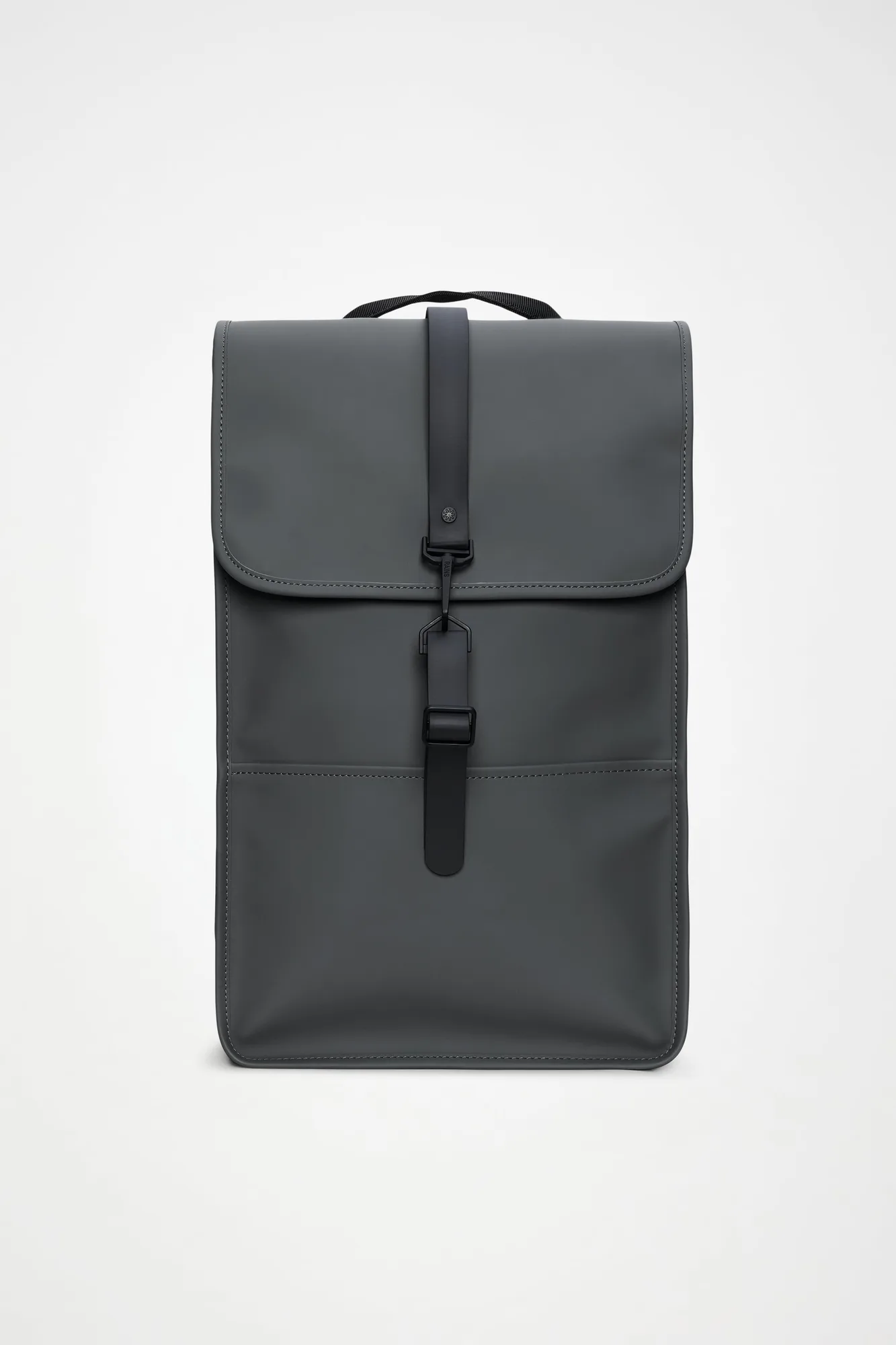
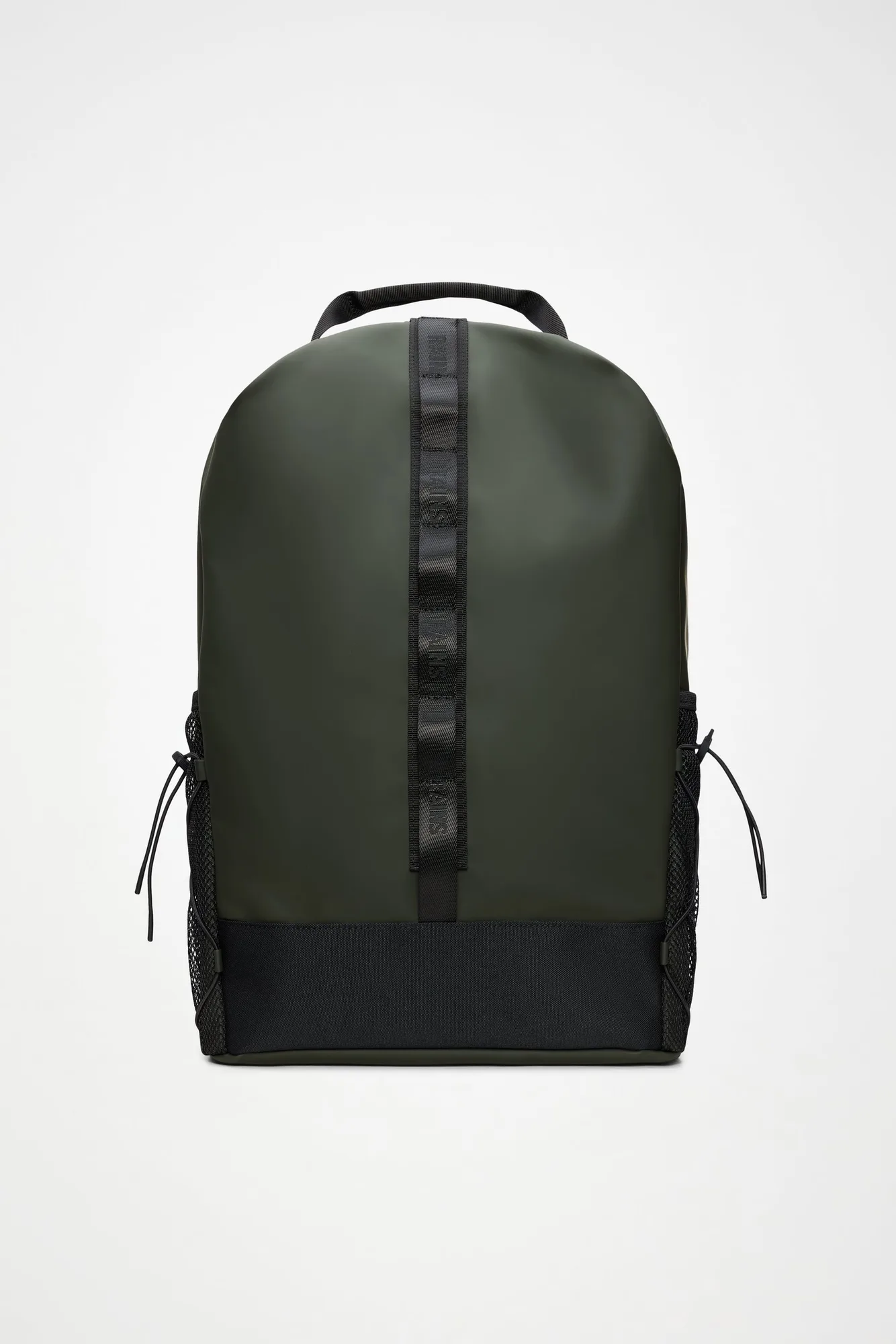
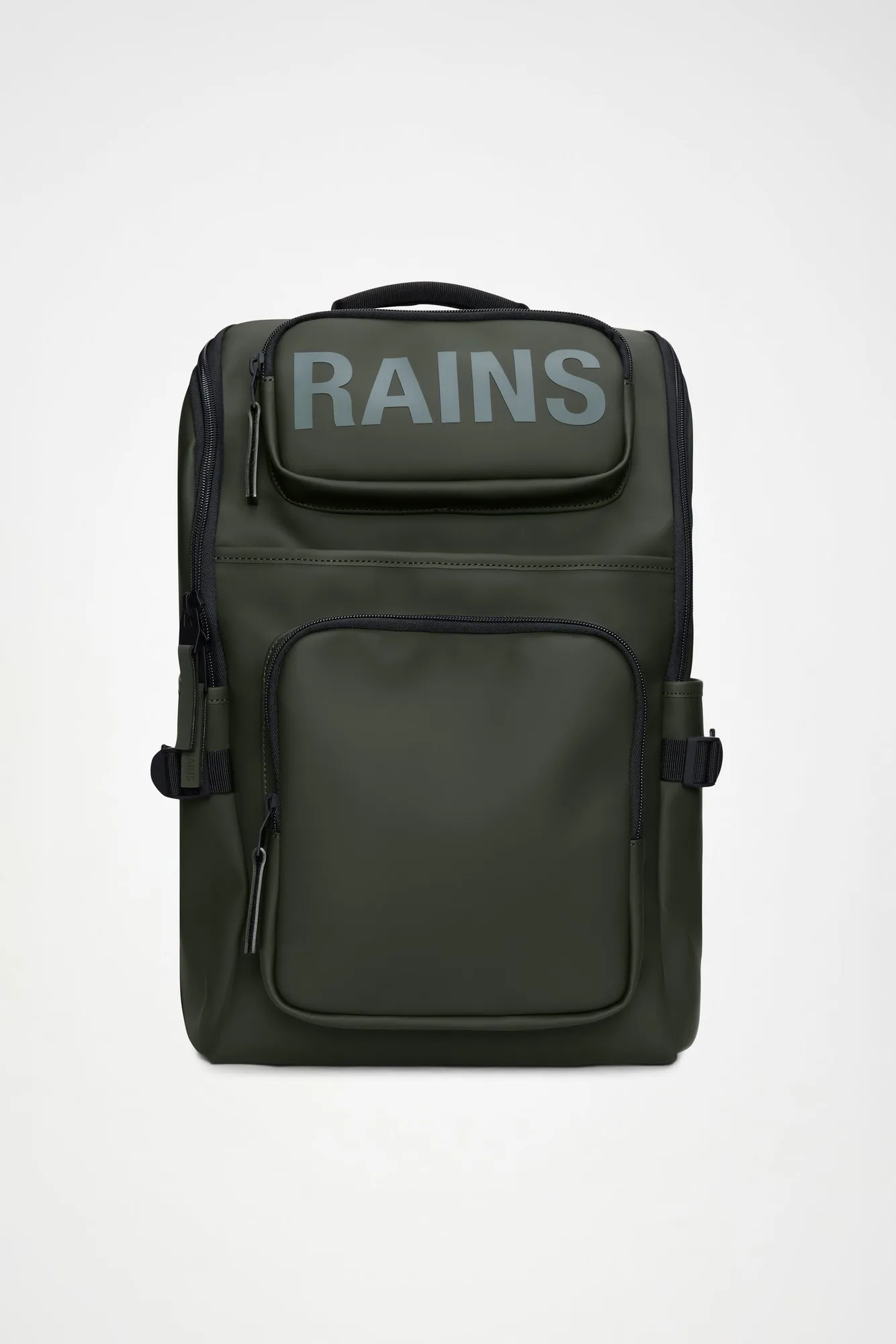
If you carry tech, look for a backpack with a dedicated padded laptop pocket so your lunch never presses against the screen. The Texel Cargo Backpack fits a 16-inch laptop in an internal laptop pocket and adds two square front zip pockets, which gives you a separate spot for utensils, napkins, or a small snack pouch instead of burying them in the main compartment. The Rolltop Rucksack Mini is the opposite trade-off: a downscaled rolltop that folds tight and secures with a carabiner, which suits a short bike or foot commute where you carry a compact lunch and little else.
Weight and carry comfort on the move
A loaded lunch box concentrates weight in one hard block, which can dig into your back if the backpack has a thin panel. A soft lunch bag spreads that weight and molds to your spine. The counterpoint is stability: a rigid box does not shift when you walk, while a soft bag can slump and let a drink tip sideways.
For longer walks or bike commutes, pair either format with a backpack that holds its shape. The Trail Clip Front Backpack uses a rounded zip opening for full access and a second c-clip closure at the front, so you can open the main compartment wide, drop in a box, and clip the front shut for extra security. The Sibu Clip Front Backpack follows the same clip-front design in a lighter build aimed at urban movement, and its hidden front pocket under the clip is a sensible place for a folded napkin or a small snack rather than a leaking container.
Trade-offs at a glance
- Temperature retention: A rigid box with a gasket seal holds cold air longer; a soft insulated bag depends on lining thickness and zipper quality. Choose the box for long gaps between packing and eating.
- Leak and odor control: Sealed hard compartments contain sauces; fabric linings absorb them and need frequent wiping. Choose the box for soups, curries, and dressings.
- Space flexibility: A lunch bag compresses into odd gaps; a box keeps a fixed footprint and does not squash. Choose the bag when your backpack is already full.
- Commute comfort: Soft bags mold to your back; hard boxes stay stable but can dig in on long walks. Choose the bag for long walks, the box for short, stable trips.
Backpacks that carry lunch well
- Texel Cargo Backpack: Texel Cargo Backpack has an internal laptop pocket that fits a 16-inch laptop, a spacious main compartment with gray lining, and two square front zip pockets. The separate laptop pocket keeps a lunch box from pressing against your screen, and the front zip pockets separate dry snacks from the main load.
- Trail Clip Front Backpack: Trail Clip Front Backpack has a waterproof design with a rounded zip opening for full access and a second c-clip closure at the front, plus a hidden pocket revealed by unclipping the front closure. Full-access opening makes it easy to slide a rigid lunch box in and out, and the hidden front pocket keeps small items secure when you clip it over.
- Sibu Clip Front Backpack: Sibu Clip Front Backpack is lightweight with a rounded zip opening for full access and a second c-clip closure at the front; unclipping reveals a hidden pocket. A lighter pack suits short urban commutes where you carry a compact lunch bag rather than a heavy box.
- Rolltop Rucksack Mini: Rolltop Rucksack Mini is a downscaled rolltop with a fold-and-carabiner closure designed to keep precipitation out. A compact rolltop suits minimal lunches on bike or foot commutes, but the smaller volume limits how much food and gear you can carry together.
Which should you carry?
Best for
- Anyone packing saucy, leak-prone, or stacked meals who needs sealed compartments and easy wipe-down
- Commuters with a short, stable trip who want predictable packing and no shifting
Not for
- People who need to squeeze lunch into a backpack that is already packed with a laptop, gym kit, or layers
- Cyclists and long walkers who want the load to mold to their back rather than sit as a rigid block