Quick answer
For most people, the simplest way to use M42 Takumar lenses is a plain M42-to-Pentax-K adapter on a Pentax DSLR, because it preserves infinity focus and stop-down metering without glass. If you shoot mirrorless, a cheap M42-to-mirrorless adapter adds focus peaking and magnification, which makes manual focus much easier. The trade-off is that you give up autofocus, auto aperture, and often reliable metering, so plan to shoot in manual or aperture priority and check exposure after each shot.
Adapter routes compared
There are two realistic ways to mount an M42 Takumar on a modern body. The first is a mechanical M42-to-Pentax-K adapter, which screws onto the lens thread and bayonets onto a Pentax K-mount DSLR. The second is an M42-to-mirrorless adapter for Sony E, Fujifilm X, Canon RF, Nikon Z, or Micro Four Thirds. Both are glassless, so they preserve the lens's native focal length and aperture range.
The Pentax-K route keeps the camera's in-body stabilization and familiar DSLR handling, but you must stop the lens down manually and meter in stop-down mode. The mirrorless route adds live-view focus aids like peaking and magnification, which makes nailing focus at f/2.8 far easier, but you lose phase-detect autofocus and often rely on magnified manual focus.
What changes when you adapt
M42 lenses have no electronic contacts, so the camera cannot control aperture or report EXIF data automatically. On a Pentax DSLR you use stop-down metering; on mirrorless you set the aperture on the lens and the camera meters what it sees. Expect to shoot in manual or aperture priority and to check the histogram rather than trusting the meter blindly.
Focus confirmation chips exist for some adapters, but they are not universal. If you rely on autofocus for fast action, an adapted Takumar is the wrong tool. If you shoot portraits, still life, or landscapes at a deliberate pace, the slow workflow is the point.
Two Takumar lenses worth adapting
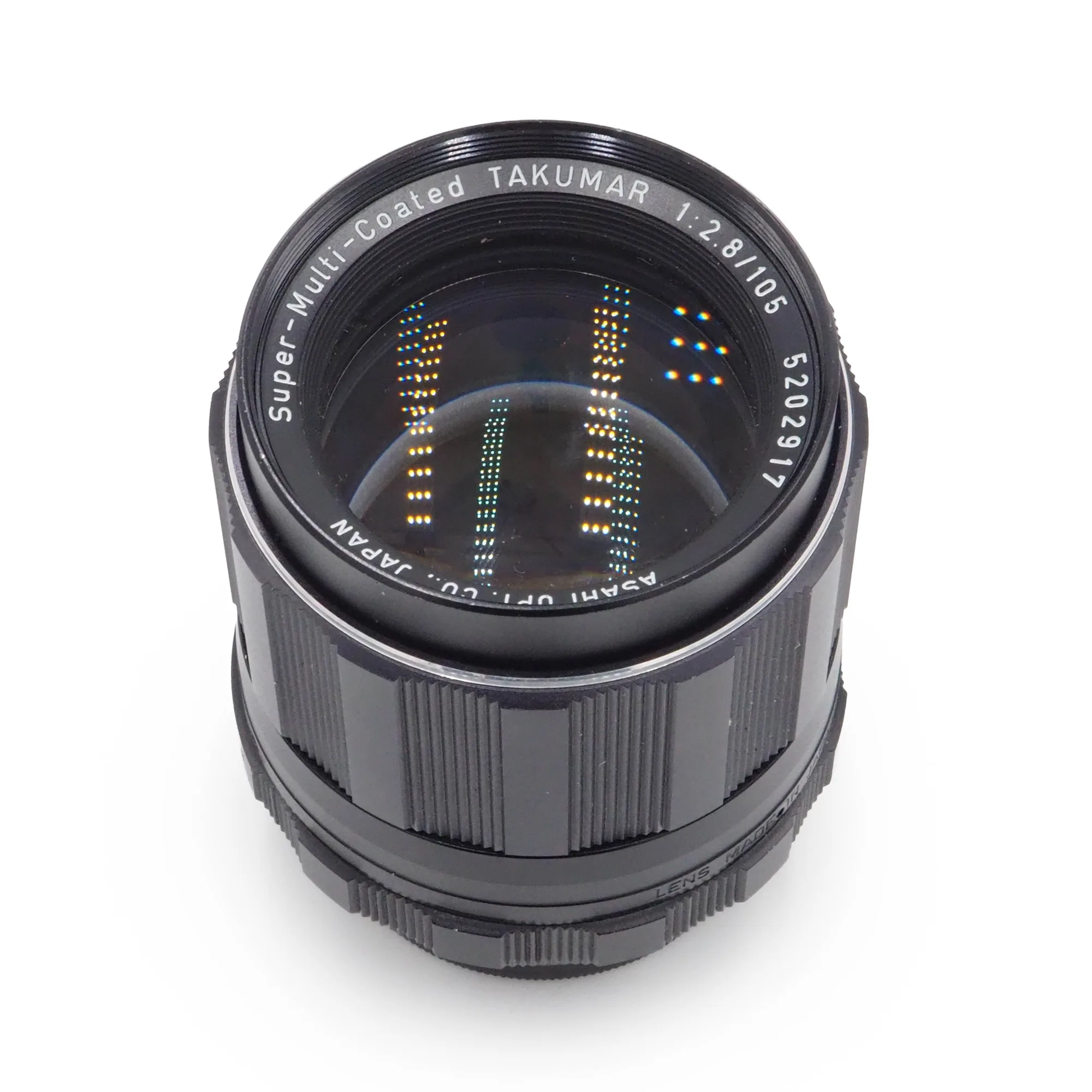
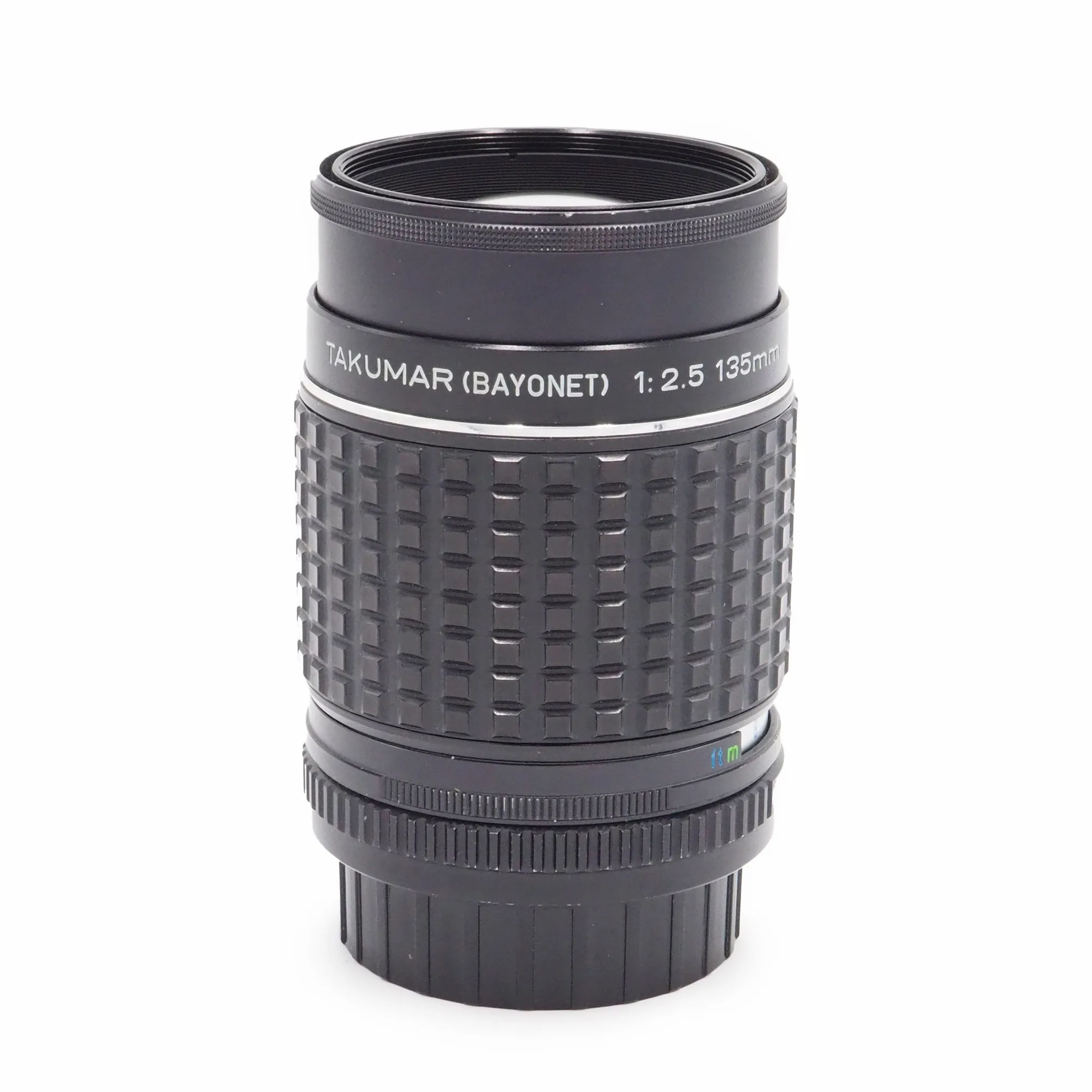
The Asahi Super-Multi-Coated Takumar 105mm f/2.8 is an M42 lens, so it needs an M42 adapter for either route. Its 105mm focal length is a classic short telephoto for portraits on full frame and a tight portrait lens on APS-C. The Takumar 135mm f/2.5 is a Pentax K-mount lens, so it mounts directly on a Pentax DSLR without an adapter and needs a K-to-mirrorless adapter for mirrorless bodies.
That mount difference matters. If you already own a Pentax DSLR, the 135mm f/2.5 is the lower-friction purchase because it does not need an adapter at all. If you shoot mirrorless, both lenses need an adapter, so the choice comes down to focal length and maximum aperture rather than mount.
Metering, stabilization, and exposure
On a Pentax DSLR, stop-down metering works but can be slow in changing light. On mirrorless, live-view metering is usually more predictable because the sensor sees the stopped-down aperture. In both cases, manual aperture means you should decide whether to expose for highlights or shadows before you press the shutter.
In-body stabilization helps at 105mm and 135mm, but you must set the correct focal length manually on most bodies. If you forget, stabilization can be less effective. This is a small step that makes a real difference at these focal lengths.
A darkroom detour: the FAK 118 to 120 Film Adapter

FAK 118 to 120 Film Adapter
If you also shoot film, the FAK 118 to 120 Film Adapter from Film Photography Project adapts 118 film for use with 120 film equipment. It is a darkroom accessory, not a lens adapter, so it does not help you mount a Takumar on a digital body. It is worth knowing about if your workflow spans both digital adaptation and film processing, but it solves a different problem.
Tradeoffs to weigh
- Pentax K DSLR + M42 adapter: Keeps in-body stabilization and native K-mount handling, but requires stop-down metering and manual aperture control. Best if you already own a Pentax DSLR and want the least expensive path.
- Mirrorless + M42 adapter: Adds focus peaking and magnification for easier manual focus, but loses phase-detect autofocus and can be slower for moving subjects. Best if you shoot stills or slow portraits and value focus aids over speed.
- Native Pentax K lens on Pentax DSLR: The Takumar 135mm f/2.5 needs no adapter on a Pentax K body, so there is no added flange distance or adapter play to manage. Best if you want a direct mount and fewer variables.
Product facts
- Asahi Super-Multi-Coated Takumar 105mm f/2.8 M42 Mount Lens - USED: Used Asahi Super-Multi-Coated Takumar 105mm f/2.8 in M42 mount, fully tested as working, with a 90-day warranty; optics described as clean and free of dust, scratches, haze, fungus, or separation. Because it is M42, you will need an M42 adapter for either a Pentax K DSLR or a mirrorless body, and the clean optics report reduces the risk of buying a lens with hidden haze.
- Takumar 135mm f/2.5 Lens for Pentax K Mount - USED: Used Takumar 135mm f/2.5 in Pentax K mount, fully tested as working, with a 90-day warranty; optics described as having no marks, haze, or separation and minimal debris that will not affect image quality. Because it is native Pentax K, it mounts directly on a Pentax DSLR without an adapter, which removes one purchase and one potential source of play or misalignment.
Who should choose which
Best for
- Pentax DSLR owners who want a native-mount 135mm f/2.5 without an adapter
- Mirrorless shooters who want focus peaking and magnification for manual focus
- Portrait and still-life photographers who work at a deliberate pace
Not for
- Action or event shooters who need autofocus and auto aperture
- Anyone unwilling to meter manually or check exposure after each shot
- Buyers who need weather sealing or electronic EXIF from the lens