Quick answer
For extreme macro on a budget, a reverse ring is the simplest way to reverse-mount a lens. For more flexibility and auto-exposure, an extension tube is a better all-around choice.
Reverse ring vs extension tube: the core difference
A reverse ring lets you mount a lens backward on your camera, turning any standard lens into a high-magnification macro lens. It has no electronics, so you lose auto-focus and auto-exposure. An extension tube, on the other hand, sits between the camera and lens, preserving electronic connections and allowing automatic functions. Both increase magnification, but the reverse ring is simpler and cheaper, while the extension tube offers more control.
When a reverse ring makes sense
If you already own a prime lens and want to try extreme close-ups without spending much, a reverse ring is a great entry point. For example, the Macro Reverse Ring for Sony and Macro Reverse Ring for Canon are all-metal adapters that maintain optical quality. They require manual focusing and aperture control, which is fine for stationary subjects and controlled lighting.
When an extension tube is better
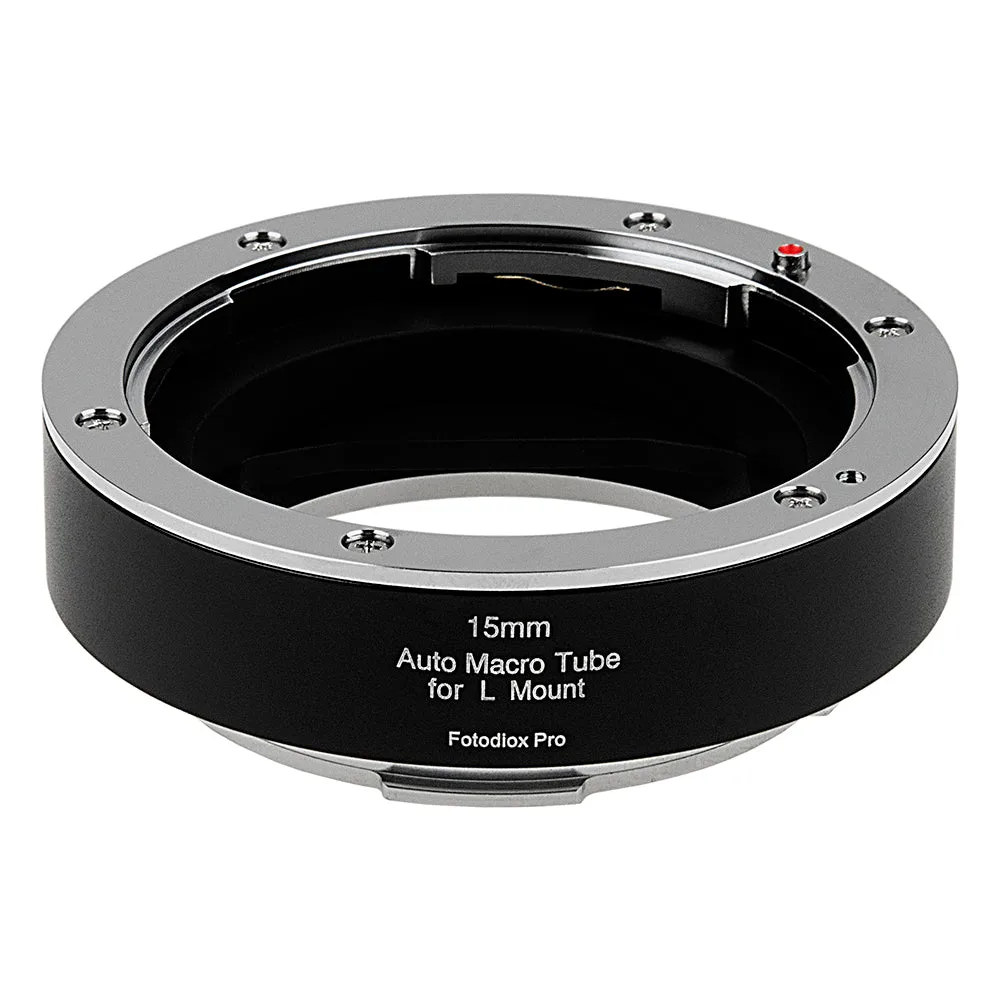
Extension tubes preserve lens electronics, so you keep auto-focus and auto-exposure. This makes them ideal for handheld shooting or moving subjects. The Fotodiox Pro Automatic Macro Extension Tube, 15mm Section for L-Mount is an all-metal tube that maintains lens communication. You can combine multiple tubes for different magnifications. The trade-off is higher cost and slightly more bulk.
Trade-offs at a glance
- Macro Reverse Ring: Cheapest way to get extreme macro. No auto-focus or auto-exposure. Best for stationary subjects and controlled lighting. Requires manual aperture ring on lens. Ideal for budget macro experimentation with a prime lens.
- Macro Extension Tube (Auto): Preserves lens electronics. More expensive but offers auto-focus and auto-exposure. Can be combined for different magnifications. Adds bulk between camera and lens. Best for photographers who need speed and flexibility.
- Macro Bellows: Offers the highest magnification (up to 8:1). Requires a stable setup and manual operation. Best for studio or tabletop macro work. Choose bellows only if you need extreme magnification and have a stable shooting environment.
Product facts
-
Macro Reverse Ring for Sony - Camera Mount to Filter Thread Adapter for Sony Alpha A-Mount Camera Mounts: All-metal design with precise 0.75 pitch thread; no optical insert. You get sharp, distortion-free macro images without adding extra glass, and the metal build ensures a solid, lasting connection.
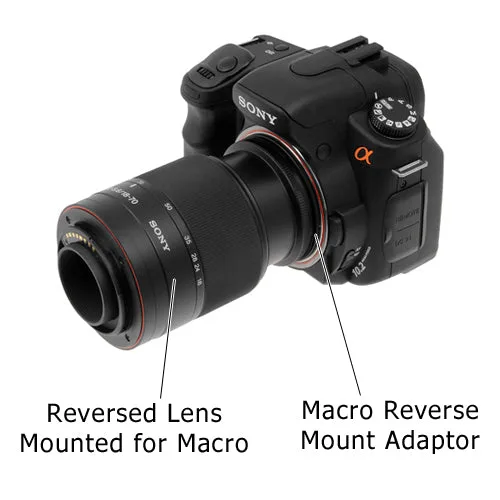
Macro Reverse Ring for Sony - Camera Mount to Filter Thread Adapter for Sony Alpha A-Mount Camera Mounts
-
Macro Reverse Ring for Canon - Camera Mount to Filter Thread Adapter for Canon EOS (EF & EF-S) Camera Mounts: Compatible with Canon EF and EF-S lenses; no electrical contacts. Works with most Canon lenses but requires manual aperture and focus, so plan for slower shooting and use a tripod.
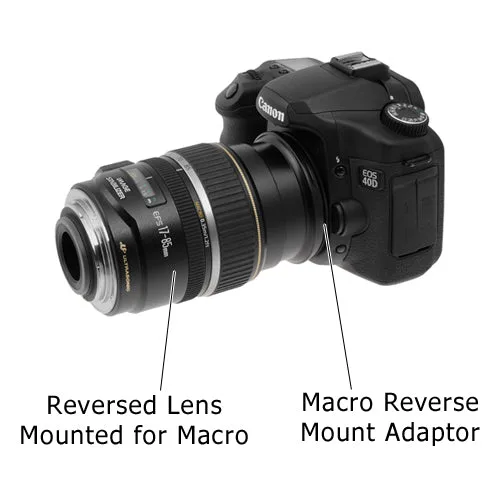
Macro Reverse Ring for Canon - Camera Mount to Filter Thread Adapter for Canon EOS (EF & EF-S) Camera Mounts
-
Fotodiox Pro Automatic Macro Extension Tube, 15mm Section - for L-Mount Alliance Mirrorless Cameras for Extreme Close-up Photography: Maintains auto-focus and auto-exposure; all-metal construction; can be combined for varied magnification. You retain full electronic control, making it easier to shoot handheld or capture fast-moving subjects, and you can adjust the macro ratio by stacking tubes.
Which should you choose?
Best for
- Budget-conscious photographers wanting to try macro with existing lenses
- Sony or Canon shooters who already own a prime lens and shoot stationary subjects
Not for
- Photographers who need auto-focus or auto-exposure for handheld or moving subjects
- Those who want to combine multiple macro accessories for variable magnification