Quick answer
Use a macro lens when you need to photograph surface details of a whole specimen. Switch to a biological microscope when you need to see internal cell structures, tissues, or microorganisms. For serious biology study, a binocular microscope like the Konus Biorex 2 is the essential tool.
What a macro lens does best
A macro lens lets you capture life-size or larger images of small subjects—think the veins on a leaf, the eye of an insect, or the texture of a petal. It works with natural light and a camera, giving you a photograph you can share instantly. The trade-off is that you are limited to surface features; you cannot see what is inside the specimen.
What a biological microscope reveals
A biological microscope uses transmitted light to illuminate thin slices of a specimen, letting you see cells, nuclei, and other internal structures. The Konus Biorex 2, for example, reaches 1000x magnification and has a 360-degree revolving binocular head angled at 45 degrees, making it comfortable for extended viewing. This is the tool you need for identifying cell types, studying mitosis, or examining microorganisms in pond water.
The practical trade-off for plant study
If you are documenting the overall shape and color of a flower petal, a macro lens is faster and more convenient. But if you need to identify the different cell layers in that petal, you need a microscope and prepared slides. The Konus Structure of Plants Prepared Slide Set includes 10 prepared slides showing variations in common vegetable and plant cell types, so you can start observing immediately without preparing your own specimens.
When to choose macro vs microscope
- Choose a macro lens when: You want to photograph the external surface of a specimen at life-size or greater magnification. Ideal for field work, art, or quick documentation.
- Choose a biological microscope when: You need to see internal cell structures, tissues, or microorganisms. Essential for biology education, lab work, and detailed plant anatomy study.
- Consider a binocular microscope for comfort: A binocular head, like the one on the Konus Biorex 2, reduces eye strain during long sessions and gives a more natural viewing experience than a monocular scope. If you plan to spend more than 15 minutes at a time observing, a binocular model is worth the investment.
Products that help you decide
-
Konus Biorex 2 1000X Biological Binocular Microscope - 5601: The Konus Biorex 2 is a research grade microscope that reaches a maximum magnification of 1000x and has a 360-degree revolving binocular head angled at 45 degrees. This means you can view specimens comfortably for long periods and see details far beyond what any macro lens can capture.
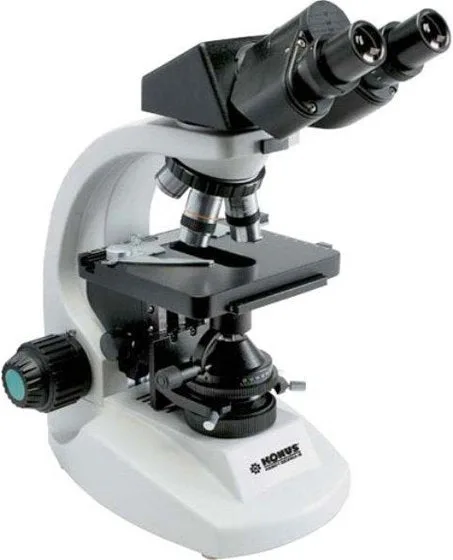
Konus Biorex 2 1000X Biological Binocular Microscope - 5601
-
Konus Structure of Plants Prepared Slide Set - 4886: The Konus 4886 Slide Set identifies variations in common vegetable and plant cell types and comes with 10 prepared slides and 10 blank slides in a wooden case. It gives you a ready-to-use collection for plant cell studies, plus blank slides to prepare your own samples.

Konus Structure of Plants Prepared Slide Set - 4886
Which tool fits your work?
Best for
- Students and educators studying plant cell structure or microbiology
- Hobbyists who want to explore the microscopic world of pond water or insect anatomy
Not for
- Photographers who only need surface-level close-ups of whole specimens (choose a macro lens instead)
- Users who need to view living, moving specimens without slides (consider a stereo microscope)