Quick answer
Choose Magic Gold Edition if your child wants a larger repertoire of 150 tricks and is ready for a more involved set. Pick Magic Silver Edition for a focused, budget-friendly introduction with 100 tricks that still delivers a strong learning experience.
Trick Count and Learning Curve
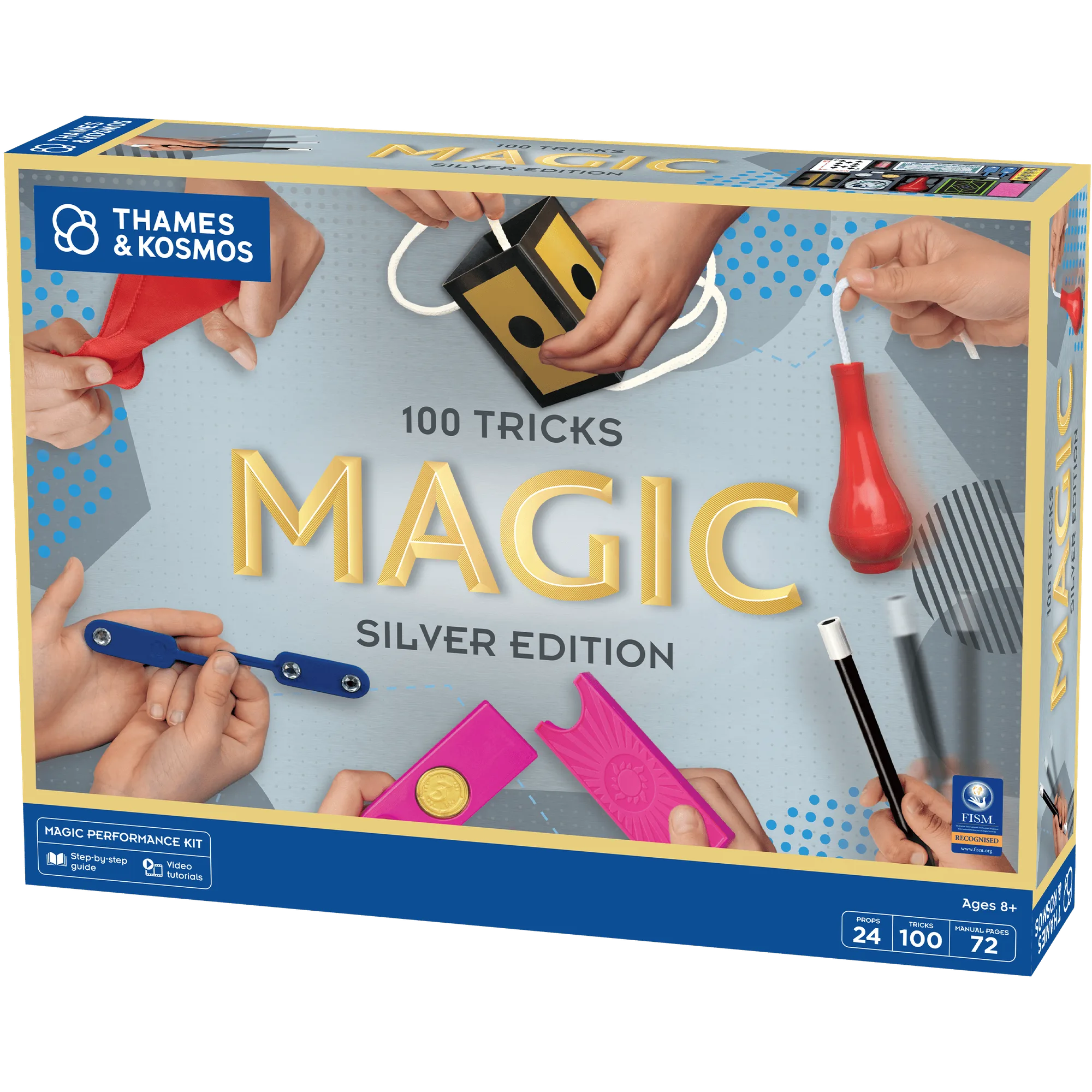
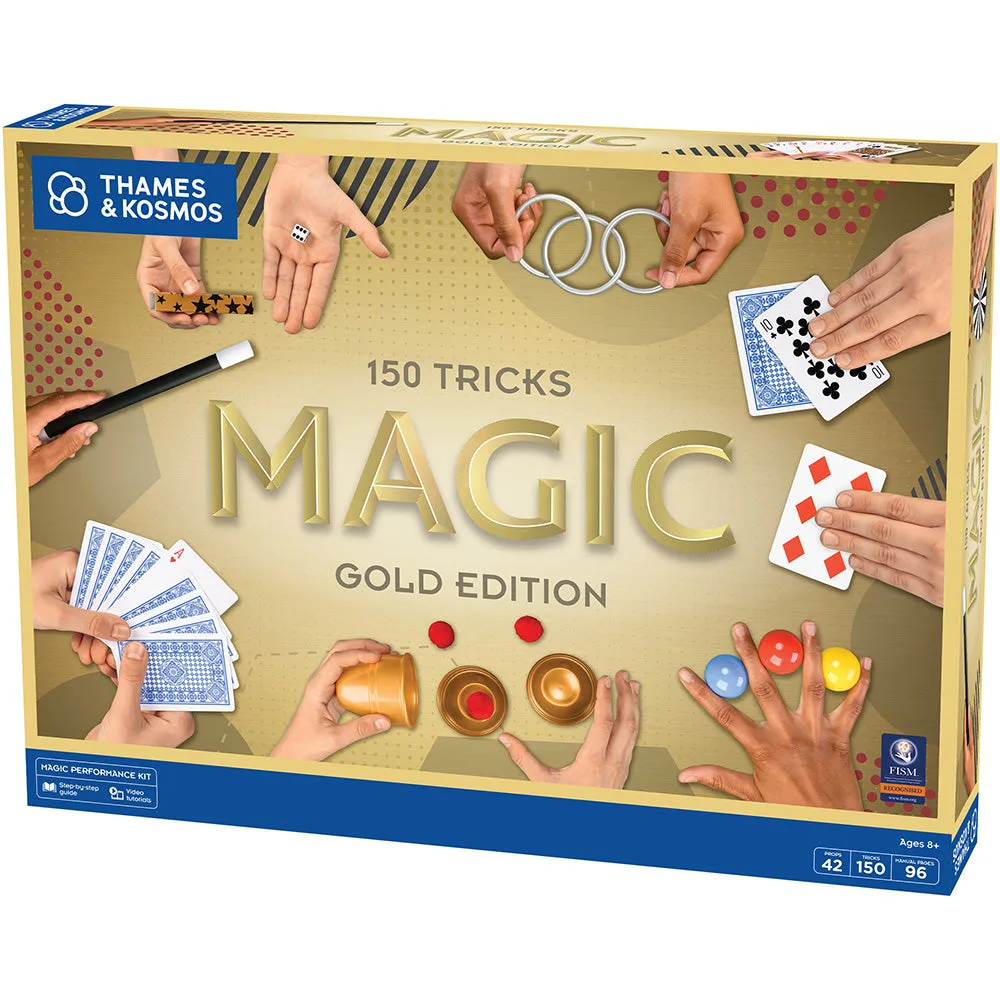
The most obvious difference between these two kits is the number of tricks. Magic Gold Edition includes 150 tricks, while Magic Silver Edition offers 100. That extra 50 tricks in the Gold edition covers more advanced illusions like cup-and-ball routines and confetti tube effects, which require a bit more practice to master. Silver Edition focuses on foundational tricks such as paddle tricks and card manipulations, making it easier for a younger or less patient child to feel successful quickly.
Props and Variety
Both kits come with high-quality magic props, but Gold Edition naturally includes a wider variety. Silver Edition provides the essentials for its 100 tricks—paddles, playing cards, coin boxes—while Gold Edition adds specialized items like cups and balls and a confetti tube. If your child already knows they love magic and wants to explore different types of illusions, the broader prop set in Gold Edition will keep them engaged longer. For a first kit, Silver Edition's focused prop list reduces overwhelm.
Price and Value
Magic Silver Edition has a catalog price of $18.27 (regularly $29.95), while Magic Gold Edition is $28.36 (regularly $39.95). The Gold Edition costs about $10 more but delivers 50 additional tricks and more props. That works out to roughly $0.19 per trick for Gold versus $0.18 per trick for Silver—nearly identical value. The real decision isn't about cost per trick; it's about whether the extra complexity and variety are worth the higher upfront investment for your child's current interest level.
Trade-offs to consider
- More tricks vs. easier start: Gold Edition's 150 tricks offer more variety but require more time and patience to learn. Silver Edition's 100 tricks are more accessible for a child who might get frustrated with longer routines. Choose based on your child's attention span and previous experience with structured activities.
- Broader props vs. focused essentials: Gold Edition includes specialty props like cups and a confetti tube, which open up new types of illusions. Silver Edition sticks to classic props like paddles and coins, which are easier to master and less likely to be misplaced. If your child tends to lose small pieces, Silver Edition's simpler prop set may be more practical.
- Higher price vs. better long-term value: Gold Edition costs $10 more but includes 50 extra tricks and more props. Silver Edition is the lower-risk entry point if you're unsure how committed your child will be to magic. Silver Edition is a safer first purchase; Gold Edition is better for a child already hooked on magic.
Product facts at a glance
- Magic: Gold Edition: Master the magical arts! With this extensive collection of magic props, you can easily learn, practice, and perform 150 incredible magic tricks and illusions to astonish spectators. In tricks using cups and balls, balls disappear, appear, and change places inside moving cups. The 150-trick count and cup-and-ball routines give this kit more depth for a child who wants to move beyond basic tricks and develop a real performance repertoire.
- Magic: Silver Edition: Grab your wand! With high-quality magic props and simple illustrated instructions, the 100 magic tricks in this kit can be easily learned, practiced, and mastered — to stun and amaze audiences! Dots appear and disappear in paddle tricks. The 100-trick count and focus on paddle tricks and card manipulations make this kit ideal for a younger beginner who benefits from quick wins and straightforward instructions.
Which one is right for your young magician?
Best for
- A child ages 8+ who is already excited about magic and wants a big variety of tricks to learn over many months
- A gift for a birthday or holiday where you want a single kit that provides lasting engagement
Not ideal for
- A very young child (under 7) who may be overwhelmed by 150 tricks and complex props
- A casual buyer who wants the lowest-cost introduction to magic tricks