Quick answer
In Maglev Metro, you pick up and deliver passengers and robots on a magnetic-levitation rail network, then use delivered robots to build a personal engine of upgrade tiles that shapes your strategy. The player with the most points from passenger deliveries, robot upgrades, and end-game bonuses wins.
Understanding the two-sided map and its impact on strategy
Maglev Metro includes maps of Manhattan and Berlin, each with distinct station layouts and passenger types. Manhattan is more compact, encouraging tight routes and frequent deliveries, while Berlin offers longer lines and more branching paths. Your initial strategy should account for the map you choose, as route density directly affects how quickly you can deliver passengers and activate robots.
Robot engine building: the key to long-term scoring
Delivering robots to stations lets you claim upgrade tiles that form a personal engine. These tiles grant ongoing abilities such as extra movement, teleportation, or bonus points. A common mistake is ignoring engine building in favor of immediate passenger deliveries. Balance both: early robot deliveries give you a stronger engine for later turns, while passenger deliveries provide end-game points.
Passenger scoring and end-game bonuses
Passengers are worth points at game end based on how far they traveled and which station they reached. Some stations offer bonus points for specific passenger colors. Pay attention to these bonuses during setup and plan your routes to maximize them. Also, certain upgrade tiles grant end-game scoring opportunities, so keep an eye on the tile display and pivot your strategy accordingly.
How to play Maglev Metro: step-by-step
- Set up the board and player components: Choose a map (Manhattan or Berlin) and place it in the center. Each player takes a player board, a set of train tokens in their color, and a starting hand of three passenger tiles. Shuffle the robot tiles and place them face down near the board. Place the upgrade tile display within reach of all players. Common mistake: forgetting to place the end-game bonus tiles on the map. Check the map's specific setup instructions for bonus station markers.
- Understand turn structure: move, deliver, or upgrade: On your turn, you may move your train along the track up to the number of spaces shown on your current movement tile (starting movement is 3). You may stop at any station along the way. If you stop at a station that matches a passenger tile you hold, you may deliver that passenger for points. If you stop at a station with a robot icon, you may take a robot tile from the supply and place it on your player board. Checkpoint: you cannot pass through a station without stopping unless you choose to skip it. Plan your route to avoid wasting movement.
- Build your robot engine with upgrade tiles: When you deliver a robot, you may immediately claim one upgrade tile from the display (if available). Upgrade tiles provide permanent abilities such as extra movement, the ability to pick up passengers from stations, or bonus points for certain actions. Place the tile on your player board in the designated slot. You can have a maximum of three upgrade tiles active at once. Common mistake: claiming an upgrade tile without considering how it combos with your existing tiles. Read each tile's effect carefully before choosing.
- Deliver passengers for end-game points: Passengers are worth points based on the distance between their starting station and the station where you deliver them. Some stations award bonus points for delivering specific passenger colors. Keep track of which passengers are still available and which stations offer bonuses. You may also use upgrade tiles to gain additional delivery opportunities. Checkpoint: delivering a passenger early might give you a small point now, but waiting for a longer route could yield more points. Balance immediate gains with long-term scoring.
- End the game and calculate final scores: The game ends when a player has delivered all their passengers or when the robot tile supply runs out. Each player then adds up points from delivered passengers, end-game bonuses from upgrade tiles, and any remaining robot tiles on their player board (each robot is worth 1 point). The player with the highest total wins. Common mistake: forgetting to score robot tiles still on your board. They are worth 1 point each, so don't leave them unaccounted.
Product facts
-
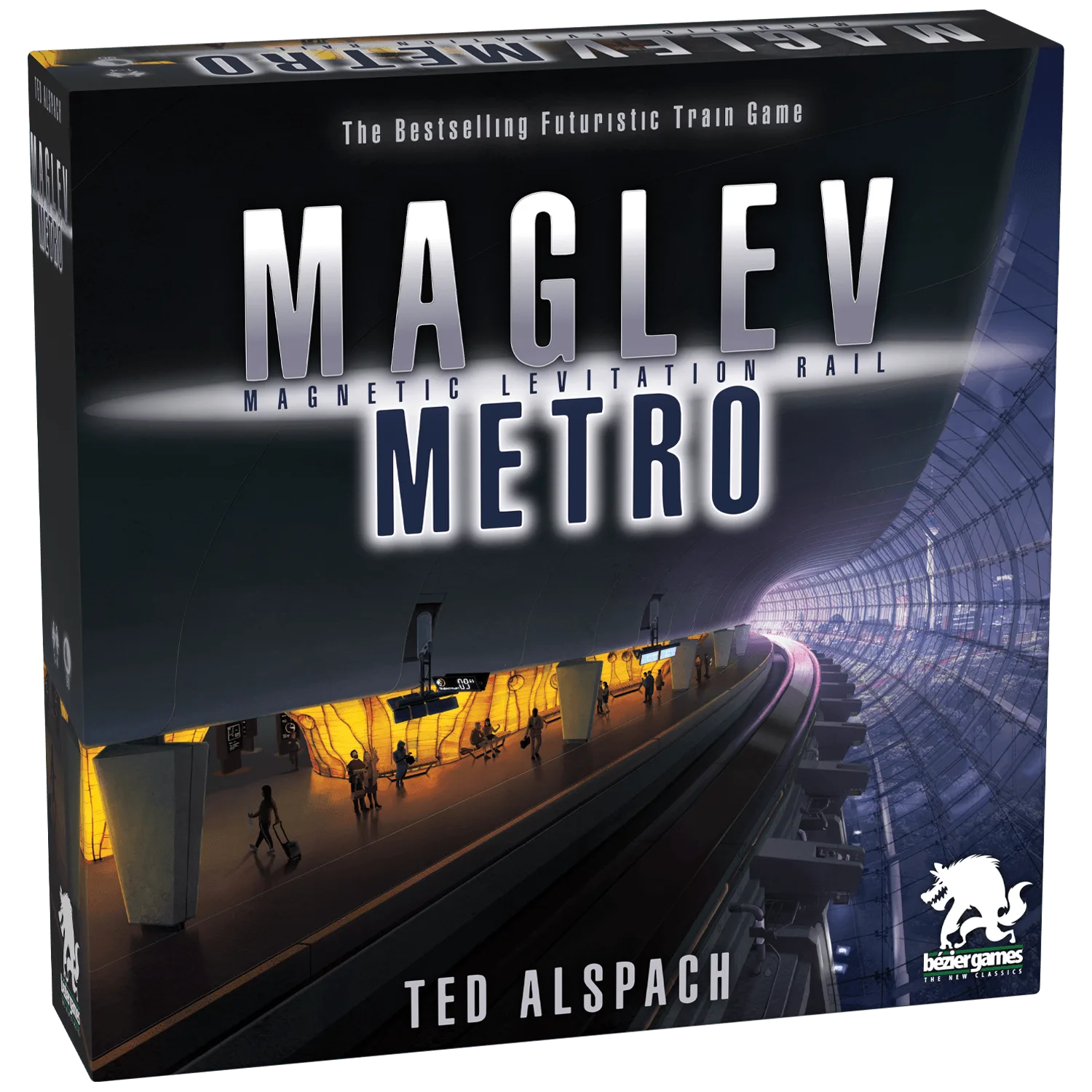
Maglev Metro: Maglev Metro uses cutting edge magnetic levitation technology to transport passengers and robots beneath the cities of Manhattan and Berlin. The sci-fi theme is integrated into the movement rules: your train moves along tracks without stopping, so you must plan routes that avoid dead ends and maximize efficiency.
Maglev Metro