Quick answer
For most women, a magnesium glycinate capsule taken in the evening is the easiest starting point because the glycinate form is commonly chosen for sleep and stress support, and the capsule format makes timing simple. If your main goal is occasional constipation, magnesium citrate is the more suitable form. Start with one capsule or the serving stated on the label, take it consistently for a few weeks, and adjust only after you know how your body responds.
What to check on a magnesium capsule label
The front of the bottle usually names the form, but the back tells you what you are actually getting. Look for the elemental magnesium amount per serving, not just the total compound weight, because different forms deliver different amounts of usable magnesium. Also check whether the formula includes supporting ingredients, since a women's magnesium supplement may pair magnesium with herbs rather than relying on magnesium alone.
- Elemental magnesium per serving: the number that matters for comparing products.
- Form name: glycinate, citrate, oxide, or a blend. Each behaves differently in the body.
- Serving size: two capsules is not the same as one, and it affects how long a bottle lasts.
- Added herbs or extracts: useful if they match your goal, unnecessary if they do not.
Magnesium glycinate vs citrate: which form fits your goal
Magnesium glycinate is magnesium bound to glycine, an amino acid. It is often chosen by women who want support for sleep, stress, and muscle relaxation because it tends to be gentle on the stomach. Magnesium citrate is magnesium bound to citric acid. It is better absorbed than magnesium oxide for many people, but it also draws water into the intestines, which is why it is commonly used for occasional constipation. If you have a sensitive stomach and your goal is evening wind-down rather than digestive regularity, glycinate is usually the friendlier choice.
- Choose glycinate if your priority is sleep, stress, or muscle relaxation.
- Choose citrate if your priority is digestive regularity or occasional constipation.
- Avoid guessing: if a label does not state the form, treat that as a limitation and look for one that does.
When to take magnesium for sleep and stress
Timing matters less than consistency, but evening dosing is a common approach for women using magnesium for sleep and stress support. Taking it with your evening meal can reduce the chance of stomach upset and may help with absorption. If you take other supplements or medications, separate magnesium from them by a couple of hours unless your healthcare provider says otherwise, because magnesium can compete with certain minerals and medicines for absorption.
- Evening, with food: a practical default for sleep and stress goals.
- Morning or midday: fine if evening dosing interferes with your routine.
- Consistency beats perfect timing: same time each day is easier to remember.
A sensible magnesium dosage for women
There is no single magnesium dosage for women that fits everyone. Your needs depend on your diet, health status, and the form you take. A common approach is to start at the low end of the label's suggested serving, see how you feel over two to four weeks, and only then consider increasing. More is not automatically better: too much magnesium can cause loose stools, cramping, or nausea. If you are pregnant, nursing, or managing a health condition, ask your healthcare provider before starting any magnesium supplement.
- Start low and stay consistent for at least two weeks before judging results.
- Split doses if a single serving causes digestive discomfort.
- Stop and seek advice if you experience persistent digestive upset.
How magnesium fits with other women's supplements
Magnesium is often stacked with other nutrients and herbs, but the combination should match your actual goal. If your focus is hormonal balance or menopause-related changes, a formula built around those concerns may make more sense than a plain magnesium capsule. If your focus is joint comfort or general wellness, turmeric and ginger or lion's mane may be more relevant. The point is not to take everything, but to choose the few products that address what you are actually trying to support.
- Match the formula to the goal, not to the number of ingredients.
- Check for overlap: two products may contain the same mineral or herb.
- Keep a simple list of what you take and when, so you can spot what helps.
Decision rules for choosing a magnesium capsule
- If your goal is sleep, stress, or muscle relaxation: Choose magnesium glycinate and take it in the evening with food. Glycinate is the form most often selected for these uses and is generally gentle on the stomach. Start with one capsule or the label's lowest serving for two to four weeks.
- If your goal is digestive regularity: Choose magnesium citrate instead of glycinate. Citrate draws water into the intestines, which is why it is used for occasional constipation. Do not stack citrate with other magnesium products without checking total intake.
- If you want hormonal or menopause support alongside magnesium: Compare a combined formula, such as one with chasteberry, against a single-ingredient magnesium capsule. A combined product can simplify your routine, but it also limits how much you can adjust each ingredient independently. Pick the combined option only if its other ingredients match your goal.
- If you take medications or have a health condition: Check with your healthcare provider before starting magnesium, and separate it from other medications or minerals by about two hours unless told otherwise. This rule overrides form and timing preferences.
Product facts that matter for this decision
- Magnesium Capsules for Women, 60ct: Magnesium Glycinate is a vital mineral that helps support stress relief, sleep, heart health, muscles, nerves and bone density in women. This is the clearest match if your goal is evening wind-down, stress support, or muscle relaxation, because the glycinate form is the one commonly chosen for those uses.
- Magnesium Capsules for Women, 60ct: The formula also includes chasteberry, which promotes a healthy hormonal balance in women, supporting a healthy mood and menstrual cycle. If you want magnesium plus hormonal support in one capsule, this combination is more targeted than a plain magnesium product; if you only want magnesium, a single-ingredient option may suit you better.
- Women’s Menopause Support, 60ct: BioSchwartz's Menopause Support Supplement features gentle yet powerful herbs that can help with hot flashes, mood swings, fatigue, and night sweats, in an easy-to-take vegetable capsule without fillers, soy, preservatives, or allergens. If your main concern is menopause-related changes rather than general magnesium intake, this is the more relevant formula to compare against a magnesium capsule.
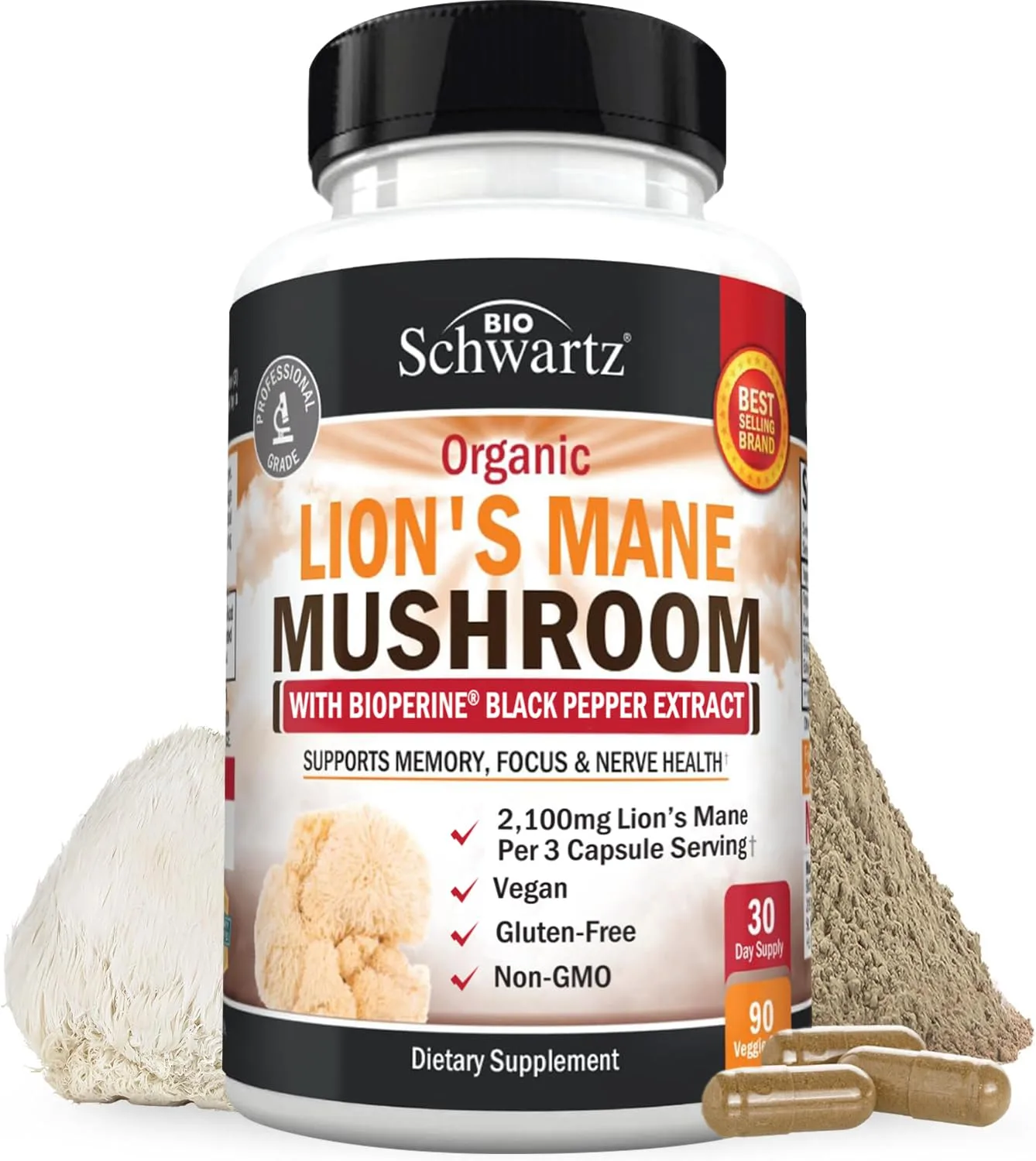
- Lions Mane Mushroom Capsules, 90ct: BioSchwartz Lions Mane Supplement provides 2,100 mg of ultra high purity organic lion's mane mushroom per serving, with 10 mg of BioPerine black pepper extract to enhance nutrient absorption. This is a different goal entirely, so it is worth considering only if you are building a broader routine and want to avoid duplicating ingredients across products.
Who this approach fits
Best for
- Women who want a simple evening magnesium routine for sleep and stress support
- Women who prefer a capsule over powders or gummies
- Women who want magnesium combined with chasteberry for hormonal balance support
Not for
- Women whose primary goal is occasional constipation, who should compare magnesium citrate instead
- Women who need a single-ingredient magnesium product with no added herbs
- Anyone who has not checked with a healthcare provider about medication interactions