Quick Answer
For early engineering skills, both magnetic toys and STEM toys have strengths, but magnetic building toys like Guidecraft's Magnetic Matching Fossil Stones excel at hands-on spatial reasoning and open-ended creativity. STEM toys, such as loose parts kits, offer broader problem-solving opportunities. Choose magnetic toys for focused construction play and STEM toys for varied experimentation.
When it comes to nurturing early engineering skills, parents and educators often debate between magnetic toys and STEM toys. Both categories promise to build critical thinking, spatial awareness, and creativity, but they approach these goals differently. Understanding these differences can help you choose the right tools for your child's development.
In this comparison, we'll explore how magnetic toys and STEM toys support early engineering skills, using specific examples from Guidecraft's catalog. We'll also provide practical guidance on which type suits different learning styles and situations.
What Are Magnetic Toys and How Do They Support Engineering Skills?
Magnetic toys use magnets to connect pieces, allowing children to build structures that defy gravity and encourage experimentation. They are particularly effective for developing spatial reasoning, as kids must visualize how pieces fit together in three dimensions. The tactile feedback of magnets clicking into place provides immediate reinforcement, making them ideal for young learners.
Guidecraft's Magnetic Matching Fossil Stones: Aquatic Life - Set of 8, for example, combines magnetic play with scientific discovery. Children can match fossil stones, revealing imprints of aquatic species. This not only builds fine motor skills but also introduces basic concepts of paleontology and biology, fostering curiosity about the natural world.
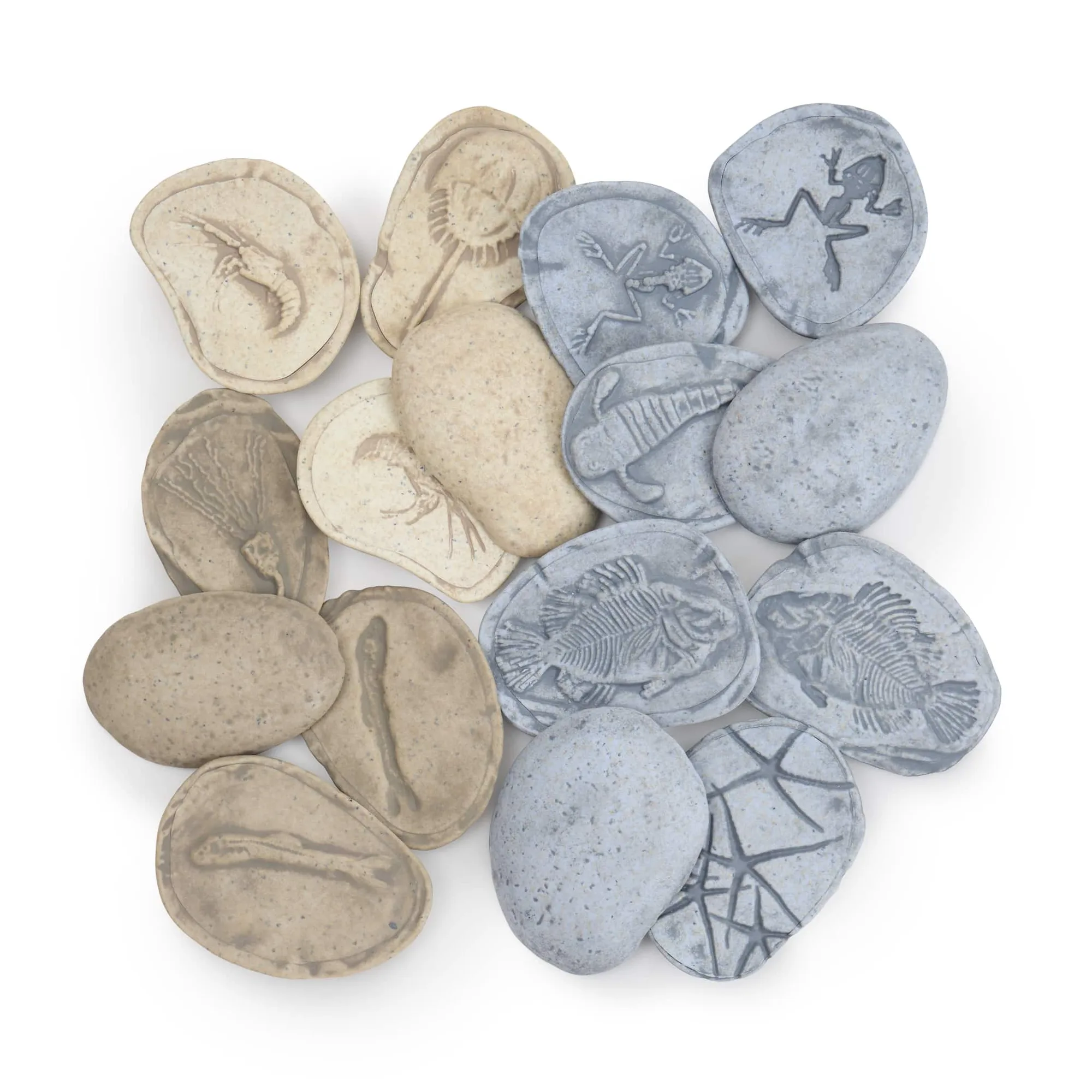
Magnetic Matching Fossil Stones: Aquatic Life - Set of 8
- Magnetic toys often require precise alignment, enhancing hand-eye coordination.
- Open-ended magnetic sets allow for endless creative constructions, from simple towers to complex geometric shapes.
What Are STEM Toys and How Do They Foster Engineering Thinking?
STEM toys encompass a wide range of products designed to teach science, technology, engineering, and math concepts through play. They often include components that encourage problem-solving, logical thinking, and experimentation. Loose parts kits, a popular STEM category, provide assorted materials that children can manipulate, sort, and combine in countless ways.
The Sound Play Loose Parts STEM Kit is a prime example. It encourages children to explore acoustics by shaking, tapping, and scraping various materials. This kind of open-ended exploration is fundamental to engineering thinking, as it teaches cause and effect, observation, and iterative testing. STEM toys like this also promote collaboration and communication when used in group settings.
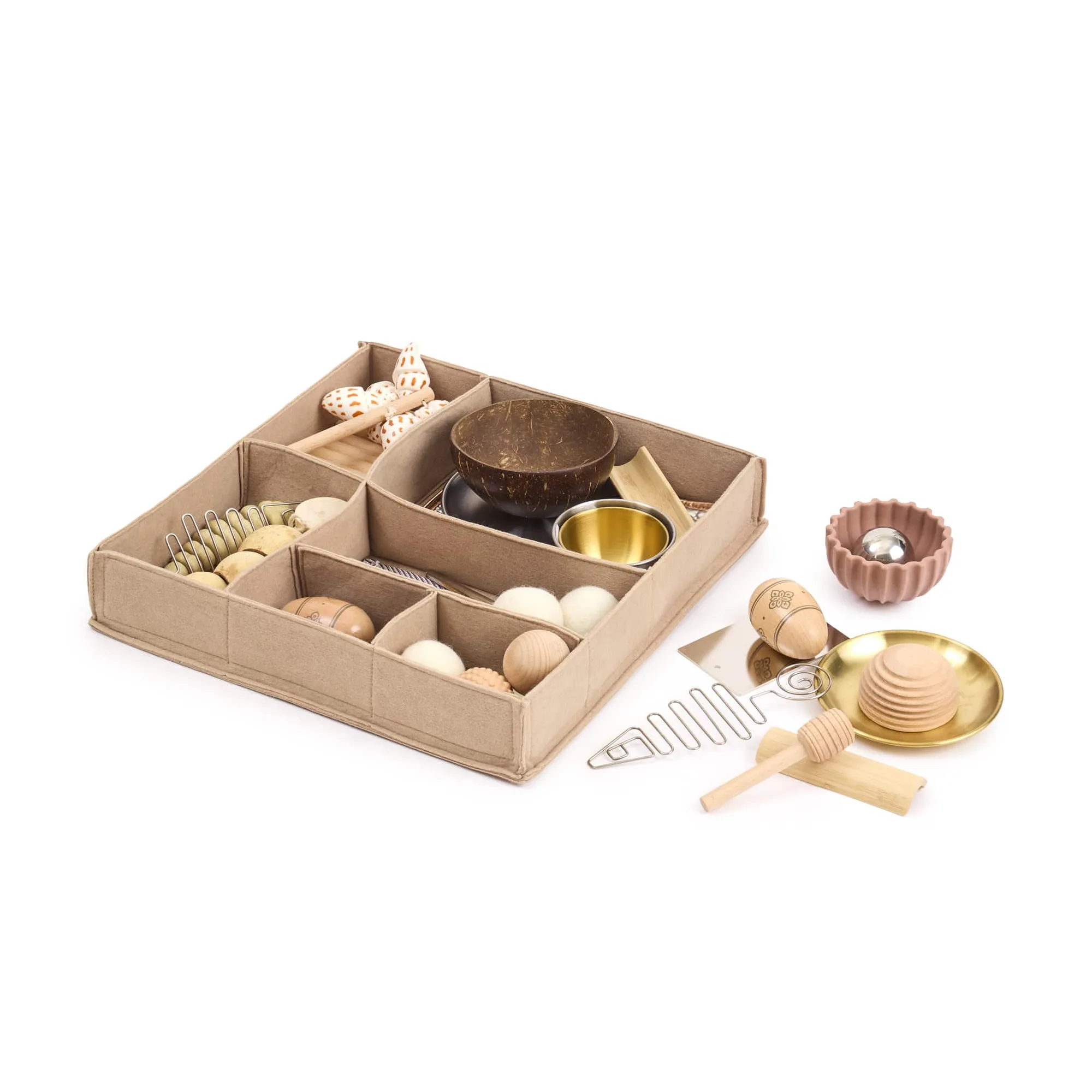
Sound Play Loose Parts STEM Kit
- STEM toys often include multiple types of materials, offering diverse sensory experiences.
- They encourage children to ask questions and test hypotheses, key components of the engineering design process.
Comparing Magnetic Toys and STEM Toys for Early Engineering
When comparing magnetic toys and STEM toys, consider the specific engineering skills you want to develop. Magnetic toys excel at teaching spatial relationships and structural integrity. For instance, building with magnetic tiles or blocks requires understanding balance and symmetry. STEM toys, on the other hand, are better for fostering a broader problem-solving mindset, as they often involve more variables and open-ended challenges.
Both types of toys support creativity, but they do so differently. Magnetic toys tend to have a more defined play pattern—connecting pieces to form structures. STEM toys, especially loose parts kits, are less prescriptive, allowing children to invent their own uses for the materials. This can lead to more divergent thinking, which is crucial for engineering innovation.
- If your child loves building and constructing, magnetic toys may be more engaging.
- If your child enjoys exploring and experimenting with different materials, STEM toys might be a better fit.
Trade-offs to Consider
- Spatial reasoning vs. broad problem-solving: Magnetic toys specifically target spatial skills through precise connections, while STEM toys like loose parts kits encourage a wider range of problem-solving approaches. Choose magnetic toys to focus on spatial development; choose STEM toys for a more holistic engineering mindset.
- Structured play vs. open-ended exploration: Magnetic toys often have a clear building purpose, while STEM toys allow for more open-ended, creative experimentation. If your child thrives with clear goals, magnetic toys are ideal; if they love to invent, STEM toys offer more freedom.
- Durability and cleanup: Magnetic toys typically have fewer pieces and are easier to clean up, while STEM kits may include many small parts that require more organization. For busy classrooms, magnetic toys may be more practical; for dedicated play areas, STEM kits offer richer experiences.
Product Facts
- Magnetic Matching Fossil Stones: Aquatic Life - Set of 8: Children ages 2 and up can learn about aquatic life through play with the Magnetic Matching Fossil Stone set. Interesting textures, a subdued natural color scheme, and authentic replicated fossils will spark a deeper interest in science activities inside and outside the classroom. This magnetic toy integrates engineering (matching and spatial reasoning) with scientific discovery, making it a versatile tool for early STEM learning.
- Sound Play Loose Parts STEM Kit: Encourage children to become sound explorers, experimenting with different materials and actions—shaking, tapping, scraping, and crinkling—to create unique auditory experiences. Durable, easy-to-clean pieces can be used indoors or outdoors. This STEM kit promotes open-ended experimentation and problem-solving, key components of engineering thinking, while also supporting sensory development.
Which Should You Choose?
Best For
- Children who enjoy constructing and building, as magnetic toys provide immediate visual and tactile feedback.
- Classrooms or homes with limited storage, as magnetic toys often have fewer pieces and are easier to manage.
Not For
- Children who prefer open-ended, exploratory play, as magnetic toys may feel too structured.
- Educators seeking to teach a broad range of engineering concepts, as STEM toys offer more variety in materials and challenges.
In the debate between magnetic toys and STEM toys, there is no one-size-fits-all answer. Both types offer unique benefits for early engineering skills. Magnetic toys like the Magnetic Matching Fossil Stones are excellent for spatial reasoning and structured building, while STEM toys like the Sound Play Loose Parts STEM Kit provide broader opportunities for experimentation and problem-solving. Consider your child's interests and learning style to make the best choice. Explore our selection of magnetic and STEM toys to find the perfect fit for your young engineer.