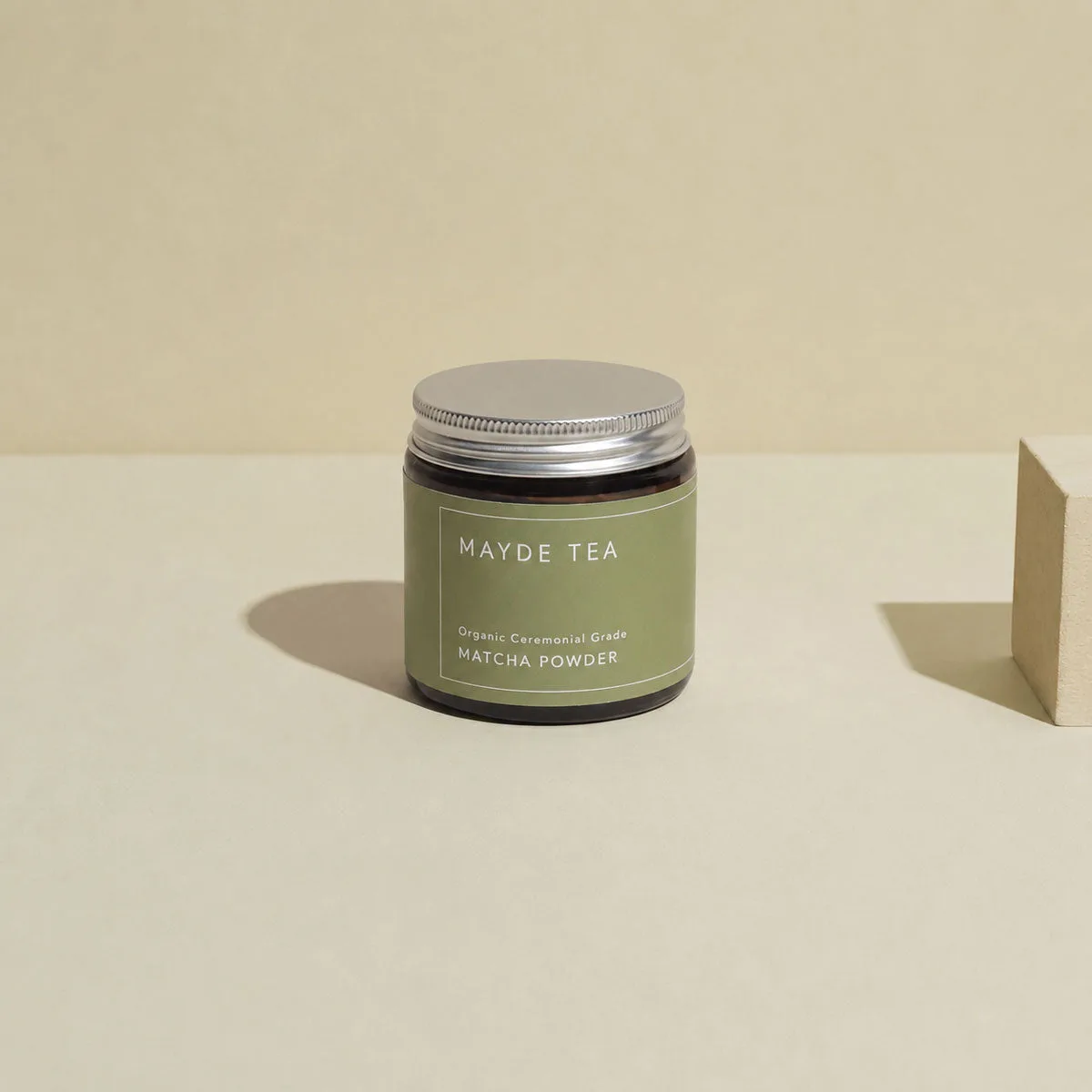
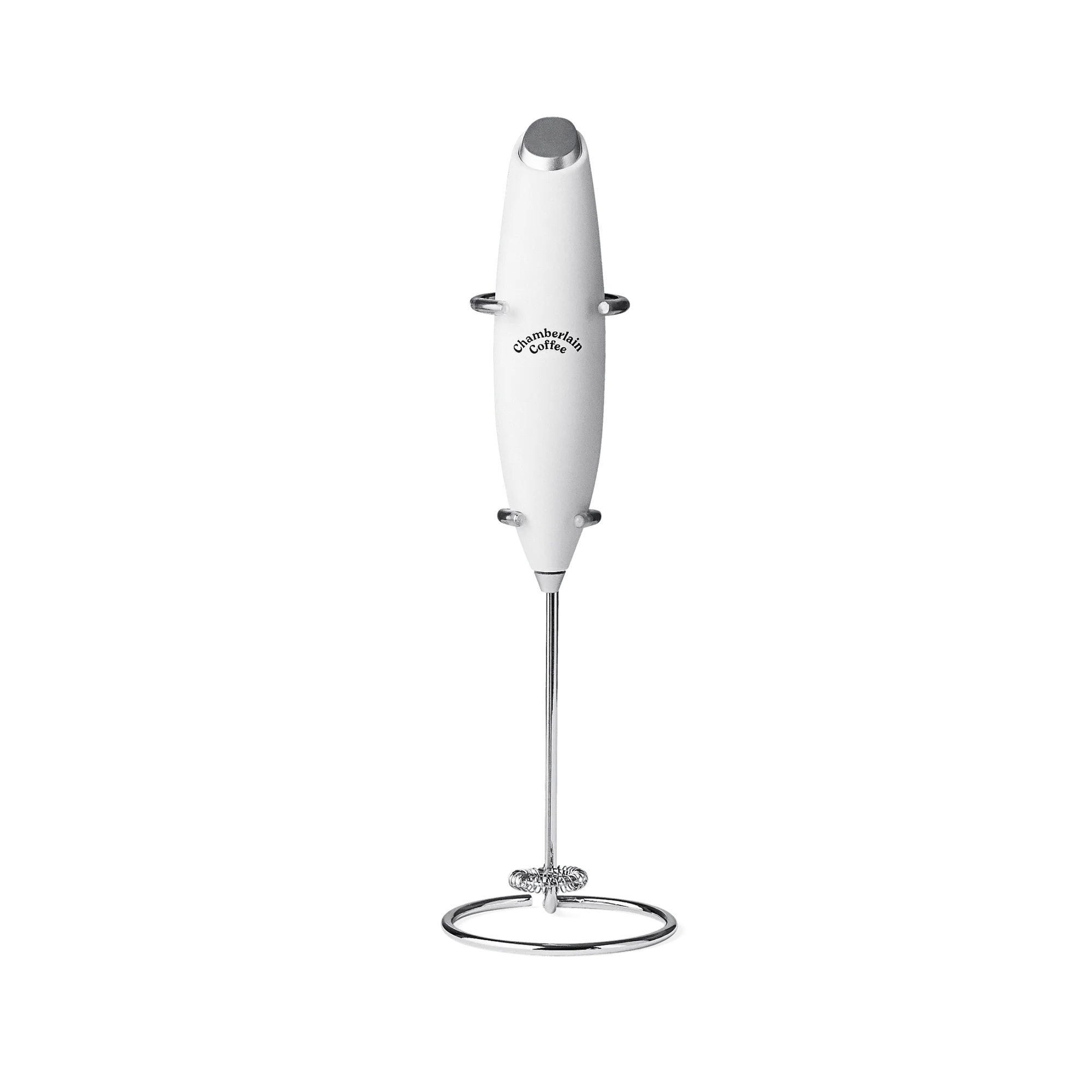
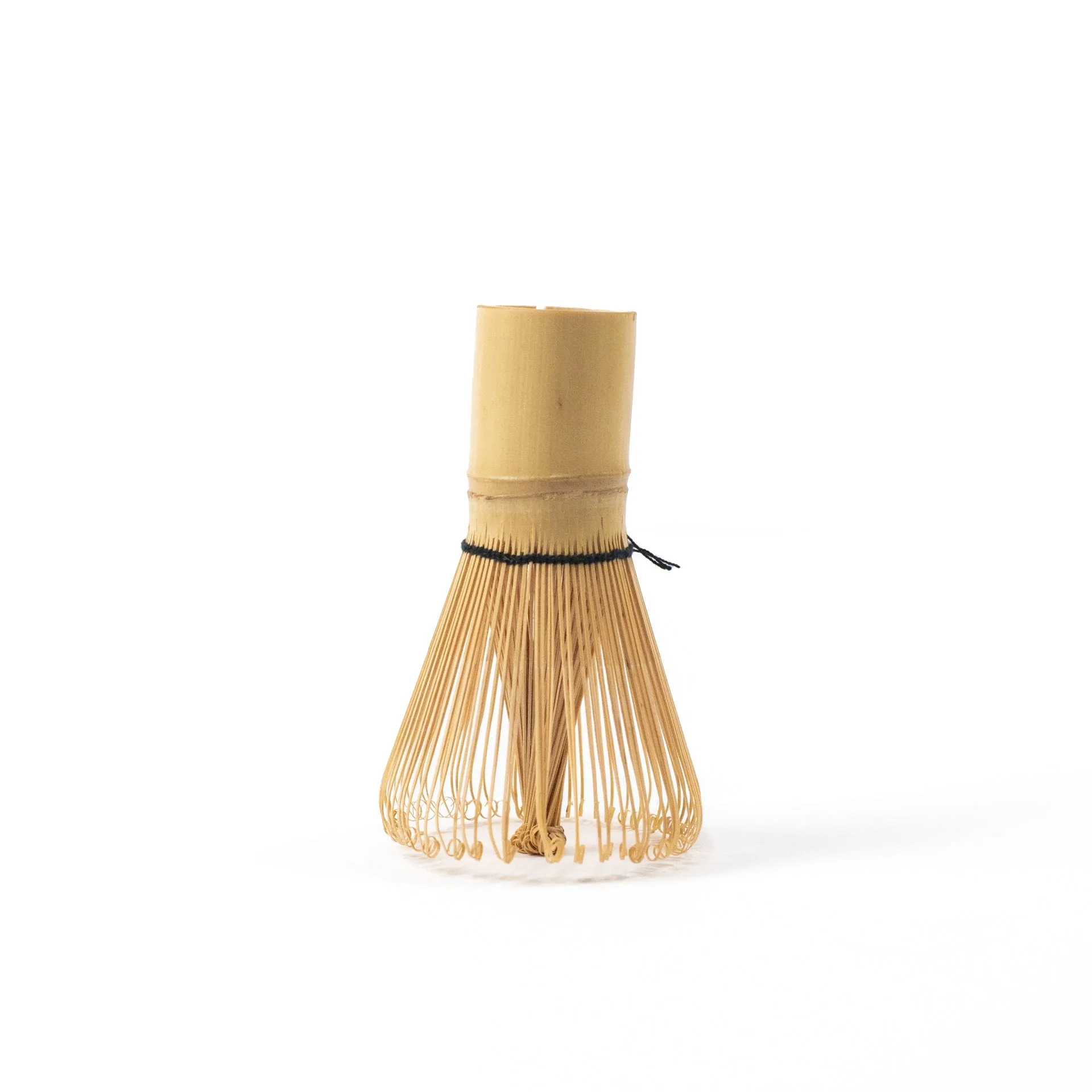
Start with the right matcha and the right tools
Mammoth Matcha is a shade-grown matcha with stems and veins removed before the leaves are ground into powder. That fine grind is what makes a smooth bowl possible, but it also means clumps can form if you rush the whisking. The catalog describes the flavor as creamy-smooth with a vegetal aroma and a delicate aftertaste, whether you drink it traditionally or as a latte.
You do not need a full tea ceremony setup, but two tools make a real difference: a bamboo whisk (chasen) and a bowl wide enough to move the whisk freely. A small fine-mesh sieve is also helpful for breaking up clumps before you add water.
How to whisk Mammoth Matcha, step by step
The catalog instruction is simple: mix matcha powder into water, traditionally done with a bamboo whisk. These steps put that instruction into practice without adding unsupported temperatures or ratios.
- Sift the powder first: Place a fine-mesh sieve over your bowl and press the matcha through it with a small spoon. This breaks up clumps before water touches the powder, which is one of the simplest matcha sifting tips for a smoother bowl.
- Add water and whisk in a back-and-forth motion: Pour water into the bowl, then submerge the bamboo whisk and move it briskly back and forth in a zigzag or W-shaped motion rather than in a circle. This is the traditional whisking technique that aerates the matcha and helps it dissolve evenly.
- Finish with a slow lift: When the surface is foamy and no dry powder remains, slow the whisk and lift it gently from the center. This settles the foam and gives you a smoother-textured bowl.
- Drink it traditionally or build a latte: The catalog says Mammoth Matcha works in the traditional style or as a matcha latte. If you want a latte, whisk the matcha with water first, then add milk.
Water temperature and ratio: what the catalog does and does not specify
The supplied product information does not list a water temperature or a powder-to-water ratio for Mammoth Matcha. That means any specific numbers you see elsewhere are general matcha guidance, not manufacturer instructions for this product. If you are new to matcha, start with a small amount of powder and a modest amount of water, whisk thoroughly, then adjust to your taste. The catalog does not confirm a recommended starting ratio, so treat your first bowl as a test rather than a fixed recipe.
For water temperature, the same caution applies: the catalog does not state a target. A common approach is to use water that is hot but not boiling, since boiling water can make green tea taste harsh. However, this is general advice, not a verified instruction for Mammoth Matcha.
What the Mammoth Matcha listing confirms
-
Mammoth Matcha: Mammoth Matcha is shade grown for approximately three weeks before processing. Shade growing is part of what gives matcha its characteristic color and flavor, and it explains the vegetal aroma described in the catalog.
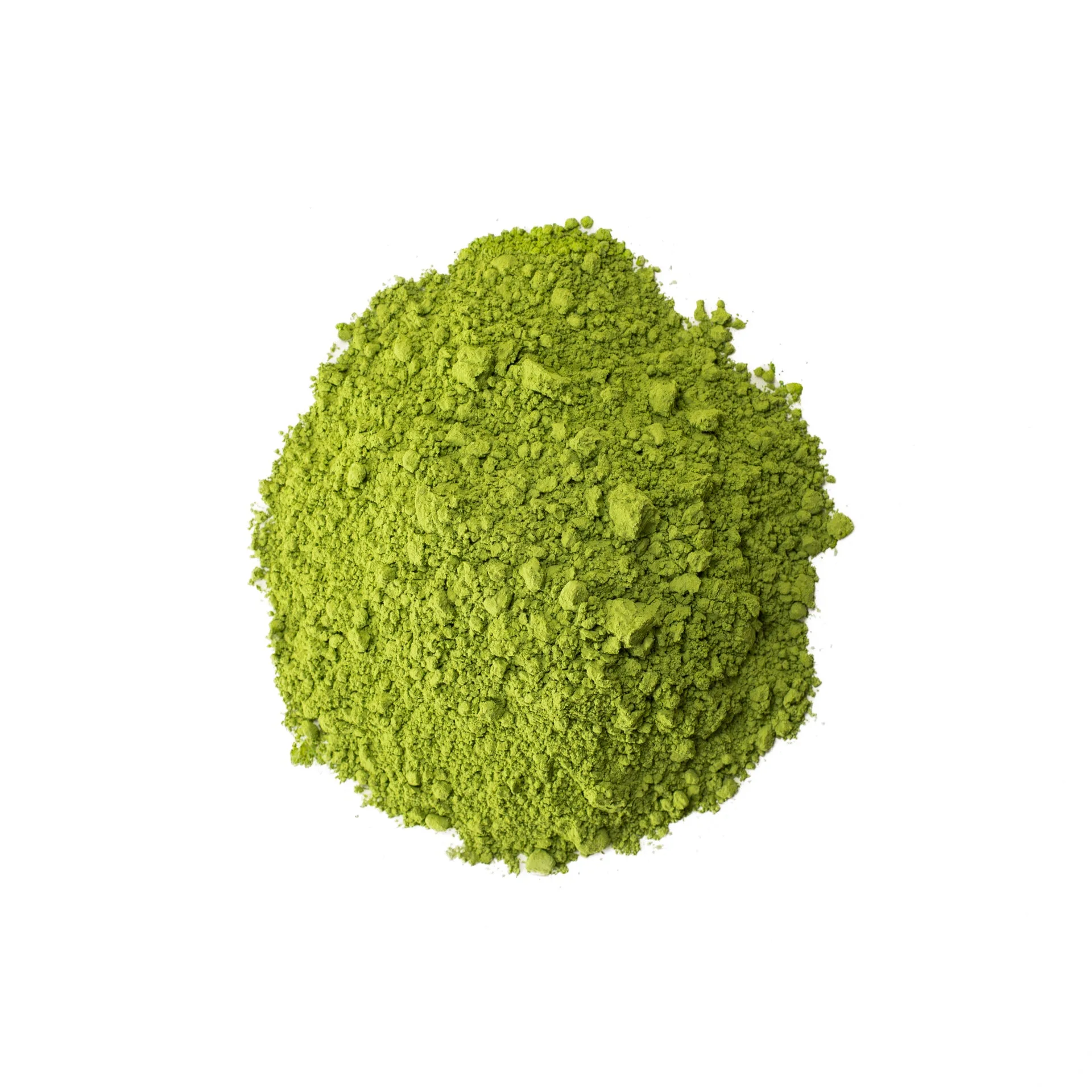
Mammoth Matcha
-
Mammoth Matcha: Stems and veins are removed before the tea leaves are ground into powdered form. This step contributes to a finer, smoother powder, which is why sifting and proper whisking matter for a clump-free bowl.
-
Mammoth Matcha: The catalog describes the taste as creamy-smooth with a vegetal aroma and a delicate aftertaste. Knowing the expected flavor helps you judge whether your whisking and water adjustments are working.
-
Mammoth Matcha: Preparation instruction: mix matcha powder into water, traditionally done with a bamboo whisk. This is the only preparation method the catalog supplies, so it is the safest starting point.
Choosing a Mammoth Matcha size for how you actually drink it
Mammoth Matcha comes in four sizes: 40g (20 cups), 100g (50 cups), 227g (113 cups), and 454g (227 cups). The cup counts are the catalog's own yield estimates. If you are new to whisking matcha at home, the 40g size lets you practice without committing to a large bag. If you already drink matcha daily or make lattes for more than one person, the 100g or 227g size may fit your routine better. The 454g size suits frequent, high-volume use.
Matcha is sensitive to air, light, and moisture, so store it in a sealed container away from heat and light. The catalog's care guidance is simply: take care of your matcha and your matcha will take care of you. It does not specify a shelf life or a exact storage temperature, so use your judgment and keep the powder dry.
Checkpoints for a smooth bowl
Use these checkpoints as you whisk, based on the catalog's flavor description and preparation instruction.
- No dry pockets: After whisking, tilt the bowl and look for dry powder at the bottom or edges. If you see any, whisk again briefly.
- Even foam: A smooth bowl should have a fine, even layer of foam. Large bubbles can mean you whisked too slowly or stopped too early.
- Taste before adding more powder: The catalog describes a creamy-smooth flavor with a delicate aftertaste. If your bowl tastes weak, add a little more powder; if it tastes too strong or bitter, add water. The catalog does not give a ratio, so adjust gradually.