Quick answer
Choose PlanToys Mandala if you want an open-ended concentration activity for older children; choose Beehives if you need a fine-motor matching game that builds focus through color and counting for toddlers.
What each toy does best
Mandala is a 60-piece pattern-making set that encourages children to arrange pieces from the center outward, either free-form or following instructions. It targets concentration, decision-making, visual perception, and hand-eye coordination. This makes it a quiet, meditative activity suitable for children who can handle small pieces and follow multi-step directions.
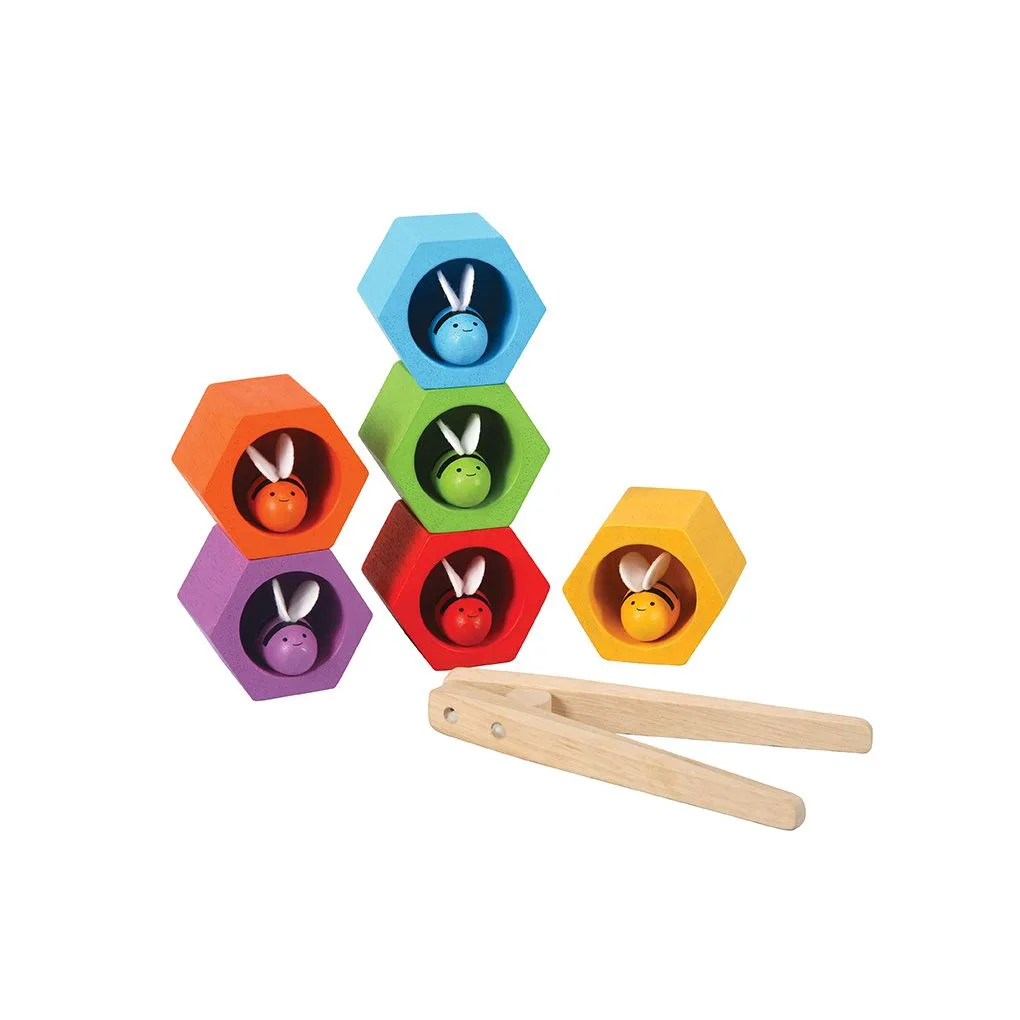
Beehives is a matching game with six colored bees and matching hives. Children use a pincer grasp or forceps to place each bee in its hive, building fine motor skills while learning color recognition and counting. The realistic beehive theme also introduces basic biology about bees. It is designed for younger children who need a simple, repetitive task to build focus.
Key differences that affect focus
The main difference lies in the type of focus each toy demands. Mandala requires sustained attention to create patterns and follow instructions, which suits children who enjoy structured or creative play. Beehives uses repetition and a clear goal (matching bee to hive) to hold a toddler's attention for shorter periods. Mandala's 60 pieces offer more complexity and longer engagement, while Beehives' six pieces provide quick success and easy cleanup.
Mandala vs Beehives: Trade-offs at a glance
- Age suitability: Mandala works best for children ages 3 and up who can handle many small pieces and follow instructions. Beehives is ideal for toddlers around 18 months to 3 years who need a simple, safe matching game.
- Type of focus: Mandala builds sustained attention through pattern creation and problem-solving. Beehives builds short-term focus through repetitive matching and color identification.
- Skill development: Mandala emphasizes visual perception, decision-making, and hand-eye coordination. Beehives emphasizes fine motor skills, color recognition, and counting. If fine motor development is the priority, start with Beehives; if you want to deepen concentration and creativity, move to Mandala.
Product facts at a glance
-
Mandala: Mandala includes 60 pieces in a variety of shapes and sizes, plus a circular base, and instructions for creating patterns. The large number of pieces and open-ended design let children practice sustained concentration and decision-making as they build increasingly complex designs.
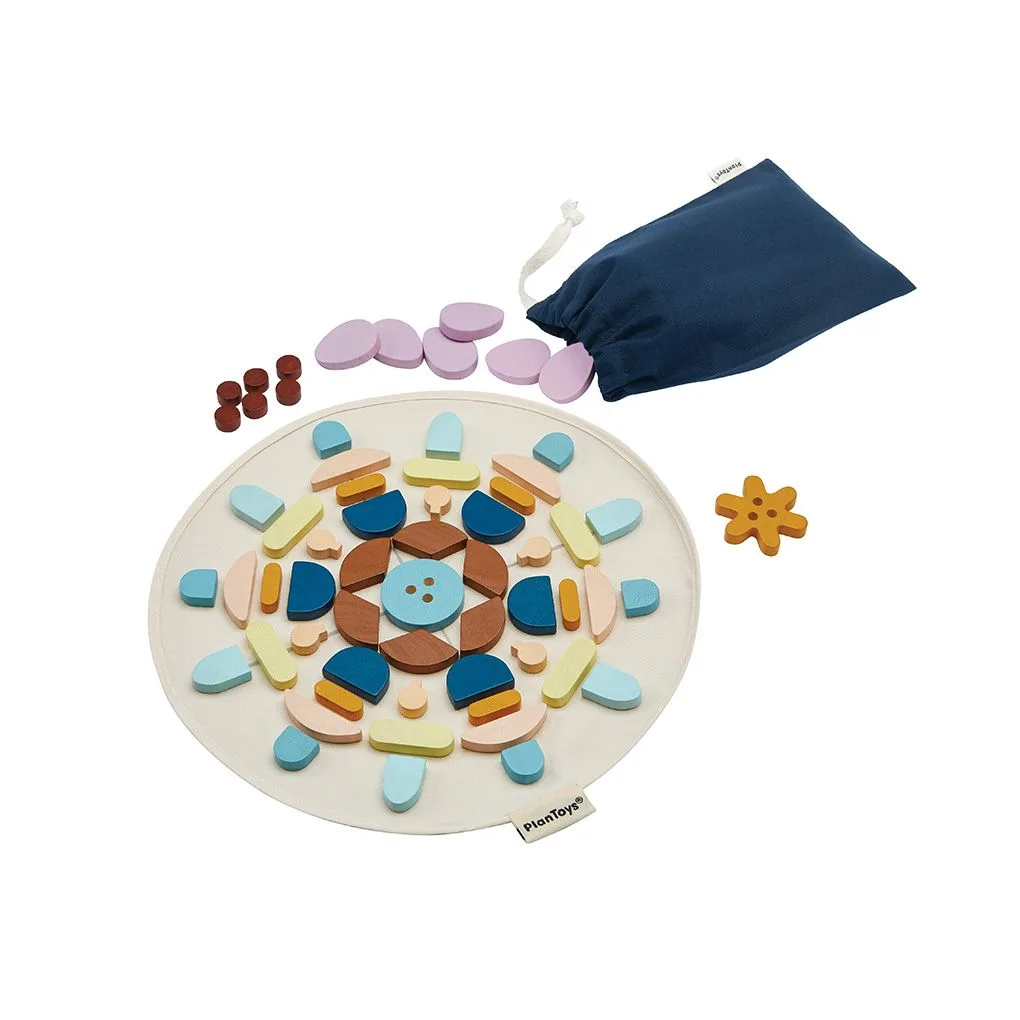
Mandala
-
Beehives: Beehives has six bees that vary in color, each matching a hive, and can be used with forceps to develop the pincer grasp. The simple matching task and tool use help toddlers focus on a single goal while strengthening the hand muscles needed for writing.
Beehives
Which one fits your child?
Best for
- Parents seeking a quiet, meditative activity for children 3+ who enjoy patterns and following instructions (Mandala)
- Parents wanting a simple, repetitive matching game that builds fine motor skills and color recognition for toddlers 18 months–3 years (Beehives)
Not for
- Toddlers under 3 who still mouth toys or cannot handle small pieces (avoid Mandala)
- Older children who need a more complex challenge (Beehives may be too simple)