Quick answer
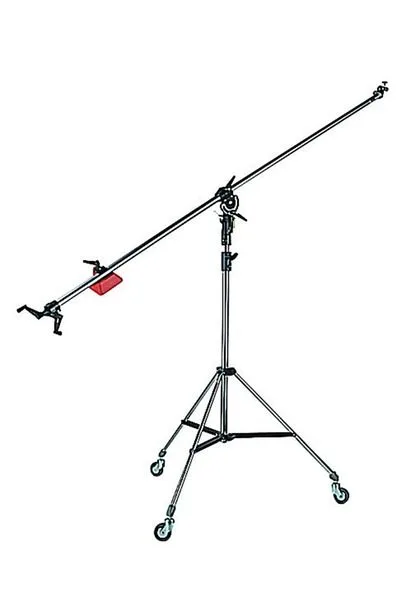
If the boom arm on a Manfrotto 025BS drifts down, the counterweight is usually too light or sitting too close to the stand column. Move the counterweight outward along the rear of the boom in small steps until the arm holds level with the light mounted, then lock every clamp and sandbag the wheeled base. If the arm still creeps, or the load exceeds 5kg, stop and use a different support instead of adding more weight.
Why a boom drifts down instead of staying put
A boom is a lever, not a shelf. The light on the front and the counterweight on the back sit on opposite sides of the stand column, so the arm only stays level when the two sides balance. A 2kg light at 1.5m out on the boom needs roughly 3kg at 1m back, which is why a counterweight that looks generous on the bench can feel useless once the arm is extended.
The Manfrotto 025BS ships as a system: lighting stands, boom, casters and counterweight are all included, and the boom stand extends to 2.1m with a rated payload of up to 5kg. That ceiling applies to the whole load, not just the head. A heavy modifier plus a flag plus a cable bundle can reach 5kg faster than most people expect, and once you are at the limit there is no safe way to add more counterweight.
Balance the arm before you touch a sandbag
Set the stand height first, because raising or lowering the column changes the geometry and undoes your balance work. Mount the light, point it where it needs to point, then slide the counterweight along the rear of the boom in small increments. Tighten the boom clamp, let go, and watch for ten seconds. A slow sink means the weight is still too close to the column; a slow rise means you have gone too far and should pull it back.
Once the arm holds level on its own, lock the tilt and pan controls and check that the boom clamp is fully seated. Do this at the working height, not at chest height, because a boom that balances low can behave differently when the column is extended. If you cannot find a position where the arm holds, the load is outside what the counterweight can offset, and that is your signal to change the setup rather than fight it.
Sandbags, casters and the wheeled base
The 025BS uses a wheeled base for manoeuvrability, which is convenient in a working studio and a liability once the boom is extended. Lock the casters before you load the arm, and place sandbags over the legs rather than hanging them from the column. Weight on the legs resists tipping; weight on the column adds load without improving the footprint.
The double-braced leg base adds stability and safety, but bracing resists flex, not tipping. A long boom with a heavy head can still rotate the whole stand around one leg. If the arm is reaching far over a set or a subject, keep people out from under it and treat the sandbags as mandatory, not optional.
Care that keeps the boom predictable
Boom problems are often maintenance problems. Check the boom clamp and tilt locks for wear before each shoot, and stop using any clamp that slips under load even when tightened. Wipe the boom tube and column clean so grit does not work into the locking mechanisms, and inspect the casters for flat spots or debris that can make the base roll when you do not want it to.
Store the stand with the boom retracted and the counterweight removed or slid fully inboard. Leaving a loaded boom extended for weeks puts constant stress on the clamps and the leg joints. If a clamp has been slipping for a while, the tube underneath may already be marked, and that is a repair question rather than a balancing one.
Diagnosis: symptom, cause, action, stopping point
- Boom sinks slowly after you let go: The counterweight is too light or too close to the stand column for the load and extension you are using. Slide it outward in small steps, retighten the boom clamp and test again. If the arm still sinks with the counterweight at the end of the boom, the load is beyond what the counterweight can offset.
- Boom holds when empty but drops once the modifier goes on: The modifier and its accessories have pushed the front load past the balanced point. Weigh the whole head assembly, not just the fixture, and reduce it or move the counterweight before adding anything else. Stop adding counterweight once the total payload approaches 5kg.
- Whole stand tips or rolls when the boom is extended: The wheeled base is unlocked, the legs are not sandbagged, or the boom is reaching further than the footprint can support. Lock the casters, sandbag over the legs and shorten the reach. If it still tips after that, choose a different support rather than extending further.
- Clamp slips even when fully tightened: This is wear, not balance. A clamp that slips under load should be taken out of service and inspected rather than compensated for with more counterweight. Do not keep shooting on a slipping clamp.
Product facts
- Manfrotto 025BS Black Light Boom (Stand Included): Includes lighting stands, boom, casters and counterweight, supports payloads of up to 5kg, and the boom stand extends to 2.1m. The 5kg ceiling and 2.1m reach define when balancing is possible and when you need a different support.
- Manfrotto 025BS Black Light Boom (Stand Included): Features a wheeled base for manoeuvrability and a double-braced leg base for extra stability and safety. Lock the casters and sandbag the legs before extending the boom over a set.
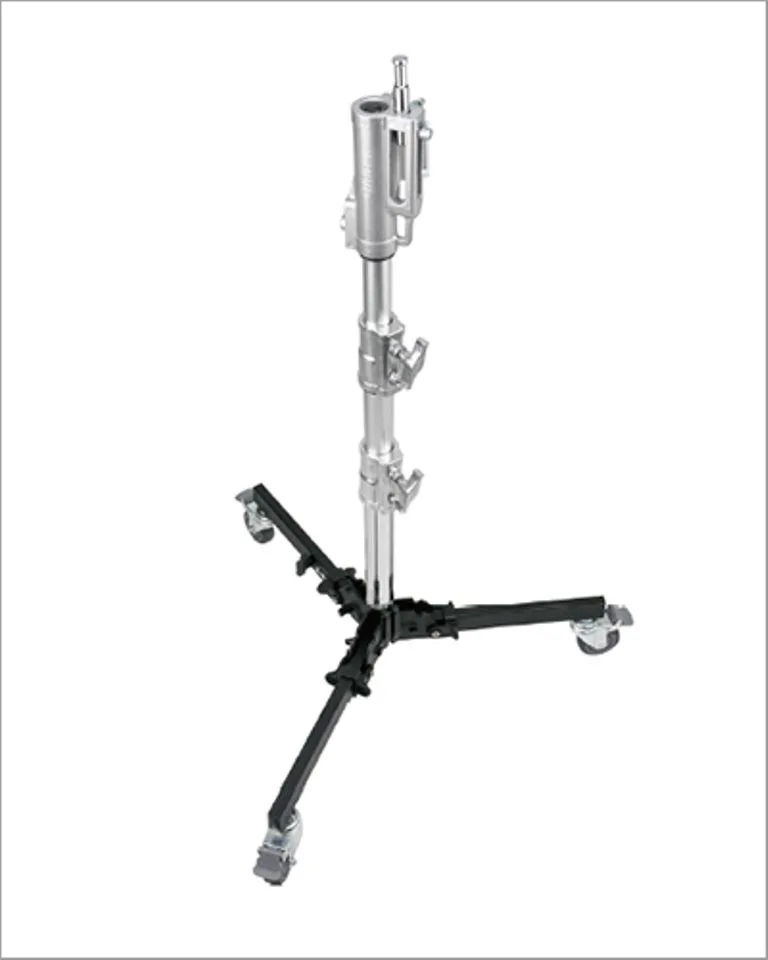
- Kupo 370M Low Boy Junior Studio Aluminium Roller Stand: Maximum height 120cm, footprint 150cm diameter, max load 25kg, folded length 71cm, weight 7.8kg. A low, wide-footprint roller stand carries heavier loads but does not give the overhead reach of a boom, so it is the fallback when the boom is at its limit.