Quick answer
Choose alcohol markers for smooth blending and layered colouring, paint markers for opaque coverage on mixed surfaces, and metallic markers for shiny accents. If you mainly colour stamped images or illustrations, start with a quality alcohol marker set. For mixed media and dimensional effects, add paint and metallic markers as complements.
Walk into any craft shop and you will see shelves of markers that look similar but behave very differently. The label matters: alcohol markers, paint markers, and metallic markers each use different ink and suit different jobs. Buying the wrong type for your project leads to frustration and wasted money.
This comparison breaks down how each marker type works, what they are best at, and where they fall short. You will also see real product examples from Crafter's Companion to ground the advice, so you can match a marker to your next project with confidence.
How alcohol markers work and when to use them
Alcohol markers use dye suspended in alcohol. The ink flows smoothly and dries quickly, allowing you to layer colours without lifting the previous layer. They are the go-to choice for colouring stamped images, illustrations, and any project where you want gradient shading or seamless blending. Because the ink is translucent, you can build depth gradually.
The trade-off is that alcohol markers bleed through most paper. You need a bleed-proof mat or a spare sheet underneath. They also perform best on smooth, coated cardstock rather than textured watercolour paper. If your main goal is colouring detailed line art, alcohol markers are the most versatile option.
- Work on smooth cardstock for best blending.
- Always place a scrap sheet underneath to protect your table.
- Store horizontally to keep ink evenly distributed.
Paint markers: opaque coverage on tricky surfaces
Paint markers contain pigment rather than dye, so they sit on top of the surface instead of soaking in. That makes them opaque and ideal for covering dark backgrounds, wood, metal, glass, and plastic. You can use them for mixed media, home decor, and adding bold details to cards or journals.
The trade-off is that paint markers are not designed for blending. They dry to a solid, often matte finish, and layering wet paint can cause streaks. They also take longer to dry than alcohol markers. If you need to write on a dark card base or decorate a wooden ornament, paint markers are the right tool.
- Shake well before use and prime the nib on scrap paper.
- Let layers dry completely before adding more paint.
- Clean the nib promptly to avoid clogging.
Metallic markers: shine and accent details
Metallic markers contain fine metal particles that create a reflective finish. They are not intended for full colouring; instead, they add highlights, outlines, and decorative accents. You can use them on paper, card, and some non-porous surfaces to make sentiments or borders pop.
The trade-off is that metallic ink can be less opaque than paint and may require multiple passes for solid coverage. It also tends to show nib strokes on textured paper. For small, shiny details that catch the light, metallic markers are unmatched.
- Test on scrap first to gauge opacity.
- Use light pressure and build up layers.
- Seal with a fixative if the project will be handled often.
Key differences at a glance
Alcohol markers excel at blending and smooth gradients but bleed through paper. Paint markers offer opaque coverage on almost any surface but are not blendable. Metallic markers provide reflective accents but lack the coverage for large areas. Your choice depends on whether you prioritise blending, coverage, or shine.
Consider the surface you work on most. Smooth cardstock favours alcohol markers. Wood, glass, and dark card favour paint markers. For a finishing touch on any project, metallic markers add a professional shimmer.
- Blending: alcohol > paint > metallic
- Opacity: paint > metallic > alcohol
- Surface versatility: paint > metallic > alcohol
Trade-offs to weigh before you buy
- Blending vs. opacity: Alcohol markers blend seamlessly but are translucent; paint markers are opaque but not blendable. Choose alcohol for gradients, paint for solid coverage.
- Surface compatibility: Alcohol markers need smooth, coated paper; paint markers work on wood, glass, and dark card; metallic markers suit accents on most surfaces. Match the marker to your most common surface.
- Drying time and bleed: Alcohol markers dry fast but bleed through; paint markers dry slower and sit on top; metallic markers dry quickly but may need sealing. Plan your layers and protect your workspace.
Product facts
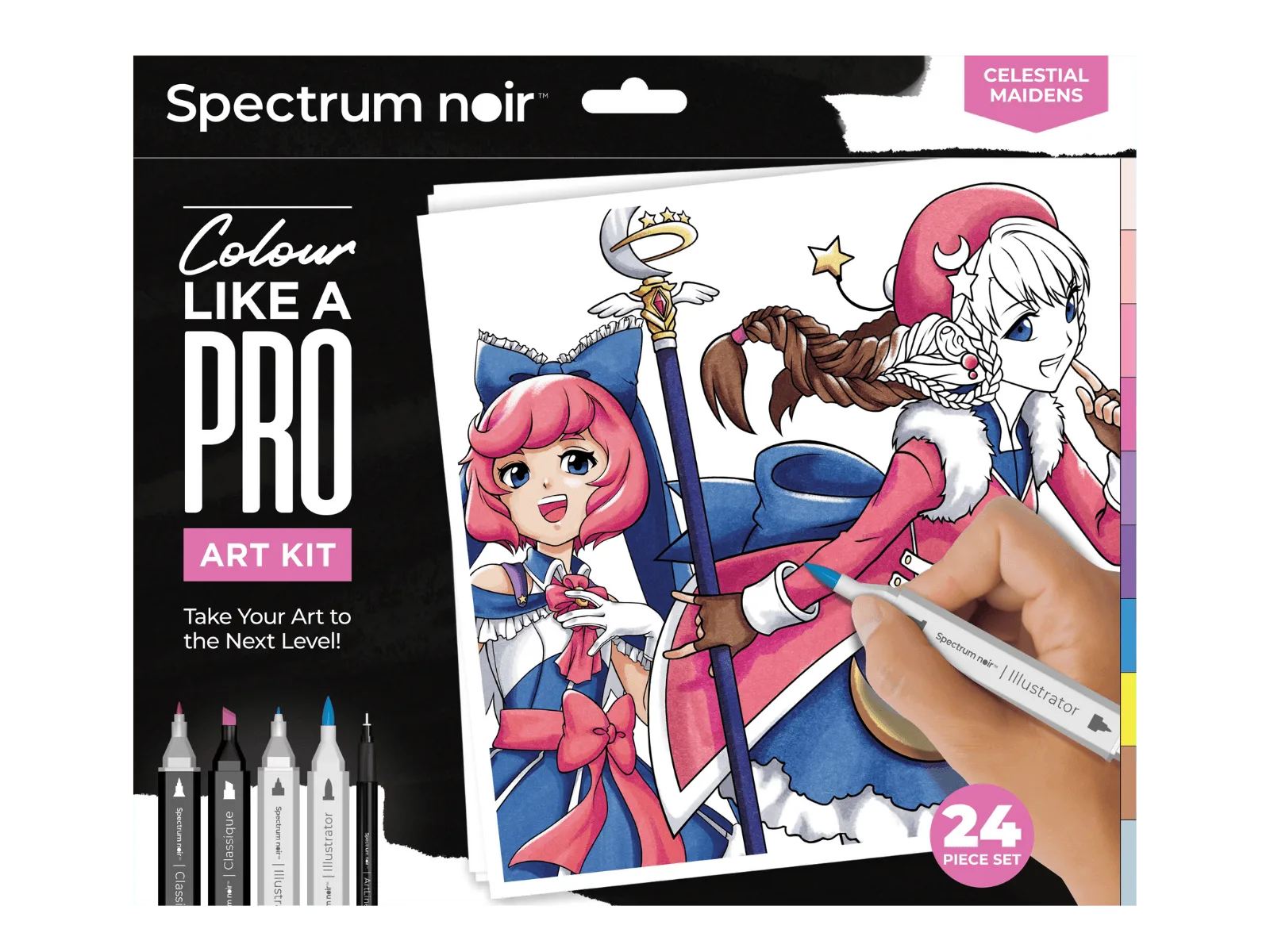
- Spectrum Noir Pro Colour Art Kit - Celestial Maidens: This 24-piece kit includes professional art markers, accessories, and a guide to get started, with original line art by artist Nicola Yau. It gives you alcohol-based markers and ready-to-colour artwork in one box, so you can practise blending immediately without buying separate supplies.
- Crafter's Companion 6"x 6" White Linen Card & Envelopes - 50 Piece: The pack includes 25 pre-scored cards and 25 envelopes with a textured linen effect. The textured surface is not ideal for alcohol marker blending, but it works well for paint markers or metallic accents that sit on top.
Which marker type is right for you?
Best for
- Crafters who colour stamped images or illustrations and want smooth blending.
- Mixed-media artists who need opaque coverage on wood, glass, or dark backgrounds.
- Card makers who want to add shiny accents and highlights to sentiments.
Not for
- Anyone who needs a single marker for all surfaces and techniques.
- Crafters who prefer water-based blending and do not want to use alcohol markers.
- Projects that require large areas of solid metallic colour.
There is no single best marker for every craft. Alcohol markers win for blending, paint markers for opaque coverage, and metallic markers for shine. Start with the type that matches your most frequent project, then add the others as your skills grow. The Spectrum Noir Pro Colour Art Kit is a smart first step if you want to explore alcohol marker blending with guided artwork.