Quick answer
Matcha collagen provides a unique combination of antioxidants from matcha plus collagen protein, but traditional green tea delivers a higher concentration of catechins per serving without added protein. Your choice depends on whether you prioritize pure antioxidant intake or a two-in-one beauty and energy boost.
Antioxidant content: green tea vs matcha collagen
Green tea is renowned for its high levels of catechins, particularly epigallocatechin gallate (EGCG), which are powerful antioxidants. A standard brewed cup contains roughly 50–100 mg of catechins, with EGCG making up about half. Matcha, being ground whole tea leaves, can offer even higher catechin concentrations per gram than steeped green tea. However, matcha collagen blends like Vital Proteins Matcha Collain add collagen peptides and other ingredients, which dilute the catechin density per serving compared to straight matcha or green tea. If your primary goal is maximizing antioxidant intake, a cup of plain green tea or pure matcha is the more concentrated choice.
Beyond antioxidants: the collagen advantage
The real strength of matcha collagen lies in its dual function. While green tea only provides antioxidants, a product like Matcha Collagen from Vital Proteins also delivers collagen peptides sourced from grass-fed bovine and wild-caught fish. This collagen supports skin elasticity, joint health, and hair and nail strength—benefits that green tea alone cannot offer. For someone looking to simplify their morning routine, mixing a scoop of matcha collagen into water or milk replaces both a tea break and a collagen supplement. The trade-off is a slightly lower antioxidant punch per serving in exchange for added protein and convenience.
Caffeine and energy: similar lift, different delivery
Both green tea and matcha collagen provide a gentle caffeine boost. Matcha contains L-theanine, an amino acid that promotes calm alertness and reduces the jitters often associated with coffee. Vital Proteins Matcha Collain retains this property, offering steady energy without a crash. Green tea also contains L-theanine but in smaller amounts per cup. If you prefer a creamy, slightly sweet flavor and want to combine your energy boost with skin-supporting nutrients, matcha collagen is the better fit. For a purist tea experience with no added calories or protein, stick with brewed green tea.
Matcha collagen vs green tea: trade-offs at a glance
- Antioxidant density: Green tea (and pure matcha) delivers a higher concentration of catechins per serving. Matcha collagen blends dilute this with collagen and other ingredients. If your top priority is maximum antioxidants, choose plain green tea or pure matcha.
- Multi-function convenience: Matcha collagen combines antioxidants with collagen protein for skin, joint, and hair support in one drink. Green tea offers only antioxidants. For a two-in-one beauty and energy boost, matcha collagen wins on convenience.
- Caffeine & energy profile: Both provide a gentle, sustained energy lift thanks to L-theanine. Matcha collagen may have slightly less caffeine per serving than a strong cup of green tea. Choose based on whether you want a creamy flavored drink or a traditional tea.
Product spotlight
-
Matcha Collagen: Matcha Collagen from Vital Proteins combines the benefits of collagen with the vibrant flavor of matcha. You get both antioxidant-rich matcha and collagen protein in one scoop, simplifying your supplement routine.
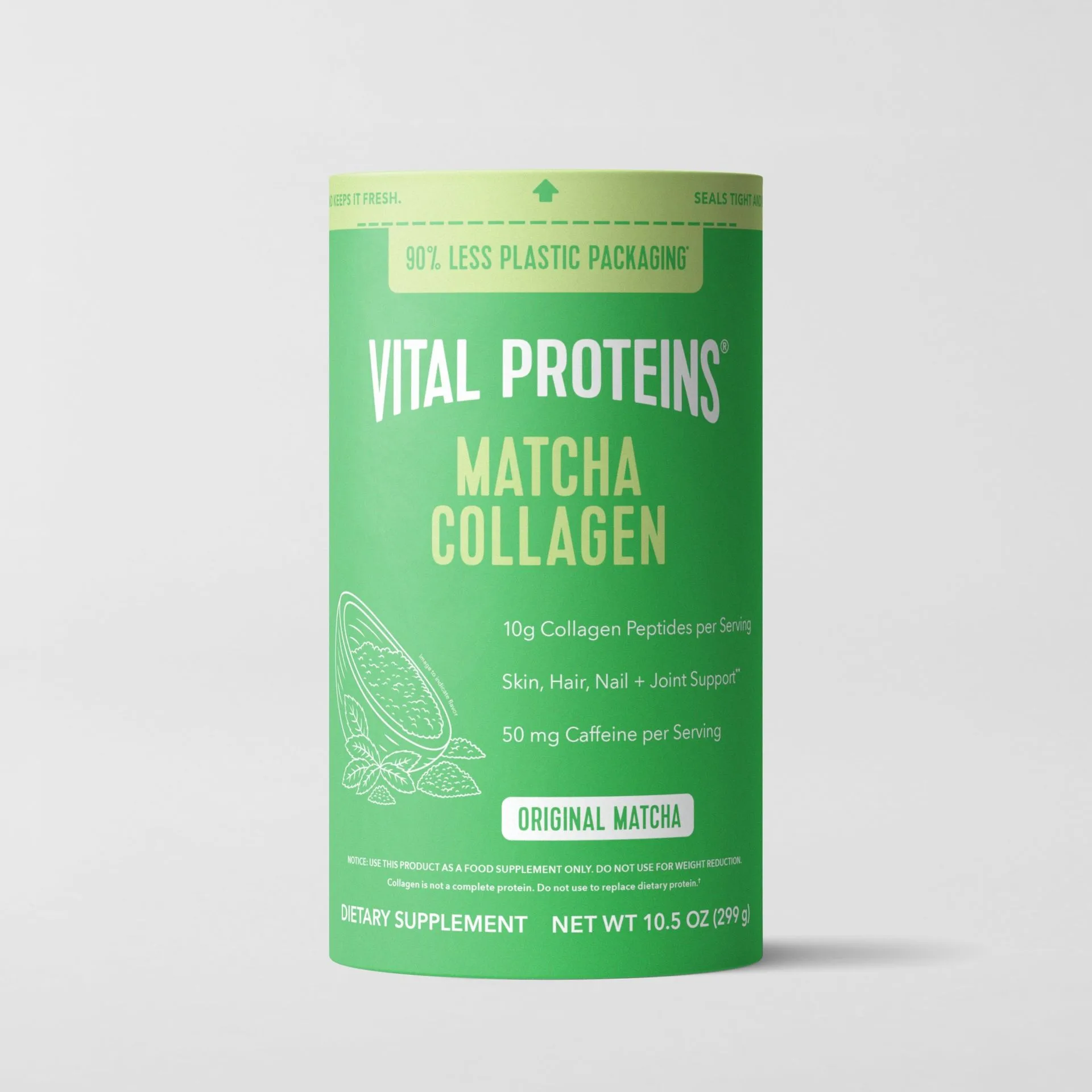
Matcha Collagen
Which one is right for you?
Best for
- Anyone who wants to combine antioxidant support with collagen protein for skin and joints in one easy drink
- People who prefer a creamy, slightly sweet matcha flavor over plain tea and value convenience
Not for
- Those seeking the highest possible catechin intake per serving—pure green tea or matcha is more potent
- Individuals who avoid added protein or want a zero-calorie beverage