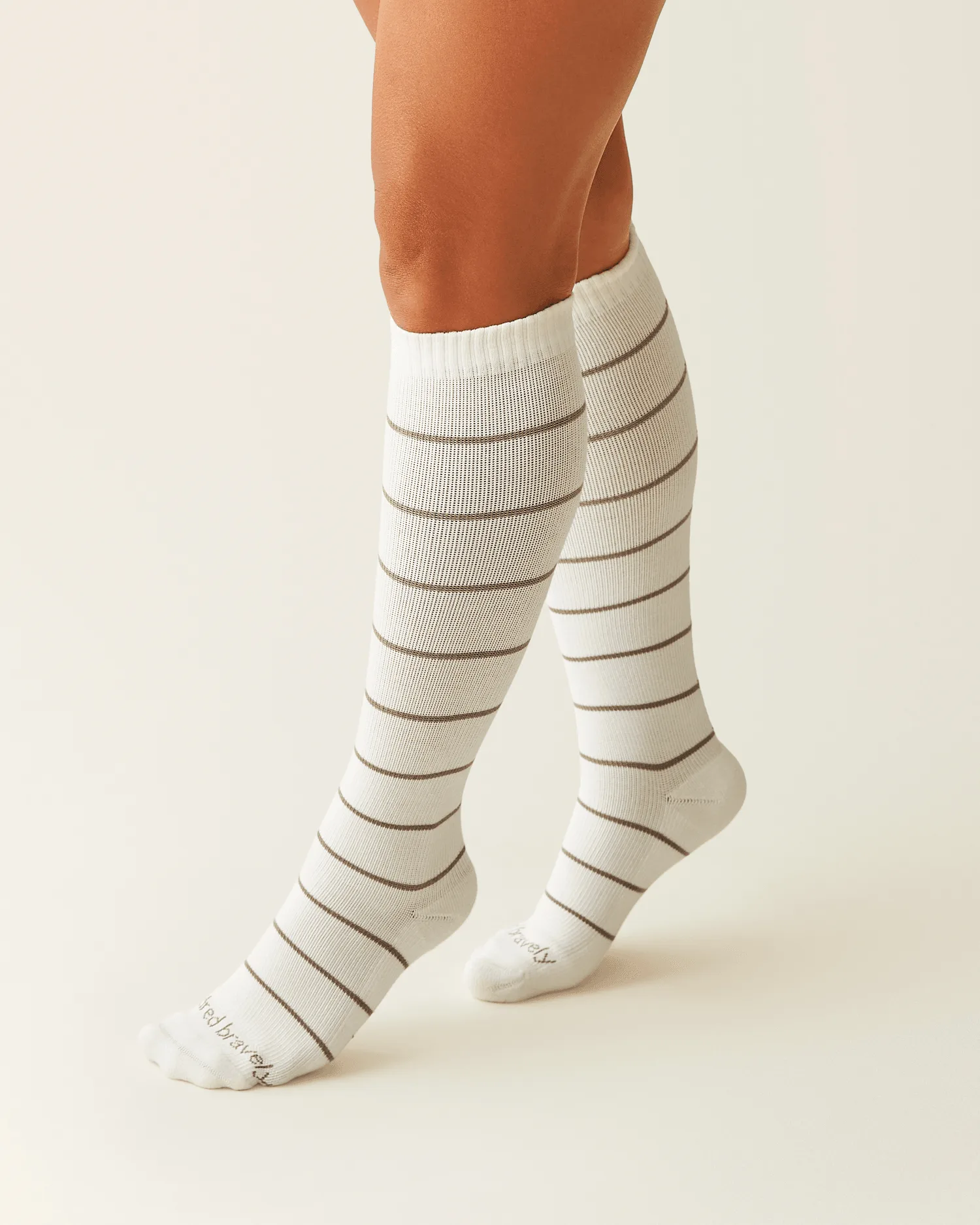
Quick answer
If your main concern is swollen legs and improving circulation during late pregnancy or postpartum, choose graduated compression socks (20–30 mmHg). If you want a cozy, non-skid sock for labor and recovery that also makes a fun hospital bag addition, go with anti-slip labor socks.
Why you might need both
Many moms pack both types of socks in their hospital bag because they serve different stages. Compression socks help with fluid retention and soreness during the final weeks and after delivery. Labor socks stay on your feet during birth with grippy soles and a soft feel, then keep you warm during recovery without restricting movement.
What graduated compression does
Graduated compression means the pressure is highest at the ankle and decreases as it moves up the calf. This design helps push blood back toward the heart, which can reduce swelling and achiness. The 20–30 mmHg range is considered medical-grade compression, so it provides real support but may feel snug if you are not used to wearing compression garments.
When non-skid matters most
Hospital floors can be slippery, and your balance may be off during labor or after medication. A sock with anti-slip grips on the sole gives you traction when walking to the bathroom or moving around the room. Terry-knit fabric also adds warmth without overheating, which is helpful in a cold delivery room.
How to decide between them
- Choose compression socks if: You have noticeable leg swelling, varicose veins, or discomfort that makes standing or walking painful. The graduated compression (20–30 mmHg) can help ease those symptoms during pregnancy and after birth. Compression socks are a medical aid, not just comfort wear.
- Choose labor socks if: You want a soft, breathable sock that stays on your feet during labor and has non-skid soles for safety. The playful message adds a lighthearted touch to your birth experience, and the cotton blend works well for lounging in the hospital. Labor socks prioritize warmth, grip, and comfort over circulation support.
- Consider packing both if: You plan to wear compression socks during travel or the early stage of labor, then switch to labor socks for delivery and recovery. This covers swelling relief and safety without compromise. Having both options gives you flexibility during a long hospital stay.
Product facts at a glance
-
Premium Maternity Compression Socks (2-Pack) | Stone Blue & Black: High compression (20–30 mmHg) with graduated pressure targeted at the ankle, decreasing toward the sock opening. This level of compression actively reduces swelling and soreness during pregnancy and the postpartum period, making it a medical support tool rather than just a cozy sock.

Premium Maternity Compression Socks (2-Pack) | Stone Blue & Black
-
Labor & Delivery Socks | IYKYK: Anti-slip, non-skid design with ultra-soft terry-knit fabric, made for safe walking during labor and recovery. The grip keeps you stable on hospital floors, and the soft cotton-blend material keeps feet warm without overheating — exactly what you need during a long labor stay.
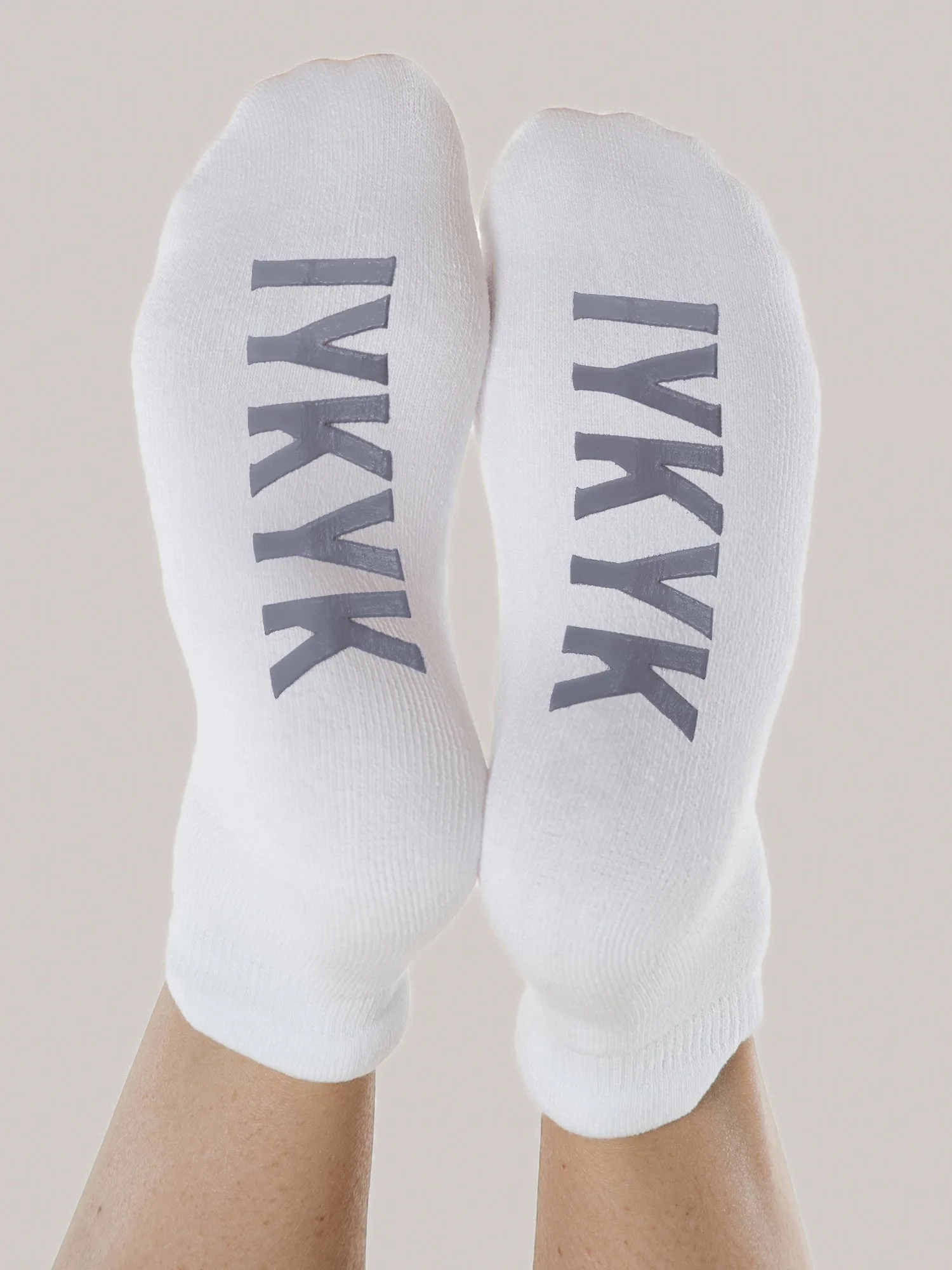
Labor & Delivery Socks | IYKYK
Which sock fits your situation?
Best for
- Pregnant women with moderate to severe swelling who need circulation support
- Moms planning a hospital birth who want a safe, non-skid option for labor and recovery
Not ideal for
- Someone who only needs light support or prefers no compression — compression socks may feel too tight
- A mom who wants a single sock that does both jobs — no single product replaces both functions