Quick answer
R-value tells you how well a mattress resists heat loss, while a temperature rating tells you the approximate low temperature a complete sleep system keeps an average sleeper comfortable. They are not interchangeable: a high R-value pad can still feel cold with a thin quilt, and a warm bag can feel cold on a bare, low-R pad. Match the pad's R-value to the ground and season, then choose insulation to cover the air temperature.
Two numbers get quoted constantly in sleeping pad listings, and they measure completely different things. R-value is a material property of the mattress itself. A temperature rating is a system-level estimate that assumes you are wearing baselayers and using insulation on top.
That distinction matters because the two specs fail in different ways. Get the R-value wrong and the cold comes up through the ground, no matter how good your quilt is. Get the temperature rating wrong and you lose heat into the air above you. This comparison breaks down what each number means, where the limits are, and how to combine them without overbuying.
What R-value actually measures
R-value is a measure of thermal resistance: how well a material slows heat moving from the warm side to the cold side. On a sleeping mattress, that means how effectively it stops your body heat from draining into the ground. It is a property of the pad and its construction, not of the air temperature around you.
Higher R-values mean more resistance to heat loss. For most three-season backpacking, an R-value in the 3 to 4 range is a common target, while winter camping typically calls for higher values. The exact number you need depends on ground temperature, how warm you sleep, and how much insulation you carry on top. R-value does not account for wind, humidity, or the warmth of your quilt.
- R-value is tested on the mattress alone, so it stays the same regardless of the bag or quilt you pair with it.
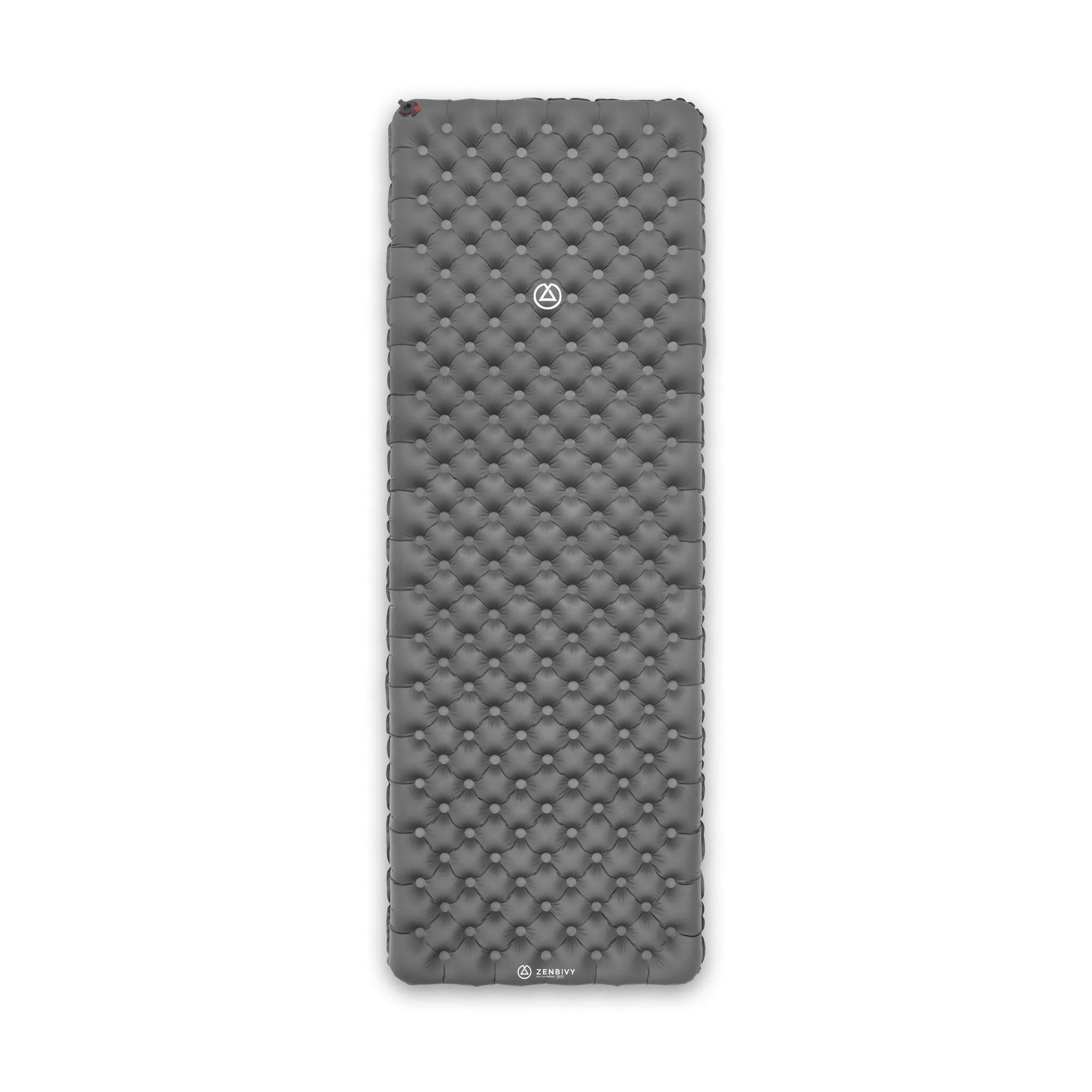
- A mattress with 200g of fully baffled synthetic insulation, like the Light Mattress, is built to deliver EN/ISO-matched performance for three-season warmth.
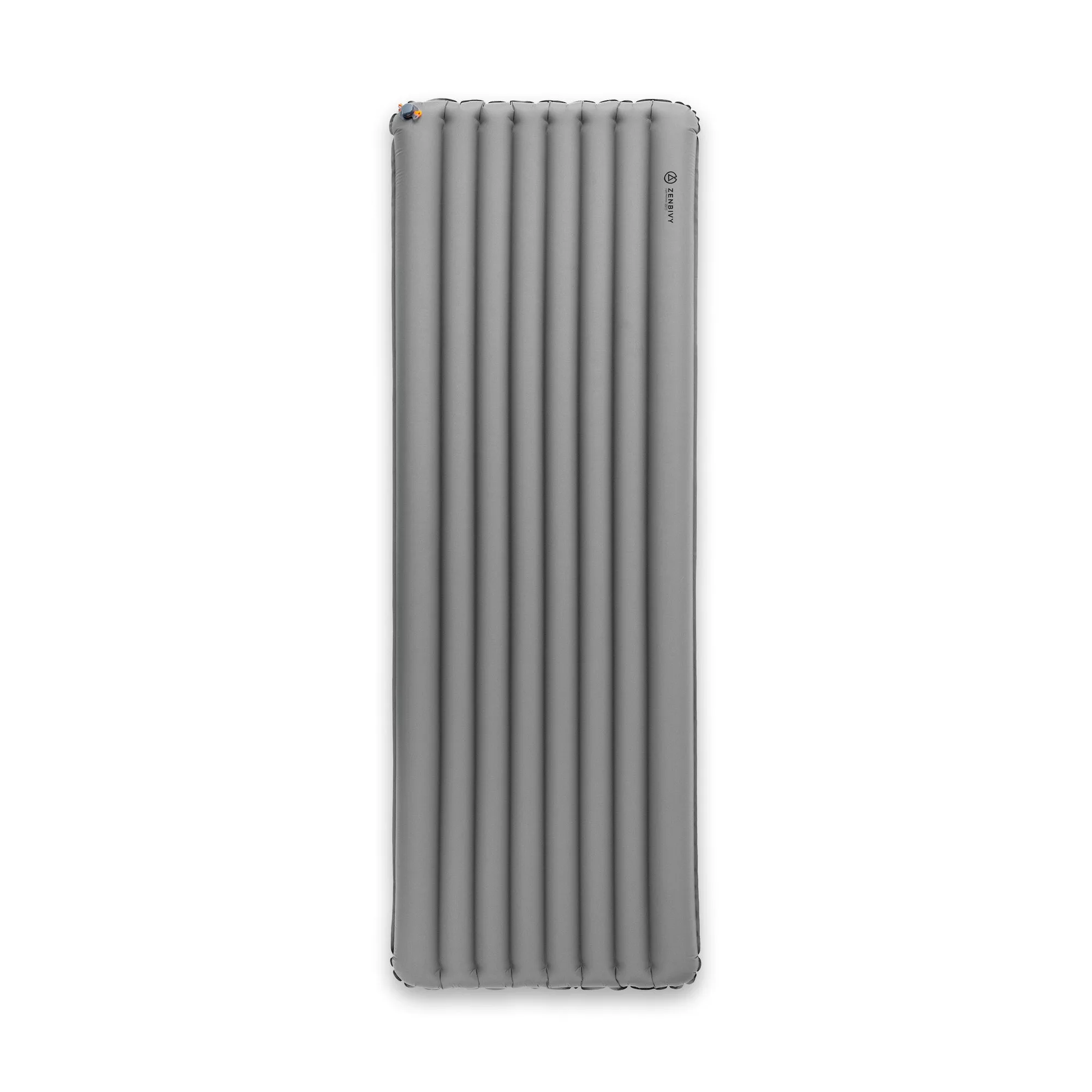
Light Mattress
What a temperature rating actually means
A temperature rating is an estimate of the low temperature at which a sleep system keeps an average sleeper comfortable. It is not a single material property. It assumes you are wearing a baselayer, using a properly sized pad, and sleeping inside the bag or under the quilt as intended.
Because it is a system-level number, it shifts with every component. Swap a thin sheet for a draft-blocking one, add a warmer quilt, or move to a higher-R mattress, and your real comfort floor changes. Treat any temperature rating as a starting point for comparison, not a guarantee for your body on a given night.
- Ratings assume a closed, draft-free system; gaps at the shoulders or feet can make a rated setup feel colder.
- Two people can sleep at the same temperature and feel different results based on metabolism, hydration, and clothing.
How the two specs interact on a real trip
Think of the mattress as the floor of your insulation and the bag or quilt as the ceiling. R-value controls heat loss downward; the temperature rating describes the combined performance of the ceiling plus the floor and your clothing. If the floor is weak, the ceiling has to work harder, and the rated temperature becomes optimistic.
This is why pairing matters more than any single number. A quilt rated for cold conditions on a bare, low-R pad will underperform, while a modest quilt on a well-insulated mattress can feel warmer than expected. When you compare options, compare the whole stack, not one spec in isolation.
- If you sleep cold, add R-value before you add a heavier quilt; ground heat loss is often the bigger variable.
- If you sleep warm, a moderate R-value plus a versatile quilt usually covers more nights than a single extreme-rated bag.
Where quilt and sheet design changes the math
Quilts and sheets change how much of the temperature rating you actually realize. A quilt that attaches to a sheet can eliminate drafts and constriction, which keeps the rated warmth where you need it. A sheet that blocks drafts and manages your pillow does the same job at the head end, where heat loss is easy to overlook.
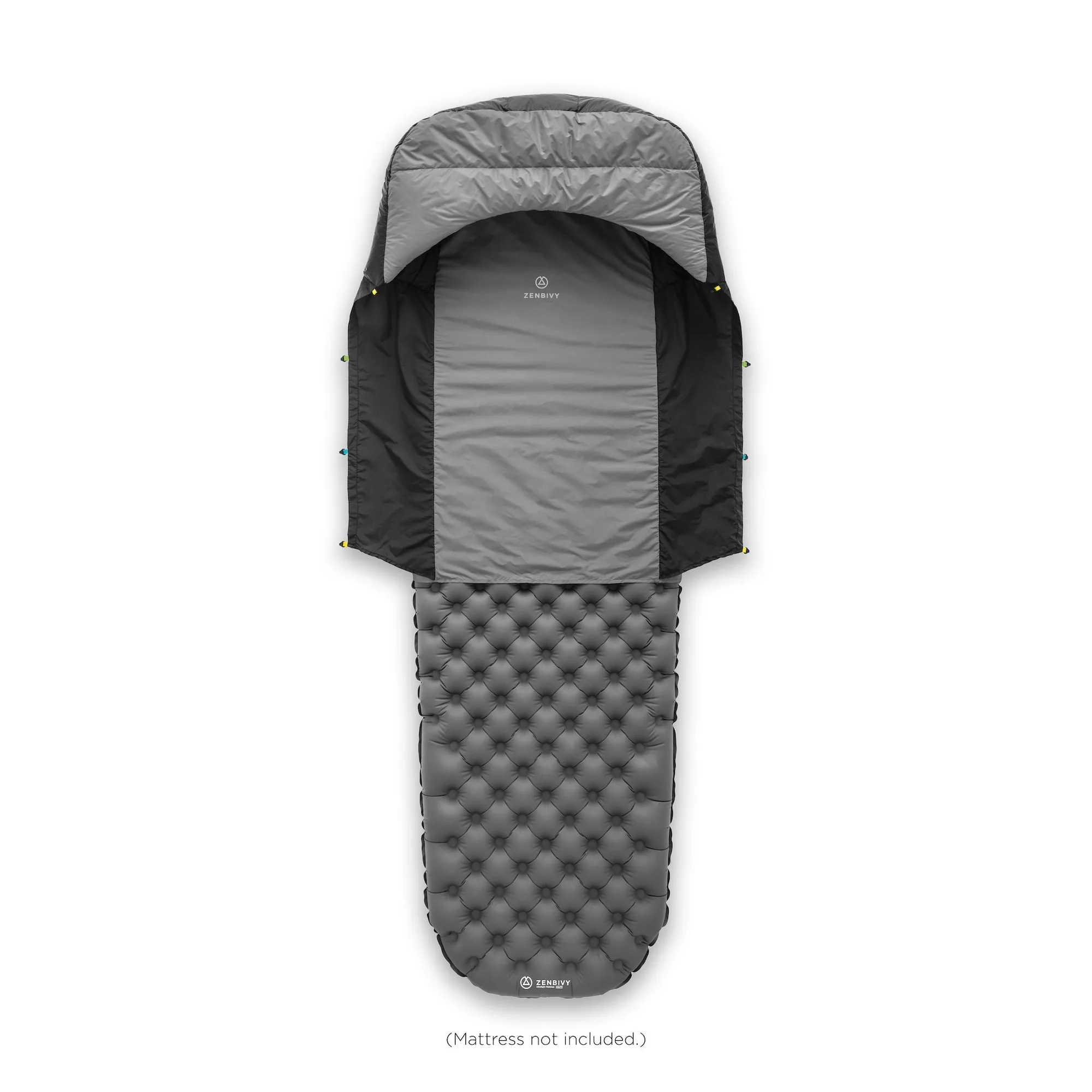
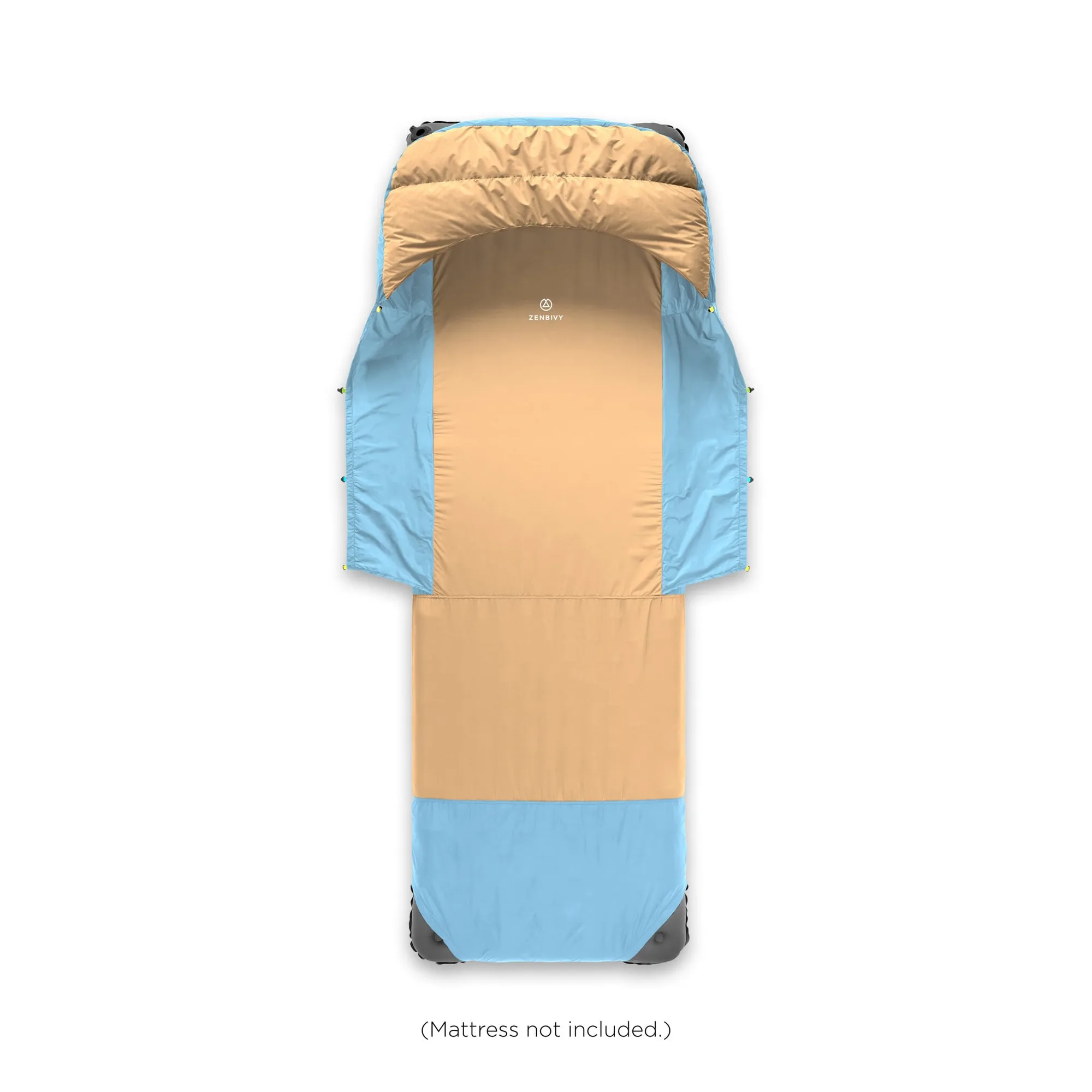
The Ultralight Sheet is described as the lightest way to block all drafts, eliminate all constriction, insulate your head, and manage your pillow, and it is compatible with any Zenbivy clip quilt. The Light Quilt uses an ultra-soft, lightweight 25D Pongee lining and a quick Fast Footbox for adjustable warmth, and pairs with a Light Sheet to create a complete backpacking sleep system. Those design choices affect comfort more than a spec sheet alone shows.
- Draft management at the shoulders and head is often the difference between hitting a rating and missing it.
- A sheet-and-quilt pairing lets you adjust warmth through the night without changing the mattress.
Common mistakes when reading sleeping pad specs
The most common error is treating R-value and temperature rating as the same scale. They are not comparable numbers: an R-value of 4 does not mean a 4-degree rating, and a 20-degree bag rating does not imply a specific R-value. Comparing them directly leads to bad purchase decisions.
The second mistake is assuming a rating applies to any setup. A temperature rating assumes a closed system with adequate ground insulation. If you use a quilt loosely, skip a sheet, or sleep on a bare pad, expect the real comfort floor to be warmer than the label. Buy for your system, not for the number alone.
- Check whether the rating is for a bag, a quilt, or a full system before you compare it to another product.
- If a spec is not published, treat that as a decision limitation and ask before assuming performance.
Trade-offs to weigh before you buy
- Higher R-value vs pack weight: More ground insulation usually means more material and more packed volume. A three-season mattress like the Light Mattress targets lightweight comfort and 3-season warmth rather than extreme winter performance. Choose the R-value for the coldest ground you realistically camp on, not the coldest night you have ever read about.
- Quilt versatility vs single-bag simplicity: A quilt such as the Light Quilt with a Fast Footbox lets you adjust warmth and pairs with a sheet for a complete system, but it requires you to manage the pairing. A single bag is simpler but less tunable. If you want one setup for many trips, a quilt-plus-sheet system usually covers more conditions.
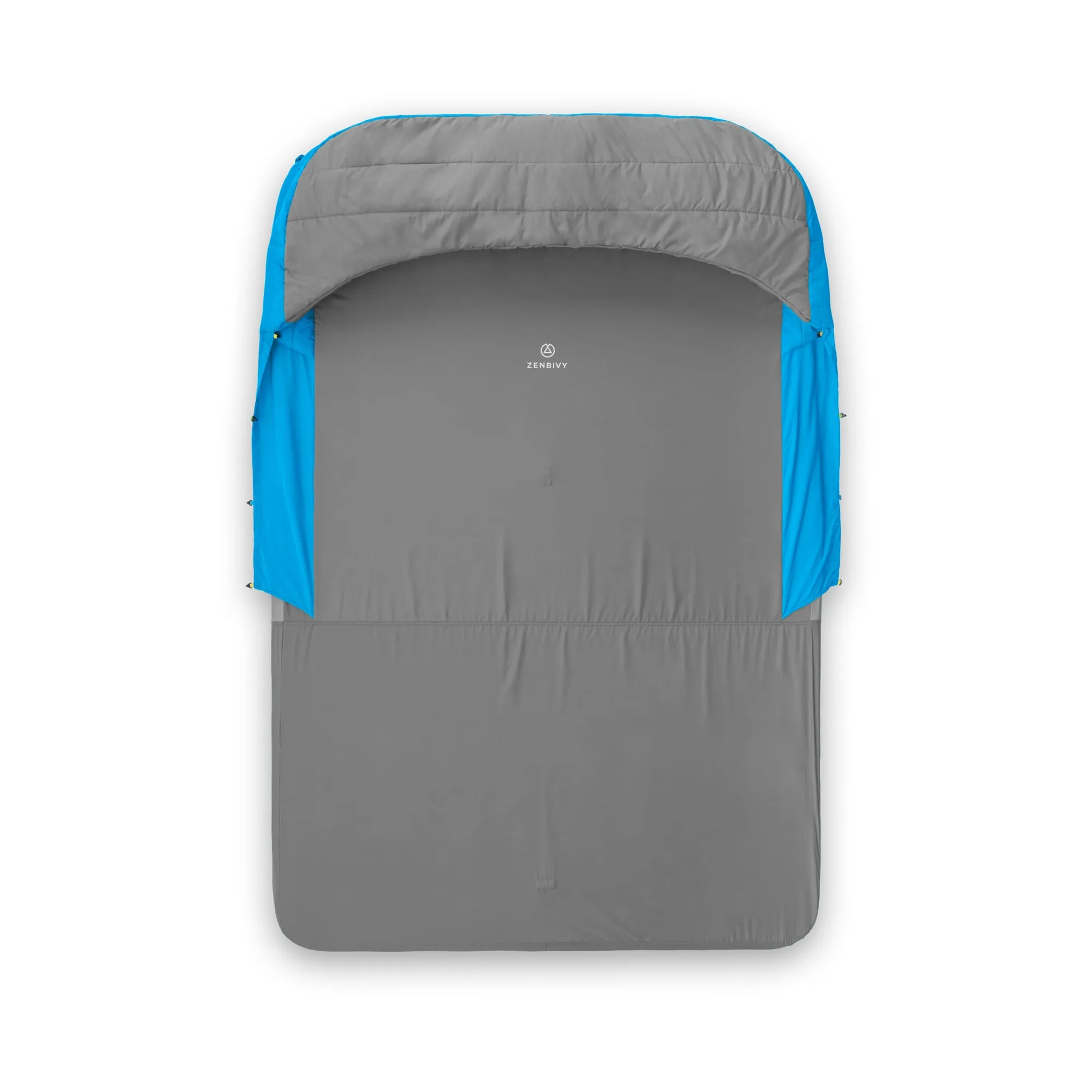
- Rated temperature vs real-world comfort: Temperature ratings assume a closed, draft-free system with adequate ground insulation. Sheets like the Ultralight Sheet or Overland Double Sheet exist because drafts and head exposure routinely cost you warmth. Budget for draft control if you plan to sleep near the rated limit of your bag or quilt.
Product facts that show the difference
- Light Mattress: Features 200g of fully baffled synthetic insulation and delivers EN/ISO-matched performance for lightweight comfort and 3-season warmth in the backcountry. This is the ground-side half of the equation: the mattress controls heat loss downward, so its construction sets the floor your quilt or bag has to work against.
- Ultralight Quilt: Built for ultralight backpackers, it is the lightest and most packable option while keeping key comfort features and patented tech. This is the air-side half: a quilt's warmth only performs as rated when the mattress below it is adequate for the conditions.
- Light Quilt: Features an ultra-soft, lightweight 25D Pongee lining and a quick Fast Footbox for easy, adjustable warmth; pairs with a Light Sheet to create a complete backpacking sleep system. Adjustable warmth and a paired sheet let you tune the system to the night instead of relying on a single temperature rating.
- Ultralight Sheet: The lightest way to block all drafts, eliminate all constriction, insulate your head, and manage your pillow; compatible with any Zenbivy clip quilt. Draft control at the head and shoulders is where rated temperature performance is most often lost, so this directly affects how close you get to the rating.
Which spec should drive your decision?
Choose based on R-value first if you
- camp on cold ground, snow, or in shoulder-season conditions where heat loss downward is the main problem
- sleep cold and have already tried a warmer bag without solving the issue
- use a quilt and want the ground side of the system to carry more of the insulation load
Choose based on temperature rating first if you
- are shopping for a complete bag or quilt for mild summer conditions where ground insulation is rarely the limiting factor
- already own a high-R mattress and only need to adjust the insulation above you
- want a single number to compare bags across brands without considering the pad underneath
R-value and temperature rating answer different questions: one is about the mattress, the other about the whole system. Read the R-value to judge ground insulation, read the temperature rating to judge the bag or quilt, and then evaluate them together. If you are unsure, add ground insulation first, then draft control, then a warmer quilt.