Why MCT Oil and Tea Tree Oil Work for Acne Spots
A thin, fast-absorbing oil may not sound like a typical acne treatment, but MCT Oil infused with Tea Tree Oil offers a different approach. The blend combines two ingredients that target acne without the heavy, pore-clogging feel of many moisturizers or creams.
Tea Tree Oil has been clinically proven to kill mites, yeast, and fungus in 20 minutes. When paired with MCT Oil—a moisturizer that lacks the fat molecules that feed certain microbes—this blend can help manage acne, including types linked to Malassezia or fungal overgrowth.
What the Product Record Confirms
-
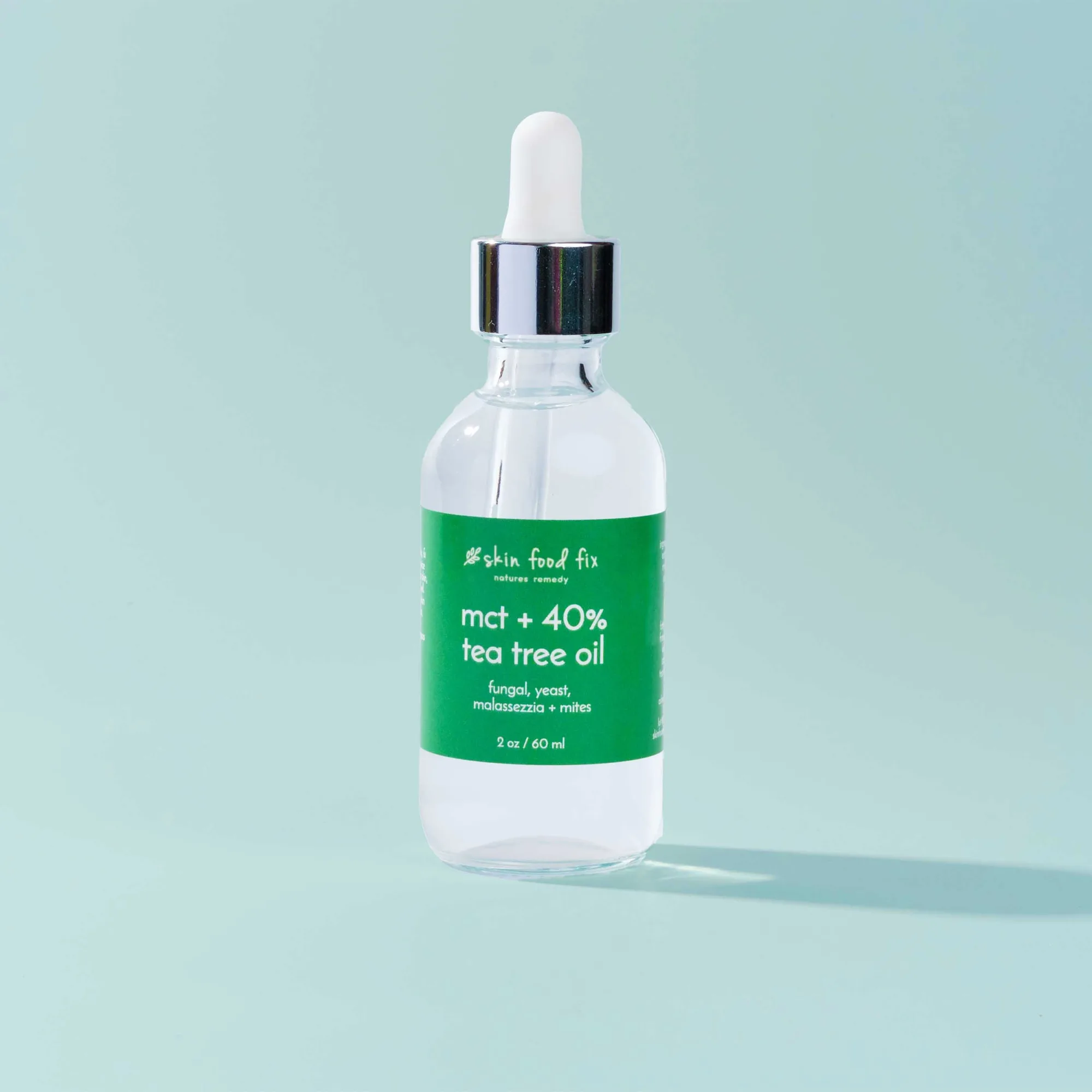
MCT Oil & Tea Tree Oil: Organic Natural Pure Plant oil Caprylic and Capric 8-10 molecule chain with 40% tea tree oil infused. The 40% tea tree concentration is already blended, so you don't need to mix or dilute yourself. The MCT base (C8 and C10 fatty acids) is outside the C11-24 range that Malassezia feeds on, making it a safe moisturizer for acne-prone skin.
MCT Oil & Tea Tree Oil
-
MCT Oil & Tea Tree Oil: For all skin types, perfect for Folliculitis, Malassezia, Oily / Acne / Rosacea, Psoriasis/Eczema. This product is formulated for conditions that often involve inflammation or microbial imbalance. The record states it is suitable for acne and oily skin specifically.
-
MCT Oil & Tea Tree Oil: Available in a 2 oz glass dropper bottle. The dropper allows precise, drop-by-drop application to individual spots without contaminating the bottle.
How to Use MCT Oil & Tea Tree Oil as a Spot Treatment
This routine is designed for evening use, when the oil can work overnight. Adjust the number of drops based on how many spots you are treating.
- Cleanse your face: Splash your face with warm water 5-10 times, then pat dry. This opens pores and removes surface dirt.
- Apply the oil to spots: Use the dropper to place 1-2 drops directly on each active pimple or breakout area. Gently massage the oil into the spot using your fingertip.
- Leave on overnight: Wear the oil blend on your skin overnight. The product record notes that mites or fungus 'don't stand a chance' when the oil is left on for several hours.
- Rinse in the morning: In the morning, wash your face with your regular cleanser. If your skin feels oily, you can double-cleanse with a gentle foaming wash.
Who This Spot Treatment Suits Best
The product record indicates this blend is ideal for oily, acne-prone skin, especially when acne is accompanied by fungal or microbial issues like Malassezia or Demodex mites. It is also suitable for those with rosacea or sensitive skin (choose the Calendula variant instead).
If your skin is very dry, the record suggests choosing the MCT Calendula variant for added soothing. For daytime moisture, the plain MCT Oil is recommended, while the Tea Tree blend is best used as a nighttime treatment.
A Note on Application and pH
The product record mentions that Malassezia and Folliculitis thrive at a pH of 5.5 to 7.5, while healthy skin is around 4.5. Using products with a pH between 3 and 5 is recommended. This oil blend itself does not have a stated pH, but the record advises always using proper skincare within that range to support the acid mantle.
For best results, avoid applying heavy creams or lotions over the oil, as those can feed the microbes you are trying to control. The MCT Oil is described as 'the only safe moisturizer' for these skin types because it lacks the fat molecules that fungal/yeast/mites feed from.