Quick answer
Focus on scientific accuracy, piece count matched to your child's age, and a puzzle size that invites hands-on exploration. The best medically accurate floor puzzles use professional-grade illustrations while keeping the assembly fun for kids.
Why accuracy matters in kids' anatomy puzzles
A medically accurate puzzle does more than label body parts—it shows correct anatomical relationships, proportions, and cross-sections. For example, a heart puzzle should place the atria and ventricles in the right positions relative to arteries and veins. When you choose a puzzle that prioritizes accuracy, your child builds a mental map of the body that aligns with what they will learn in school later.
Piece count and age: getting the balance right
A 100-piece floor puzzle suits most children ages 4–10, but consider your child's puzzle experience. A 4-year-old new to jigsaws may need help with a 100-piece set, while an 8-year-old who regularly completes puzzles might finish it quickly. The goal is a challenge that builds confidence without causing frustration. Look for large, sturdy pieces that are easy for small hands to grip.
Your decision rules for choosing a medically accurate floor puzzle
- Check the source of the artwork: Look for puzzles that explicitly state they use medically accurate or scientifically reviewed illustrations. Avoid puzzles with cartoonish or simplified organs that distort real anatomy.
- Match piece count to your child's age and experience: For ages 4–6, a 100-piece floor puzzle is a good starting point if you plan to work together. For ages 7–10, the same piece count works well for independent play. If your child is new to puzzles, consider starting with a smaller piece count first.
- Consider the puzzle's size and layout: A floor puzzle that assembles to 4 feet or more gives children a full-body view of the anatomy. This size works best on a clear floor space. If you have limited room, a tabletop puzzle may be more practical. Measure your available floor space before buying a giant floor puzzle.
- Look for an included reference guide: A puzzle that comes with an anatomy reference guide helps children identify parts and learn their functions during or after assembly. This turns the puzzle into a reusable learning tool.
Product facts
-
Kid's 100 Piece Human Body Floor Puzzle: Dr Livingston's Jr. - A Medically Accurate 4ft Human Anatomy Jigsaw Puzzle: 100-piece, 4-foot-tall floor puzzle with scientifically and medically accurate anatomy artwork, designed for ages 4–10. The large scale lets kids see the whole body at once, making it easier to understand how organs relate to each other.
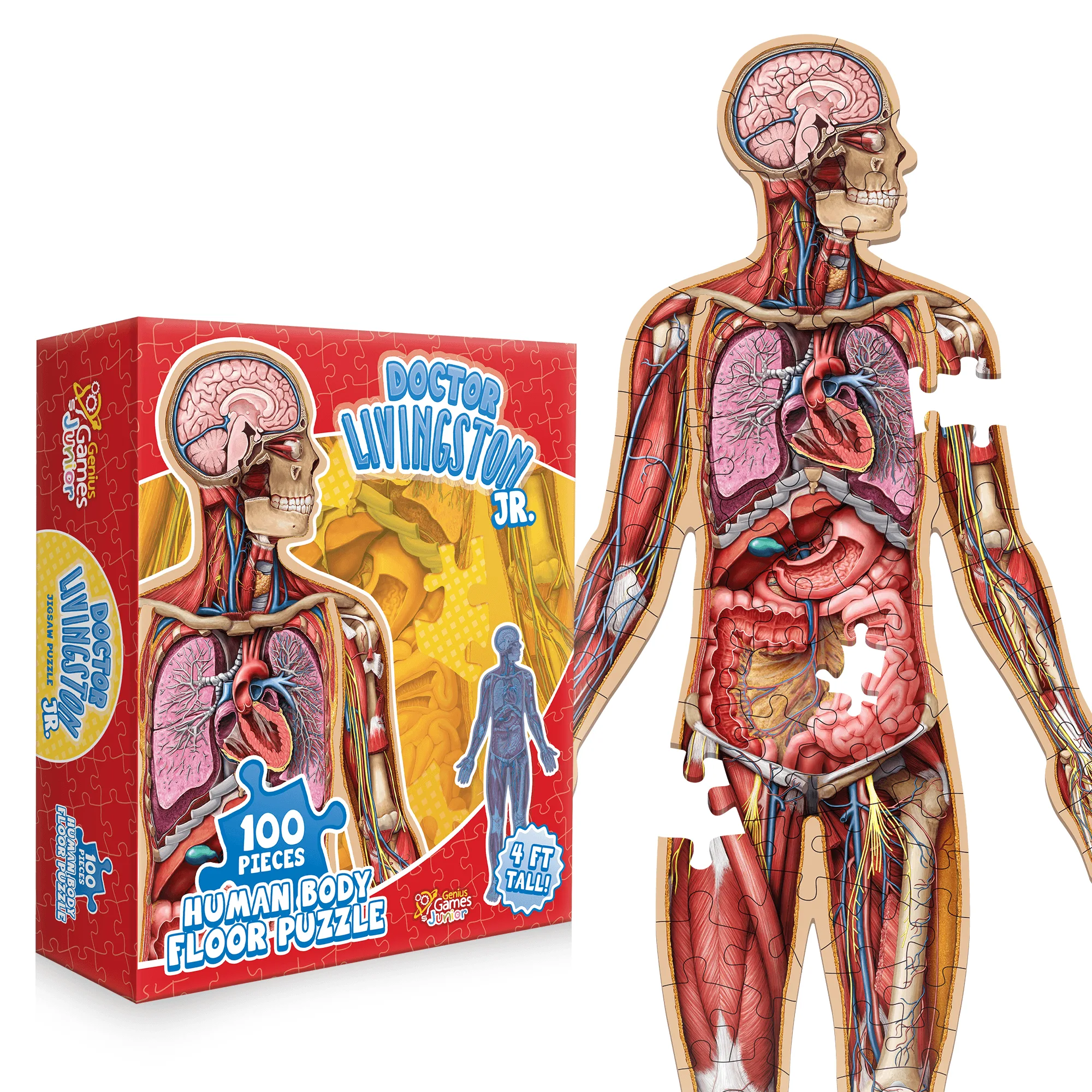
Kid's 100 Piece Human Body Floor Puzzle: Dr Livingston's Jr. - A Medically Accurate 4ft Human Anatomy Jigsaw Puzzle
-
Kid's 100 Piece Brain Floor Puzzle: Dr Livingston's Jr. - A Medically Accurate Brain Anatomy Jigsaw Puzzle: 100-piece brain floor puzzle that includes an anatomy reference guide and magnifies the brain to 500% of actual size. The reference guide turns puzzle time into a mini lesson, and the magnification reveals details a standard diagram cannot show.
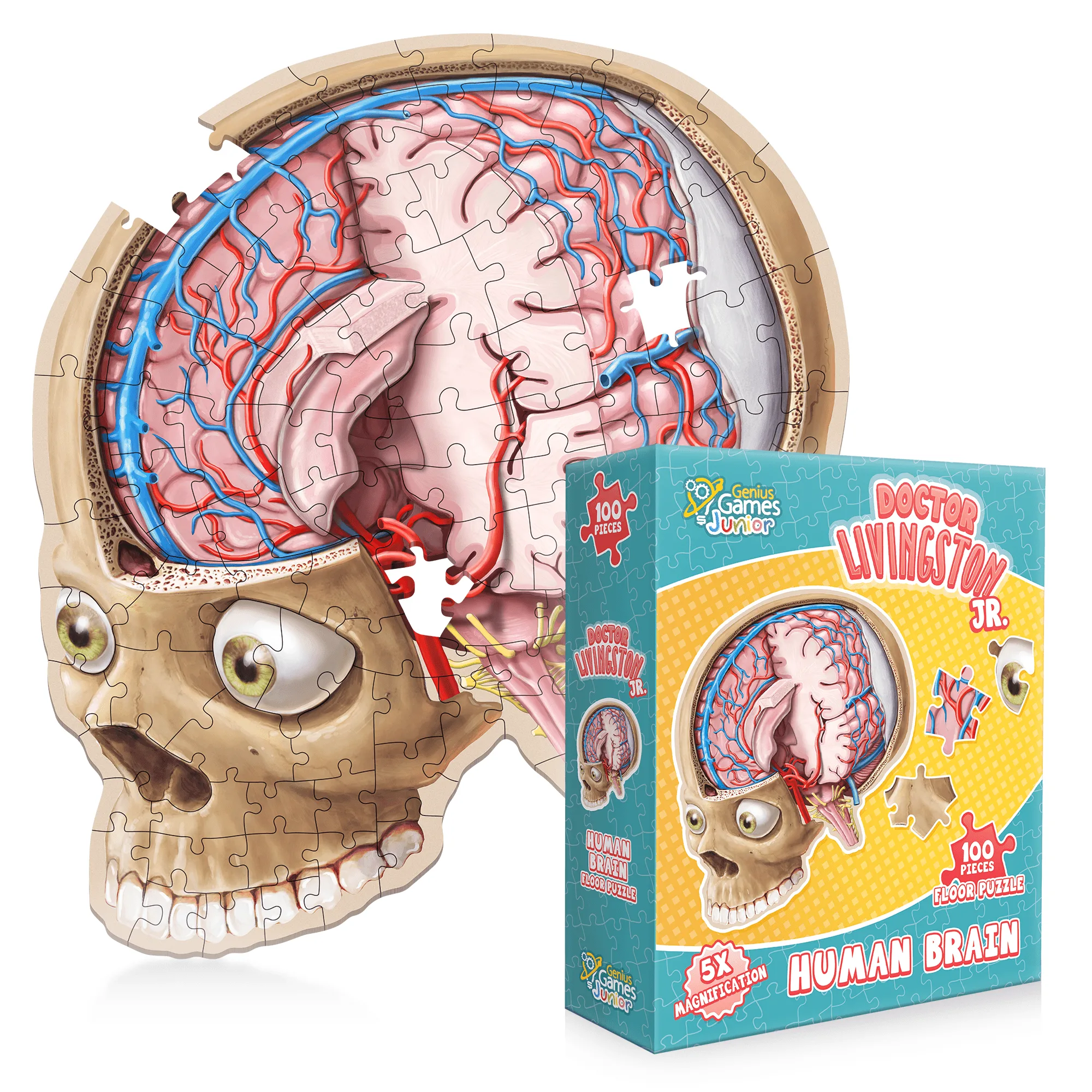
Kid's 100 Piece Brain Floor Puzzle: Dr Livingston's Jr. - A Medically Accurate Brain Anatomy Jigsaw Puzzle
-
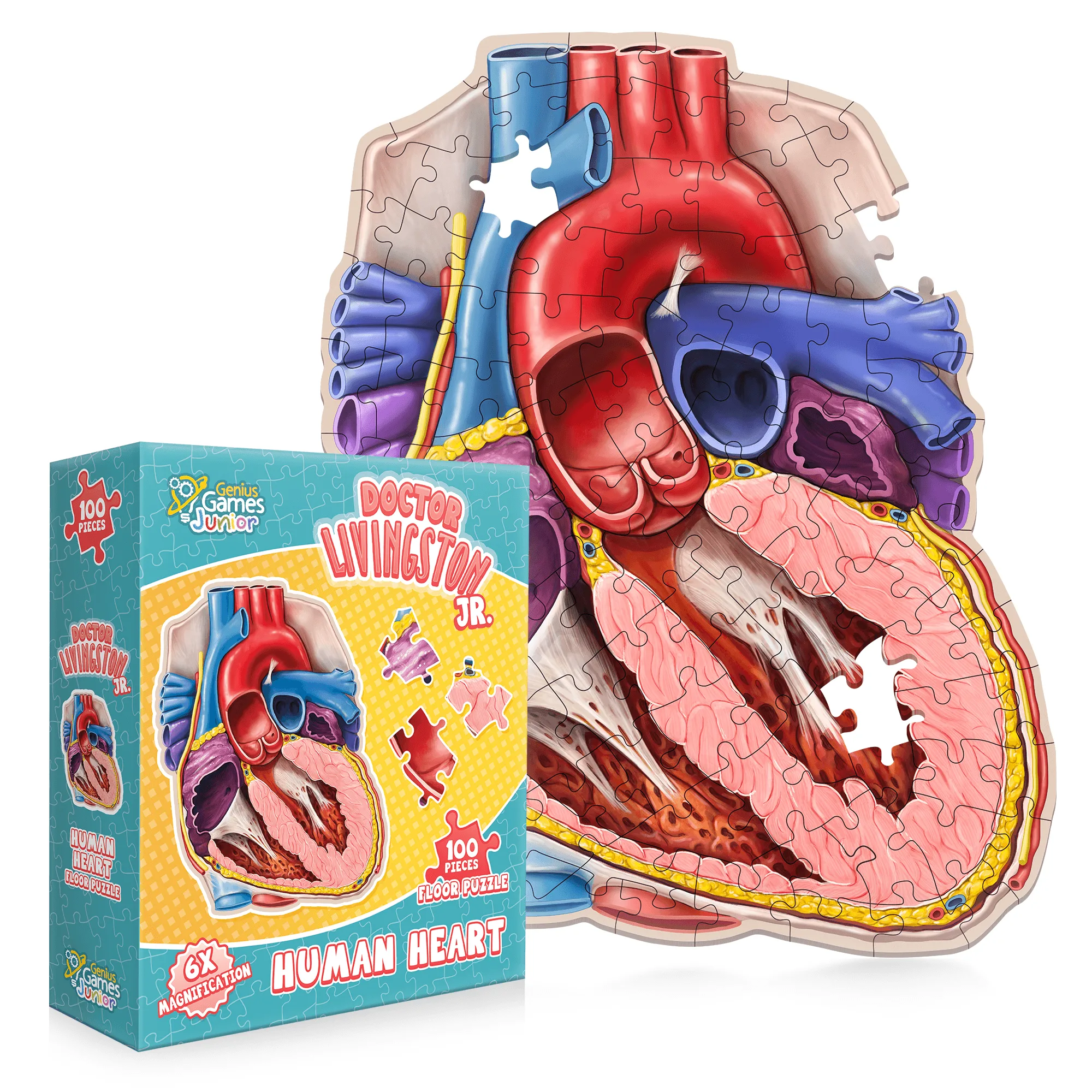
Human Heart Floor Kids Puzzle - Dr. Livingston's Unique Shaped 100 Piece Science Puzzles for Kids: 100-piece heart floor puzzle with 600% magnification, showing arteries, aortas, atria, and ventricles in a cross-section. The extra magnification helps children see the heart's internal chambers and vessels clearly, which is hard to grasp from a flat textbook image.
Who should buy what
Best for
- Families who want a screen-free way to teach basic human anatomy to kids ages 4–10
- Homeschool or classroom settings where a hands-on, large-scale visual aid is useful
Not for
- Children under 4 who may still put puzzle pieces in their mouths
- Parents seeking a detailed medical reference—these puzzles are introductory, not comprehensive