Quick answer
For most campers who drive to their site and sleep on a flat surface, a memory foam pad sleeps better: it supports your hips and shoulders, stays warm, and does not squeak or slowly deflate. An air mattress still makes sense when you fly in, hike in, or need to pack the smallest possible bag. Match the surface to how you travel, not to which one is trendy.
The sleeping pad is the one piece of camp gear that decides whether tomorrow feels good. Air mattresses are cheap, light and pack small, but they trade away support and warmth to get there. Memory foam camping pads do the opposite: they cost more and take up real space in the car, and they sleep far closer to your bed at home.
This comparison looks at how each type actually behaves in a tent, a truck bed camper, a rooftop tent pop-up, and a car camp setup, using the specs HEST publishes on its own pads. If you already own an air mattress and wonder whether upgrading is worth it, the trade-offs below will tell you.
Support and pressure relief
An air mattress supports you with air pressure, so your body sinks wherever it is heaviest. Side sleepers often wake with a sore shoulder, and couples roll toward each other because one person's weight changes the pressure under the other. You can firm it up, but a firmer air mattress feels like a balloon, not a bed.
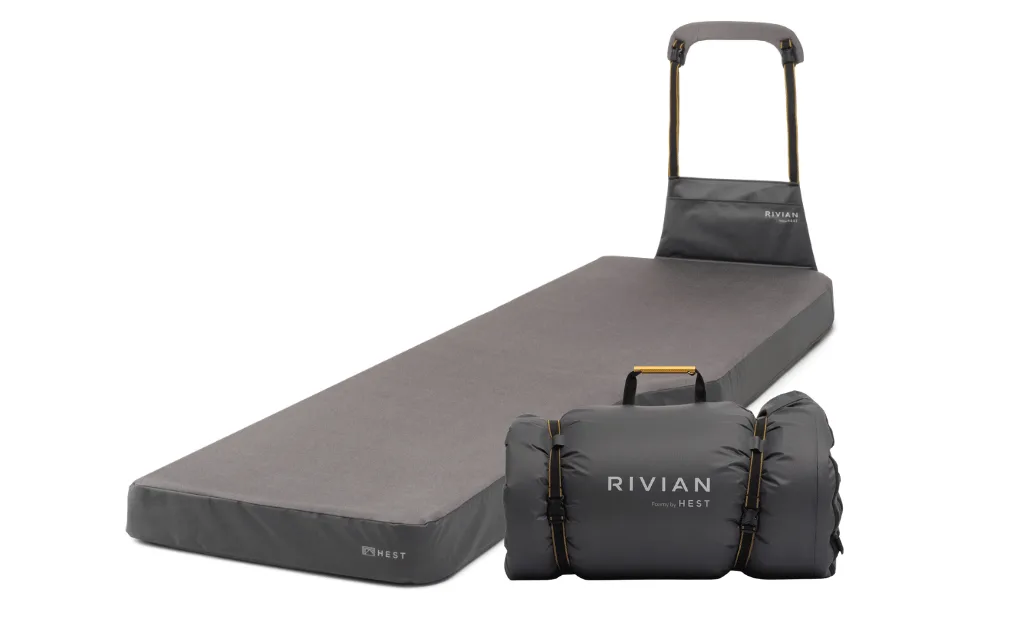
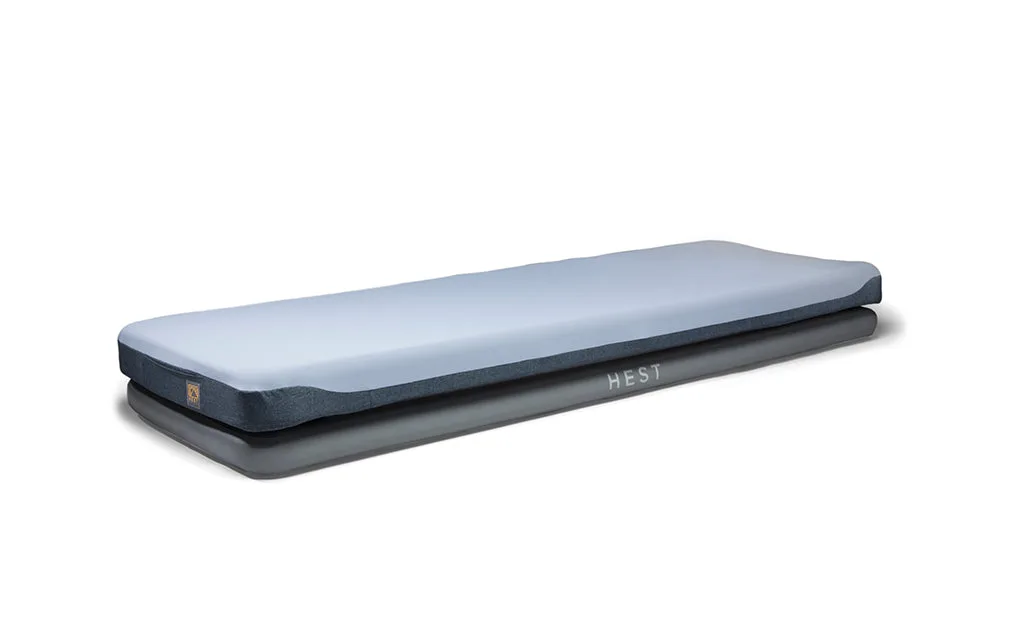
Memory foam responds to weight and temperature, contouring to hips and shoulders instead of pushing back evenly. The Dually, HEST's two-person camping mattress pad, is built for the flat, dry sleeping spaces you find in truck bed campers, rooftop tent pop-ups and tents, and comes in Dually Long 50x78, Dually Wide 60x72, Dually Short 50x64 and Dually Queen 60x78. That range matters because a pad that is too short or too narrow undoes the comfort advantage.
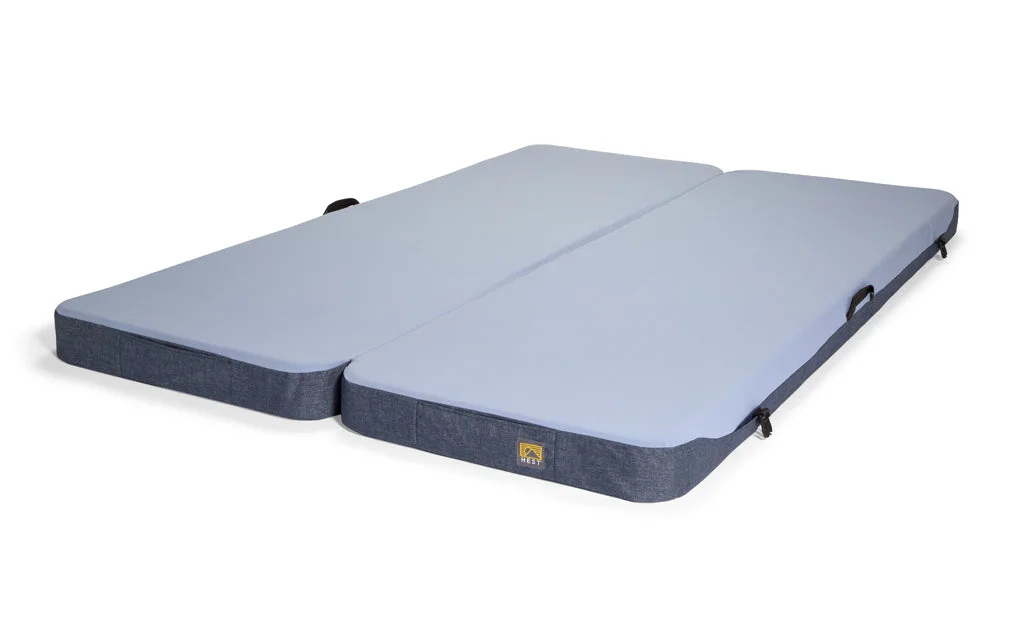
The Dually
- Measure your sleep space before choosing a size; a pad that overhangs a truck bed platform will sag at the edges.
- Couples should size up rather than share a narrow pad, since foam does not redistribute weight the way air does.
Warmth, noise and midnight movement
Air is a poor insulator, and a large air chamber sitting on cold ground pulls heat away from your body all night. Foam traps warmth in its cells and adds a layer between you and the ground, which is why cold-weather campers usually prefer it. Foam is also silent: no squeaking every time you shift position, which matters in a shared tent.
The other difference shows up at 2 a.m. Air mattresses can lose pressure through slow leaks, temperature changes or a valve that was not fully closed, and you wake up on the floor. Foam does not deflate. It can compress over time, but it will not leave you on the ground because of a pinhole.
- If you camp in shoulder seasons or at altitude, treat warmth as a comfort feature, not a luxury.
- Bring a repair patch for any air mattress; foam pads have no equivalent failure point.
Packed size, weight and setup
This is where air mattresses clearly win. A queen air mattress folds into a bag the size of a sleeping bag and weighs a few pounds. Memory foam is bulkier and heavier, and it does not compress to nothing. If your car is already full, that is a real constraint, not a minor one.
Setup differs too. Air mattresses need inflation, either by pump or by lung, and then a slow deflate in the morning. Foam pads unroll and are ready. On a multi-night trip, the foam pad saves you ten minutes of pumping every evening, and it will not wake the campground at 6 a.m. when you pack up.
- For fly-in or hike-in trips, an air mattress or a thin inflatable pad is usually the only practical option.
- For car camping and truck bed setups, give foam the space; the nightly setup savings add up.
Durability and long-term cost
Air mattresses fail at seams, valves and pinholes, and a puncture in the field usually ends the trip. Cheaper models often last a season or two of regular use. Foam pads can last years because there is no chamber to puncture, though the foam can soften and the cover can wear.
Cost per night is the useful measure. A budget air mattress is inexpensive up front but may need replacing often. A foam pad costs more once, then keeps working. That math favors foam for anyone who camps more than a handful of nights a year, and favors air for occasional use or a guest bed at home.
- Store foam pads uncompressed and dry; long-term compression is what shortens their life.
- Keep an air mattress out of direct sun when stored, since heat stresses the seams and valves.
Small add-ons that change how a pad sleeps
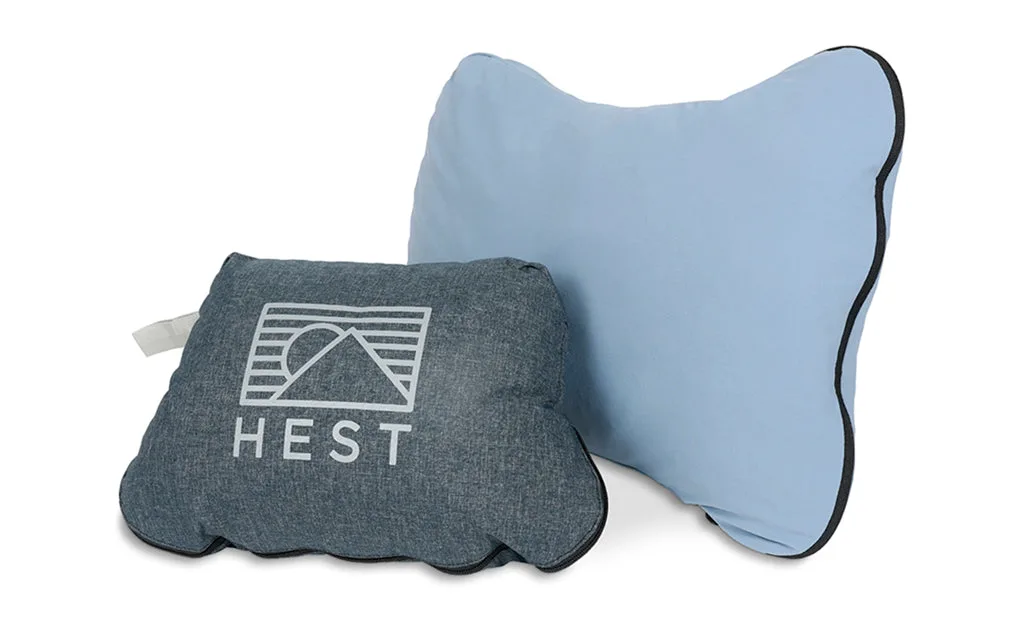
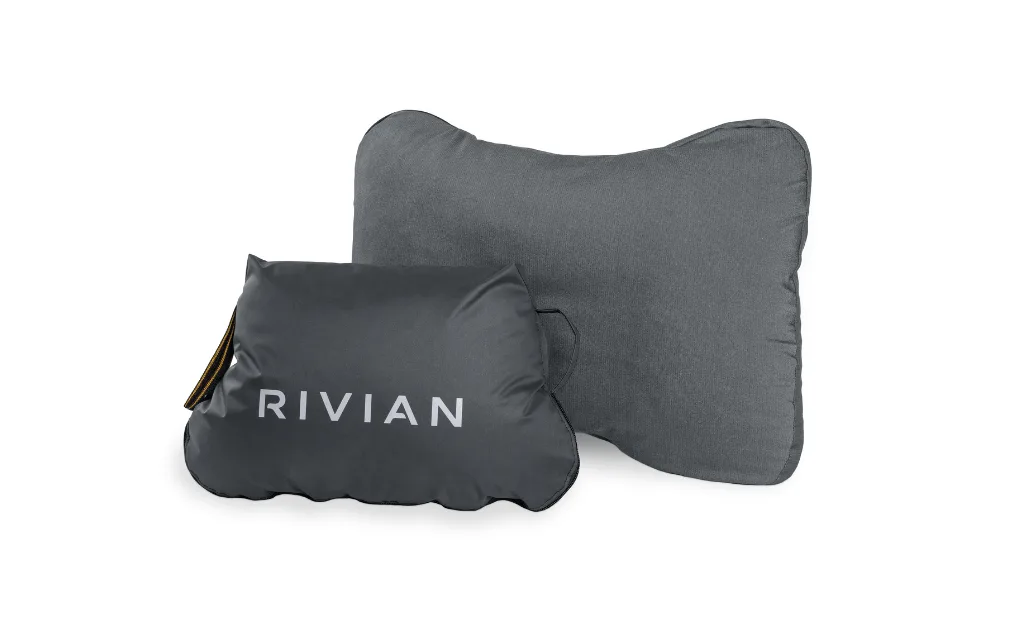
The pad is the foundation, but two accessories do a lot of work. The Rivian x HEST Camp Pillow uses shredded memory foam to bring home-pillow comfort in a compact, portable design, and it comes in more than one size, so you can match it to your sleep position. It pairs naturally with a foam pad because both hold their shape instead of squashing flat.
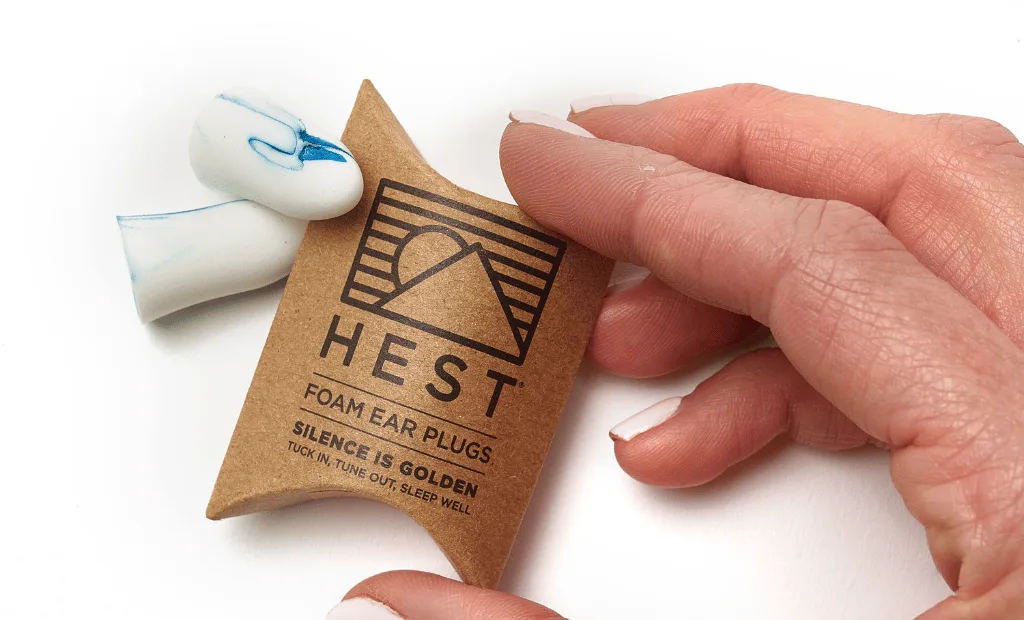
Noise is the other sleep killer. HEST Sleep Earplugs are memory foam earplugs made to block disruptive noise with a soft, pressure-free fit in the ear canal, whether you are in a tent, a car, a camper van or a noisy hotel room. They are a small item that makes a mediocre campsite feel much more sleepable.
- Upgrade the pillow before the pad if your budget is tight; it is the cheapest big improvement.
- Earplugs help most at busy campgrounds, near roads, and on windy nights.
The trade-offs, side by side
- Support and pressure relief: Memory foam contours to hips and shoulders and does not transfer movement between sleepers. Air mattresses support by pressure, so heavy points sink and couples roll toward the middle. Choose foam if you wake up sore or share the pad.
- Warmth and quiet: Foam insulates and stays silent. Air chambers lose heat to the ground and squeak with every turn, and they can lose pressure overnight through slow leaks or temperature changes. Choose foam for cold nights and shared tents.
- Packed size and setup: Air mattresses pack small and light but need inflation and deflation every day. Foam pads are bulkier and heavier but unroll ready to sleep. Choose air if you fly or hike in; choose foam if you drive to camp.
- Durability and cost per night: Air mattresses fail at seams, valves and punctures, often within a season or two of regular use. Foam has no chamber to puncture and can last years, though the foam softens and covers wear. Choose foam for frequent camping; choose air for occasional use.
HEST products that fit this comparison
- The Dually: The Dually is a two-person camping mattress pad designed for flat, dry sleeping spaces in truck bed campers, rooftop tent pop-ups and tents, offered in Dually Long 50x78, Dually Wide 60x72, Dually Short 50x64 and Dually Queen 60x78. The four sizes let you match the pad to a specific platform, which is the difference between a foam pad that sleeps well and one that sags or crowds your partner.
- Rivian x HEST Camp Pillow: The Rivian x HEST Camp Pillow uses shredded memory foam to provide home-pillow comfort in a compact, portable design, and is available in more than one size. A foam pillow keeps its loft on a foam pad, so your head and neck stay supported instead of flattening by morning.
- Sleep Earplugs: HEST Sleep Earplugs are high-performance memory foam earplugs designed to block disruptive noise while providing a soft, pressure-free fit inside the ear canal, for sleeping in a tent, car, camper van or noisy hotel room. They address the noise problem that no mattress, foam or air, can solve, and they take up almost no pack space.
Which should you buy?
Best for
- Car campers, truck bed camper and rooftop tent owners who sleep on flat, dry surfaces and want bed-like support
- Couples who roll toward each other on an air mattress and want a quiet, warm night
- Campers who sleep out more than a few nights a year and want a pad that lasts
Not for
- Backpackers, bikepackers and fly-in campers with strict weight and packed-size limits
- Anyone sleeping on uneven or sloped ground where a foam pad cannot be leveled
- Campers who need the lowest possible up-front price and only camp once or twice a year
Memory foam and air mattresses solve different problems. If you drive to camp and sleep on a flat surface, foam is the better night's sleep and the better long-term buy. If you carry your bed on your back, air still earns its place. Pick the one that matches how you actually camp, then spend the difference on a pillow that keeps its shape.