Quick Answer
If you wake up sore, cold, or on the ground because your air mattress leaked or felt unstable, switch to a memory foam camping pad. Choose a pad sized to your sleep area and body, expect a firmer feel than an air bed, and give yourself two or three nights to adjust. If you need ultra-light backpacking bulk or you sleep best on a soft, bouncy surface, a foam pad may not be the right call.
You bought an air mattress to make camping comfortable, but lately you are waking up with a stiff back, sliding toward the middle, or discovering a slow leak at 2 a.m. That is a common turning point. Many campers start with air because it is familiar and inexpensive, then realize the tradeoffs are not worth it.
Switching to a memory foam camping pad is less about buying a new product and more about changing how you sleep outdoors. Foam supports you differently, packs differently, and feels different. This guide walks through the symptoms that mean it is time to switch, what to do first, and when to stop and choose another option.
Symptom: You Wake Up Sore or Stiff
Air mattresses rely on air pressure to support you. When that pressure is uneven, your hips and shoulders can sink while your lower back stays unsupported. The result is the classic air mattress ache: a stiff back, tight shoulders, or a numb hip. If you wake up feeling worse than when you went to bed, the surface is not giving your body the support it needs.
Memory foam responds to your body by contouring to pressure points and then holding that shape. It does not push back the way air does, so you are less likely to roll toward the center or feel every movement. For side sleepers especially, this can mean less pressure on the shoulder and hip.
- Try a firmer inflation first: a too-soft air mattress is the most common cause of sore mornings.
- If firming it up does not help after two nights, the issue is likely the surface type, not the pressure.
Symptom: You Wake Up Cold
Air is a poor insulator. A standard air mattress pulls warmth away from your body and circulates cold air beneath you, which is why you can feel chilled even with a good sleeping bag. This is one of the most common air mattress problems in shoulder seasons and winter camping.
Memory foam is denser and traps more warmth, so it feels less cold against your back. That does not replace a proper sleeping pad R-value in freezing conditions, but it removes the cold-air draft that makes an air mattress uncomfortable below about 50°F.
- If you camp in freezing temps, pair foam with an insulated pad underneath or a closed-cell foam layer.
- Do not assume memory foam alone is enough for winter; check the pad's insulation rating.
Symptom: The Mattress Deflates or Feels Unstable
Slow leaks, stretching seams, and the wobble you feel when your partner moves are structural realities of air mattresses. You can patch a leak, but the instability remains. If you are tired of troubleshooting, that is a sign the air mattress has reached the end of its useful life for you.
A memory foam pad does not deflate. It may compress over time, but it will not leave you on the ground because of a pinhole leak. That reliability is a big part of why many campers make the switch and never go back.
- Check for leaks with soapy water before deciding to replace; sometimes a patch buys another season.
- If you have patched the same mattress twice, replacement is usually the better spend.
How to Make the Switch Without Wasting Money
Start by measuring your sleep space. Tent floors, RVs, and vehicle platforms all have different usable widths, and a pad that overhangs or leaves gaps will feel wrong no matter how good the foam is. Then decide whether you sleep solo or with a partner, because that changes whether you need one pad or two.
Next, match thickness to your sleep style. Thicker foam generally means more cushioning for side sleepers, while back sleepers can often use a thinner pad. Finally, plan storage. Memory foam rolls or folds, but it does not compress as small as an air mattress, so you need a place for it in your vehicle or gear closet.
- Measure your tent or vehicle sleeping area before ordering.
- Decide solo versus shared sleep before choosing pad width.
- Test your pad at home for one night before your trip.
What Changes When You Switch
The first night on memory foam often feels firmer than expected. That is normal. Foam supports you rather than cradling you the way a fully inflated air bed does. Give it two or three nights. Most people find the firmer feel is what actually reduces their back pain.
Packing also changes. Foam pads are heavier and bulkier than air mattresses, so they suit car camping, overlanding, and RV use better than backpacking. If you are counting ounces, this is the moment to reconsider whether foam is right for you.
- Expect a firmer feel for the first few nights; do not judge it after one sleep.
- Store foam uncompressed when possible to help it keep its shape.
When to Stop and Choose Another Option
If you backpack long distances and every ounce matters, a memory foam pad is probably not your best choice. Look at inflatable pads with insulation instead. If you sleep best on a very soft, bouncy surface and cannot adjust to foam, an air mattress with a foam topper may be a better compromise.
Also stop if your sleeping space is extremely narrow or irregular. Foam pads need a relatively flat, consistent surface to work well. On a steep slope or in a hammock, foam can be awkward, and an inflatable or quilt system may serve you better.
- Backpacking? Prioritize pack size over plushness.
- Very uneven ground? Fix the site first, or choose a different sleep system.
Diagnosis: Is It Time to Switch?
- Symptom: Morning back pain or stiffness: Likely cause: uneven air pressure or a surface that does not support your hips and shoulders. Corrective action: try firming the air mattress for two nights. If it does not improve, a memory foam pad is the better fit. Stop troubleshooting after two firm nights and switch.
- Symptom: Feeling cold from below: Likely cause: air circulation under the mattress pulls warmth away. Corrective action: add an insulated layer under your sleeping bag. If that is not enough, choose a foam pad with better insulation. Foam alone is not a winter solution; insulation still matters.
- Symptom: Repeated deflation or wobble: Likely cause: leaks, seam fatigue, or unstable air pressure. Corrective action: patch once if you want, but plan a replacement. Foam does not deflate and does not wobble when your partner moves. If you have patched it twice, replace it.
- Symptom: You backpack and count ounces: Likely cause: memory foam is heavier and bulkier than inflatable options. Corrective action: do not switch. Choose an insulated inflatable pad instead. Stop here; foam is the wrong tool for ultralight trips.
HEST Products That Fit This Transition
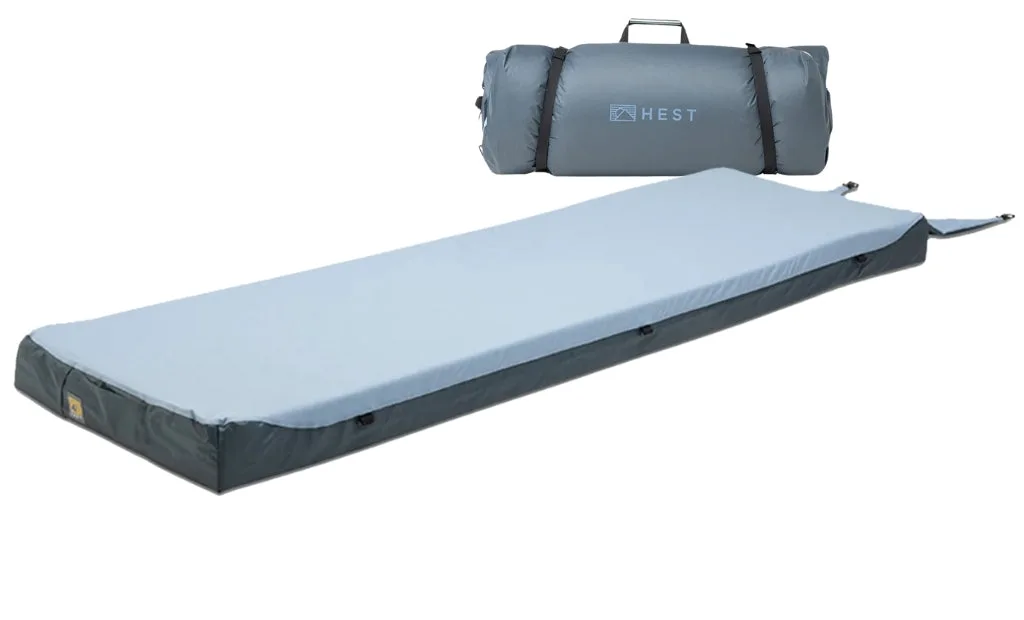
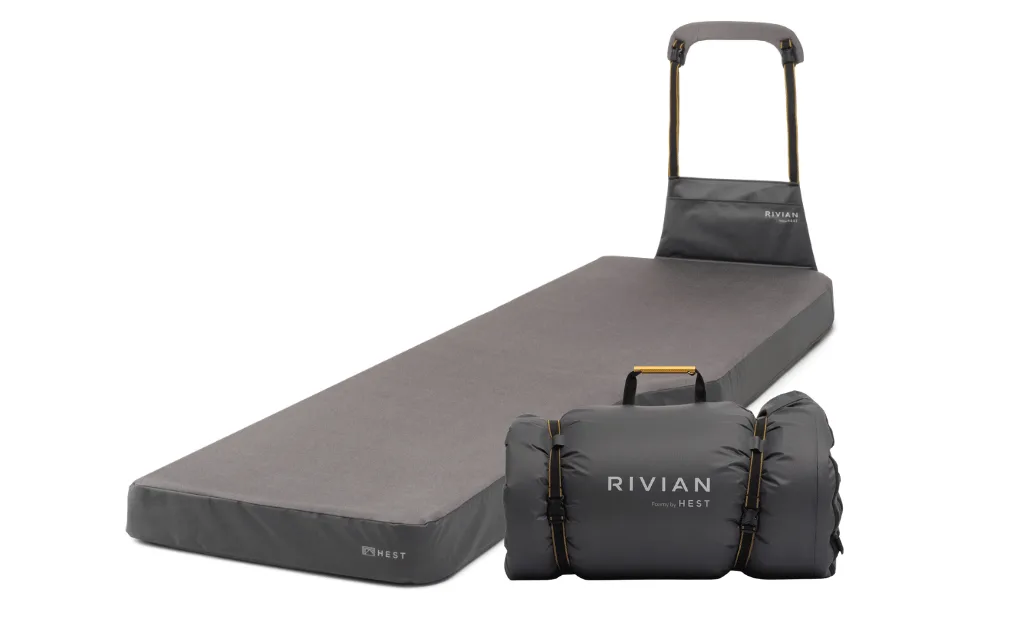
- foamy-for-r2-478dbb14600a33c419f17eb2-1913178">Foamy For R2: The Foamy For R2 by HEST is designed specifically for the Rivian R2, turning the back of your EV into a comfortable, custom-fit sleep system. Built with temperature-resilient memory foam and a durable waterproof base, it rolls compact for storage in the frunk and deploys quickly when it's time to rest. Note: This is sold as a single mattress for the driver and/or passenger sides. If you are switching from an air mattress in a Rivian R2, this is a direct-fit option that removes the guesswork of sizing a generic pad. The waterproof base matters when you are camping in wet conditions, and the roll-up design addresses the bulk concern that keeps some people on air mattresses.
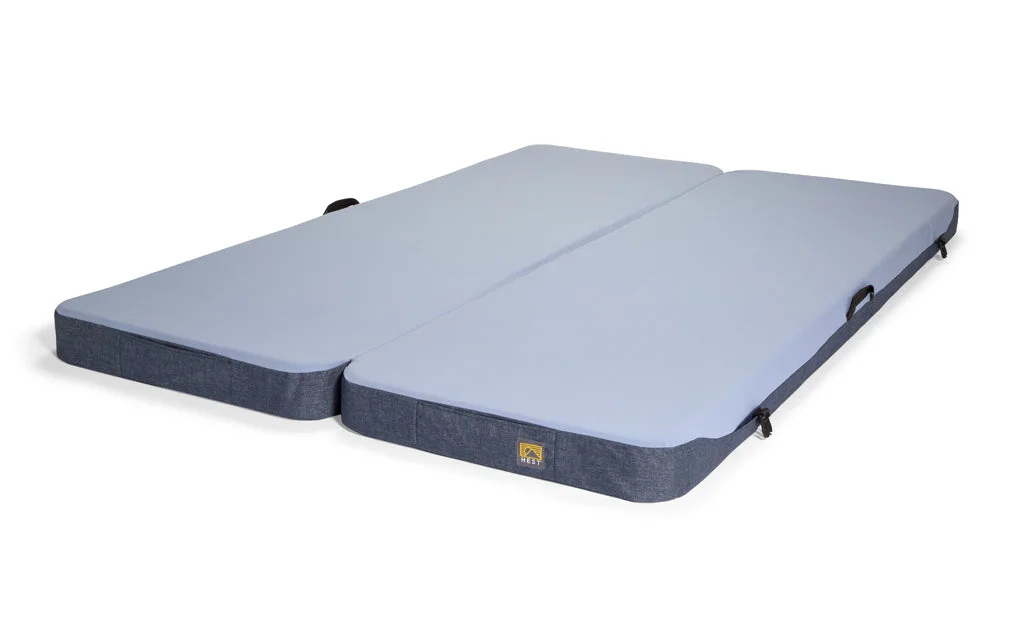
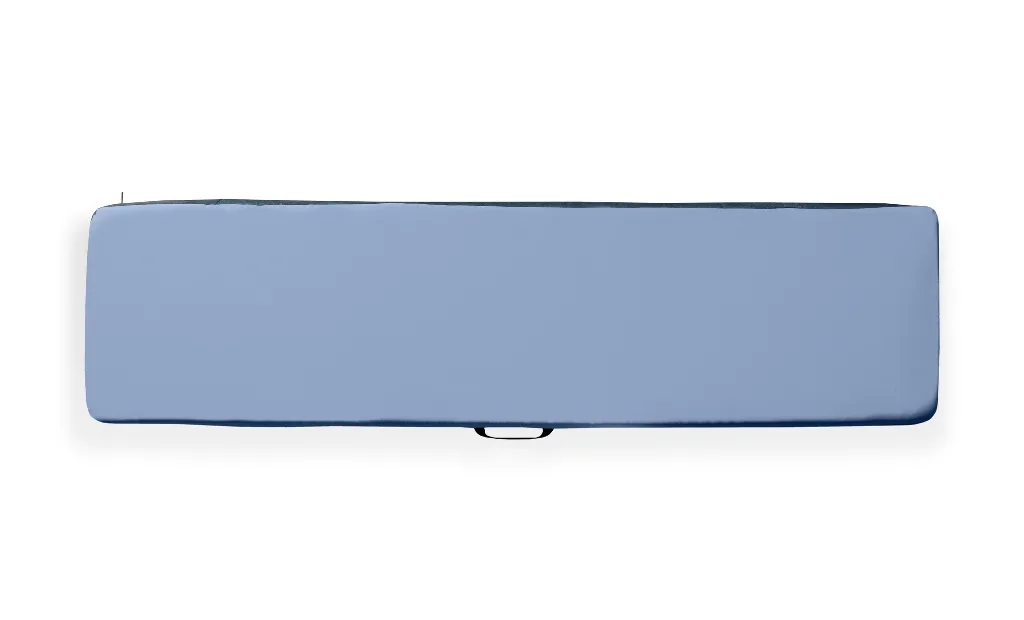
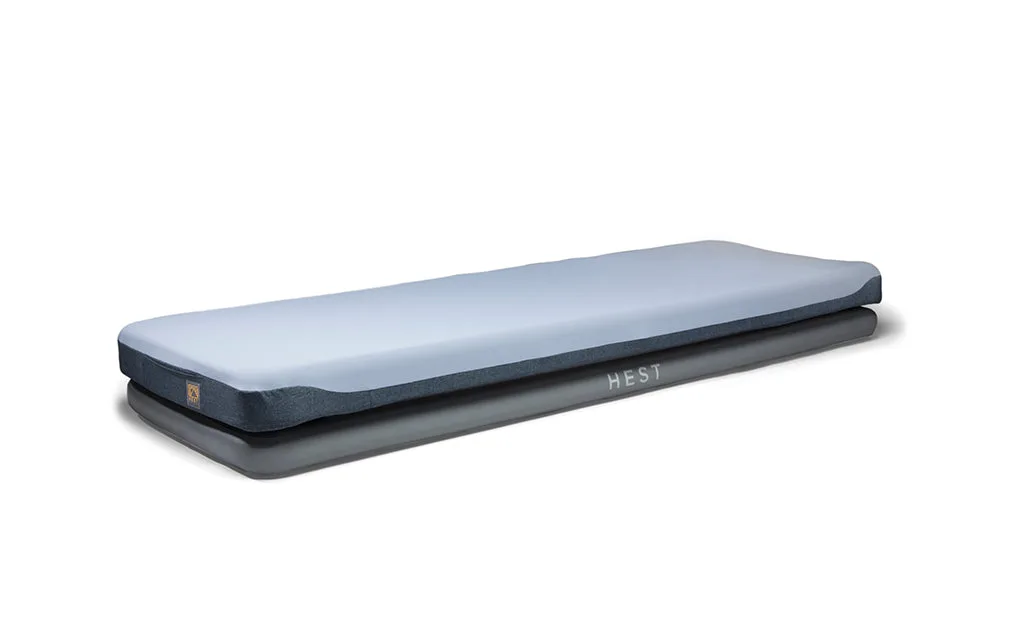
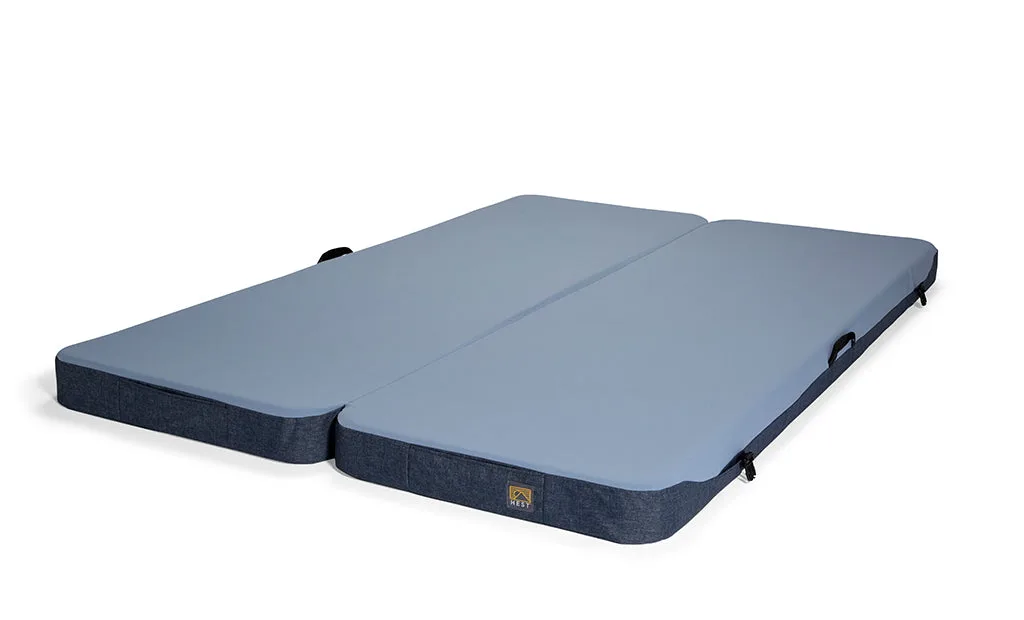
- Dually Extend: The Dually Extend expands the sleeping area of the Dually by maximizing extra space with HEST's enhanced memory foam. The Extend easily attaches to HEST Dually models—Dually Extend 72 for the Dually Wide and Dually Extend 78 for the Dually Long or Queen—offering a larger mattress area suitable for slide-outs in campers, larger RTTs, and RVs. It can also be used alone on benches or other narrower spaces. If your air mattress felt too small or you and a partner kept rolling into each other, the Dually Extend shows how modular foam can solve a space problem that a single air mattress cannot. It is also a reminder to check sizing carefully, since the Extend is model-specific.
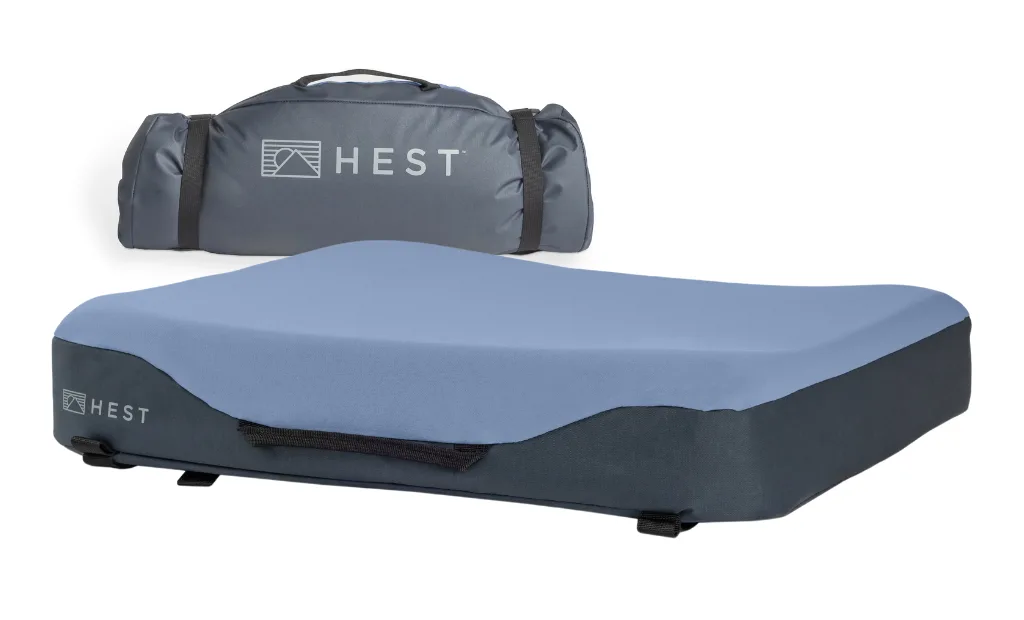
- Foamy Seat Cushion: The HEST Foamy Seat Cushion is designed to enhance your sitting experience wherever you roam. Sit with more comfort and support in your airplane seat, car, your camp chair, cold bleachers, cooler tops by the fire or any other surface. A small memory foam cushion is a low-risk way to test whether you like how foam feels before committing to a full sleeping pad. If you like the support it gives your seat, you will likely appreciate a foam sleep surface too.
Switching from an air mattress to a memory foam camping pad is a practical upgrade for car campers, overlanders, and RVers who are tired of sore mornings and slow leaks. Measure your space, expect a firmer feel, and give it a few nights. If you backpack or sleep best on a bouncy surface, stay with an inflatable setup instead. The right choice is the one that matches how you actually camp.