Quick answer
For most office workers needing pressure relief and spinal alignment during long sitting, a memory foam seat cushion with cooling gel layer offers the best balance of support and temperature regulation. Gel cushions excel when airflow is the priority but often lack structured ergonomic contouring.
Why material choice matters for office seating
The cushion material directly affects how your weight distributes across the chair, how your spine aligns, and whether you overheat after an hour. Memory foam and gel cushions address these differently, so the right pick depends on your pain points and work setup.
Cooling vs. contouring trade-off
Gel cushions feel cool to the touch and allow some air movement, but they lack the deep contouring that memory foam provides. Memory foam molds to your body shape, which reduces pressure points on the tailbone and hips. The trade-off is heat retention, though a built-in cooling gel layer can offset that.
Memory foam vs. gel: key trade-offs
- Pressure relief: Memory foam conforms to your body and distributes weight evenly, reducing stress on the coccyx and hips. Gel cushions compress but do not contour, so pressure points may persist.
- Temperature regulation: Gel cushions stay cool initially and allow some airflow. Memory foam without a cooling layer can trap heat. A cushion with an integrated cooling gel layer solves this. If you run hot, look for memory foam cushions that include a gel layer rather than pure gel or plain foam.
- Posture support: Memory foam cushions often include ergonomic shaping—like a raised back or coccyx cutout—to encourage upright sitting. Most gel cushions are flat slabs that provide cushioning but not active posture correction.
Product facts
-
Memory Foam Seat Cushions: Designed for long hours of sitting with an ergonomic design that promotes healthy posture and proper spine alignment, zero pressure on the coccyx, and a cooling gel layer. This means you get the pressure relief of memory foam without the typical heat buildup, making it suitable for full workdays.
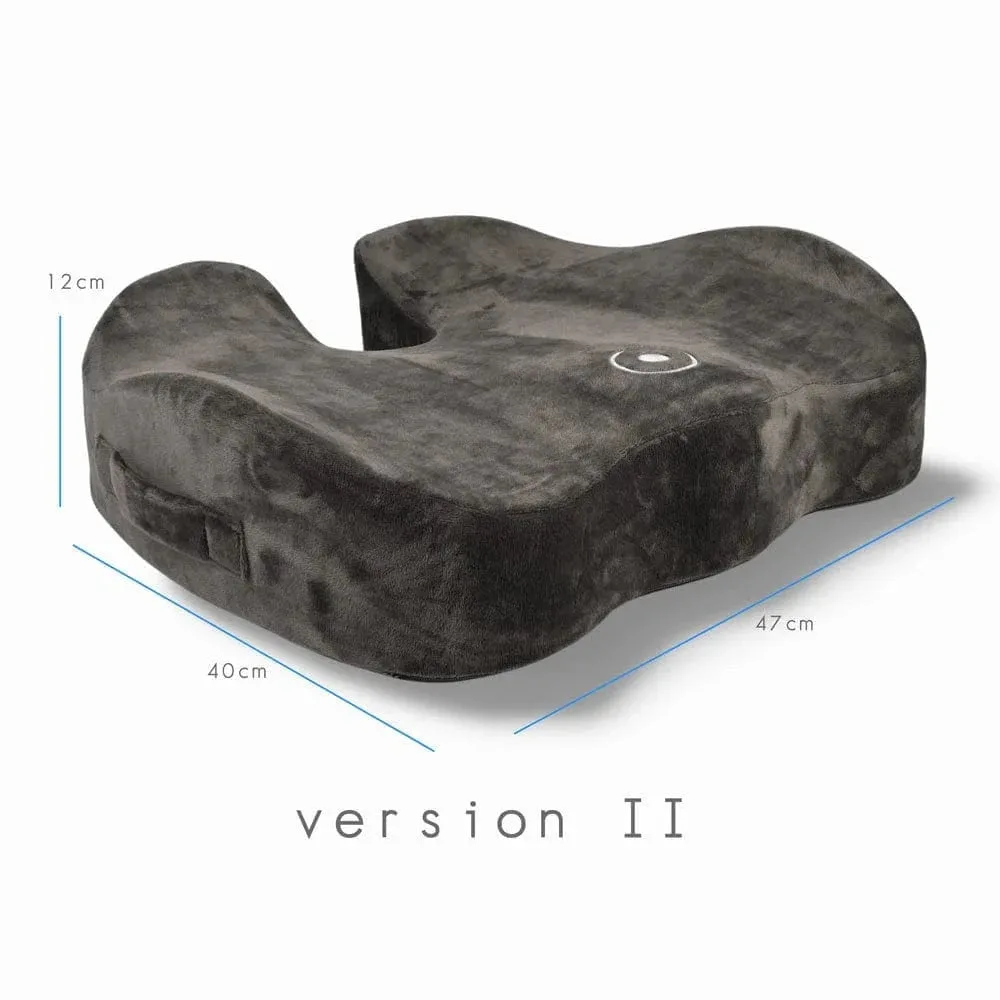
Memory Foam Seat Cushions
Which cushion fits you?
Best for
- Office workers sitting 6+ hours who need pressure relief and spinal alignment
- People with tailbone or lower back discomfort who want structured support
Not ideal for
- Users who prioritize maximum airflow over ergonomic contouring (choose a ventilated gel cushion instead)
- Those who need a thin, portable cushion that fits in a bag (memory foam models are thicker and less foldable)