Quick answer
Dong quai and wild yam are traditional women's health herbs, but neither is a proven stand-alone menopause treatment. If you want herbal support for menopause, treat these as optional additions to a broader plan, check with your clinician first, and follow the label rather than guessing at a dong quai dosage.
What does dong quai actually do for menopause?
Dong quai is a root with a long history in Chinese wellness practice, where it was traditionally used to help nourish the blood and harmonize vital energy. The name loosely translates to "state of return." Modern menopause research on dong quai alone is limited and mixed, so it is best framed as traditional support rather than a guaranteed fix for hot flashes or night sweats. If you try it, note your symptoms for four to six weeks so you can judge whether it earns a place in your routine.
How does wild yam fit into menopause support?
Wild yam is often marketed for menopause because it contains a compound once used in lab settings to synthesize hormones. Your body does not make that conversion on its own, so eating or supplementing wild yam is not the same as hormone therapy. Some women still find wild yam formulas useful as part of a comfort-focused routine, especially when sleep and stress are already being managed. Set expectations accordingly and do not use it as a substitute for prescribed treatment.
What is a reasonable dong quai dosage, and who should skip it?
Follow the serving directions on your specific product rather than copying a dose from a forum. Dong quai is not appropriate for everyone: if you take blood thinners, have a bleeding disorder, are pregnant or breastfeeding, or are preparing for surgery, talk to your clinician before using it. Because dong quai can interact with medications, bring the bottle to your appointment so your clinician can see the exact amount per serving.
How do I choose menopause herbal supplements without wasting money?
Start with one new herb at a time so you can tell what is helping and what is not. Look for a label that states the part of the plant used and the amount per serving, and avoid blends that hide several herbs behind a single proprietary number. Give any product a fair trial of several weeks, record your symptoms, and stop if you notice side effects. Herbal support for menopause works best alongside sleep, movement, and medical care, not instead of them.
Menopause herb FAQ: quick checks
Can I take dong quai every day?
Only if the label and your clinician say it is appropriate for you. Take it with food if it upsets your stomach, and pause if you notice unusual bleeding or bruising. Daily use is a personal decision, not a default.
Will wild yam replace hormone therapy?
No. Wild yam does not convert to hormones in the body, so it cannot do what prescription therapy does. It may still suit a comfort-focused routine. Keep prescriptions and herbs in separate categories.
How long before I know if an herb helps?
Track your symptoms for four to six weeks before deciding. If nothing changes, or side effects appear, stop and reassess with your clinician. Give it a fair trial, then make a clear call.
Product facts to know
- Dong Quai Root: Dong quai root dates back to ancient Chinese wellness practices, originating in writing as early as the 1st century BC, and was traditionally used to help nourish the blood and harmonize vital energy. This context explains why dong quai is a traditional women's health herb rather than a modern menopause drug, so you can set realistic expectations.
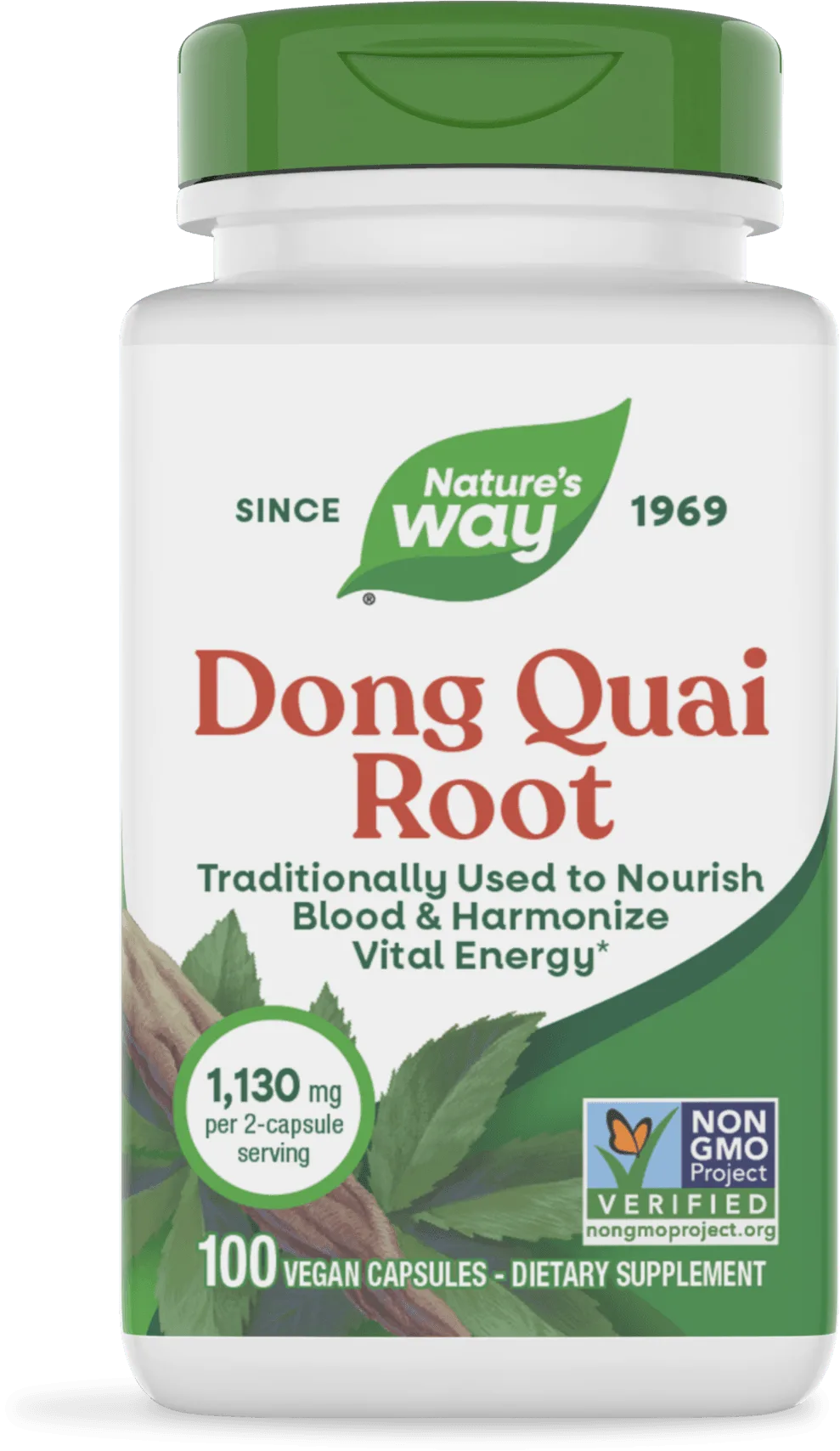
Dong quai root