Quick answer
Buy an IFAK if you are treating one person and carrying the kit on your body. Buy an MFAK if you are responsible for a group, a vehicle, or a household and can stage the kit nearby rather than wear it. The real difference is casualty count and access speed, not how serious the contents are.
What an MFAK actually is
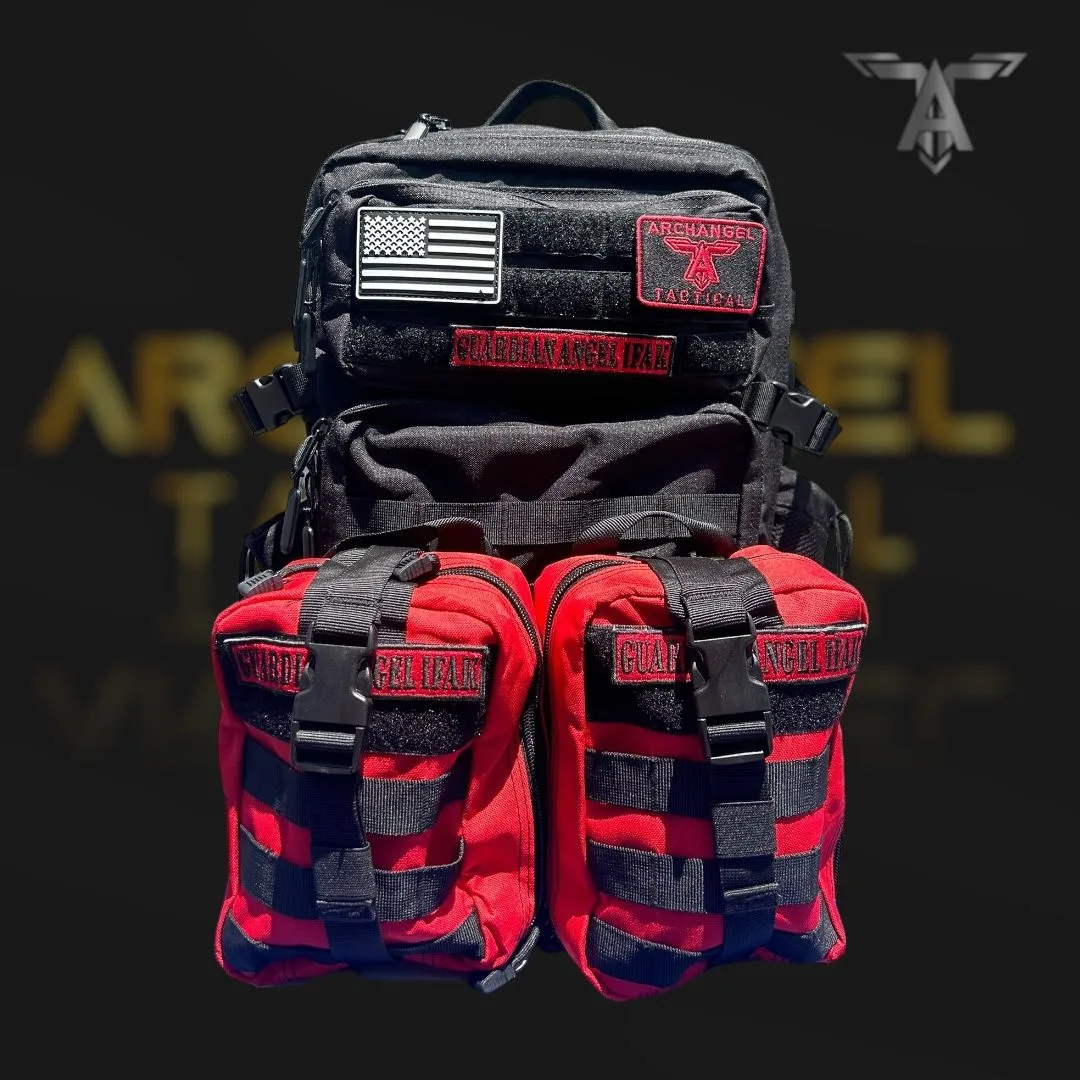
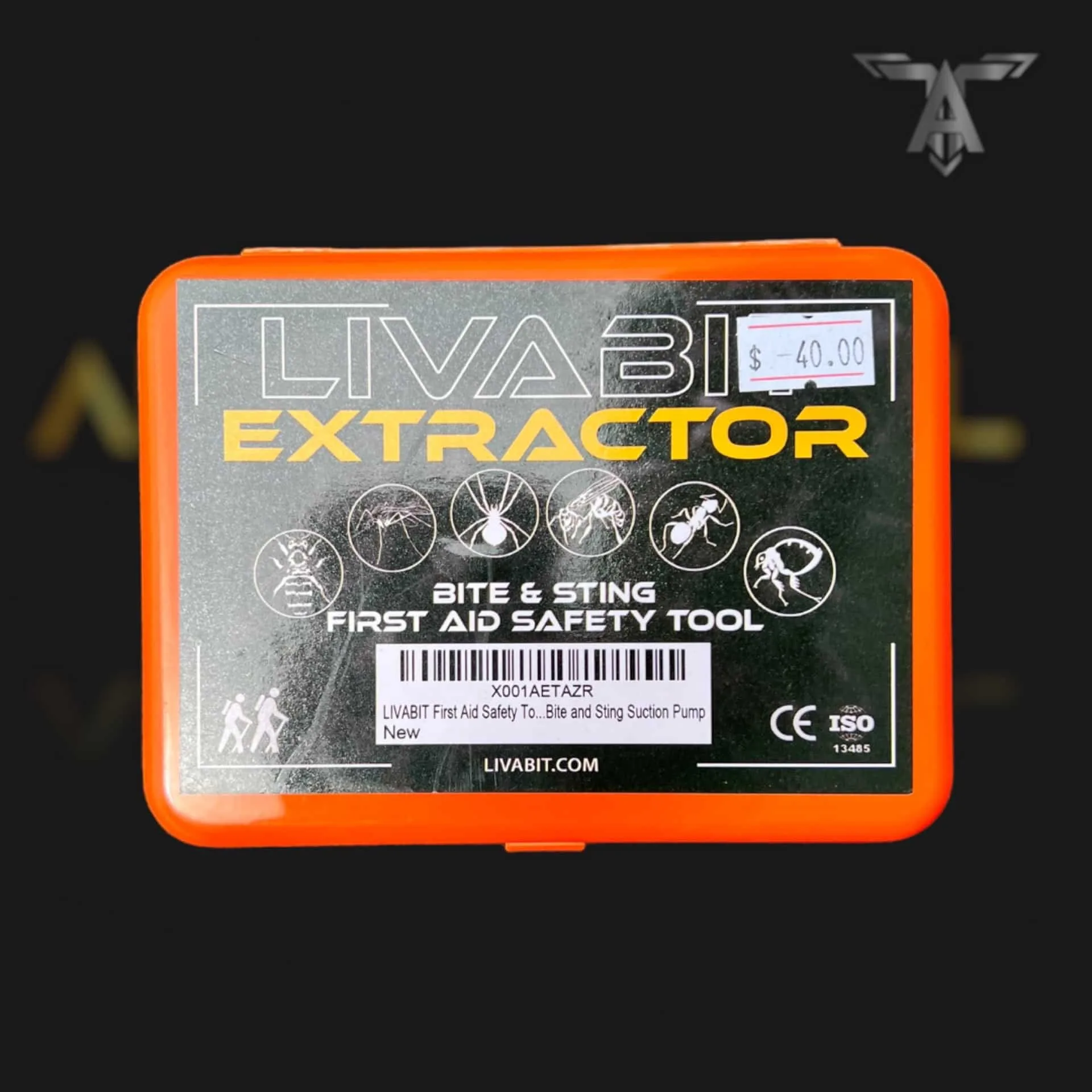
MFAK stands for Multiple Persons First Aid Kit. The name describes the job: supplies scaled to treat more than one casualty before you resupply. The Guardian Angel MFAK is built inside a rugged 50L tactical backpack and stocked with advanced trauma gear, everyday medical supplies, and specialty tools for burns, bites, and severe injuries, plus two IFAKs inside the same bag.
That last detail matters more than any single item. Two IFAKs inside one MFAK means the kit can be split. One person can grab a sub-kit and move while the main bag stays staged, which is the practical advantage a single large kit usually lacks.
What an IFAK is and where it belongs
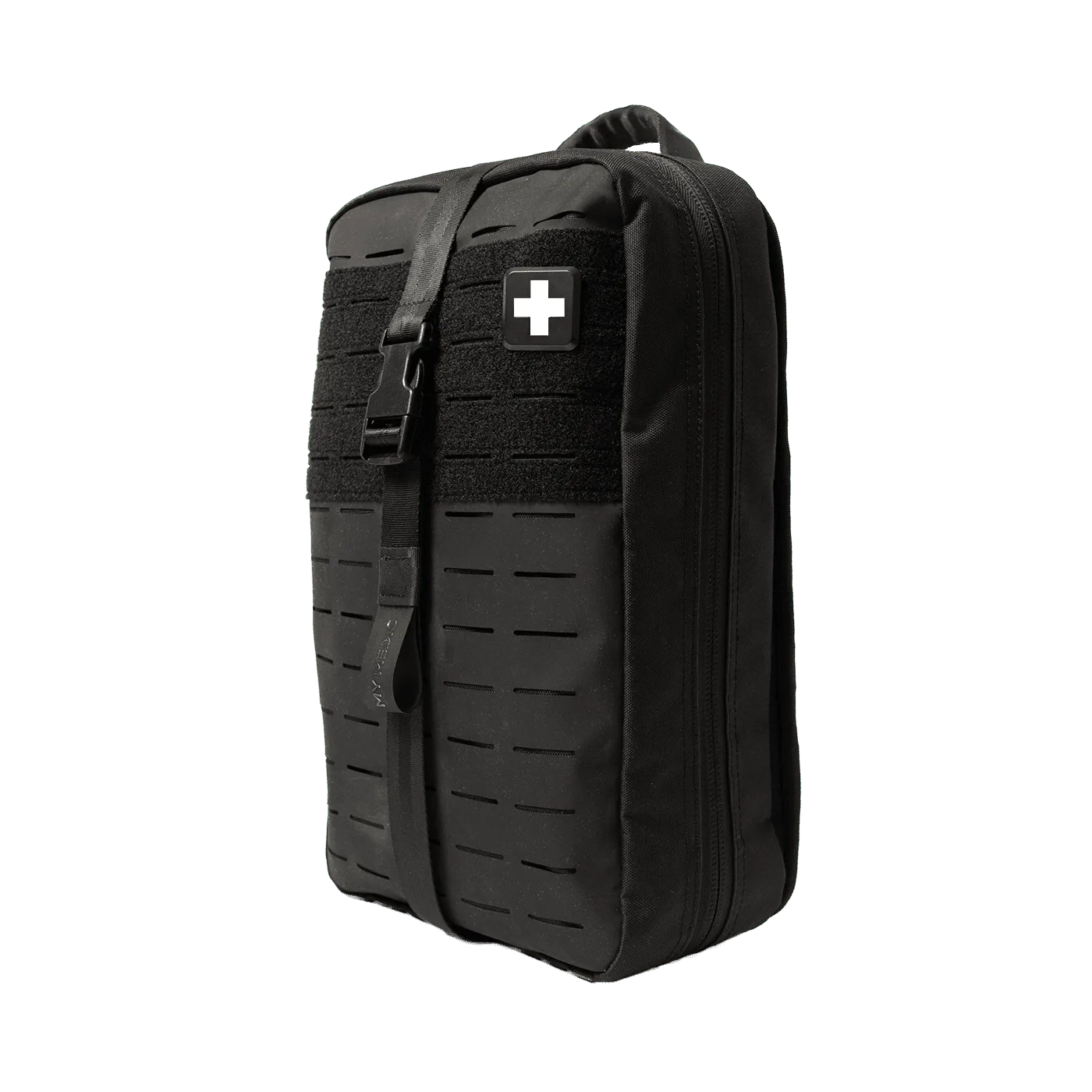
An IFAK is an Individual First Aid Kit: a compact trauma kit sized for one person, usually the wearer. Its design priority is access, not depth. It lives on a belt, a plate carrier, or in a bag you keep within arm's reach.
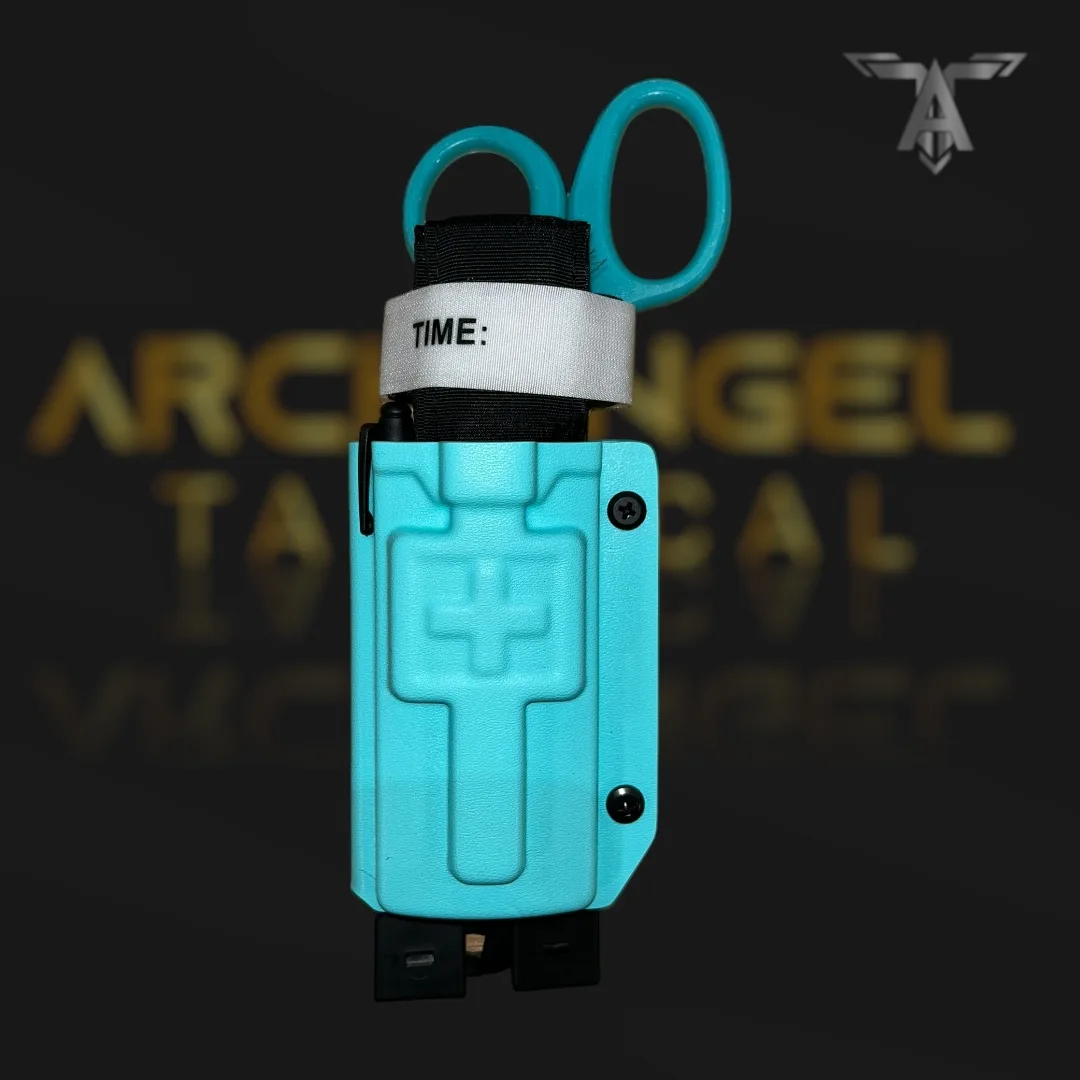
The Tourniquet Holder Kit is a good example of the IFAK philosophy at its most focused. It pairs a rugged Kydex tourniquet holder with the essentials for stopping a bleed, keeping the gear secure but instantly accessible. It is not trying to cover burns, bites, or a second casualty. It is trying to solve one problem in seconds.
The trade-off you are actually choosing
Coverage and portability pull in opposite directions. A 50L MFAK with two IFAKs inside covers more scenarios and more people, but you will not carry it on your body all day. An IFAK rides with you, which means it is present at the moment of injury, but it runs out after one patient.
The honest answer for most people is not either/or. A staged MFAK at home, in a vehicle, or at a range bag plus a carried IFAK covers both the group scenario and the seconds that decide a bleed. If you can only fund one first, fund the one you will actually have with you.
How to decide in five minutes
Count the people you are responsible for, then count how far away your kit will sit. If the number of people is one and the kit is on your body, you want an IFAK. If the number is more than one and the kit lives in a trunk, a closet, or a staging point, you want an MFAK.
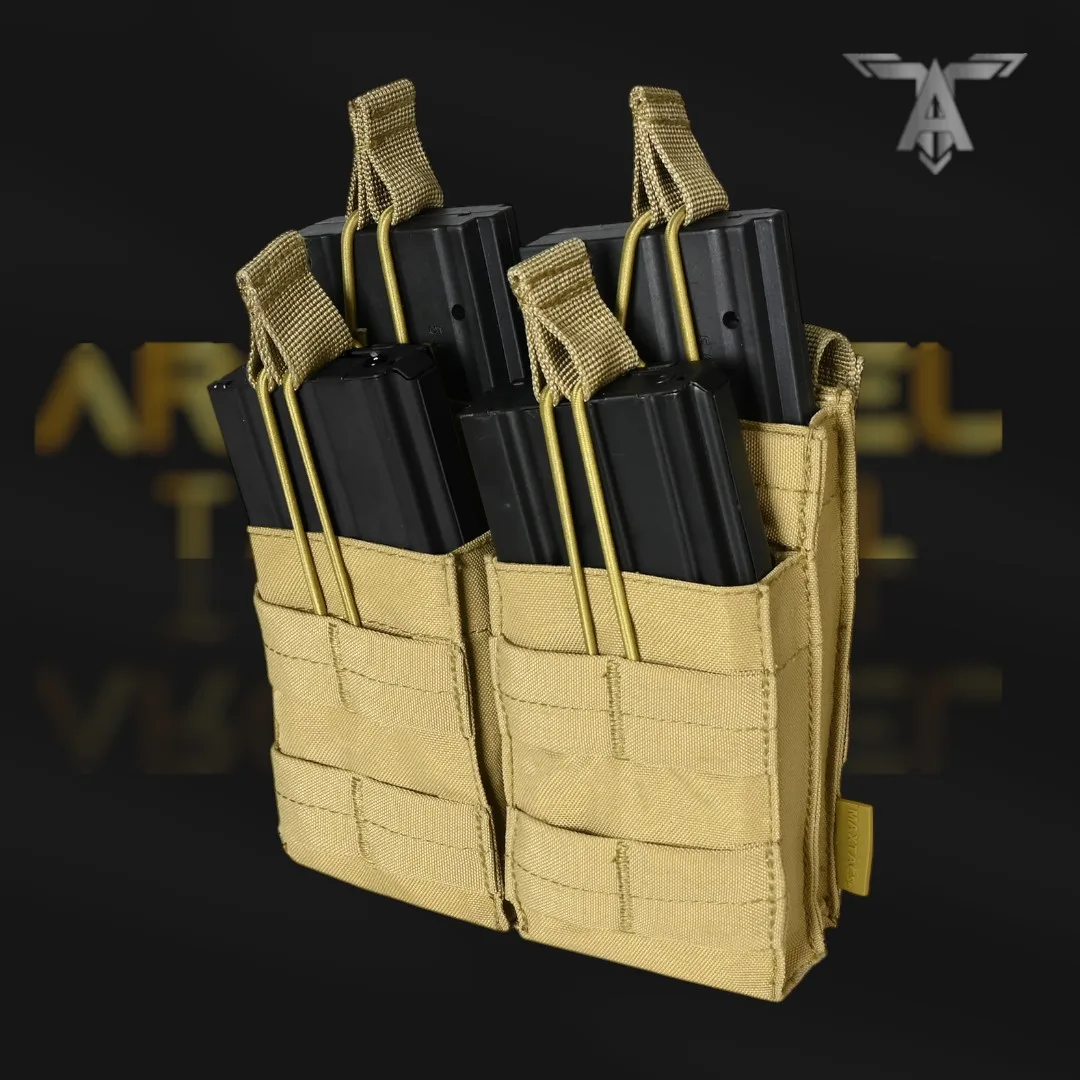
Then check the rest of your loadout. Trauma kits and magazine pouches compete for the same real estate, so decide belt space before you buy. The Double Stacker M4 Mag Pouch is a stacked configuration that carries more magazines in a compact footprint, which is the same capacity-versus-space math you are running on medical gear.
Trade-offs at a glance
- Coverage vs. carry: An MFAK covers multiple people and multiple injury types but is staged rather than worn. An IFAK is worn but treats one person. Pick based on whether the kit needs to be on your body or near the group.
- Setup time vs. depth: The Guardian Angel MFAK arrives stocked with trauma gear, everyday supplies, and specialty tools, which saves assembly time but costs storage space and budget. If you have not built a kit before, a stocked MFAK removes the guesswork.
- Access speed vs. capacity: The Tourniquet Holder Kit keeps bleed control instantly accessible in a compact bundle; a 50L pack holds far more but is slower to open under stress. Keep the fastest-access tool on your person and the depth in the bag.
- Space budget: Medical gear and ammunition pouches compete for the same belt and bag space, so the Double Stacker M4 Mag Pouch's stacked layout is the same capacity trade you make on medical gear. Decide belt space before buying either kit.
Product facts
- Guardian Angel MFAK - Archangel Tactical Gear: The Guardian Angel MFAK is a family-sized, top-tier kit built inside a rugged 50L tactical backpack, stocked with advanced trauma gear, everyday medical supplies, and specialty tools for burns, bites, and severe injuries, and includes two IFAKs. It is the group and household option: one staged bag that can treat several people and still split into smaller kits when someone needs to move.
- Tourniquet Holder Kit - Archangel Tactical Gear: The Tourniquet Holder Kit is a compact, ready-to-deploy bundle with a rugged Kydex tourniquet holder, built for tactical, medical, or everyday emergency use. It is the carried option: a low-profile way to keep bleed-control gear on you, which is the role a full MFAK cannot fill.
- Double Stacker M4 Mag Pouch - Archangel Tactical Gear: The Double Stacker M4 Mag Pouch uses a stacked configuration to carry more magazines while staying streamlined, aimed at range use, training, or full loadouts. Useful when you are budgeting belt and bag space, because medical gear and ammunition pouches draw from the same limited real estate.
Which one fits you
Best for
- Households, teams, and vehicles responsible for more than one person
- Buyers who want a stocked kit with trauma gear, everyday supplies, and specialty tools rather than assembling one
- Anyone who needs a staged kit that can split into smaller sub-kits
Not for
- Carrying on your body all day, where a 50L pack is impractical
- Single-person concealed or belt carry, where a compact IFAK-style kit fits better
- Buyers who only need bleed control and nothing else