Quick answer
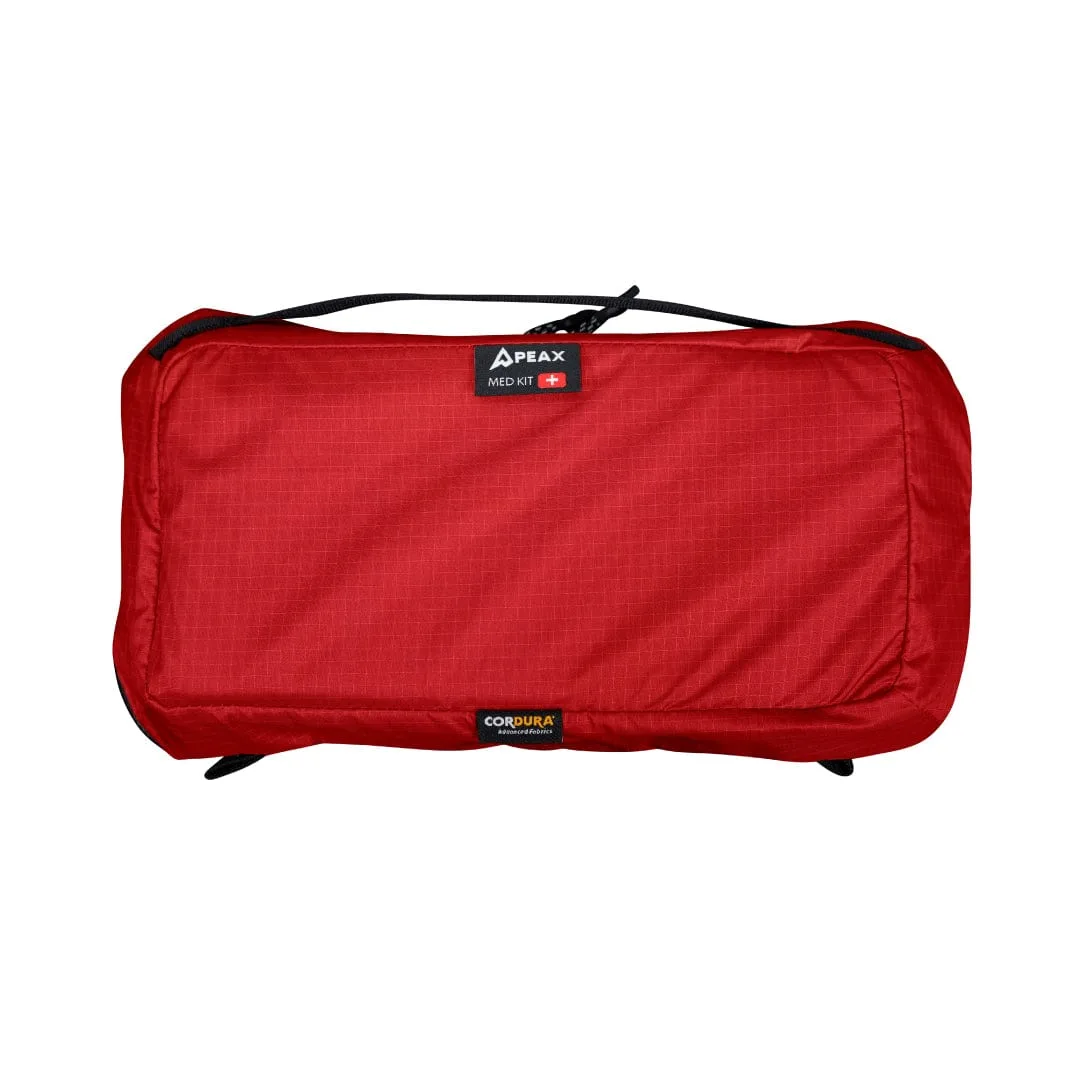
Buy a compact, organized kit sized to your worst realistic injury and your distance from help, then add trip-specific items rather than carrying a giant kit you'll resent. For most solo or two-person backcountry hunts, a pre-built kit such as the PEAX Hunting First Aid Kit covers the basics, and a small organizer like the PEAX Kit Sack keeps the add-ons findable. If you hunt far from roads or in extreme cold, treat the kit as a starting point and build it out.
Match kit size to distance from help, not to trip length
A day hunt two miles from a trailhead and a five-day hunt twenty miles in require different kits even though both are 'backcountry.' The deciding factor is how long it takes to reach professional care, not how many nights you sleep out. If a rescue could realistically take more than a few hours, your kit needs to stabilize a serious bleed, manage shock, and support a slow self-evacuation.
That usually means a compact kit with trauma supplies plus a small organizer for extras. A pre-built kit gives you a known baseline; a separate sack lets you add blister care, medications, or spare items without unpacking the whole kit. The PEAX Kit Sack is a lightweight option for that second layer, and it keeps small items from disappearing into pack clutter.
What belongs in a hunting first aid checklist
Start with the injuries that actually happen on hunts: cuts from knives and broadheads, blisters, sprains and rolled ankles, eye irritation from brush, and minor burns from stoves or fires. Then add the environmental problems your season creates — hypothermia risk in cold, wet conditions, or heat and dehydration in early season.
A practical checklist: nitrile gloves, gauze and medical tape, an elastic wrap, antibiotic ointment, blister dressings, pain relievers, antihistamine, tweezers, a small mirror, and a way to irrigate a wound. For remote hunts, add a tourniquet and a hemostatic dressing. Keep medications in original labeled packaging and check expiration dates before every season.
- Trauma: gloves, gauze, tape, elastic wrap, tourniquet for remote trips
- Wound care: irrigation, ointment, assorted dressings, tweezers
- Foot care: blister dressings and tape you'll actually use
- Medications: pain reliever, antihistamine, personal prescriptions
- Exposure: space blanket or emergency shelter, especially in cold, wet conditions
Organization is the difference between a kit and a pile
A first aid kit only works if you can find what you need with cold hands, in the dark, under stress. That's why organization matters as much as contents. Group items by problem — bleeding, blisters, medications — and keep the most urgent items on top or in an outer pocket.
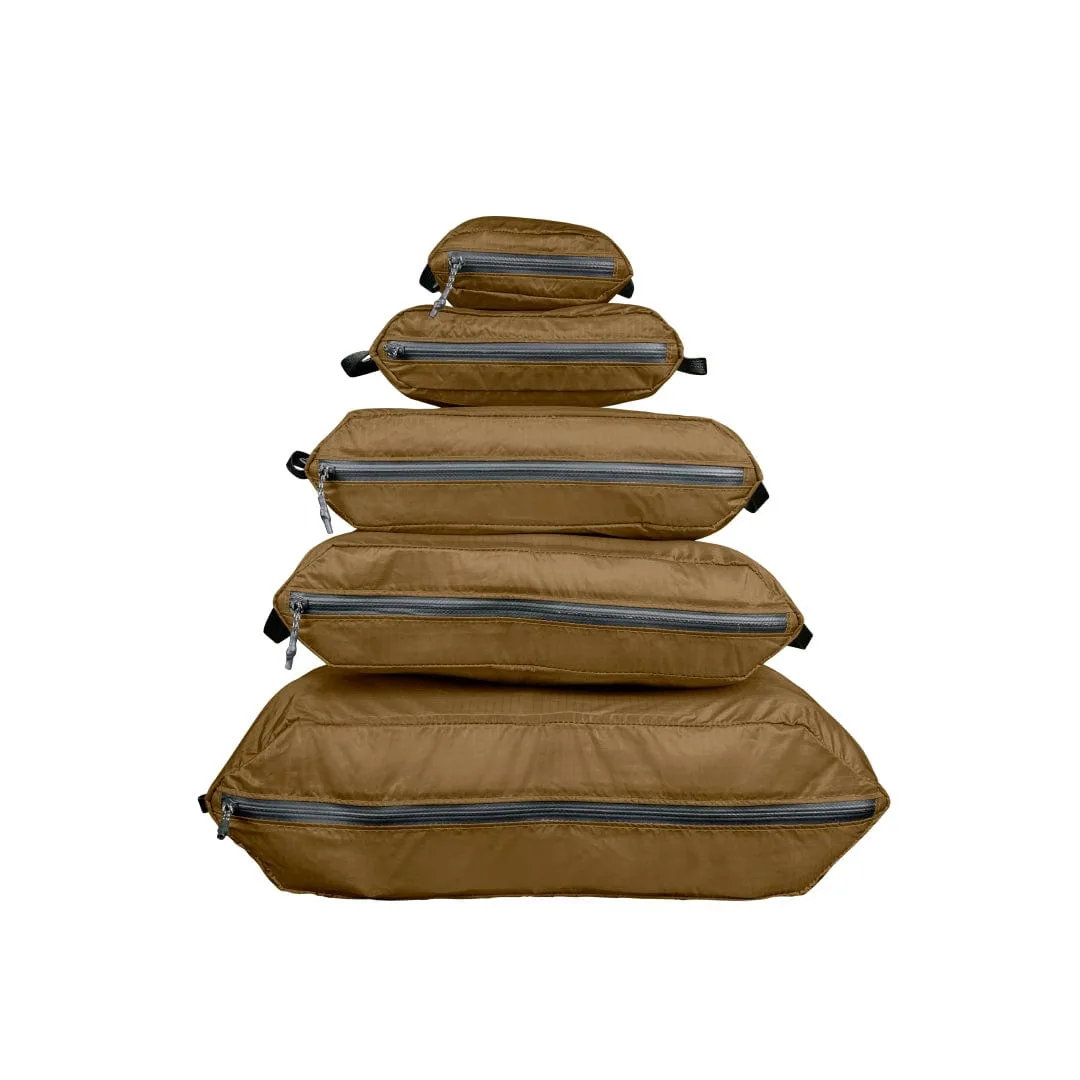
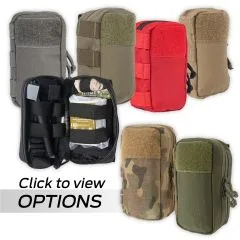
If you build your own kit, use a small stuff sack or pouch to separate first aid from other gear. The PEAX Kit Sack is designed for exactly this kind of gear organization, and it's available in multiple colors and sizes so you can color-code by purpose. A red or otherwise distinct sack makes the kit obvious in a crowded pack.
Trade-offs: pre-built kits versus building your own
Pre-built kits win on speed and completeness. You get a curated set, often in a compact case, without researching every item. The trade-off is that you may carry items you'll never use and still need to add trip-specific supplies. A kit priced like the PEAX Hunting First Aid Kit is a reasonable baseline for hunters who want to be prepared without assembling everything from scratch.
Building your own wins on precision. You carry exactly what your hunt demands, in packaging you choose. The trade-off is time, and the risk of missing something you didn't think of. A hybrid approach works well: start with a pre-built kit, then add and subtract based on your season, terrain, and distance from help.
Decision rules for choosing a hunting first aid kit
- Rule 1: Size the kit to time-to-help: If help is more than a few hours away, carry trauma supplies and a way to stabilize a serious bleed. If you're close to a trailhead, a compact kit for cuts, blisters, and sprains is enough. Checkpoint: can your kit handle the worst injury you could realistically suffer before rescue arrives?
- Rule 2: Choose pre-built if you won't maintain a custom kit: Pre-built kits stay complete because someone else curated them. If you know you won't restock and check expiration dates, a pre-built kit is the safer choice. Verdict: pre-built for most hunters; custom only if you'll actually maintain it.
- Rule 3: Add organization before you add volume: A disorganized kit wastes time when you need it most. Use a dedicated pouch or sack so first aid items don't mix with game bags, stove parts, or snacks. Next step: pack your kit in a distinct, labeled sack and put it in the same place every trip.
- Rule 4: Re-check the kit before every season: Replace expired medications, restock used items, and confirm that tape and dressings are still sealed and functional. Cold and moisture degrade some supplies. Checkpoint: treat the kit as consumable gear, not permanent gear.
Products that support a backcountry first aid setup
- FIRST AID KIT: The PEAX Hunting First Aid Kit provides critical medical supplies to help hunters manage injuries, stabilize emergencies, and respond when professional care is hours away. It is compact and organized for remote hunting environments. Gives you a ready baseline for wound care and stabilization without building a kit from scratch, which matters most when help is far away.
- KIT SACK: The PEAX Kit Sack keeps essential gear organized, protected, and easy to find, and is available in multiple colors and sizes. Lets you separate first aid from other gear and color-code it so the kit is findable with cold hands or in low light.
Who this approach fits
Best for
- Solo or two-person backcountry hunters who need a compact, organized kit
- Hunters who want a pre-built baseline and will add trip-specific items
- Anyone hunting more than a few hours from professional medical care
Not for
- Hunters who want a fully custom kit and will maintain it item by item
- Guided trips where the outfitter carries the primary medical kit
- Front-country or vehicle-based hunts where a larger, heavier kit is practical