Quick answer
Treat the Micro Maxi Glow Plus LED Scooter's motion-activated deck and wheels as a visibility booster, not a substitute for active lights. Before every dusk ride, confirm the glow deck, handgrips and T-bar logo are charging in light, add a rider-worn light or reflective gear, and check the wheels for debris that can dull the LED effect.
Why the glow effect needs a backup plan
The Maxi Glow Plus LED lights up only when the wheels rotate, so it goes dark the moment your child stops. That is fine for a driveway, but at a crosswalk or a blind corner a stationary scooter can be nearly invisible. Pair the built-in glow with a small clip-on light or reflective vest on the rider, and the scooter stays noticeable even when it is not moving.
Glow-in-the-dark surfaces also need light exposure to recharge. If the scooter is stored in a dark garage or trunk, the deck, handgrips and T-bar logo will look dim at the start of a ride. Letting it sit in daylight or near a bright window before an evening session gives the glow material a chance to work.
Route and timing choices that reduce risk
Pick routes with wide, smooth pavement and few driveway cutouts. LED wheels are most visible from the side, so a rider crossing an intersection is harder to see than one traveling parallel to traffic. Choose paths where your child can ride predictably and where drivers expect scooters.
Ride earlier in the evening when possible. Deep dusk still gives some ambient light, so the glow effect reads as an accent rather than the only cue. If you must ride after full dark, shorten the route and stay on sidewalks or closed paths rather than mixing with traffic.
A pre-ride check you can do in two minutes
Spin each wheel by hand and watch for the LED flash. If a wheel stays dark, the issue is usually debris, moisture or a wheel that is not spinning freely, not a dead battery, because the system generates power from rotation. Wipe the wheel and hub with a dry cloth and spin again before assuming something is broken.
Check the folding or connection points and the handlebar height. A loose T-bar or a slipping clamp is more dangerous in low light because the rider has less visual feedback. Tighten what needs tightening before the scooter leaves the driveway.
Night-riding routine for the Maxi Glow Plus
- Charge the glow surfaces in daylight: Set the scooter where the deck, handgrips and T-bar logo can absorb light for at least an hour before dusk. Common mistake: pulling it straight out of a dark car trunk and expecting a bright glow. Checkpoint: the deck should look visibly brighter than a scooter stored in the dark.
- Spin-test every wheel: Lift the scooter and spin each wheel by hand. The motion-activated LEDs should flash with rotation. If one stays dark, clean the wheel and hub with a dry cloth and spin again. Checkpoint: all wheels light up before the ride starts.
- Add rider-worn visibility: Clip a small light to the rider's jacket or helmet and add a reflective strap or vest. The scooter's glow is a side-facing accent, not a headlight. Checkpoint: the rider is visible from the front and back, not just from the side.
- Tighten the T-bar and set the height: Confirm the handlebar clamp is secure and the height suits the rider. A slipping bar is harder to catch in low light. Checkpoint: no wobble when you push down on the grips.
- Choose a lit, predictable route: Prefer smooth sidewalks and paths with few driveway crossings. Avoid routes where the rider must cross traffic at unlit intersections. Checkpoint: you can name the crossings and know they are lit.
- Ride earlier in the evening when you can: Deep dusk gives the glow effect enough contrast without making it the only light source. If you ride after full dark, shorten the route. Checkpoint: the ride ends before visibility drops to the point where you cannot see the rider from 50 feet.
- Wipe the wheels after every wet or gritty ride: Moisture and grit can dull the LED effect and slow the wheel. A dry cloth on the wheel and hub keeps the motion-activated lights working and protects the bearings. Checkpoint: wheels spin freely and flash evenly the next time you ride.
Product facts behind this routine
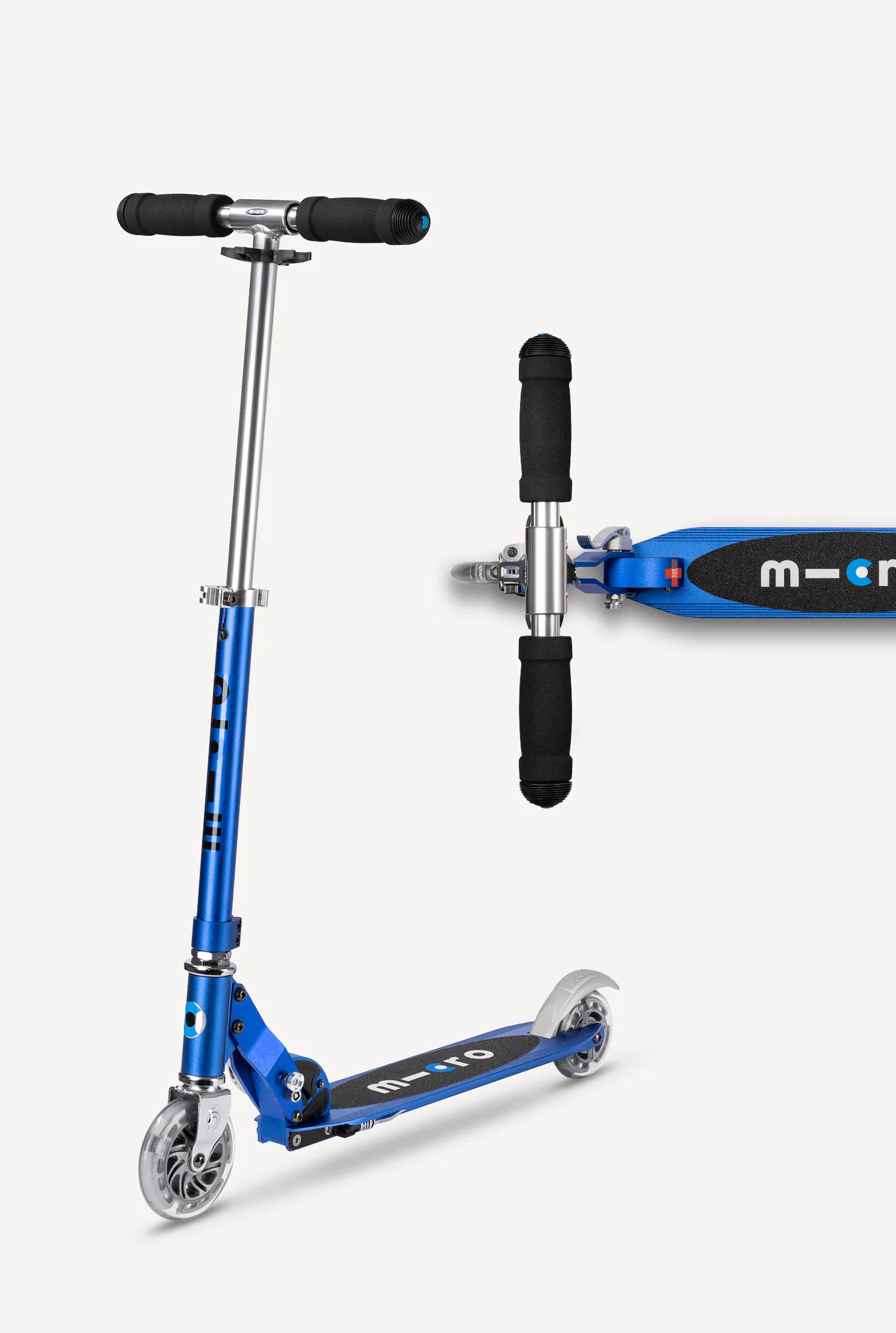
- Micro Maxi Glow Plus LED Scooter: Motion-activated LED deck and wheels illuminate with every wheel rotation and need no batteries. There is no battery to charge or replace, but the lights only work while the wheels spin, so a rider-worn light is still needed when stopped.
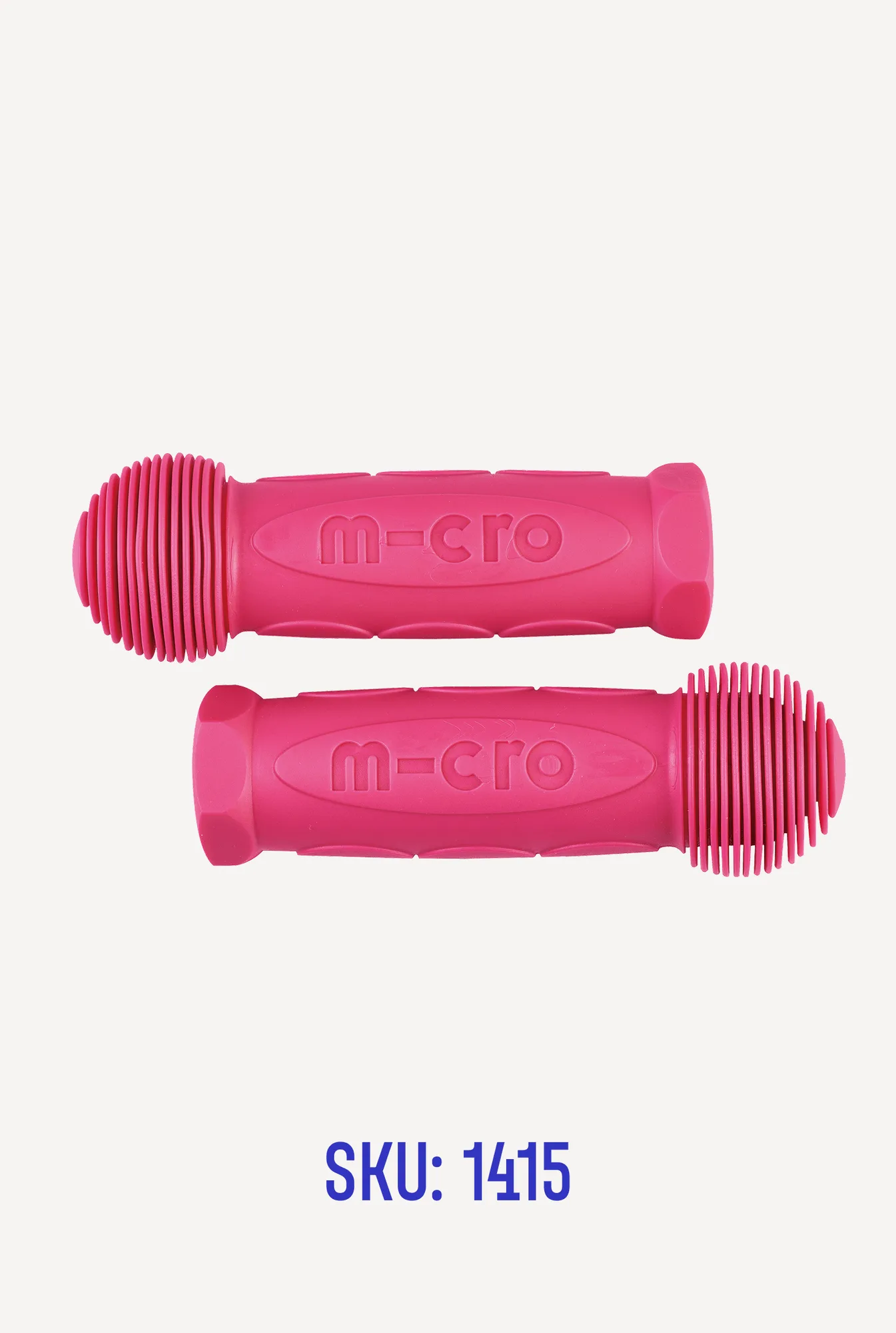
- Micro Maxi Glow Plus LED Scooter: Glow-in-the-dark deck, handgrips and T-bar logo. These surfaces need light exposure to glow, so storing the scooter in daylight before an evening ride makes the effect stronger.
- Micro Mini Foldable LED Scooter: Foldable T-bar, light-up wheels that need no batteries, and an adjustable handlebar. If you need to carry the scooter after dark, the folding mechanism lets you lift it by the T-bar instead of rolling it through traffic.