Quick answer
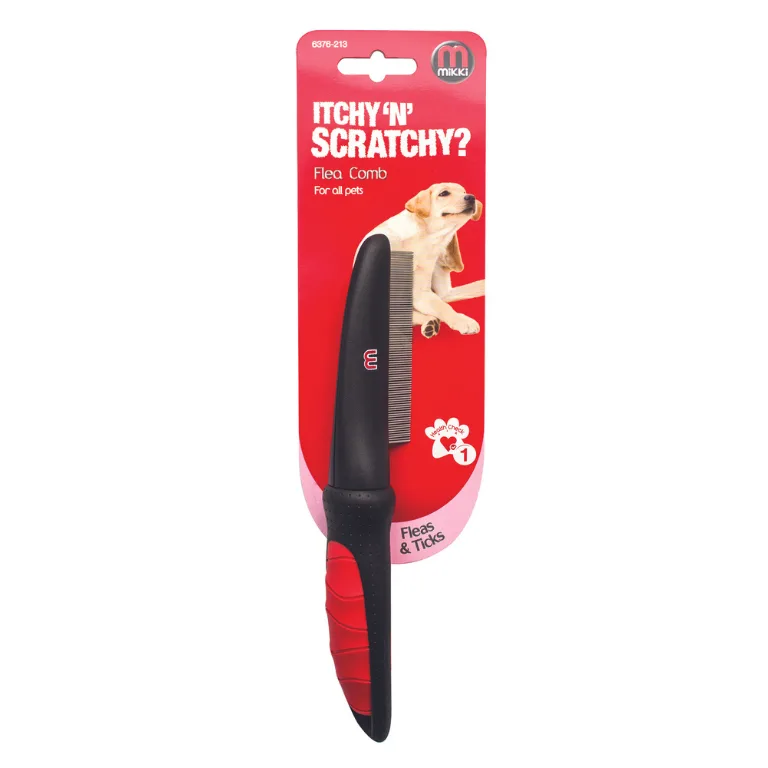
Comb your pet against the direction their coat grows, working in small sections over a light-colored surface so you can see what falls out. Keep the comb's ultra-fine teeth in contact with the skin rather than skimming the top of the fur, and dip the comb in soapy water after every few strokes. The Mikki Deluxe Flea Comb is built for this job: its ultra-fine teeth are designed to trap fleas, eggs and dirt in the coat.
Why a fine-tooth flea comb finds what your eyes miss
Fleas spend most of their time close to the skin, not on the tips of the coat, so a quick stroke with your hand tells you very little. A fine-tooth flea comb works because the teeth are spaced closely enough to catch fleas and their eggs as they pass through the coat, and the debris that comes out with them is the real evidence you are looking for.
That is also why combing is a check, not a cure. It tells you whether fleas are present and roughly how heavy the problem is, but it does not treat the pet or the home. Use it to confirm what you are dealing with, then act on that information.
Set up before you touch your pet
Have everything within reach first: the comb, a bowl of soapy water, a few paper towels, and somewhere bright to work. A light-colored surface matters more than people expect, because flea dirt (which looks like coarse black pepper) and live fleas are far easier to spot against white than against a dark floor or a patterned rug.
If your pet is wriggly, comb them somewhere they normally settle, such as a favorite bed or a non-slip mat, rather than chasing them around the room. A few treats nearby turns the session into something tolerable rather than a wrestling match.
Where fleas actually hide on dogs and cats
Concentrate on the warm, sheltered areas: along the back just above the tail base, around the neck and behind the ears, under the chin, in the armpits, and along the belly and inner thighs. These are the spots fleas gravitate to, and they are also the spots owners skip because pets dislike being handled there.
On cats, pay particular attention to the neck and the base of the tail. Cats often groom fleas away from the rest of the body, so the fleas you find on a cat tend to be concentrated in the places a cat cannot easily reach with its tongue.
Reading what comes off the comb
Live fleas are usually obvious: small, dark, and moving. Eggs are tiny and pale and easy to mistake for dandruff. The most useful clue is flea dirt, the dried blood that adult fleas excrete. If you are unsure whether dark specks are dirt or just dirt, wipe them onto a damp paper towel: flea dirt dissolves into a reddish-brown smear, while ordinary soil stays dark.
Finding nothing is a real result, but it is not proof of a flea-free pet. Combing samples the coat rather than examining all of it, so a light infestation, a very thick coat, or a pet that has just been groomed can all produce a clean comb. Repeat the check every few days if you have a reason to suspect fleas.
How to use a flea comb, step by step
- Work in bright light on a pale surface: Comb your pet over a white towel, a sheet of paper, or a light countertop so anything that falls is visible. Have a bowl of soapy water ready to dip the comb into. Checkpoint: if you cannot clearly see the surface you are combing over, move before you start.
- Comb against the direction of the coat: Start at the tail base or the neck and push the teeth down to the skin, then draw the comb back through the coat in short strokes. Part the fur with your free hand so the teeth reach skin rather than riding over the top. Common mistake: combing with the lie of the coat, which skims the surface and misses fleas near the skin.
- Dip the comb after every few strokes: Tap the comb into the soapy water so trapped fleas drown and the teeth stay clean. Wipe the teeth with a paper towel if debris builds up and the comb starts dragging. Common mistake: combing the whole pet first and emptying the comb afterward, which lets fleas drop back into the coat or onto the floor.
- Cover the hot spots, not just the back: Give extra passes to the tail base, neck, behind the ears, chin, armpits, belly, and inner thighs. On cats, spend most of your time at the neck and tail base. Checkpoint: if you only combed the back, you have not finished the check.
- Inspect the debris on the towel: Look for moving fleas, pale eggs, and dark specks. Press any dark specks onto a damp paper towel: a reddish-brown smear means flea dirt, which means fleas have been feeding on your pet. Next step: flea dirt or live fleas means you need a treatment plan for the pet and the home, not just more combing.
- Repeat the check every few days: A single clean comb is a snapshot, not an all-clear. Comb again in two to three days, and keep the comb with your pet first aid supplies so it is easy to reach. Common mistake: treating one clean result as proof the problem is gone.
The tool this method is built around
- Mikki Deluxe Flea Comb: Ultra-fine teeth are designed to trap fleas, eggs and dirt in the coat, and the comb is suitable for both cats and dogs. You only need one comb for a multi-pet household, and the tooth spacing is the part that does the work, so technique matters less than getting the comb down to the skin.
- Mikki Deluxe Flea Comb: The comb is designed for left- or right-handed use. You can switch hands when working along a pet's flank or belly without fighting the handle, which makes a full-body check faster.