Quick answer
Rinse your silicone bib immediately after each meal, wash it with warm soapy water or in the dishwasher, and let it air-dry completely before storing. A quick daily routine prevents stains and odors without harsh scrubbing.
Why silicone needs its own care routine
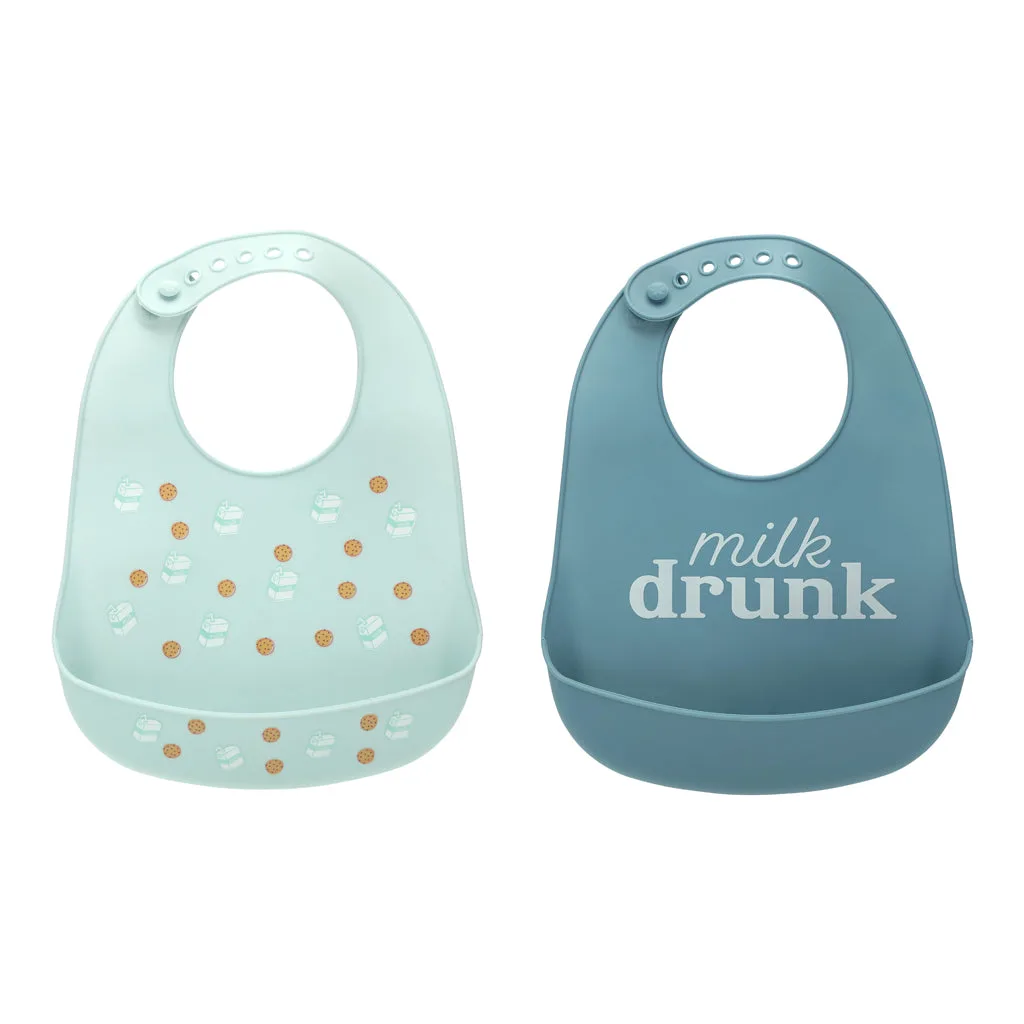
Silicone is flexible, waterproof, and food-safe, but it can hold onto food oils and smells if residue sits too long. The Milk & Cookies silicone baby bib set is made from food-grade silicone and is dishwasher safe, so you have two cleaning paths—but neither works well if you skip the pre-rinse. A few seconds of rinsing now saves you from scrubbing dried oatmeal later.
When to hand wash vs. dishwasher
Use the dishwasher for a thorough clean after messy meals, but hand wash if your dishwasher runs very hot or uses a harsh detergent—over time those conditions can dull the silicone. The bibs are PVC free and FDA safe, so both methods are safe for your baby; choose based on convenience and how quickly you need the bib back in rotation.
Storage that protects the shape
The adjustable neck fasteners and front pockets can get bent out of shape if you cram the bibs into a crowded drawer. Store them flat or loosely rolled with the pocket facing up, and avoid stacking heavy items on top. Proper storage also keeps the bibs from picking up odors from nearby foods or cleaning supplies.
Step-by-step cleaning and care
- Scrape off solids right away: After each meal, use a silicone spatula or spoon to scrape leftover food from the bib into the trash. Don’t let food dry on the surface—dried dairy or cereal can stick to silicone and become harder to remove. Keep a small spatula near the sink for quick scraping.
- Rinse with warm water: Hold the bib under warm running water to flush away loose residue. Avoid very hot water, which isn’t necessary and can be uncomfortable on your hands. Warm, not hot, water is enough for daily rinsing.
- Wash with dish soap or in the dishwasher: For hand washing, apply a small amount of mild dish soap to a soft sponge and gently scrub both sides, including the pocket and neck fastener. For dishwasher cleaning, place the bibs on the top rack. Skip abrasive scrubbers that can scratch the silicone. Top rack only in the dishwasher to prevent warping.
- Rinse thoroughly and check for residue: If hand washing, rinse until the water runs clear and no soap bubbles remain. Soap residue can leave a film that attracts dust and may irritate sensitive skin. Run your finger over the surface—it should feel smooth, not slippery.
- Air-dry completely before storing: Shake off excess water and lay the bib flat on a drying rack or hang it over a clean towel. Make sure the pocket and neck fastener are fully dry before putting the bib away. Damp storage encourages mildew and odors.
- Store flat or loosely rolled: Keep bibs in a clean, dry drawer or bin, away from sharp objects that could puncture the silicone. Avoid folding the neck fastener sharply, which can weaken it over time. A simple drawer divider helps keep bibs separate and uncrushed.
Product facts
-
milk & cookies silicone baby bib set: Includes two waterproof food-grade silicone bibs with adjustable neck fasteners and front pockets. Two bibs mean you can wash one while the other is in use, and the pocket catches dropped food to reduce mess.
-
milk & cookies silicone baby bib set: Dishwasher safe and PVC free, for ages 6 months and up. You can sanitize thoroughly in the dishwasher without worrying about harmful materials.