Quick Answer
Start with short, simple affirmations that your child can repeat daily, using visual aids like affirmation cards to make the practice engaging and consistent.
Why Mindful Affirmations Work for Kids
Mindful affirmations are positive statements that help children focus on their strengths and possibilities. They can boost self-esteem, reduce negative self-talk, and build resilience. The key is to keep sessions brief and fun, so kids stay interested and actually internalize the messages.
Age Matters: Tailoring Your Approach
Younger children (ages 3-6) respond best to simple, concrete phrases like 'I am kind' or 'I am brave.' Older kids (7-12) can handle more abstract affirmations about effort and growth. Adjust the complexity based on your child's language skills and emotional maturity to avoid frustration or boredom.
Consistency Over Intensity
A daily 2-minute ritual is more effective than a long weekly session. Tie affirmations to an existing routine, like brushing teeth or breakfast, to build a habit. Use visual cues like a display stand to remind your child to practice without nagging.
Trade-Offs: What to Watch Out For
Affirmations are not a substitute for professional help if your child shows signs of anxiety or depression. Also, some children may feel silly or resist at first. Acknowledge their feelings and let them choose which affirmations to use, which increases buy-in.
Decision Rules for Starting Affirmations
- Start Simple: Choose 3-5 affirmations that are short, positive, and specific to your child's current needs (e.g., 'I am a good friend'). Avoid abstract or complex statements. Review and update the affirmations monthly to keep them relevant.
- Make It Visual: Use affirmation cards placed where your child will see them daily, like on a nightstand or breakfast table. A stand keeps them visible and organized.
- Practice Together: Say the affirmations out loud with your child each morning or evening. Model the behavior by sharing your own affirmations to make it a shared activity. Encourage your child to say the affirmation in their own words after a week.
- Keep It Short: Limit each session to 2-3 minutes. If your child loses interest, reduce the frequency or change the wording to keep it fresh.
- Celebrate Progress: Acknowledge when your child uses an affirmation spontaneously or shows improved confidence. Positive reinforcement strengthens the habit. Create a simple sticker chart to track daily practice for younger kids.
Product Spotlight
-
Mindful Affirmations for Kids - Kids: Mindful Affirmations for Kids use positive psychology statements to teach children how to find their inner strength, overcome doubts, and boost self-esteem. These cards give you ready-made, age-appropriate phrases that target common childhood challenges, saving you time and ensuring the messages are effective.
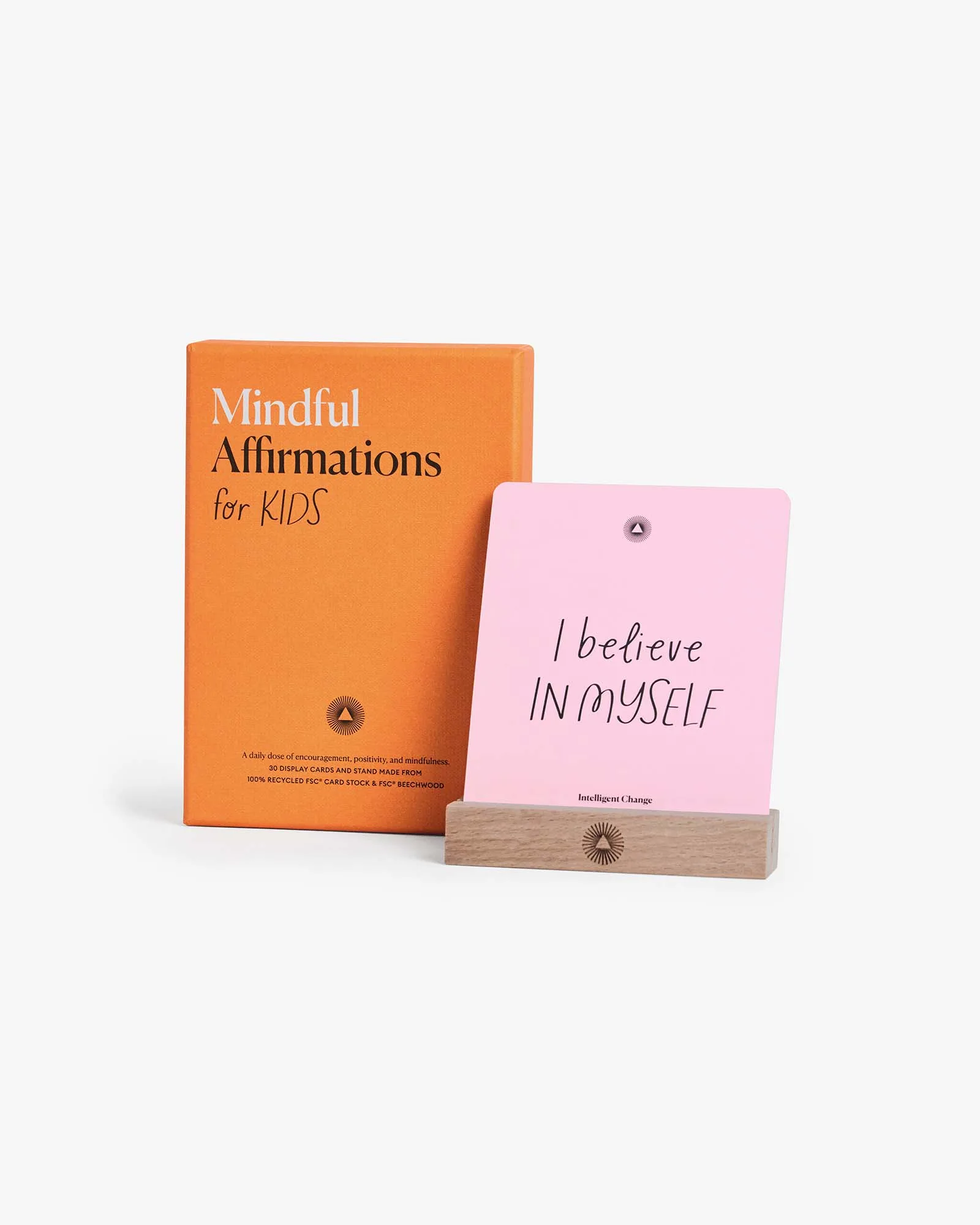
Mindful Affirmations for Kids - Kids
Who Should Use This Approach
Best for
- Parents of children aged 3-10 who want to build confidence and positivity at home
- Families looking for a simple, screen-free mindfulness activity to incorporate into daily routines
Not for
- Children with severe emotional or behavioral issues that require professional intervention
- Parents who expect immediate results without consistent practice