Quick answer
For most sensitive skin types, SPF 30 offers ample daily protection with a lighter feel, while SPF 50 delivers higher defense for extended sun exposure without sacrificing a gentle formula.
Why mineral sunscreen suits sensitive skin
Mineral sunscreens use zinc oxide or titanium dioxide to sit on top of the skin and reflect UV rays, rather than absorbing into the skin like chemical filters. This physical barrier is less likely to cause stinging, redness, or irritation, making it a go-to for reactive or easily upset skin.
Both ShadeDrops options are mineral-based and infused with antioxidants to soothe and protect, so the choice between SPF 30 and SPF 50 comes down to your daily environment and how much sun you actually get.
SPF 30 vs SPF 50: the real difference in protection
SPF 30 blocks about 97% of UVB rays, while SPF 50 blocks about 98%. The jump in protection is modest, not double. For everyday commutes, errands, or office days near windows, SPF 30 provides sufficient defense without extra weight.
SPF 50 becomes more valuable when you spend prolonged time outdoors—beach days, hiking, or outdoor dining. The added buffer can compensate for missed spots or uneven application. Both numbers still require reapplication every two hours for reliable protection.
Texture and finish: what changes with SPF level
Higher SPF mineral formulas sometimes feel thicker or leave more of a white cast, but the ShadeDrops line uses a milky serum texture designed to glide on and dry with a natural finish. The SPF 50 version is described as fast-absorbing and lightweight, so the trade-off in texture is minimal.
If your skin is very oily or you prefer an almost invisible feel, the SPF 30 may feel slightly lighter. For those who prioritize maximum protection and don't mind a touch more coverage, the SPF 50 is still a serum-like experience.
SPF 30 vs SPF 50: trade-offs for sensitive skin
- Protection level: SPF 30 blocks ~97% of UVB rays; SPF 50 blocks ~98%. The difference is small but meaningful for extended exposure.
- Texture and feel: Both use a milky serum texture. SPF 30 may feel slightly lighter; SPF 50 is still fast-absorbing and natural-finish.
- Best use case: SPF 30 suits daily indoor-outdoor routines and short commutes. SPF 50 is better for prolonged outdoor activity or high-UV environments. Choose SPF 30 for everyday wear under makeup or alone; pick SPF 50 when you plan to be outside for hours.
Product facts at a glance
-
ShadeDrops Broad Spectrum SPF 30 Mineral Milk Sunscreen: Featuring a milky serum texture and natural finish, this mineral sunscreen helps shield skin from UVA/UVB rays and soothes skin with added antioxidants. The lightweight texture and soothing ingredients make it ideal for sensitive skin that reacts to heavy creams or chemical filters.
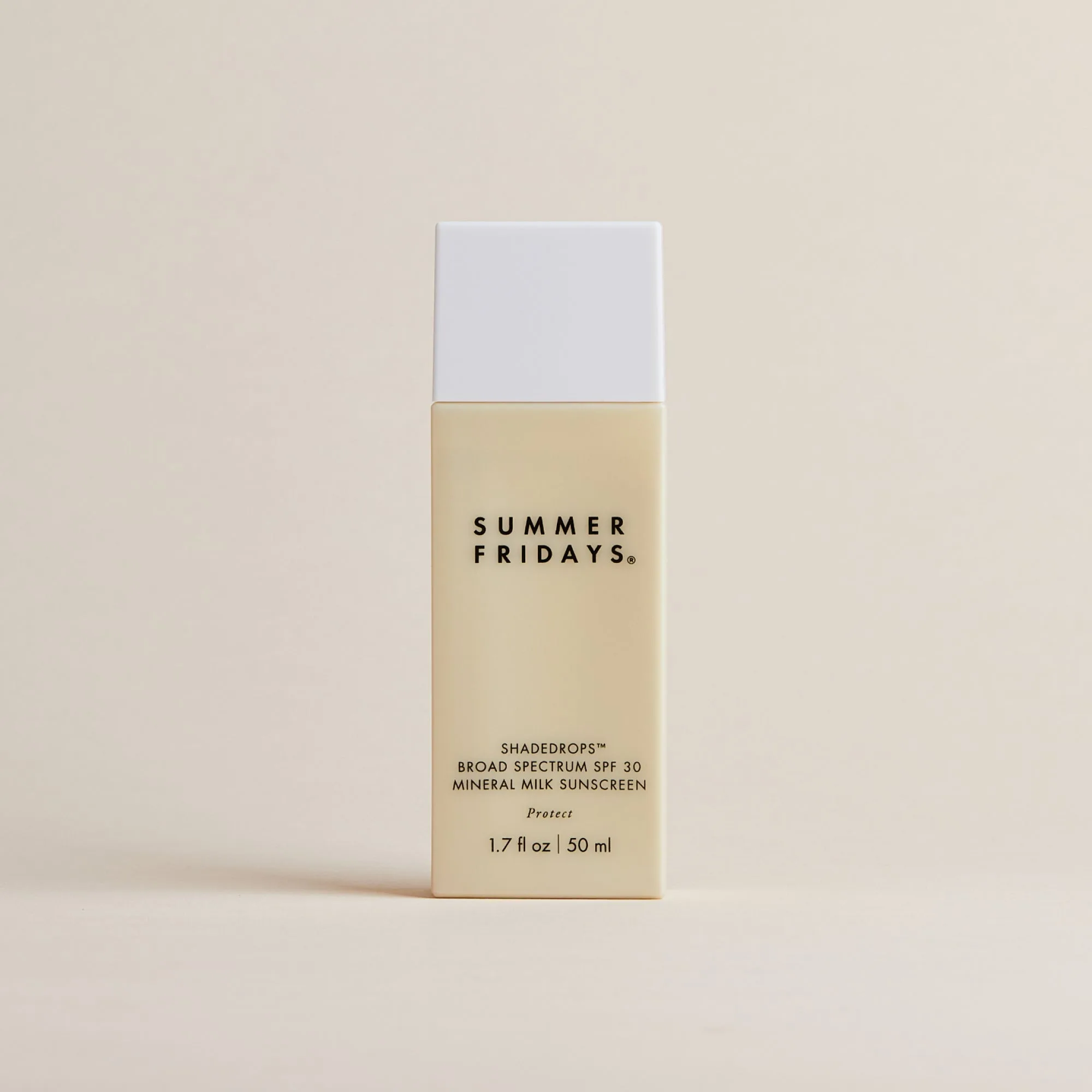
ShadeDrops Broad Spectrum SPF 30 Mineral Milk Sunscreen
-
ShadeDrops® Broad Spectrum SPF 50 Mineral Milk Sunscreen: Our lightweight, broad spectrum mineral sunscreen helps protect skin from UVA/UVB rays. Infused with antioxidants, the fast-absorbing milky serum glides on to deliver a soft, natural finish. Its improved formula is now SPF 50 and infused with gentle ingredients to soothe and protect skin. The upgraded SPF 50 formula maintains a fast-absorbing, gentle feel, so sensitive skin gets higher protection without irritation or a heavy layer.
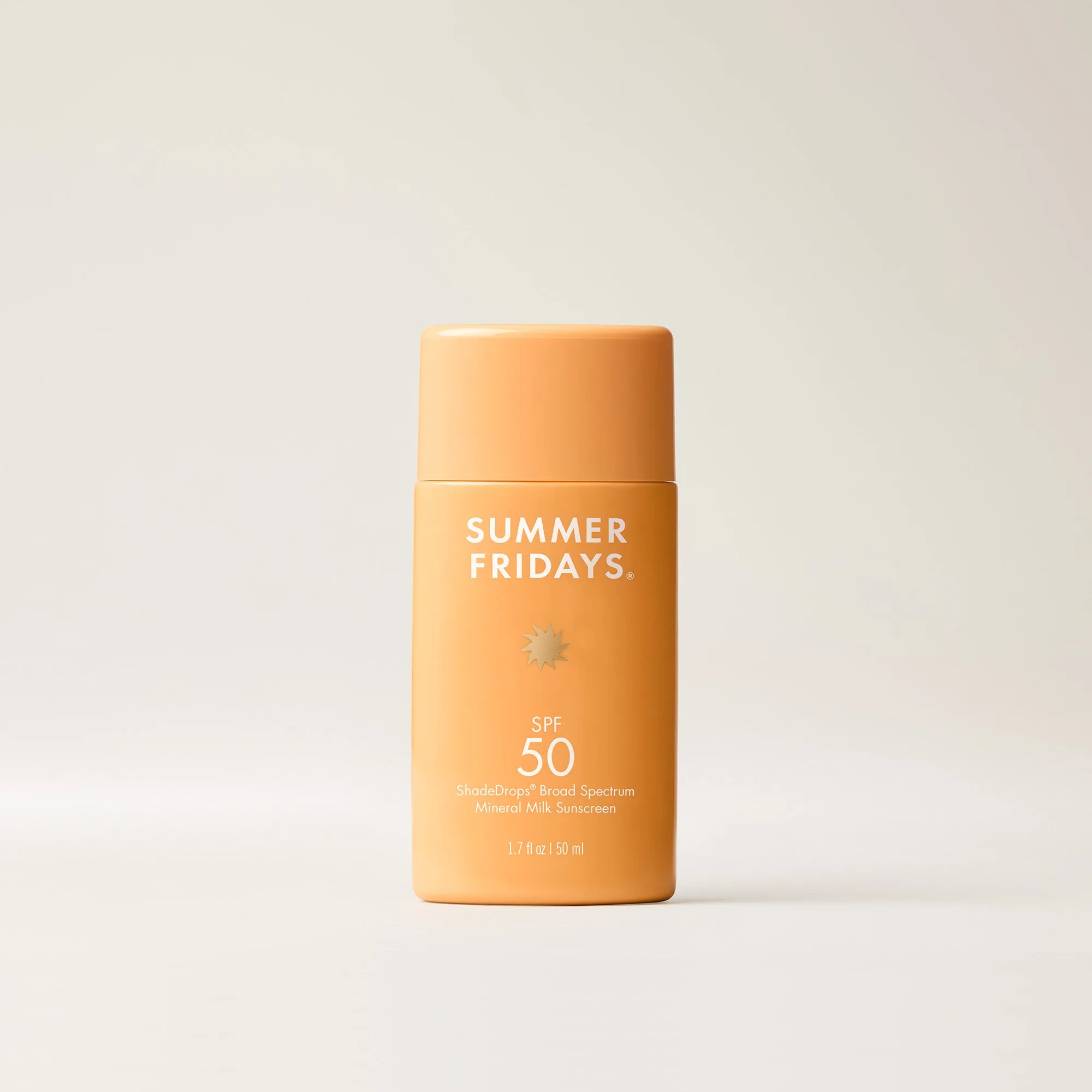
ShadeDrops® Broad Spectrum SPF 50 Mineral Milk Sunscreen
Which one fits your routine?
Best for
- Daily commuters and office workers who want lightweight protection under makeup
- Sensitive skin that prefers the lightest possible mineral layer
Not ideal for
- Full-day outdoor activities without reapplication (choose SPF 50 and reapply)
- Anyone who wants maximum UV defense from a single application (no sunscreen lasts all day)