Quick answer
Mini carry-on luggage works best for one- to three-night trips, light packers, and travelers who want to skip the overhead bin altogether. If you regularly travel with more than a week of clothing or need checked-bag capacity, a standard carry-on or medium luggage will serve you better. For most short trips, a compact carry-on paired with packing cubes and a personal item is the simplest setup.
Mini carry-on luggage is having a moment, and it's easy to see why. Smaller bags are easier to lift, easier to squeeze into tight spaces, and often small enough to slide under the seat in front of you. But the trade-off is real: less space means every packing decision counts.
This guide walks through who actually benefits from a mini carry-on, who should choose a different size, and how to pack one without leaving essentials behind. We'll also look at a few CALPAK options that fit different versions of the small-bag lifestyle, from a compact hard-shell carry-on to a mini duffel that works as a personal item.
What counts as mini carry-on luggage
Mini carry-on luggage generally refers to bags smaller than the standard 22 x 14 x 9 inch carry-on size. Many are designed to fit under the seat, which is why they're sometimes called underseat carry-ons. The exact dimensions vary by brand and airline, and there's no single universal standard, so always check your airline's personal item and carry-on limits before you buy.
That smaller footprint is the whole point. A compact carry-on luggage piece is easier to maneuver through a crowded aisle, lift into an overhead bin, or stash at your feet. It also encourages you to pack less, which can be a feature rather than a limitation if you tend to overpack.
- Measure your airline's personal item size before buying, not after.
- If a bag claims to be underseat, confirm the dimensions against your specific airline.
Who should buy a mini carry-on
The best small carry-on is the one that matches your actual travel pattern. If most of your trips are one to three nights, a mini carry-on can replace both a backpack and a larger suitcase. It's also a strong choice for business travelers who want to keep a change of clothes and a laptop within reach rather than in the overhead bin.
Parents traveling with kids often find a mini carry-on useful as a dedicated bag for children's items, since it stays close and is easy to access mid-flight. And if you fly on regional jets or budget airlines with tight overhead space, a smaller bag reduces the risk of being forced to gate-check.
- Short trips of one to three nights are the sweet spot.
- Frequent flyers on regional or budget airlines benefit most from the smaller size.
Who should skip it
If you regularly travel for a week or more, or if you need to pack bulky items like winter coats, hiking boots, or formal wear, a mini carry-on will frustrate you. The same goes for anyone who prefers to pack without planning every outfit. A standard carry-on or medium luggage gives you more room to improvise.
Travelers who bring multiple pairs of shoes, full-size toiletries, or dedicated camera gear should also look at larger options. There's no prize for packing in the smallest possible bag if it makes your trip harder. The goal is a bag that fits your trip, not a bag that forces you to leave things behind.
- Week-long trips and cold-weather destinations usually need more space.
- If you hate planning outfits in advance, a larger carry-on will feel less restrictive.
How to pack a mini carry-on
Mini carry-on packing is less about folding tricks and more about choosing the right items. Start with a packing list built around a single color palette so everything mixes and matches. Roll soft items like t-shirts and leggings to fill gaps, and use packing cubes to compress bulk and keep categories separate.
Wear your bulkiest shoes and layer on your heaviest jacket during travel. Put toiletries in a clear quart-size bag and keep them under the airline's liquid limit. If you're bringing a laptop, use a padded sleeve or a bag with a dedicated compartment rather than burying it between clothes.
- Pack for the trip, not for every possible scenario.
- Keep one outfit and essential toiletries in your personal item in case your bag gets gate-checked.
Choosing between a hard-shell mini carry-on and a soft mini duffel
Hard-shell mini carry-ons protect fragile items and hold their shape, which makes them easier to pack consistently. Soft-sided mini duffels and backpacks, on the other hand, can squeeze into tighter spaces and often have more exterior pockets for quick-access items. Neither is universally better; it depends on what you carry.
If your priority is protecting a laptop or camera, a structured hard-shell carry-on with a built-in lock is the safer bet. If your priority is flexibility and easy access, a soft mini duffel or backpack may serve you better. Some travelers use both: a hard-shell mini carry-on for the overhead bin and a small duffel as a personal item.
- Hard-shell: better protection, less flexibility.
- Soft-sided: more give, more pockets, less structure.
Decision rules for buying a mini carry-on
- Trip length rule: If your typical trip is one to three nights, a mini carry-on is enough. For four to seven nights, consider a standard carry-on. Beyond a week, look at medium or large luggage. Match the bag to your most common trip, not your longest one.
- Airline rule: Check your airline's personal item and carry-on dimensions before buying. Underseat space varies, and regional jets are tighter than mainline aircraft. Measure twice, buy once.
- Packing style rule: If you plan outfits and pack light, a mini carry-on will feel liberating. If you pack for every possibility, it will feel cramped. Be honest about how you actually pack.
- Carry comfort rule: Choose spinner wheels if you'll be rolling through airports. Choose padded straps if you'll be carrying the bag on your shoulder or back for long stretches. The best bag is the one you don't dread carrying.
CALPAK options for small-carry travel
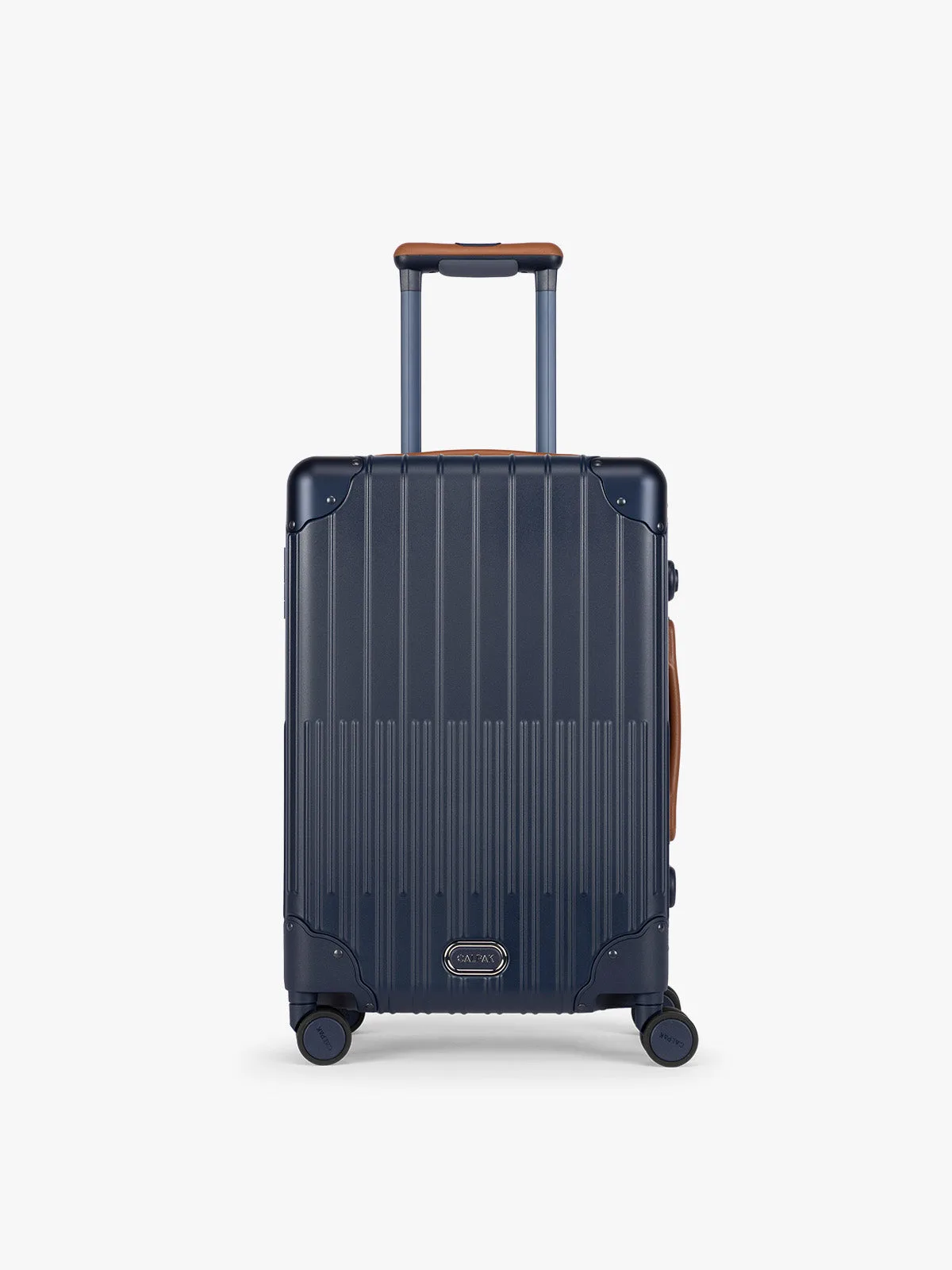
- Vault Carry-On Luggage: Durable hard-shell exterior with an aluminum frame, smooth spinner wheels, a built-in TSA-approved lock, a removable divider panel, and an anywhere-stop trolley handle. This is a structured carry-on that protects what you pack and rolls easily through airports. The TSA lock and divider panel add security and organization, which matters when you're packing tight.
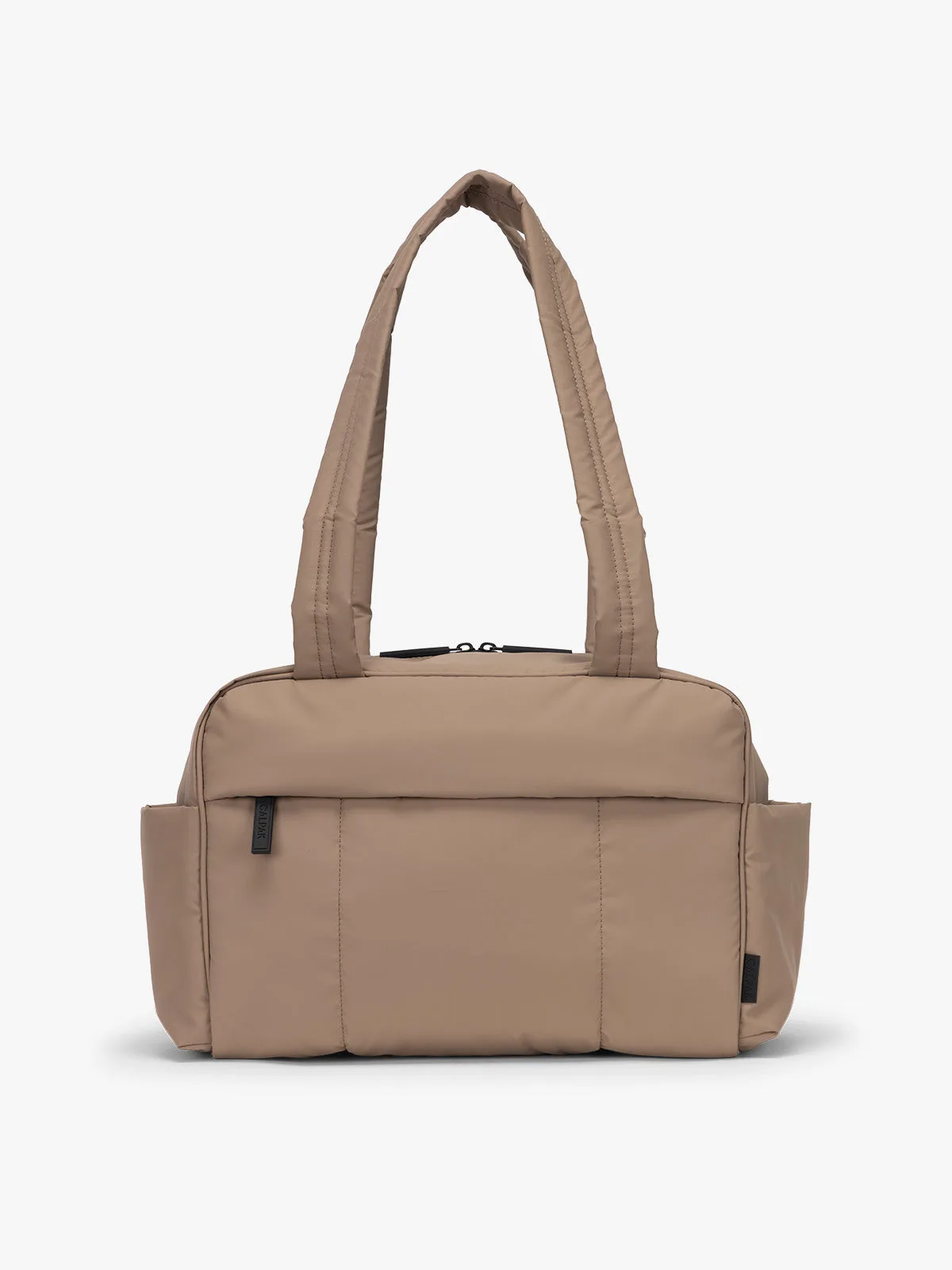
- Luka Mini Duffel: A lightweight mini duffel with dedicated water bottle holders and plush, padded straps, spacious enough for workout gear yet polished enough for brunch. This works well as a personal item or an underseat bag for short trips. The water bottle holders and padded straps make it comfortable to carry for longer stretches.
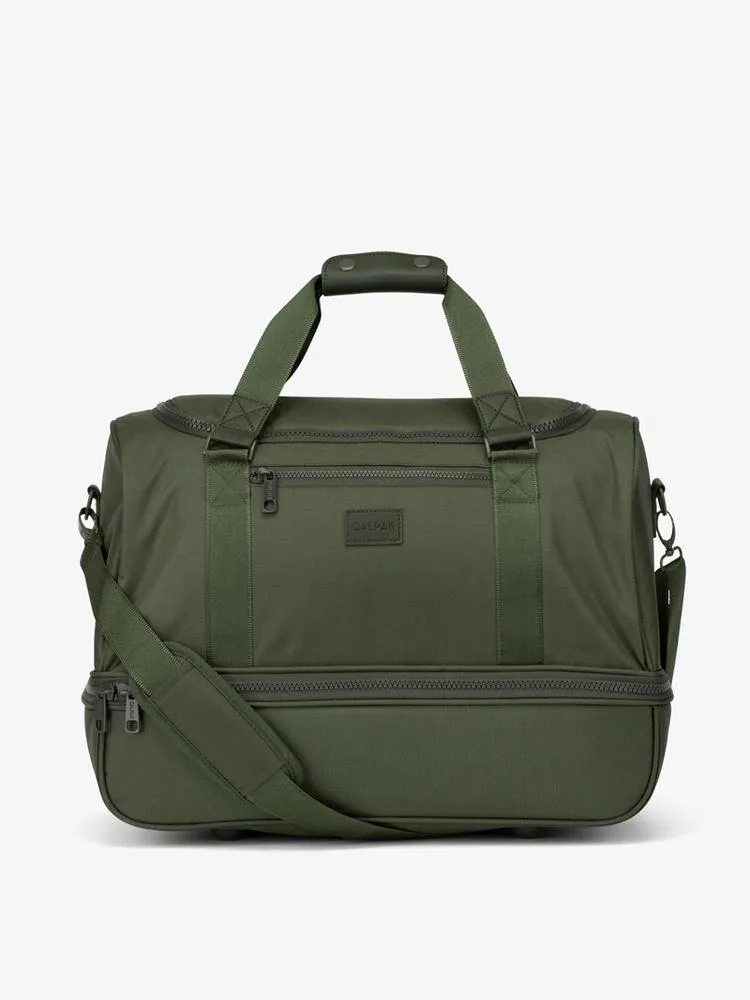
- Stevyn Duffel Bag with Shoe Compartment: A lightweight duffel with a dedicated shoe compartment, interior pockets, and a luggage sleeve. The shoe compartment keeps dirty soles away from clean clothes, and the luggage sleeve lets you slide it over a rolling carry-on handle. Useful if you're combining a mini carry-on with a second bag.
Is a mini carry-on right for you?
Best for
- One- to three-night trips and weekend getaways
- Light packers who plan outfits in advance
- Travelers on regional or budget airlines with tight overhead space
- Parents who want a dedicated bag for children's items within reach
Not for
- Week-long trips or cold-weather destinations with bulky clothing
- Travelers who bring multiple pairs of shoes or full-size toiletries
- Anyone who prefers to pack without a detailed plan
- Trips where you need checked-bag capacity for gear or gifts
A mini carry-on is a focused tool, not a universal one. If your trips are short and your packing style is disciplined, it can simplify travel and keep everything within reach. If you need more room, choose a standard carry-on or medium luggage and skip the squeeze. The right size is the one that makes your trip easier, not the one that looks smallest.