Quick answer
Choose a mini crib like the Newton Galileo Mini Crib if you need a space-saving, portable sleep solution for a smaller nursery or frequent travel. Opt for a full-size crib if you have ample space and want a longer-lasting sleep surface that transitions to a toddler bed.
Size and footprint: the biggest difference
A full-size crib typically measures about 28 inches wide by 52 inches long, while a mini crib is roughly 24 inches wide by 38 inches long. That extra foot of length in a full-size crib gives your baby more room to grow, but it also demands significantly more floor space. In a tight nursery, a mini crib can free up room for a rocking chair or dresser.
Mini cribs are also lighter and easier to move. Many come with locking casters, like the Newton Galileo Mini Crib, so you can roll it from room to room or pack it for a trip. Full-size cribs are heavier and rarely designed for frequent relocation.
Longevity and transition options
Full-size cribs are built to last from birth through toddlerhood. Most convert into toddler beds, daybeds, or even full-size headboards, giving you years of use. Mini cribs generally accommodate babies up to around 18–24 months or until they can climb out. After that, you'll need to transition to a toddler bed or full-size crib.
If you plan to have multiple children close in age, a mini crib can serve as a second sleep space or travel crib, while a full-size crib remains the primary bed. Consider how long you want the crib to be the main sleep surface before making your choice.
Mini crib vs. full-size crib: trade-offs
- Space needed: Mini cribs require about 30% less floor space than full-size cribs. Measure your nursery before deciding. If your nursery is under 100 sq ft, a mini crib is likely the better fit.
- Portability: Mini cribs with locking casters (like the Newton Galileo) can be rolled between rooms or taken on trips. Full-size cribs are heavy and stationary. For families who travel or want flexibility, a mini crib wins on portability.
- Long-term use: Full-size cribs convert to toddler beds and beyond, lasting 4+ years. Mini cribs typically last 18–24 months before your child outgrows them. If you want a single bed from baby to preschool, a full-size crib is the better investment.
Product facts
-
Newton Galileo Mini Crib with Newton Mattress: The Galileo Mini Crib features a modern, space-saving design with smooth rounded arches, two mattress height settings, and locking caster wheels for easy room-to-room portability. Includes a FREE breathable Newton Mini Crib Mattress. This mini crib saves floor space while still offering adjustable mattress heights for safety as your baby grows, and the locking wheels make it easy to move from room to room or pack for travel.
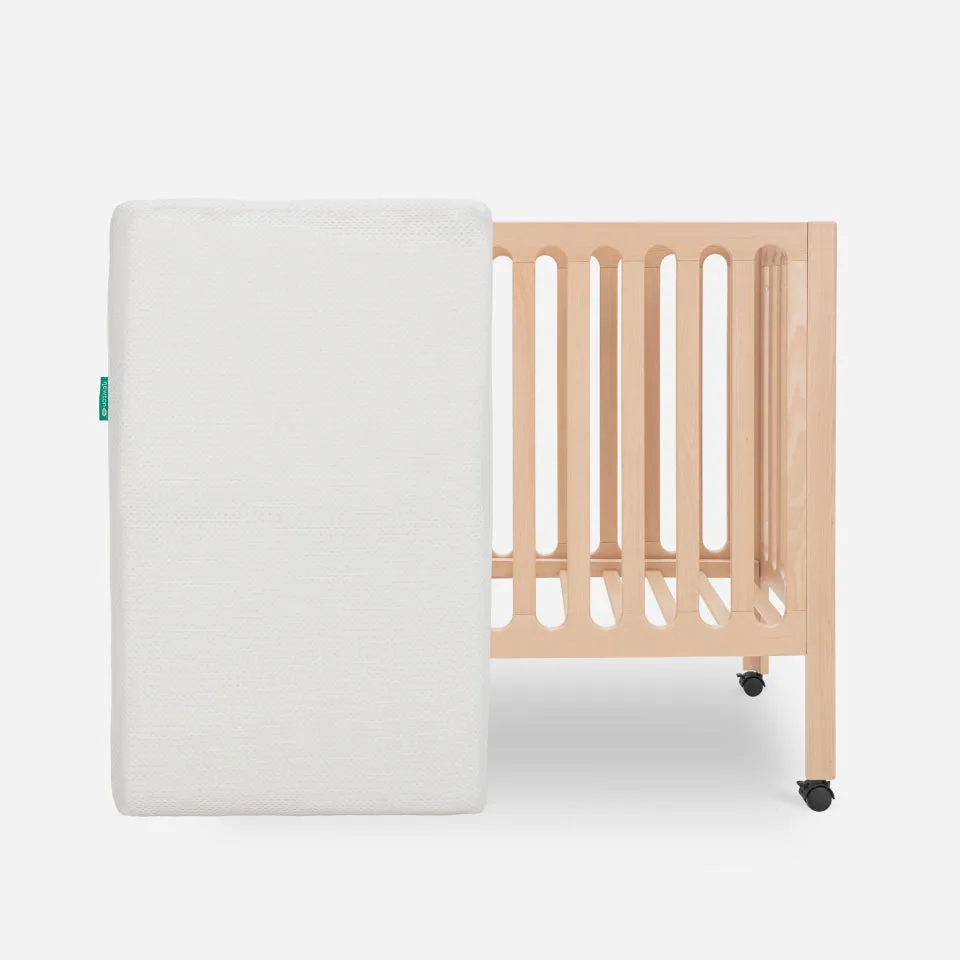
Newton Galileo Mini Crib with Newton Mattress
Which crib is right for you?
Best for
- Small nurseries or shared rooms where floor space is limited
- Families who travel frequently and want a portable sleep solution
- Parents who plan to use the crib as a secondary or travel bed
Not ideal for
- Families who want a single sleep surface that lasts from birth through preschool
- Nurseries with ample space where a full-size crib fits comfortably