Quick Answer
Choose a mini puzzle (often 48 pieces) when you need a compact, low-commitment activity for travel, small hands, or quick solo play. Choose a full-size puzzle (100 pieces and up) when you want a longer shared challenge or a finished piece worth displaying. If you are unsure, start with a 48 piece mini puzzle for portability and a 100 piece full-size puzzle for tabletop family time.
Puzzle shopping gets confusing fast because the same brand can offer a 48 piece mini puzzle and a 750 piece shaped puzzle in nearly identical boxes. The real question is not which size is better overall, but which size fits your table, your time, and the person solving it.
This comparison uses specific Mudpuppy puzzles to show how piece count, finished dimensions, and included extras change the experience. You will see where minis win, where full-size puzzles earn their space, and how to match each format to a real use case.
What Counts as a Mini Puzzle vs a Full-Size Puzzle
In practical terms, a mini puzzle is a small jigsaw with roughly 48 pieces. These are often called small jigsaw puzzles or pocket puzzles because the box and finished size stay compact. A full-size puzzle starts around 100 pieces and climbs through 300, 500, 750, and 1000 pieces. The jump from 48 to 100 pieces is not just more cardboard; it changes how long the activity lasts and how much table space you need.
Mudpuppy's catalog reflects this split clearly. The 48 Piece Mini Puzzle line sits at the small end, while the 100 Piece Puzzle, 500 Pc Puzzle, and 750 Piece Shaped Puzzle lines occupy the full-size range. When you compare a mini puzzle vs full size puzzle, you are really comparing portability and speed against duration and display value.
- Mini puzzles usually mean 48 pieces; full-size puzzles start at 100 pieces and go up to 1000.
- Check the finished dimensions, not just the piece count, because a 100 piece wooden puzzle can be nearly a foot wide.
Portability and Storage: Where Minis Win
Mini puzzles are built for movement. A 48 piece mini puzzle fits in a backpack pocket, a car seat organizer, or a restaurant activity bag. Because the finished size is small, you can solve it on a tray or a lap desk without clearing a whole table. That makes minis a strong choice for travel puzzles for kids, waiting rooms, and any situation where you need a quiet activity that starts and stops quickly.
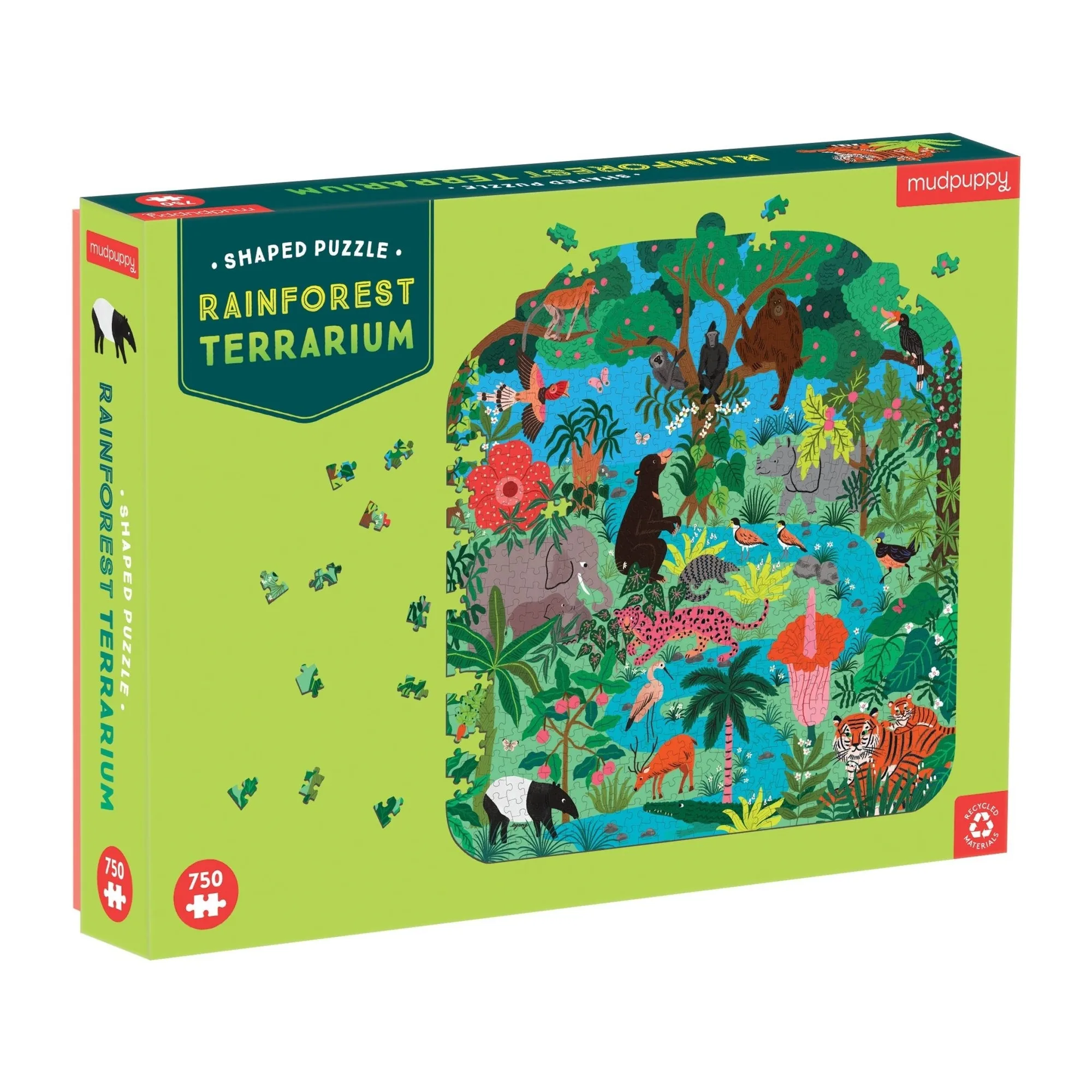
Full-size puzzles demand more real estate. A 500 piece puzzle like Ghostly Gathering finishes at a size that needs a dedicated table or puzzle board, and a 750 piece shaped puzzle can run about 20 by 21.5 inches. Storage also matters: full-size puzzles usually come in larger boxes that take shelf space, while minis tuck into drawers or tote bags. If your space is tight or your solving happens on the go, minis have a clear advantage.
- Measure your available surface before buying a full-size puzzle; finished dimensions are listed on the box.
- Keep a mini puzzle in a zip pouch with a small tray so pieces do not scatter in transit.
Difficulty, Duration, and Age Fit
Piece count is the quickest difficulty signal, but it is not the only one. A 48 piece mini puzzle is usually solvable in one short sitting, which suits young children or anyone who wants a confidence boost. A 100 piece puzzle adds time and requires more sorting, while a 500 or 750 piece puzzle becomes a multi-session project that rewards patience and table persistence.
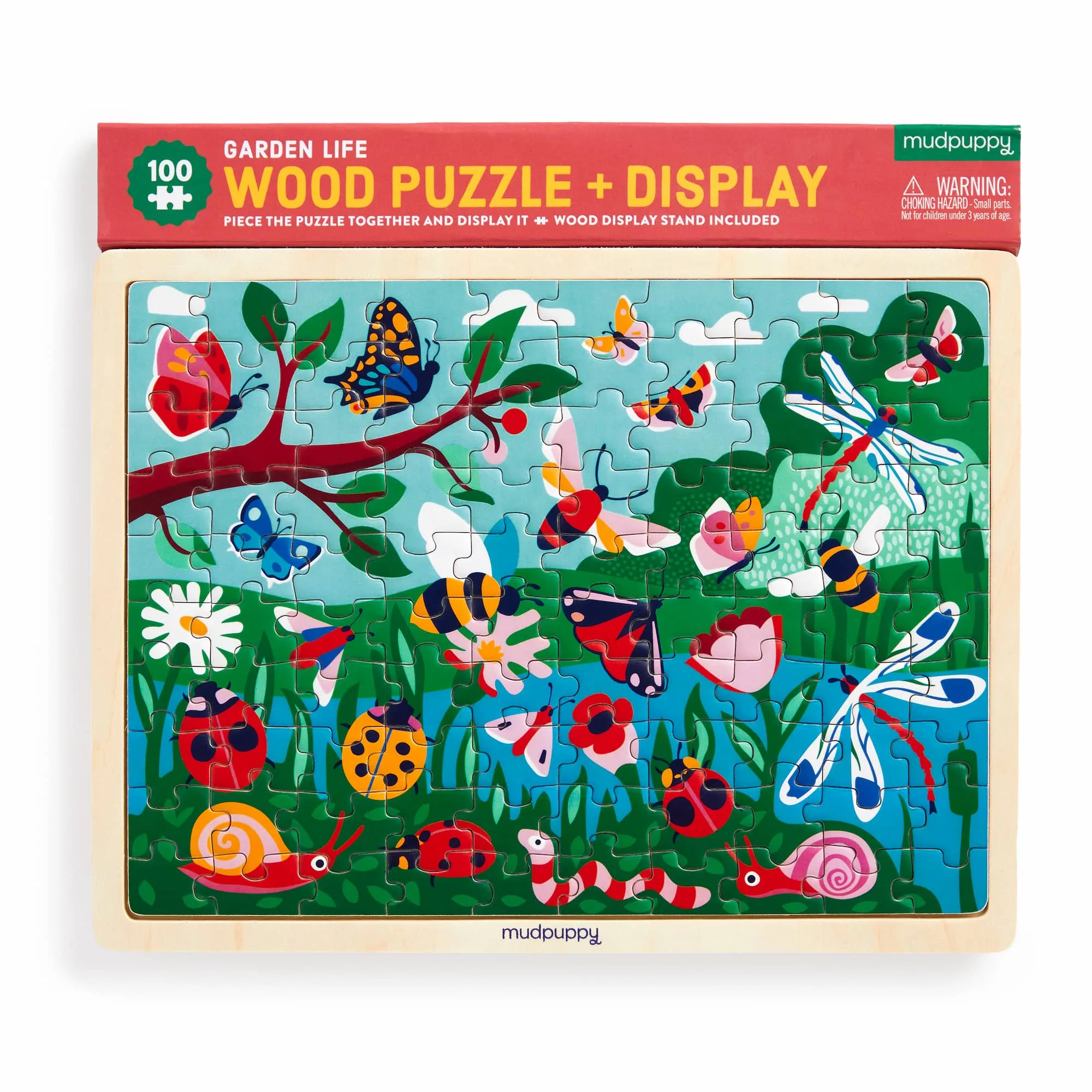
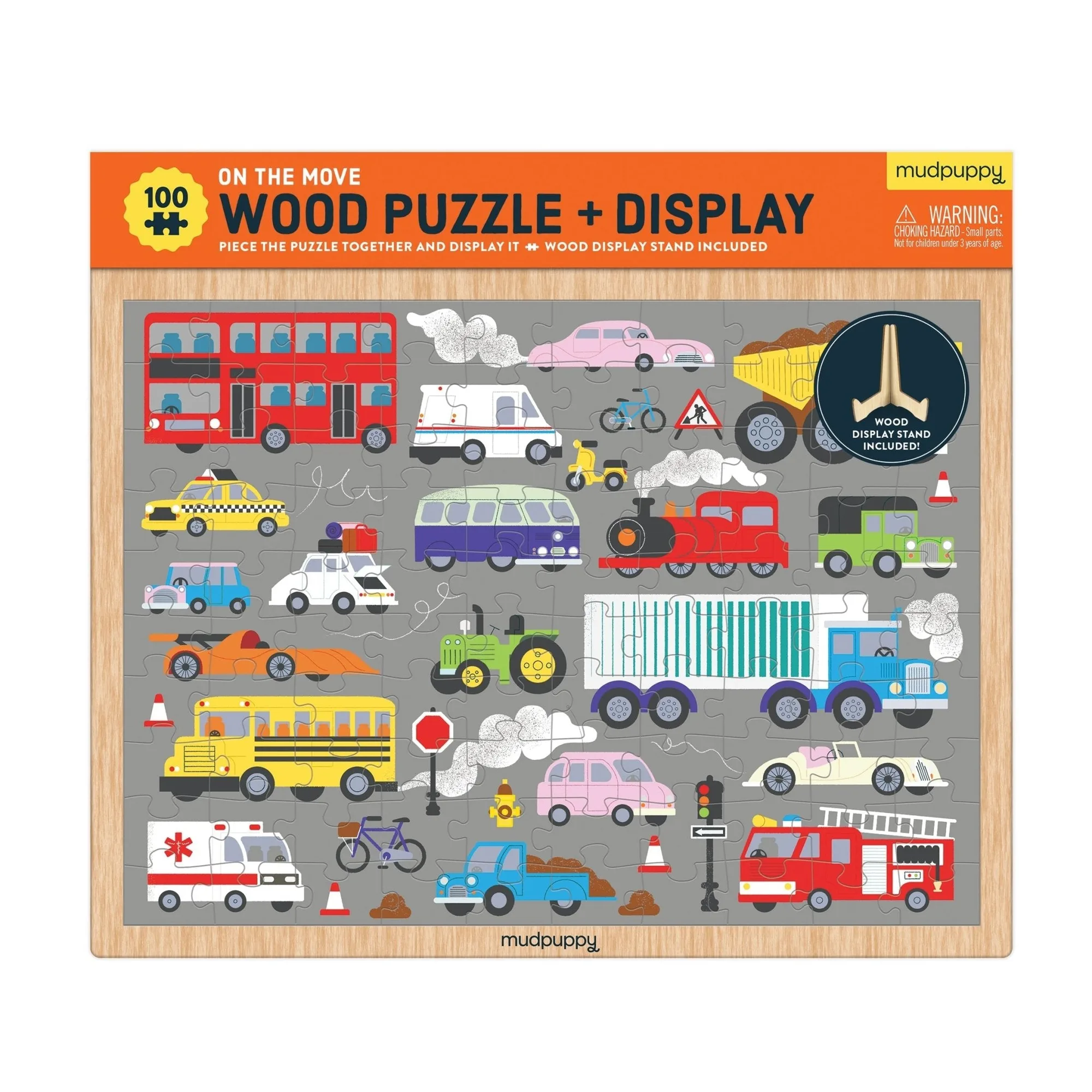
Age guidance helps narrow the field. The Garden Life 100 Piece Wood Puzzle + Display and On the Move 100 Piece Wood Puzzle + Display are both marked Ages 5+, so they are a reasonable step up from minis for early elementary kids. Full-size family puzzles in the 500 piece range are often pitched as just challenging enough for kids and adults to enjoy together. If you are buying for a mixed-age group, a 500 piece family puzzle can keep everyone involved without the frustration of a 1000 piece build.
On the Move 100 Piece Wood Puzzle + Display
- Match the piece count to attention span: 48 pieces for a quick win, 100 pieces for a focused sitting, 500+ for a weekend project.
- For mixed ages, choose a 500 piece family puzzle and let younger kids handle edge pieces and color blocks.
Display and Reuse: Where Full-Size Puzzles Earn Their Space
Some full-size puzzles are designed to be shown off, not just solved and boxed. The Garden Life 100 Piece Wood Puzzle + Display and On the Move 100 Piece Wood Puzzle + Display both include a display stand that turns the finished puzzle into home decor. That extra step changes the value equation: you are not just buying an activity, you are buying a piece of art your child can point to on a shelf.
Mini puzzles rarely come with display hardware, and their small finished size makes them less suited to wall or shelf display. Full-size puzzles also offer more visual payoff because the artwork has room to breathe. The Michael Storrings Halloween Parade 500 Piece Puzzle, for example, finishes at 20 by 20 inches and includes a puzzle insert, which makes the completed scene feel substantial. If display potential matters to you, full-size is the stronger buy.
- Check whether the puzzle includes a display stand or insert if you plan to keep it assembled.
- For a seasonal display, a 500 piece puzzle like the Halloween Parade offers a larger, more dramatic finished image than a mini.
Cost, Gifting, and Value
Mini puzzles typically cost less, which makes them easy add-ons, party favors, or stocking stuffers. Full-size puzzles cost more but deliver more solving time and, in some cases, display extras. The better value depends on how often the puzzle will be used. A mini that gets solved five times on car trips may beat a large puzzle that stays on the shelf.
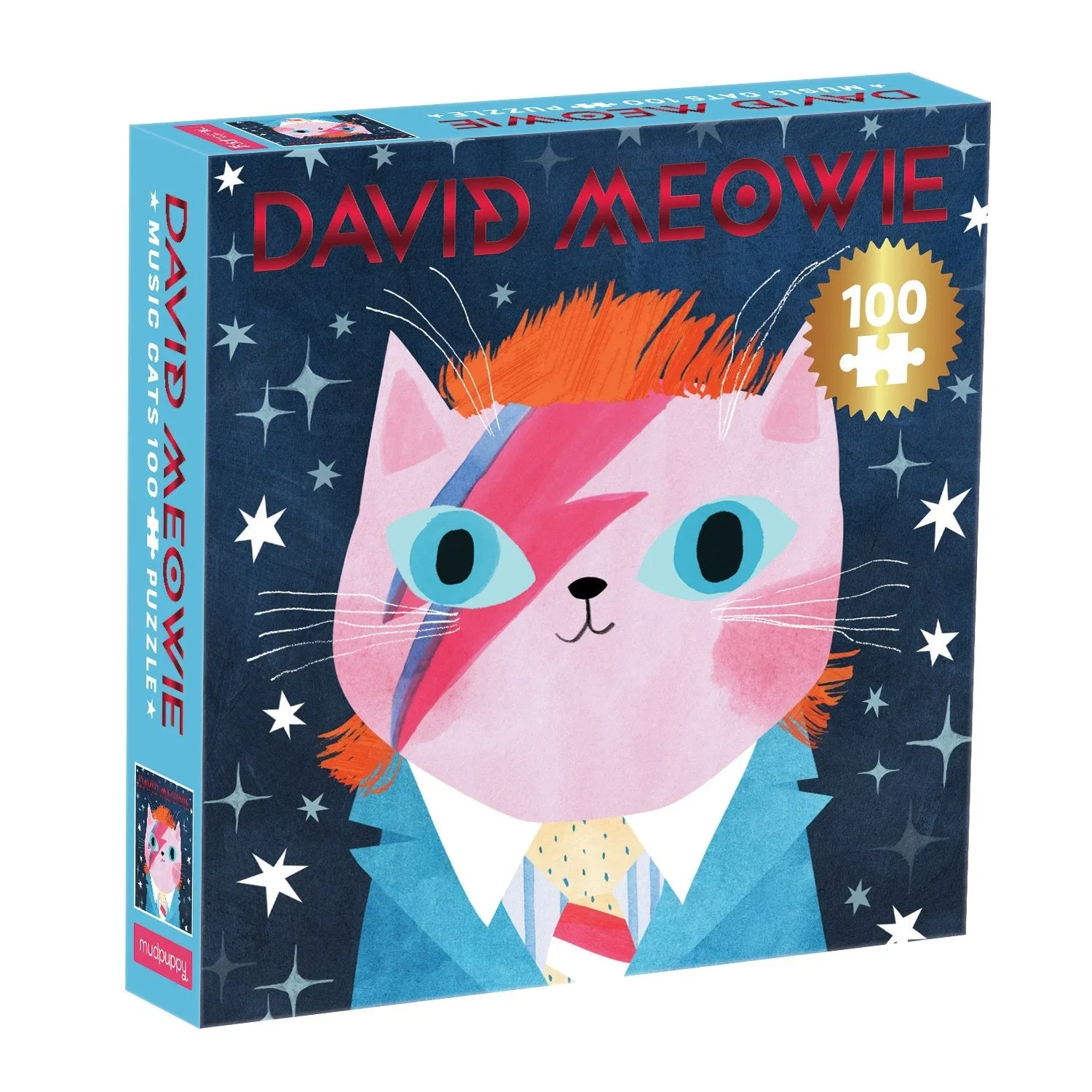
Gifting is another angle. A 48 piece mini puzzle is a low-risk gift for a child you do not know well because it is portable and quick. A full-size puzzle with a strong theme, like the David Meowie Music Cats 100 Piece Puzzle with foil embellishments, feels more like a keepsake. If you are buying for a family, a 500 piece puzzle gives multiple people something to do at once, while a mini is best for solo or parallel play.
- Buy minis in multiples for travel bags, party favors, or classroom rewards.
- For a gift you want to feel special, choose a full-size puzzle with foil, shaped pieces, or a display stand.
Trade-Offs at a Glance
- Portability vs. table presence: Mini puzzles win for travel and small spaces because they pack flat and solve on a lap tray. Full-size puzzles need a dedicated surface but create a bigger, more satisfying finished image. If the puzzle will leave the house, buy a mini; if it stays on a table, buy full-size.
- Quick win vs. long engagement: A 48 piece mini puzzle usually finishes in one sitting, which suits young children or short attention windows. A 100 piece puzzle adds sorting and a longer build; 500 pieces and up turn into a multi-day project. Match piece count to the solver's typical attention span, not to their age alone.
- Simple storage vs. display extras: Minis store in a drawer and rarely include display hardware. Some full-size puzzles, like the Garden Life and On the Move wood puzzles, include a display stand that keeps the finished puzzle visible. If you want the puzzle to become decor, choose a full-size option with a stand or insert.
- Low cost vs. keepsake value: Minis cost less and work well as add-ons or party favors. Full-size puzzles cost more but often include foil, shaped pieces, or larger artwork that feels more gift-worthy. Buy minis in multiples for everyday use; buy one full-size puzzle when the gift needs to impress.
Product Facts That Show the Difference
- Garden Life 100 Piece Wood Puzzle + Display: Includes 100 wooden pieces, a puzzle tray, and a wooden display stand; puzzle measures 11.75 x 9 inches and is marked Ages 5+. This sits between a mini and a large puzzle: it is small enough for a child's desk but comes with display hardware, so the finished puzzle can stay out instead of going back in the box.
- Rainforest Terrarium 750 Piece Shaped Puzzle: 750 piece shaped puzzle measuring 20 x 21.5 inches, packaged in a matte-finish sturdy box. A clear example of a full-size commitment: the shaped outline and large finished size make it a multi-session project that needs table space and offers a dramatic display piece.
- Ghostly Gathering 500 Piece Family Puzzle: 500 piece family puzzle described as just challenging enough for kids and adults to enjoy together. Shows how full-size puzzles can be sized for shared play rather than solo solving, which is a different use case than a 48 piece mini puzzle.
- David Meowie Music Cats 100 Piece Puzzle: 100 piece puzzle with foil embellishments on the puzzle and box; finished puzzle measures 14 x 14 inches. A 100 piece full-size puzzle can still be compact enough for a smaller table, and the foil detail adds a display-worthy finish that minis typically do not have.
Which Should You Buy?
Best for
- Travel, restaurants, and waiting rooms where you need a quiet, packable activity
- Young children or beginners who need a quick, confidence-building win
- Party favors, stocking stuffers, or classroom rewards bought in multiples
Not for
- Families who want a shared multi-hour project around one table
- Buyers who want a finished puzzle large enough to display on a shelf or wall
- Solvers who prefer a substantial challenge with sorting and long-term progress
There is no single winner in the mini puzzle vs full size puzzle decision. Minis earn their place through portability and quick play, while full-size puzzles deliver longer engagement and better display potential. Pick the format that matches where and how you actually puzzle, and you will get more value from either choice.