Quick answer
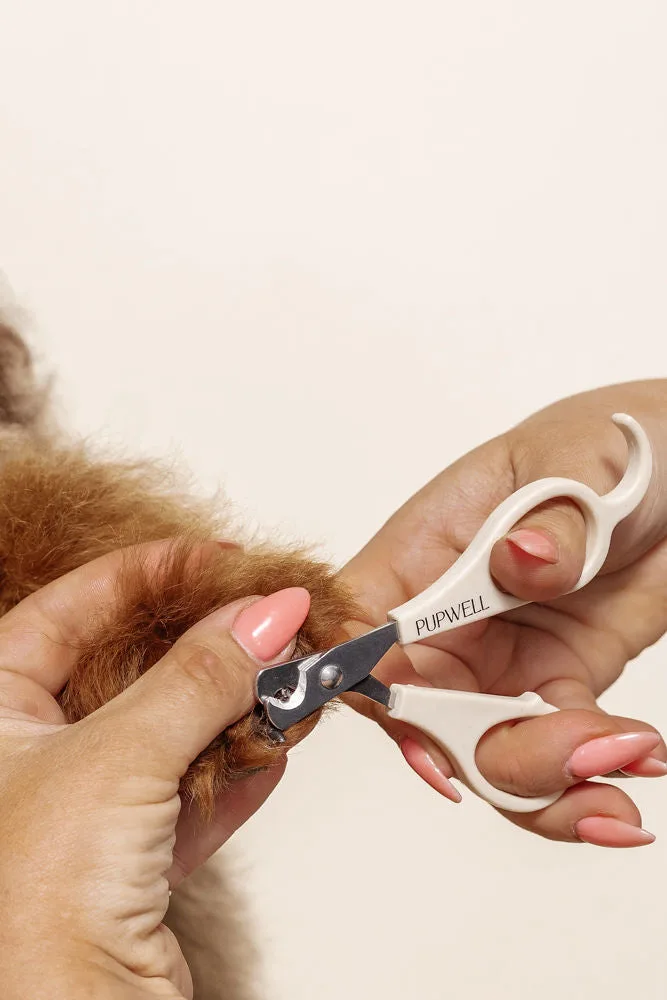
For touch-ups around a small dog's eyes, nose, and paws, mini safety scissors give you more control and a lower risk of nicking delicate skin. Clippers are faster for bulk coat work on the body, but they can catch thin skin and scare a puppy. If you mostly need to clear vision hair and tidy the face, start with a mini safety scissor like the Pupwell Mini Safety Scissor, and keep clippers for larger areas.
Why face touch-ups are different from body clipping
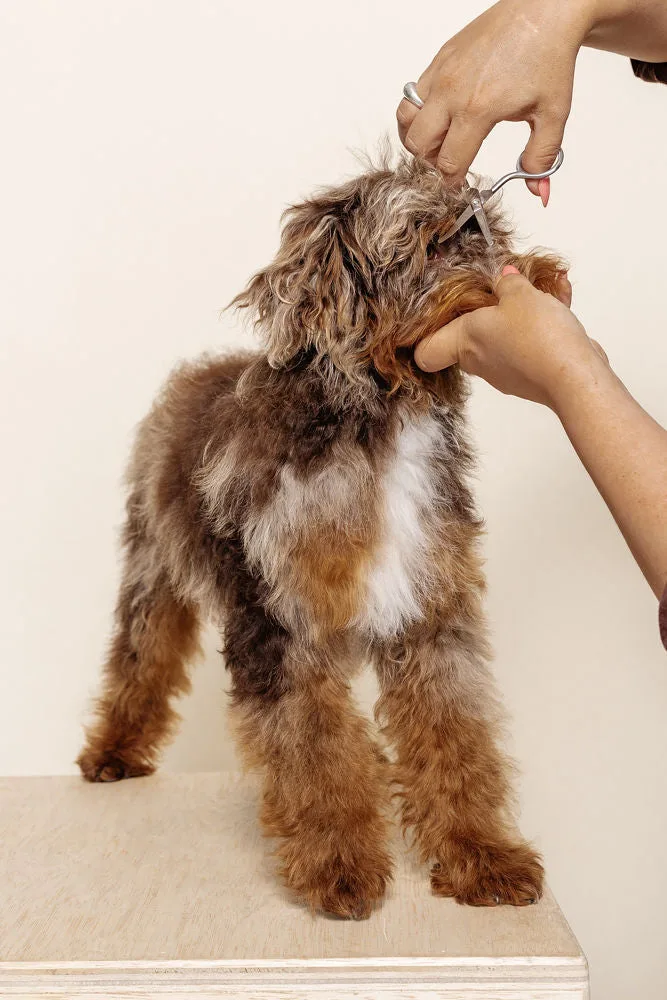
The skin around a dog's eyes, muzzle, and ears is thin and loose, and puppies often move at the wrong moment. Clipper blades cut close to the skin and can pinch or burn if the coat is matted or the blade heats up. Scissors with a rounded safety tip let you point the blade away from the eye and trim only the hair you can see, which is why many groomers reach for them first on the face. If you are trimming small dog face hair, control matters more than speed.
Where clippers still win
Clippers are the better choice for clearing a thick, uniform layer of hair on the body, sanitary areas, or paws when the coat is already combed out. They save time on larger jobs and give a more even finish than scissors alone. But they are not ideal for every touch-up: a clipper can struggle with fine hair around the eyes, and the noise may worry a dog that is not used to grooming. Use clippers where the skin is thicker and the hair is denser, and switch to scissors for the face.
How to decide for your dog
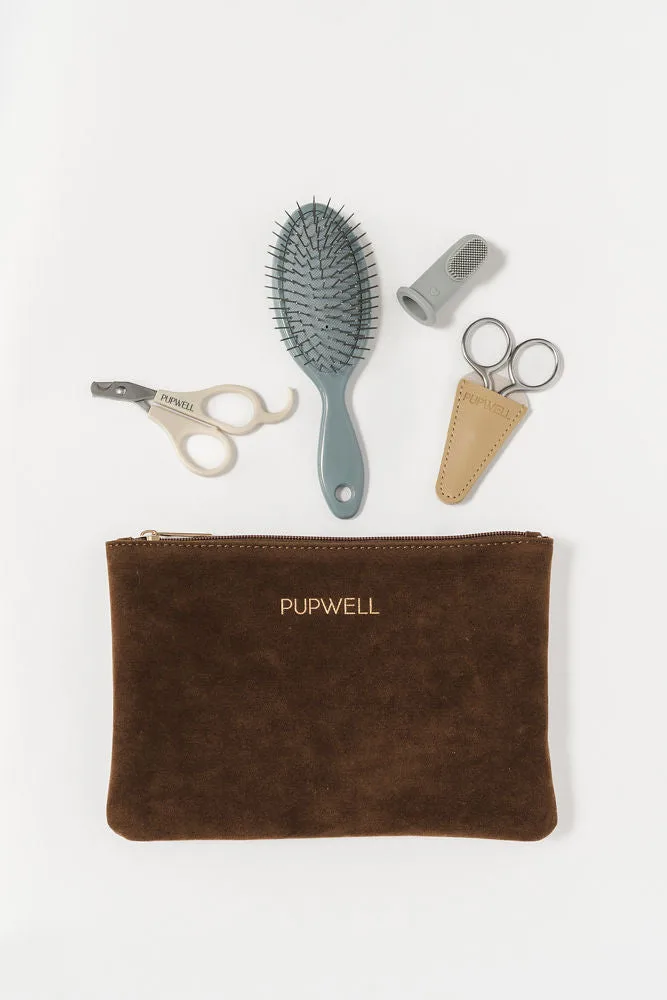
Start by checking the coat type and your dog's comfort level. If your dog has long hair that hangs into the eyes, a small safety scissor is the most direct fix. If you are dealing with mats, do not cut them out with scissors—use a detangler comb first, because cutting a mat can leave a hole in the coat and risk cutting skin. For puppies, introduce the tool slowly with treats and short sessions. A kit that includes both a brush and safety shears, like the Pupwell Puppy Grooming Kit, can help you practice without buying every tool separately.
Trade-offs at a glance
- Control vs. speed: Mini safety scissors give you precise control for eyes and face, but they are slower than clippers for large areas. Clippers are faster on the body but can be risky on loose face skin. Use scissors for detail, clippers for bulk.
- Safety vs. efficiency: A rounded safety tip lowers the chance of nicking skin around the eyes, but you still need to comb hair away from the eye and cut parallel to the skin. Clippers cut closer and faster but can burn or catch thin skin if used incorrectly. Never point scissor tips directly at the eye.
- Puppy comfort vs. long-term ease: Scissors are quieter and often less scary for a first grooming session. Clippers introduce noise and vibration that may require gradual desensitization. Start with scissors, then introduce clippers slowly.
Product facts
- Mini Safety Scissor: Mini Safety Scissor is designed to trim hair around a pup's eyes with a slightly rounded edge for safety. The rounded tip reduces the chance of poking the eye while you clear vision hair, making it a practical first tool for face touch-ups.
- Mini Safety Scissor (wholesale): Mini Safety Scissor (wholesale) is crafted of stainless steel and comes in a pack. Stainless steel holds up to repeated use, and a multi-pack lets you keep one pair in a grooming kit and one in a travel bag.
- Puppy Grooming Kit: Puppy Grooming Kit includes five tools: Mini Gentle Detangling Brush, Mini Safety Shears, Mini Nail Clippers, and others. If you are building a small dog grooming tool set, this kit covers face trimming, detangling, and nail care in one purchase.
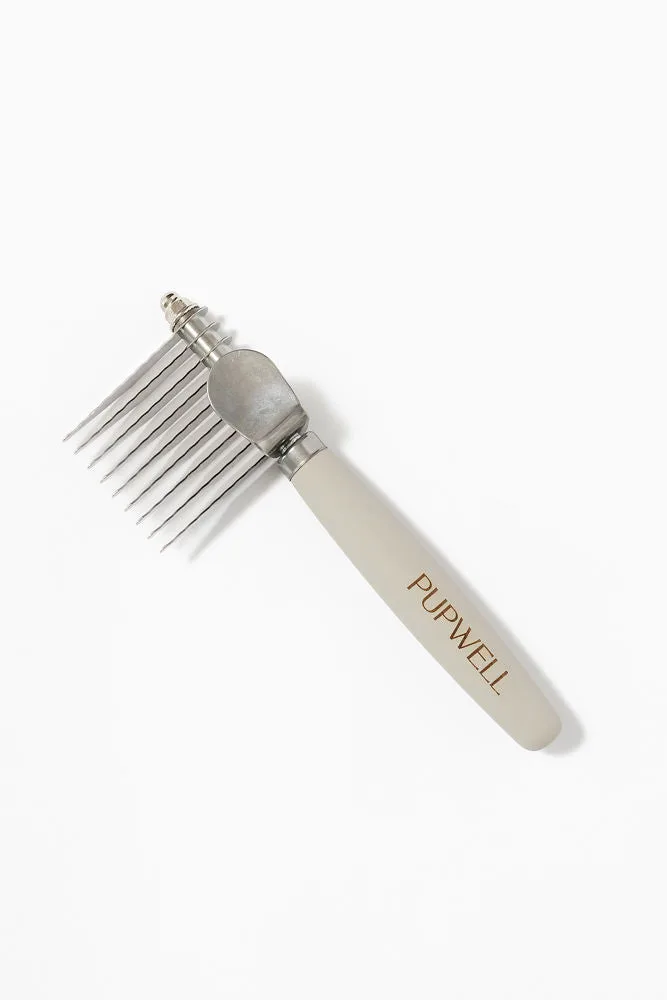
- The Detangler: The Detangler is a stainless steel comb for breaking through knots and preventing mats on long-coated breeds like doodles and retrievers. Removing tangles before you trim keeps scissors and clippers moving smoothly and helps you avoid cutting into a mat.
Which tool fits your situation?
Best for
- Owners who need to clear hair from a small dog's eyes between professional grooms.
- Puppies or nervous dogs that are not yet comfortable with clipper noise.
- Precision work on the face, paws, and sanitary areas where control matters.
Not for
- Removing large, dense mats—use a detangler comb first, and see a groomer if the mat is tight to the skin.
- Full-body haircuts on thick coats where a clipper gives a more even finish.
- Dogs that need a complete groom and will not hold still for scissor work.